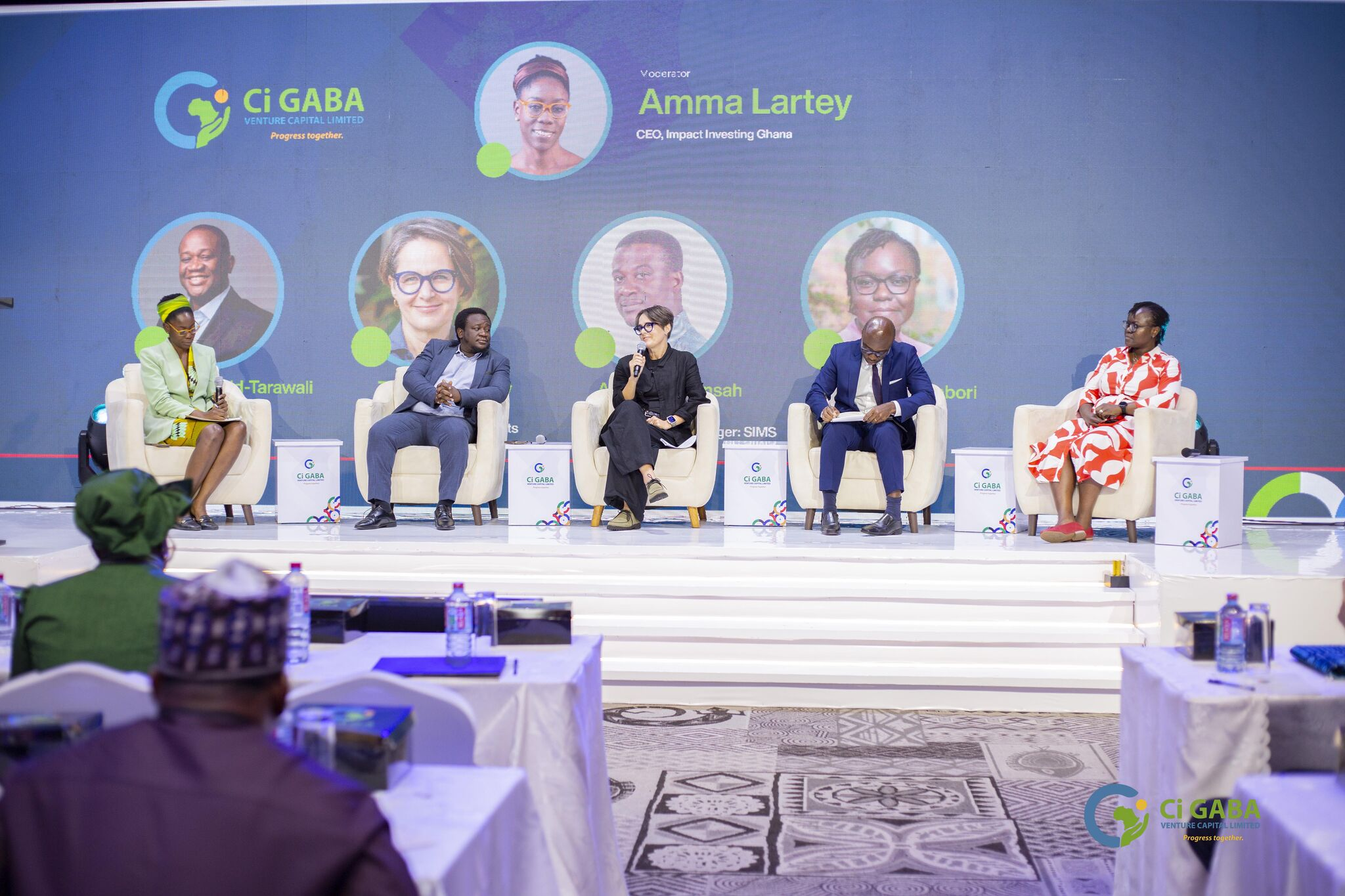











With a Best Bank in Ghana award from Euromoney, a transformative youth banking ecosystem (Access U), an all-time-high stock price, and the appointment of the first female Managing Director, this Nigerian-owned lender is undergoing a fundamental strategic realignment—betting that Ghana’s youthful demographic tsunami is a bigger asset than branch density.

Executive Introduction
In Ghana‘s banking landscape, there are established indigenous giants (GCB), pan-African behemoths (Ecobank), and disciplined niche players (BOA Ghana). But few have arrived with the momentum, the awards cabinet, and the strategic clarity of Access Bank Ghana PLC.
The numbers are compelling. A 2024 revenue of GHS 2.98 billion, net income of GHS 536.91 million, and a net profit margin of 17.99% would be impressive for any bank . But it is the trajectory that demands attention. The stock has returned over 412% in the past 12 months, and the bank was named Best Bank in Ghana 2025 by Euromoney—one of the most authoritative awards in global finance .
📢 GET A DETAILED ARTICLES + JOBS
Join ASJ's WhatsApp Channel and never miss a post or opportunity.
Yet, Access Bank Ghana’s most consequential move in 2025-2026 has not been on the balance sheet; it has been in the branding suite. The launch of Access U—a youth financial ecosystem designed for Ghanaians aged 13 to 40—represents a fundamental bet that the bank‘s future lies not in chasing corporate mandates against Ecobank or Stanbic, but in capturing the loyalty of an entire generation .
This is not a speculative gamble. Approximately 57% of Ghana‘s population is under the age of 25 . The creator economy is exploding, digital natives are entering the workforce, and traditional banks have largely treated young people as “future customers” rather than “current customers.” Access Bank has identified this gap and, in partnership with Mastercard, built a tiered, life-stage-based offering that follows the customer from school allowances to SME credit .
Under the leadership of Pearl Nkrumah —appointed October 2025 as the bank’s first female Managing Director—Access Bank Ghana is navigating a delicate transition: maintaining the institutional banking relationships that provide balance sheet stability while pivoting aggressively toward retail and youth segments .
For investors, analysts, and corporate clients, Access Bank Ghana represents a case study in strategic patience. The bank is not trying to acquire Societe Generale Ghana (unlike BOA) or become the largest by assets. It is trying to become the most relevant bank to the demographic that will define Ghana‘s economy for the next three decades. This ASJ profile examines the financial performance, the Access U strategy, the leadership transition, the parent-group dynamics, and whether the Euromoney crown truly reflects underlying strength.
Company Overview
Historical Foundation: From Ghana International to Access Bank
Access Bank Ghana‘s origins trace back to December 19, 1988, when it was founded as Ghana International Bank . For nearly two decades, it operated as a mid-tier institution before being acquired by Access Bank PLC of Nigeria, one of Africa’s largest retail banks.
The Nigerian parent, founded in 1989, has aggressively expanded across the continent, now operating in 24 markets with a stated ambition to become Africa’s most respected financial institution . The Ghana subsidiary has been central to this strategy, evolving from a relatively niche player into one of the country’s largest retail banks with a significant branch network .
Ownership Structure: The Nigerian Anchor
Access Bank Ghana is a wholly-owned subsidiary of Access Bank PLC, which is listed on the Nigerian Stock Exchange and is one of Nigeria’s “Big Five” banks. The parent group has expanded through strategic acquisitions across Africa, including in Kenya, Zambia, and South Africa.
For Ghanaian depositors and corporate clients, this parentage provides:
-
Parent-group capital support when needed
-
Cross-border trade finance capabilities across West and East Africa
-
Shared technology platforms and risk management frameworks
-
Access to Nigerian trade corridors, which remain critically important to Ghana‘s economy
However, it also means that Ghana‘s strategic direction is set within a pan-African context. The Ghana subsidiary competes for capital allocation with other markets, and key decisions—including the recent Managing Director transition—are coordinated from Lagos .
Leadership: Pearl Nkrumah and the Executive Team
Pearl Nkrumah – Managing Director & First Female MD
In September 2025, Access Bank Ghana announced the appointment of Pearl Nkrumah as Managing Director, effective October 1, 2025, making her the first female MD in the bank’s history . She succeeds Olumide Olatunji, who led the bank since 2018 and transitioned into a new executive role in Nigeria.
Nkrumah brings over 25 years of experience in banking and financial services . Before her appointment, she served as Executive Director for Retail & Digital Banking at Access Bank Ghana and Head of Retail Business for Access Africa subsidiaries (excluding Nigeria), where she was responsible for driving retail strategy across 15 markets on the continent .
Her career trajectory is notable:
-
1998–2012: Standard Chartered Bank
-
2012–2022: Stanbic Bank (various leadership roles in commercial and business banking)
-
2022–2025: Access Bank Ghana as Executive Director, Retail & Digital Banking
-
2025–Present: Managing Director, Access Bank Ghana
Nkrumah also serves as Chairperson on the Council of the Ghana Stock Exchange, representing listed companies—a role that gives her direct insight into capital market dynamics and investor expectations .
Commenting on her appointment, Board Chair Ama Bawuah stated: “Having worked alongside Pearl on the local board over the past three years, her appointment is a testament to Access Bank’s commitment to diversity and her extensive track record and leadership capabilities. We are confident that she will lead the bank into its next phase of growth“ .
Board of Directors
| Name | Position |
|---|---|
| Ama Sarpong Bawuah | Chairman |
| Pearl Nkrumah | Managing Director & Director |
| Hadiza Ambursa | Non-Executive Director |
| Jacob Kwame Kholi | Independent Non-Executive Director |
| Elikem Nutifafa Kuenyehia | Independent Non-Executive Director |
| John Bayuo Warisa | Independent Non-Executive Director |
| Yvette Adounvo Atekpe | Independent Non-Executive Director |
Operations and Footprint
Access Bank Ghana operates one of the largest branch networks in the country, with a particularly strong presence in the Ashanti Region (six branches) and across major urban centres . The bank‘s headquarters is located at Starlets‘ 91 Road, Opposite Accra Sports Stadium, Osu, Accra .
The bank employs approximately 775 people .
Key Operational Segments (per MarketWatch) :
| Segment | Description |
|---|---|
| Institutional Banking | Cocoa and exports; energy and oil; aviation and hospitality; mining; construction; maritime; telecommunications |
| Commercial Banking | Fast-moving consumer goods, commerce, wholesale, paper & chemicals, manufacturing, frozen foods, pharmaceuticals |
| Personal and Business Banking | Financial products for individuals and small businesses |
| Treasury | Treasury and financial institutional services |
Business Model: The Universal Bank With a Youth Obsession
Access Bank Ghana operates as a universal bank, serving customers across the entire spectrum from retail individuals to large institutional clients. However, its strategic differentiation lies in the deliberate, well-funded, and well-partnered focus on youth banking.
The Four Segments
1. Institutional Banking (The Corporate Engine)
This segment provides financial services to large-scale industries including cocoa and exports, energy and oil, aviation and hospitality, mining, construction, maritime, and telecommunications . These relationships provide balance sheet stability and anchor the bank’s institutional credibility.
The bank has also positioned itself as a supporter of financing for landmark projects in the private and public sectors .
2. Commercial Banking (The SME Engine)
Targeting industries such as fast-moving consumer goods, commerce, wholesale, manufacturing, frozen foods, and pharmaceuticals, this segment serves mid-sized Ghanaian enterprises that are too large for retail banking but not large enough for dedicated institutional coverage .
3. Personal and Business Banking (The Retail & Youth Engine)
This is the bank‘s strategic focus for growth. Under the Access U ecosystem, the bank provides tailored financial products and digital tools for individuals and small businesses, with particular attention to young Ghanaians .
4. Treasury (The Stability Engine)
Providing treasury and financial institutional services, including fixed income trading, foreign exchange, and liquidity management, this segment supports the bank‘s profitability while enabling the lending activities of other segments .
How They Make Money: The 2024-2025 Financials
Access Bank Ghana‘s financial performance reflects a bank that has successfully grown its top line while maintaining strong profitability metrics.
Annual Financials (2024) :
| Metric | 2024 Value | 2023 Value (est.) | Change |
|---|---|---|---|
| Revenue | GHS 2.98 billion | GHS 2.34 billion | +27.21% |
| Net Income | GHS 536.91 million | Not disclosed | Profitable |
| Operating Income | GHS 1.28 billion | Not disclosed | N/A |
| Net Profit Margin | 17.99% | ~15% (est.) | +300bps |
| Operating Margin | 43.08% | ~38% (est.) | +500bps |
| Pretax Margin | 32.14% | ~28% (est.) | +400bps |
Balance Sheet (2024) :
| Metric | 2024 Value |
|---|---|
| Total Assets | GHS 16.56 billion |
| Total Liabilities | GHS 14.80 billion |
| Debt to Assets | 89.39% |
Key Profitability Ratios :
| Metric | Value | Interpretation |
|---|---|---|
| Return on Assets (ROA) | 3.72% | Healthy; above industry average for Tier-2 banks |
| Return on Equity (ROE) | 33.98% | Excellent; among the highest in the sector |
| Return on Total Capital | 46.07% | Very strong capital efficiency |
| Return on Invested Capital | 28.11% | Solid; reflects disciplined deployment |
Quarterly Performance (September 2025) :
| Metric | Q3 2025 |
|---|---|
| Quarterly Revenue | GHS 392.94 million |
| Revenue (Last Twelve Months) | GHS 1.57 billion |
| Year-over-Year Revenue Change | -9.05% |
The quarterly revenue decline warrants attention. The 9.05% year-over-year decrease in LTM revenue suggests that the bank‘s phenomenal 2024 growth may have moderated, possibly due to the normalization of interest rates, increased competition, or strategic decisions to prioritize quality over volume .
Stock Performance (Remarkable) :
| Metric | Value |
|---|---|
| Year-to-Date Change | +187.78% |
| 12-Month Change | +412.31% |
| 52-Week Range | GHS 9.10 – GHS 46.64 |
| Current Price (March 2026) | GHS 46.62 |
| Market Capitalization | GHS 8.11 billion |
| P/E Ratio (TTM) | 18.64 |
| Earnings Per Share (TTM) | GHS 2.50 |
The 412% stock surge over 12 months is one of the most dramatic reratings on the Ghana Stock Exchange. This reflects renewed investor confidence in the bank’s strategy, the Euromoney award validation, and perhaps the market‘s enthusiasm for the Access U youth banking bet.
Valuation Considerations :
| Valuation Metric | Value |
|---|---|
| P/E Ratio (w/o extraordinary items) | 1.68 |
| Price to Sales Ratio | 0.30 |
| Price to Book Ratio | 0.51 |
| Price to Cash Flow Ratio | 1.43 |
| Dividend Yield | 0.72% (latest dividend: GHS 0.34) |
The adjusted P/E of 1.68 suggests the stock is trading at a significant discount to its earnings power when non-recurring items are excluded. The P/B of 0.51 indicates the stock is trading below book value—a potential value signal.
However, GuruFocus analysis suggests the stock is „Significantly Overvalued“ based on GF Value™ of GHS 9.73 versus a trading price of GHS 34.03—a 250% premium to fair value . Investors should note that valuation models differ, and the GF Value™ is a proprietary metric rather than an industry standard.
Earnings Growth :
| Period | EPS Growth Rate |
|---|---|
| 3-Year EPS without NRI Growth Rate | 18.60% |
| 12-Month EPS Growth Rate | -38.60% |
| Industry Median (3-Year) | 7.00% |
The 18.60% three-year EPS growth rate is significantly above the industry median of 7.00%, placing Access Bank Ghana in the top 24% of banks globally on this metric . However, the -38.60% one-year decline is a yellow flag that bears watching.
Digital Strategy and Innovation: Access U and the Youth Bet
Access Bank Ghana‘s most distinctive strategic move in 2025-2026 has been the launch of Access U, a transformative youth financial ecosystem designed to accompany young Ghanaians through every stage of their personal and financial development .
The Thesis: Capture the Demographic Tsunami
Approximately 57% of Ghana’s population is under the age of 25 . The creator economy is exploding, digital natives are entering the workforce, and traditional banks have largely treated young people as “future customers” rather than “current customers.”
Access Bank has identified this gap and, in partnership with Mastercard, built a tiered, life-stage-based offering that follows the customer from school allowances to SME credit .
The Three Life Stages of Access U
Stage 1: Teens (13–19 years)
-
Prepaid or reloadable debit card with parental controls
-
Expense-tracking tools to teach budgeting
-
Scheduled allowances for regular income simulation
-
Discounts on gaming, streaming services, and educational platforms
-
Focus: Financial literacy and early habit formation
Stage 2: Young Professionals (20–30 years)
-
Debit card paired with an entry-level credit card
-
Soft credit scoring to help first-time borrowers establish credit
-
Buy Now, Pay Later (BNPL) integrations for e-commerce, travel, and gadgets
-
Exclusive rewards on subscriptions
-
Investment-backed cashback cards for wealth building
-
Focus: Transitioning from student to income-earner
Stage 3: Middle-Established Professionals (31–40 years)
-
Premium debit and credit cards with travel and lifestyle benefits
-
Health insurance coverage
-
Career advancement resources
-
SME-linked corporate cards for entrepreneurs and executives
-
Focus: Wealth accumulation and business formation
The Creatorthon Partnership
In a defining statement of intent, Access Bank Ghana chose Creatorthon, a platform celebrated for championing imagination, innovation, and storytelling, as the official launch partner for Access U .
The decision to center the launch around Ghana‘s creator community signals the bank’s conviction that the creator economy is not a subculture; it is a formidable economic force that deserves proper financial recognition and support.
Oluwaseun David-Akindele, Head of Retail Products and Marketing, reflected: “Creators are shaping the modern economy, influencing culture, and redefining entrepreneurship. By placing them at the heart of this movement, we are affirming a simple truth: the future belongs to those bold enough to create it” .
The Mastercard Partnership
The Access U offering was developed in collaboration with Mastercard, leveraging the global payment network‘s technology and security infrastructure .
Folasade Femi-Lawal, Country Manager and Area Business Head for West Africa at Mastercard, stated: “This launch reflects our shared commitment with Access Bank Ghana to shape a more financially confident and digitally included generation. By embedding financial literacy and secure digital tools from an early age, we are empowering Ghana‘s youth to grow into financially responsible adults” .
The card will be made available across Access Bank‘s physical branches and digital network, presenting new opportunities for fintechs, merchants, and educational partners to engage Ghanaians in more meaningful ways .
Pearl Nkrumah‘s Vision for Youth Banking
When she launched Access U in April 2026, then-Executive Director (now MD) Pearl Nkrumah articulated the strategic ambition:
“Today is more than the introduction of a banking platform; it is the beginning of a community built around the ambition, creativity, and resilience of young people. Our goal is not just to introduce a product. Our goal is to build a movement, one that connects young people to opportunity, knowledge, and each other” .
Nkrumah further emphasized that the youth are not just the future but “the now“:
“Our youth are not just the future, they are the now. Through our collaboration with Mastercard, we are not just offering banking solutions to young people, but we are enhancing their job market readiness, creating recruitment opportunities, empowering young entrepreneurs, and equipping them to achieve their dreams and impact Ghana and the rest of the world“ .
The Strategic Implications of Access U
The Access U launch is not a marketing gimmick; it is a fundamental strategic repositioning:
-
Customer Acquisition at Scale: By targeting customers as young as 13, Access Bank is acquiring customers at the lowest possible customer acquisition cost (CAC) and with the highest potential lifetime value (LTV).
-
Loyalty Lock-In: A customer who opens their first account with Access Bank at 13 is unlikely to switch banks at 25—particularly if the product evolves with them seamlessly.
-
Cross-Sell at Scale: The teen with a prepaid card becomes the young professional with a credit card becomes the entrepreneur with an SME loan. Each stage unlocks new revenue streams.
-
Digital-First, Not Digital-Only: Access U is supported by digital tools but also by Access Bank‘s extensive branch network—providing the security of physical presence with the convenience of digital access.
-
Creator Economy Validation: By prioritizing partnerships with content creators, Access Bank is signalling that it understands the modern economy better than its competitors.
Beyond Access U: Other Digital Capabilities
The bank offers standard digital banking services including mobile banking, internet banking, and card products. However, Access U is clearly the flagship digital initiative.
Awards and Recognition: The Euromoney Validation
In July 2025, Access Bank was named Best Bank 2025 in Ghana (and The Gambia) by Euromoney—one of the most authoritative awards in global finance .
The Significance of Euromoney
Euromoney‘s Awards for Excellence are widely regarded as the Oscars of the banking industry. Winning „Best Bank“ in a country requires demonstrating leadership across multiple dimensions: financial performance, innovation, customer satisfaction, corporate responsibility, and strategic execution.
The award citation noted that the recognition affirms Access Bank‘s leadership across West Africa and underscores the group‘s growing regional influence and enduring commitment to financial inclusion, innovation, and sustainable impact .
Olumide Olatunji‘s Reaction
At the time of the award, Olumide Olatunji (then Managing Director) stated: “This milestone reflects the passion and dedication of our team and the trust our customers place in us. We are proud to lead a new era of banking in Ghana, one that prioritises inclusion, innovation, and sustainable development“ .
The Gambia Back-to-Back Win
Access Bank Gambia recorded back-to-back wins, having also been named Best Bank Gambia in 2024, reflecting its continued progress in financial inclusion, SME support, and ESG-led banking .
What the Award Means for Investors
The Euromoney award is not merely a plaque on the wall; it is a signal to international investors, development finance institutions, and corporate clients that Access Bank Ghana meets global standards of banking excellence. For a Nigerian-owned bank operating in Ghana, this third-party validation is particularly valuable.
Market Position and Competition
Industry Standing: The Award-Winning Challenger
Access Bank Ghana is not the largest bank by assets—GCB (GHS 60 billion+) and Ecobank (GHS 46 billion) hold those crowns. However, by profitability metrics, Access Bank is a leader. Its ROE of 33.98% is among the highest in the sector .
The bank describes itself as „one of Ghana‘s largest retail banks“ operating „one of the largest branch networks in the country“ .
Recent Performance Context
| Metric | Access Bank Ghana | Industry Context |
|---|---|---|
| ROE | 33.98% | Excellent; top quartile |
| ROA | 3.72% | Very strong |
| Net Profit Margin | 17.99% | Healthy |
| Revenue Growth (2024) | 27.21% | Strong |
| P/E (Adjusted) | 1.68 | Appears undervalued |
| 12-Month Stock Return | +412% | Exceptional |
Competitive Landscape
Access Bank competes across multiple segments against a diverse set of rivals:
| Competitor | Where Access Wins | Where Access Loses |
|---|---|---|
| GCB Bank | ROE (34% vs. ~20%), youth banking (Access U), Euromoney award | Branch network (GCB has 183), brand heritage in Ghana |
| Ecobank Ghana | ROE, youth banking differentiation, Nigerian parent backing | Pan-African scale (Ecobank in 35+ countries), cross-border trade finance |
| Stanbic Bank | Retail focus, youth proposition, ROE (34% vs. Stanbic‘s ~25%) | Corporate CX rankings, investment banking scale |
| Fidelity Bank | ROE (34% vs. ~20%), youth banking structure, parent-group scale | Agency banking (Fidelity has 9,000+ agents), indigenous ownership narrative |
| Absa Bank Ghana | Nigerian trade corridors, youth proposition, higher ROE | South African parent backing (Absa Group R24.76bn earnings) |
| FirstBank Ghana | ROE (34% vs. ~20% est.), youth proposition, larger branch network | Nigerian parent (both have Nigerian parents) |
Competitive Advantages
-
Euromoney „Best Bank“ Validation: The award provides third-party credibility that is particularly valuable for a foreign-owned bank competing against indigenous incumbents .
-
Access U Youth Ecosystem: The tiered, life-stage-based offering with Mastercard partnership is a genuine differentiator that competitors will struggle to replicate quickly .
-
Exceptional Profitability: ROE of 33.98% and operating margin of 43.08% demonstrate efficient operations and strong pricing power .
-
Parent-Group Scale: Access Bank PLC‘s presence in 24 markets provides trade finance corridors, capital support, and shared technology that local banks cannot match .
-
Nigerian Trade Corridors: As Ghana‘s largest trading partner, Nigeria‘s economic linkages are critically important. Access Bank‘s Nigerian parent provides unique access to this corridor.
-
Large Branch Network: The bank‘s claim to operate „one of the largest branch networks in the country“ provides physical accessibility that digital-only competitors lack .
-
Strong Board Governance: The board includes experienced independent directors and is chaired by Ama Sarpong Bawuah .
Competitive Disadvantages
-
Foreign Ownership Perception: Some Ghanaian depositors and corporate clients may prefer „indigenous“ banks for patriotic or local procurement reasons.
-
Limited Government Banking Share: As a foreign-owned bank, Access may not have the same access to government payroll, public sector banking, and SOE relationships that state-influenced banks (GCB, CBG, ADB) enjoy.
-
Quarterly Revenue Decline: The 9.05% year-over-year revenue decline in LTM to September 2025 warrants monitoring .
-
Valuation Concerns: Some analysts consider the stock significantly overvalued relative to fair value estimates .
-
Parent-Group Risk: A crisis at Access Bank PLC (Nigeria) would inevitably affect the Ghana subsidiary.
Social Responsibility and Community Engagement
Access Bank Ghana has demonstrated a consistent commitment to social responsibility, particularly in education and cultural preservation.
Otumfuo Charity Foundation Partnership
In February 2026, the bank’s leadership—led by Board Chairman Frank Beecham (note: sources differ on Chair name; MarketWatch lists Ama Sarpong Bawuah as Chair), Regional Managing Director Dolapo Ogundimu, and Managing Director Olumide Olatunji—paid a courtesy call on the Asantehene, Otumfuo Osei Tutu II, at the Manhyia Palace .
The visit had multiple purposes:
-
Commemorating the Asantehene‘s 20th anniversary of enstoolment
-
Introducing the bank’s new Managing Director
-
Donating to the Otumfuo Charity Foundation—a gesture Access Bank has maintained since 2010
Board Chairman Frank Beecham stated: “As a bank, we appreciate the role that our cultural heritage plays in the sustainability of our society. Our sense of being and identity is dependent on how rich our culture is and how well it is celebrated“ .
Areas of Social Investment
According to the bank‘s public statements, Access Bank has demonstrated continued commitment to influencing social, economic, and environmental systems beyond making profits, with investments in:
-
Education
-
Health
-
Environment
-
Sports
-
The Arts
The bank‘s sustainability goal, as articulated by Olumide Olatunji, is to “create a culture of economic, social and environmental responsibility“ .
Challenges and Risks
No analysis of Access Bank Ghana is complete without acknowledging the headwinds that accompany its strong performance.
Risk 1: Parent-Group Dependency
Access Bank Ghana is a wholly-owned subsidiary of Access Bank PLC (Nigeria). While the Nigerian parent provides capital and strategic direction, it also introduces risks. Nigeria‘s banking sector has faced challenges—currency volatility (the naira‘s fluctuations affect group reporting), regulatory changes, and credit risks. A crisis at the parent level would inevitably affect the Ghana subsidiary.
However, Access Bank PLC is one of Nigeria‘s strongest banks, with a diversified pan-African presence that reduces concentration risk.
Risk 2: Revenue Deceleration
The 9.05% year-over-year revenue decline in LTM to September 2025 is a yellow flag . While 2024 revenue growth was exceptional at 27.21%, the moderation could reflect:
-
Normalization of interest rates compressing margins
-
Increased competition in the retail segment
-
Strategic decisions to prioritize asset quality over volume
-
Macroeconomic headwinds affecting transaction volumes
Investors should monitor whether this decline is a temporary correction or the beginning of a sustained trend.
Risk 3: Youth Banking Monetisation Risk
Access U is an ambitious, well-funded strategy, but its profitability is unproven. The bank is essentially making a long-term bet: acquire customers at a young age (potentially at a loss) and monetize them over decades. This requires:
-
Patience: Teen accounts generate minimal revenue for years.
-
Retention: The bank must prevent customer switching as young people age.
-
Cross-Sell Execution: Converting teens into credit card users, mortgage holders, and SME borrowers requires sophisticated relationship management.
If retention or cross-sell rates disappoint, the ROI on Access U could fall short of expectations.
Risk 4: Competition in Youth Banking
Access Bank‘s first-mover advantage in structured youth banking is real, but competitors will respond. GCB, Ecobank, Stanbic, or Fidelity could launch similar tiered offerings, potentially eroding differentiation. The Mastercard partnership provides some exclusivity, but not a permanent moat.
Risk 5: Asset Quality Monitoring
The bank‘s NPL ratio is not publicly disclosed in recent sources. However, the bank‘s strong ROE (33.98%) and ROA (3.72%) suggest healthy asset quality . Investors should seek disclosure of NPL metrics in future reports.
Risk 6: Economic Sensitivity
Ghana‘s economy, while recovering, remains vulnerable to commodity price shocks (gold, cocoa, oil), climate risks affecting agriculture, and the lingering effects of the debt restructuring. A return to macroeconomic instability would affect Access Bank Ghana‘s loan portfolio, deposit base, and profitability.
Risk 7: Leadership Transition Risk
The transition from Olumide Olatunji (who led the bank since 2018) to Pearl Nkrumah occurred in October 2025 . While Nkrumah is an insider who helped craft the Access U strategy, any leadership change carries execution risk. The bank‘s strong first-quarter 2026 performance would provide reassurance, but full-year results will be the real test.
Economic and Industry Impact
Employment
Access Bank Ghana employs approximately 775 people, providing stable formal-sector jobs in Ghana‘s financial services industry .
Youth Financial Inclusion
The Access U ecosystem is arguably the most significant private-sector contribution to youth financial literacy in Ghana. By targeting customers as young as 13 with structured financial education tools (parental controls, expense tracking, budget management), the bank is helping to develop a generation of financially literate Ghanaians .
The Mastercard collaboration emphasizes that the goal is to “cultivate a financially empowered, digitally included generation” —an objective that aligns with the Bank of Ghana‘s financial inclusion agenda .
SME Support
Through its Commercial Banking segment and the Access U offering for young entrepreneurs (SME-linked corporate cards), Access Bank provides working capital, trade finance, and transaction banking services to Ghana‘s small and medium enterprises .
Banking Sector Stability
Access Bank Ghana‘s strong profitability (ROE 33.98%, ROA 3.72%) and capital efficiency contribute to overall banking system stability . A healthy, well-capitalised foreign-owned bank reduces systemic risk.
Cross-Border Trade Facilitation
As a subsidiary of Access Bank PLC (present in 24 markets), Access Bank Ghana facilitates trade and investment flows between Ghana and other African countries—particularly Nigeria, its largest trading partner. This supports the African Continental Free Trade Area (AfCFTA) agenda .
Capital Markets Development
As a listed company on the Ghana Stock Exchange with a market capitalisation of GHS 8.11 billion, Access Bank Ghana anchors the financial services sector of the GSE. The bank‘s 412% stock return over 12 months has attracted investor attention to the exchange .
Future Outlook
As of May 2026, Access Bank Ghana is executing a dual strategy: maintain institutional banking excellence while aggressively capturing the youth market through Access U. The leadership transition is complete, the Euromoney award has been secured, and the stock market has rewarded the bank handsomely.
But the strategic questions ahead are substantial.
The Bull Case (Optimistic)
-
Access U scales and monetises: The youth ecosystem onboards hundreds of thousands of young Ghanaians; retention rates are high; cross-sell to credit, mortgage, and SME products drives revenue growth beyond expectations.
-
Revenue decline reverses: The -9.05% LTM revenue decline proves temporary; 2026 revenue growth returns to double digits as Access U transaction volumes scale and corporate lending expands.
-
Profitability remains exceptional: ROE stays above 30%; net profit margin expands beyond 18%; the bank continues to be one of Ghana‘s most profitable lenders.
-
Parent-group support intensifies: Access Bank PLC sees Ghana as a strategic market and provides additional capital for digital transformation and potential acquisitions.
-
Stock re-rates further: The adjusted P/E of 1.68 normalizes toward 3-4x as investors recognise the earnings power; the P/B of 0.51 moves toward 1.0x.
-
Euromoney validation attracts institutional flows: International investors and development finance institutions prioritise Access Bank Ghana for partnerships and deposits.
The Bear Case (Pessimistic)
-
Access U monetisation disappoints: Young customers use the platform for payments but do not take up higher-margin credit products; the ROI on the Mastercard partnership falls short.
-
Revenue decline persists: The -9.05% trend continues into 2026; operating leverage works in reverse; profitability margins compress.
-
Competition intensifies: GCB, Ecobank, or Stanbic launch competing youth banking products; first-mover advantage erodes.
-
Ghana‘s economic recovery stalls: Commodity prices fall, cedi depreciates, inflation rises; NPLs increase; deposit growth slows.
-
Parent-group distress: Access Bank PLC (Nigeria) faces its own challenges; capital allocation to Ghana is reduced.
-
Valuation correction: The GF Value™ estimate of GHS 9.73 proves prescient; the stock corrects significantly from its GHS 46.62 level .
The Verdict
Access Bank Ghana has emerged from the 2022-2024 crisis as one of the most strategically focused, well-capitalised, and profitable banks in the country. The Euromoney „Best Bank in Ghana 2025“ award is not merely marketing fluff; it reflects genuine leadership across multiple dimensions .
The Access U youth banking ecosystem is the most significant strategic initiative in the bank‘s history. By targeting customers as young as 13 and following them through life stages with tailored products and Mastercard-powered digital tools, the bank is making a long-term bet on demographic tailwinds . Approximately 57% of Ghana‘s population is under 25; the creator economy is exploding; and traditional banks have largely ignored this segment. Access Bank has identified a genuine market gap and filled it with a sophisticated, well-partnered solution.
The leadership transition to Pearl Nkrumah—the bank‘s first female Managing Director and a 25-year banking veteran—brings continuity and fresh perspective . Her deep involvement in crafting the Access U strategy as Executive Director for Retail & Digital Banking suggests that the youth focus will intensify, not moderate.
The risks are real—revenue deceleration, valuation concerns, competition, parent-group dependency. But the trajectory is unmistakable. Access Bank Ghana is no longer just a Nigerian subsidiary operating in Ghana; it is a Ghanaian bank with Nigerian backing that has earned its place among the country‘s most respected financial institutions.
For corporate clients, the bank offers parent-group scale and a Euromoney-validated reputation. For young Ghanaians, Access U offers a banking relationship that can last a lifetime. For investors, the stock has delivered extraordinary returns—but valuation discipline remains essential.
FAQ SECTION
1. Is Access Bank Ghana a Ghanaian-owned bank?
No. Access Bank Ghana PLC is a wholly-owned subsidiary of Access Bank PLC of Nigeria, one of Africa‘s largest retail banks operating in 24 markets. The Ghana subsidiary was originally founded as Ghana International Bank in 1988 .
2. Who is the Managing Director of Access Bank Ghana?
The Managing Director is Pearl Nkrumah, appointed effective October 1, 2025. She is the first female Managing Director in the bank‘s history. She previously served as Executive Director for Retail & Digital Banking at Access Bank Ghana and Head of Retail Business for Access Africa subsidiaries across 15 markets .
3. Has Access Bank Ghana won any major awards recently?
Yes. In July 2025, Access Bank was named Best Bank 2025 in Ghana by Euromoney, one of the most authoritative awards in global finance. The bank was also named Best Bank in The Gambia for the second consecutive year .
4. What is Access U?
Access U is a transformative youth financial ecosystem launched by Access Bank Ghana in April 2026. It is a tiered, life-stage-based offering designed for Ghanaians aged 13 to 40, developed in partnership with Mastercard. The offering has three stages: Teens (13-19), Young Professionals (20-30), and Middle-Established Professionals (31-40), with tailored products for each stage .
5. How did Access Bank Ghana perform financially in 2024?
Access Bank Ghana reported revenue of GHS 2.98 billion in 2024, representing 27.21% growth. Net income reached GHS 536.91 million, with a net profit margin of 17.99%. Return on Equity was an exceptional 33.98% , and Return on Assets was 3.72% .
6. How has Access Bank Ghana‘s stock performed?
The stock (GHSE: ACCESS) has delivered extraordinary returns: +187.78% year-to-date and +412.31% over 12 months. The 52-week range is GHS 9.10 to GHS 46.64, with the stock trading near its high. Market capitalisation is GHS 8.11 billion .
7. Who are the key executives and board members?
The Board is chaired by Ama Sarpong Bawuah. The Managing Director is Pearl Nkrumah. Other board members include Hadiza Ambursa (Non-Executive Director), Jacob Kwame Kholi (Independent Non-Executive Director), Elikem Nutifafa Kuenyehia (Independent Non-Executive Director), John Bayuo Warisa (Independent Non-Executive Director), and Yvette Adounvo Atekpe (Independent Non-Executive Director) .
8. Is Access Bank Ghana‘s stock a good investment?
The stock has returned over 412% in 12 months and trades at an adjusted P/E of 1.68 and P/B of 0.51, suggesting potential undervaluation. However, GuruFocus analysis suggests the stock is „Significantly Overvalued“ with a GF Value™ estimate of GHS 9.73 versus a trading price of GHS 34.03—a 250% premium . Investors should conduct their own analysis .
9. How does Access Bank Ghana support small businesses?
Access Bank serves SMEs through its Commercial Banking segment (focusing on FMCG, manufacturing, pharmaceuticals, wholesale) and through Access U for young entrepreneurs (offering SME-linked corporate cards, BNPL integrations, and business advisory). The bank also provides trade finance and working capital solutions .
10. What is Access Bank Ghana‘s partnership with Mastercard?
Access Bank Ghana partnered with Mastercard to develop the Access U youth banking proposition. Mastercard provides the card technology, security infrastructure, and global acceptance network. The partnership also includes a tiered card offering (prepaid, debit, credit) with stage-appropriate benefits including parental controls, soft credit scoring, BNPL integrations, and travel/lifestyle benefits .
11. Does Access Bank Ghana offer mortgages?
Yes. As a universal bank, Access Bank Ghana offers mortgage products, though the bank‘s primary strategic focus in 2025-2026 has been on youth banking (Access U) and retail expansion. Specific mortgage product details are not prominently featured in recent public disclosures .
12. How can I contact Access Bank Ghana?
Access Bank Ghana‘s head office is located at Starlets‘ 91 Road, Opposite Accra Sports Stadium, Osu, Accra. Phone: 233 302-661769 . Customers can also visit any of the bank‘s branches across Ghana, including six branches in the Ashanti Region .
QUICK FACTS BOX
| Item | Details |
|---|---|
| Founded | December 19, 1988 (as Ghana International Bank) |
| Headquarters | Starlets‘ 91 Road, Opposite Accra Sports Stadium, Osu, Accra, Ghana |
| Industry | Banking / Financial Services |
| Services | Institutional Banking, Commercial Banking, Personal & Business Banking, Treasury, Youth Banking (Access U) |
| Ownership | Wholly-owned subsidiary of Access Bank PLC (Nigeria) |
| Parent Founded | 1989 (Access Bank PLC, Nigeria) |
| Parent Markets | 24 countries across Africa |
| Stock Ticker | GHSE: ACCESS |
| CEO (MD) | Pearl Nkrumah (appointed October 1, 2025; first female MD) |
| Board Chairperson | Ama Sarpong Bawuah |
| Employees | 775 |
| Branches | One of the largest branch networks in Ghana; 6 branches in Ashanti Region alone |
| Total Assets (2024) | GHS 16.56 billion |
| Revenue (2024) | GHS 2.98 billion (+27.21% YoY) |
| Net Income (2024) | GHS 536.91 million |
| Net Profit Margin | 17.99% |
| Return on Equity (ROE) | 33.98% |
| Return on Assets (ROA) | 3.72% |
| Operating Margin | 43.08% |
| Market Capitalisation | GHS 8.11 billion |
| Stock Performance (12M) | +412.31% |
| P/E Ratio (Adjusted) | 1.68 |
| Price to Book Ratio | 0.51 |
| Dividend Yield | 0.72% (latest dividend GHS 0.34) |
| Key Strategic Initiative | Access U youth banking ecosystem (launched April 2026) |
| Key Partnership | Mastercard (Access U card offering) |
| Key Award | Euromoney Best Bank in Ghana 2025 |
| Regulator | Bank of Ghana |
| Website | www.accessbankplc.com/ghana |
Source: Accra Street Journal
Last Updated on May 4, 2026 by Samuel Kwame Boadu
Disclaimer: Some content on Accra Street Journal may be aggregated, summarized, or edited from third-party sources for informational purposes. Images and media are used under fair use or royalty-free licenses. Accra Street Journal is a subsidiary of SamBoad Publishing Hub under SamBoad Business Group Ltd, registered in Ghana since 2014.
For concerns or inquiries, please visit our Privacy Policy or Contact Page.

Samuel Kwame Boadu is a Ghanaian media entrepreneur and storyteller with a passion for amplifying urban voices and uncovering everyday truths. He is the Editor-in-Chief and Founder of Accra Street Journal, a dynamic digital platform dedicated to capturing the pulse of Ghana’s capital—its people, culture, challenges, business, sports and innovations.