









A 199% stock surge, 23.4% capital adequacy, GHS 1.39 billion in revenue, and an SSNIT legacy stretching back to 1975—yet the bank is trapped in an acquisition battle between Morocco’s BOA and Nigeria’s Access Bank, waiting for a parent in Paris to decide its fate.

Executive Introduction
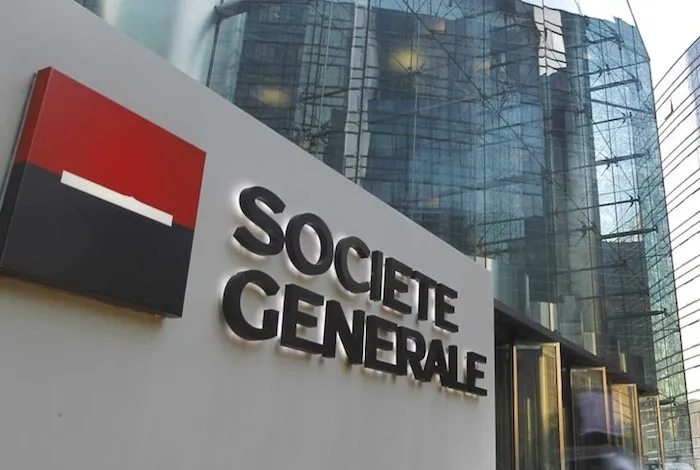
In the annals of Ghanaian banking, Societe Generale Ghana PLC occupies a unique and, at this moment, deeply uncertain position. It is a bank built on a remarkable paradox: founded in 1975 by the Social Security and National Insurance Trust (SSNIT) as SSB Bank with a mission of broadening financial inclusion, it was later acquired by French banking giant Societe Generale and transformed into a conventional tier-one institution serving predominantly high-end corporate and retail clients .
Today, that French parent is executing a strategic retreat from Africa, and Societe Generale Ghana has become the most sought-after acquisition target in the West African banking landscape. Moroccan-backed Bank of Africa (BOA) and Nigeria‘s Access Bank are locked in a discreet but fierce battle to acquire the lender, with neither the Ghanaian government nor SSNIT—which still retains roughly 19%—showing a strong preference for either bidder .
📢 GET A DETAILED ARTICLES + JOBS
Join ASJ's WhatsApp Channel and never miss a post or opportunity.
For investors, corporate clients, and market observers, Societe Generale Ghana represents a study in suspended animation: a fundamentally sound, exceptionally well-capitalised institution with a 23.4% Capital Adequacy Ratio (CAR), GHS 1.39 billion in annual revenue, and a 199% stock surge in 2025, all while its ultimate ownership hangs in the balance .
This ASJ profile examines Societe Generale Ghana‘s historical evolution from SSB Bank to French subsidiary, its 2025 financial performance under CEO Hakim Ouzzani, its shareholder structure (SG Financial Services Holding SA at over 60%, SSNIT at 19%), the competing acquisition bids from BOA and Access Bank, the strategic rationale for the French exit, and the critical question: whichever bidder prevails, what happens to the bank‘s corporate governance, strategy, and customers?
Company Overview
Historical Foundation: From SSB Bank to French Ownership
Societe Generale Ghana‘s origins trace back to 1975, when it was established as SSB Bank by the Social Security and National Insurance Trust (SSNIT) . The bank was initially aimed at broadening financial inclusion, serving a broad segment of Ghanaian society rather than exclusively high-end clients.
Over time, however, the bank shifted from its foundational mission and evolved into a conventional tier-one institution serving predominantly high-end clients . This transformation accelerated with the entry of French banking group Societe Generale, which acquired a majority stake and rebranded the institution.
The bank changed its name from Societe Generale Ghana Limited to Societe Generale Ghana PLC and is headquartered in Accra, with its shares listed on the Ghana Stock Exchange under the ticker SOGEGH .
Ownership Structure: The French Anchor and the SSNIT Legacy
Societe Generale Ghana‘s shareholding reflects its hybrid heritage: a French banking giant holding a majority stake, with significant local institutional ownership.
-
SG Financial Services Holding SA (France): Holds a majority stake of over 60%
-
Social Security and National Insurance Trust (SSNIT): Retains roughly 19%
-
Public Float: The remaining shares are traded on the Ghana Stock Exchange
This ownership structure has profound implications for the bank‘s future. The French parent is actively exiting African markets, and Ghana is firmly on the divestiture list . SSNIT‘s 19% stake gives the Ghanaian state a meaningful voice in any transaction, and the Bank of Ghana will perform a routine “fit-and-proper” check on any acquirer .
Leadership: Hakim Ouzzani and the Executive Team
Hakim Ouzzani – Managing Director
At the helm of Societe Generale Ghana is Hakim Ouzzani, who has served as Managing Director and Executive Director since February 18, 2019 . Ouzzani‘s tenure has coincided with a period of significant macroeconomic turbulence in Ghana, including the Domestic Debt Exchange Programme (DDEP), hyperinflation, and a subsequent strong recovery. Under his leadership, the bank has maintained a disciplined, risk-averse strategy focused on asset quality over aggressive loan book expansion .
Key Executive Leadership
| Name | Position |
|---|---|
| Hakim Ouzzani | Managing Director, Executive Director |
| Mohamed Fehri | Chief Financial Officer |
| Bilankalama Ibrahim Traore | Chief Operating Officer, Executive Director |
| Dorcas Hazel Quaye | Chief Compliance Officer |
| Irene Owiredu Akrofi | General Manager, Treasury |
| Angela Nanansaa Bonsu | General Manager, Company Secretariat; Company Secretary |
| Bernice Allotey | General Manager, Organisation & Projects |
| Fred Obosu | General Manager, Corporate Banking |
| Kwaku Tweneboa Kodua | General Manager, Retail Banking |
Board of Directors
The board is chaired by Margaret Boateng Sekyere, who serves as Independent Non-Executive Chairman . Other notable board members include:
| Name | Position |
|---|---|
| Margaret Boateng Sekyere | Independent Non-Executive Chairman |
| Laurette Korkor Otchere | Non-Executive Director |
| Arnaud De Gaudesmaris | Non-Executive Director |
| Magloire Nguessan | Non-Executive Director |
| Yvon Puyou | Non-Executive Director |
| Juliana Asante | Independent Non-Executive Director |
| Francis Awua-Kyerematen | Non-Executive Independent Director |
| Peggy Osei-tutu Dzodzomenyo | Independent Non-Executive Director |
| Fosuhene Acheampong | Non-Executive Director |
| Arthur Bright | Non-Executive Director |
Operations and Footprint
Societe Generale Ghana operates 39 branches across the country and employs 536 people . Its headquarters are located on Ring Road Central, Accra .
The bank serves customers across three core segments :
-
Retail Banking (48.8% of net interest income): Serving individuals, high-net-worth clients, institutional clients, and small businesses. Products include current and savings accounts; consumer appliance, institutional, auto, home, CAGD, and cash covered loans; relief credit; insurance products; and safe deposit boxes .
-
Corporate Banking (51.2% of net interest income): Provides loans and other credit facilities, mobilises deposits, and offers trade finance services including letters of credit, guarantees, documentary collection, standby letters of credit, and avalised bills. Also provides term loans comprising asset financing, finance leasing, and project financing .
-
Treasury: Includes funding activities, manages the bank‘s liquidity position through short-term placements and government debt securities, and provides treasury services to clients .
The 2025 Financial Performance: Resilience in a Stabilising Economy
Societe Generale Ghana‘s 2025 financial results demonstrate a bank that prioritises stability, asset quality, and capital strength over aggressive growth. In a year when many of its peers pursued rapid loan book expansion, SG Ghana held back—and was rewarded with a 199% stock surge and a pristine 23.4% CAR .
Full-Year 2025 Financials
| Metric | 2025 Value | 2024 Value | Change |
|---|---|---|---|
| Net Interest Income | GHS 1.19 billion ($76.8 million) | GHS 1.12 billion (est.) | +6% |
| Net Commission Income | Not separately disclosed | Not disclosed | +16% |
| Net Trading Income | GHS 122.3 million ($7.9 million) | GHS 52.8 million | +132% |
| Profit After Tax | GHS 397 million ($25.6 million) | GHS 551 million (2024 was elevated) | -28%* |
| Return on Equity (ROE) | 15.1% | 27.85% | -12.75pp |
| Capital Adequacy Ratio (CAR) | 23.4% | Not disclosed | Strong |
The sharp decline in PAT from 2024 to 2025 reflects a normalisation after 2024‘s exceptional performance, not operational distress.
Segment Revenue Breakdown (Net Interest Income):
| Segment | 2025 (GHS) | 2024 (GHS) | 2023 (GHS) |
|---|---|---|---|
| Corporate Banking | 657 million | 835 million | 553 million |
| Retail Banking | 517 million | 464 million | 467 million |
| Treasury | 216 million | 52.8 million | 119 million |
Geographical Revenue:
All revenue is generated within Ghana, reflecting the bank‘s exclusively domestic focus .
Key Drivers of 2025 Performance
1. Trading Income Surge
The most remarkable metric in SG Ghana‘s 2025 results is the more-than-doubling of net trading income to GHS 122.3 million . This was driven by the performance of treasury activities and active balance sheet management during a period characterised by falling interest rates, cedi appreciation, and slowing inflation .
2. Prudent Lending Strategy
Unlike competitors who aggressively grew loan books in 2025, SG Ghana maintained a disciplined approach, prioritising asset quality over expansion . The bank recorded a net recovery of provisions for credit losses of GHS 33.6 million ($2.2 million), reflecting improved risk profiles and successful recoveries .
3. Margin Maintenance Despite Rate Cuts
The Bank of Ghana reduced the policy rate from 30% to 18% during 2025, compressing net interest margins across the industry. SG Ghana maintained its margins through strong transaction revenues and a prudent pricing policy .
4. Cost Discipline
The bank managed operating expenses tightly despite continued investments in technology, digital capabilities, process automation, and human capital .
Valuation and Stock Performance
Societe Generale Ghana‘s stock had a remarkable 2025, reflecting improving investor confidence in the bank‘s prospects and the broader Ghanaian economic recovery.
| Valuation Metric | 2025 Value | 2024 Value | Change |
|---|---|---|---|
| Market Capitalisation | GHS 3.184 billion | GHS 1.064 billion | +199% |
| Share Price (Year-End) | GHS 4.49 | GHS 1.50 | +199% |
| PE Ratio | 8.02 | 1.93 | Expanded |
| PB Ratio | 1.22 | 0.44 | Re-rated |
| Dividend Yield | Not paid for 2025 | 22.67% (2024) | N/A |
The stock‘s 199% appreciation in 2025 was driven by:
-
Ghana‘s macroeconomic stabilisation (inflation in single digits, cedi appreciation)
-
The bank‘s strong CAR of 23.4%, signalling safety
-
Speculation about a potential acquisition, which typically drives share prices toward transaction value
Payout Ratio and Dividends
The bank did not pay a dividend in 2025, a prudent decision given the need to retain capital amid ownership uncertainty and macroeconomic recovery .
Business Model: The Conservative Universal Bank
Societe Generale Ghana operates a universal banking model with a distinct strategic emphasis on discipline and asset quality. Unlike competitors who pursue aggressive market share gains, SG Ghana has prioritised risk management, capital strength, and customer selectivity.
The Asset Quality-First Philosophy
The bank‘s 2025 performance is defined by what it did not do: aggressively expand its loan book. While other banks lent heavily in the post-DDEP recovery, SG Ghana maintained a cautious stance, extending credit primarily to established corporate and high-end retail clients .
This strategy has trade-offs:
-
Positive: A net recovery of provisions (GHS 33.6 million) rather than new impairments
-
Positive: A CAR of 23.4%, well above the regulatory minimum and among the highest in the industry
-
Negative: Loan book growth lagged peers, potentially limiting earnings growth in a falling-rate environment
Three Pillars of Revenue
1. Corporate Banking (51.2% of Net Interest Income)
The largest segment focuses on large Ghanaian enterprises, multinationals, and institutional clients. Products include structured trade finance, working capital facilities, project finance, and treasury management .
2. Retail Banking (48.8% of Net Interest Income)
Serving individuals, high-net-worth clients, and small businesses. Products include current and savings accounts, consumer loans, auto loans, home loans, CAGD loans, and insurance products .
3. Treasury
The smallest but most volatile segment. In 2025, treasury income surged to GHS 216 million from GHS 52.8 million in 2024, driven by active balance sheet management and favourable market conditions .
How They Make Money: Revenue Diversification
| Revenue Stream | 2025 Contribution | Trend |
|---|---|---|
| Net Interest Income | GHS 1.19 billion (+6%) | Stable, modest growth |
| Net Commission Income | +16% | Growing |
| Net Trading Income | GHS 122.3 million (+132%) | Exceptional growth |
The bank‘s 2025 results demonstrate a revenue model that is diversifying away from pure interest income. The 16% growth in commissions and the 132% surge in trading income provide resilience against net interest margin compression .
The French Retreat: Why Societe Generale Is Leaving Africa
To understand Societe Generale Ghana‘s future, one must understand the forces driving its French parent to exit.
The Strategic Withdrawal
Societe Generale‘s 2025 results, released in February 2026, painted a picture of deliberate contraction. Net banking income attributed to Africa fell sharply to €1.35 billion from €2.02 billion in 2024, while total assets in the region declined to €17.35 billion from €19.1 billion .
But this contraction reflects perimeter changes, not operational collapse. Over 2025, Societe Generale finalised the sale of multiple African entities, including its operations in Burkina Faso, Guinea, Mauritania, and Equatorial Guinea . These transactions automatically reduced the group’s reported African revenues, assets, and deposits.
Within the retained perimeter—Africa, the Mediterranean Basin, and Overseas—revenues grew by 2.7% in 2025 to €1.54 billion, deposits edged higher, and loan outstandings remained broadly stable .
The Selective Commitment Exception: Tunisia
Crucially, Societe Generale‘s African strategy is not a blanket withdrawal. Tunisia is the clearest illustration. After launching a strategic review of its subsidiary UIB in 2023, the group explored a potential sale. In early 2025, it reversed course, choosing instead to strengthen the bank with the support of its co-shareholders .
Where Ghana Sits
Ghana presents a different case. The transaction has not yet been fully finalised, and from an accounting perspective, the group applied hyperinflation accounting (IAS 29H) to its Ghanaian subsidiary until September 2025, reflecting macroeconomic conditions rather than an ownership change .
According to policy analyst Bright Simons, French banking group Societe Generale holds a majority stake of over 60% and is reportedly looking to exit .
Why European banks are leaving:
-
Complex risks and regulatory challenges in African markets
-
Stricter capital requirements from European regulators
-
A strategic pivot back to core European markets
-
The rise of well-capitalised African banking giants eager to acquire
The Battle for Acquisition: BOA vs. Access Bank
As of early 2026, a significant but discreet acquisition battle is taking shape in Ghana‘s financial sector .
The Contenders
1. Bank of Africa (BOA) – Morocco
BOA is a pan-African banking group founded in Mali in 1982 and majority-owned by BMCE Bank of Morocco, the country‘s second-largest private bank. The group has a presence in 18 African countries and France.
Advantage: BOA has a smaller regional footprint than Access Bank. Simons notes that this might pose less risk to market competition .
2. Access Bank – Nigeria
Access Bank is one of Nigeria‘s “Big Five” banks, with a presence in 24 markets across Africa and globally. The bank has been aggressively expanding across West and East Africa.
Advantage: Access Bank offers stronger West African integration, which could provide synergies with its existing Ghanaian operations .
The Stakeholders
| Stakeholder | Stake | Position |
|---|---|---|
| SG Financial Services Holding SA (France) | 60%+ | Exiting; seeking buyer |
| Social Security and National Insurance Trust (SSNIT) | ~19% | No strong preference indicated |
| Government of Ghana | Indirect via SSNIT | No strong preference indicated |
| Public Shareholders | ~21% | Passive |
The Regulatory Process
The Bank of Ghana is expected to perform a routine “fit-and-proper” check, as both institutions already operate within the country . Neither SSNIT nor the Ghanaian government has shown a strong preference for either bidder.
Simons notes that while subtle factors like market concentration and regional diversification could influence the decision, they are unlikely to be decisive .
What This Means for the Bank
Whichever bidder prevails, the acquisition will represent a fundamental shift in Societe Generale Ghana‘s identity:
-
If BOA wins: The bank becomes part of a Moroccan-led pan-African group with a Francophone orientation. This could open trade finance corridors to North and Francophone West Africa.
-
If Access Bank wins: The bank becomes part of a Nigerian-led pan-African group with deep West African integration. This would strengthen Nigeria-Ghana trade corridors.
Both outcomes would end the French era and align the bank with a growing African banking giant.
Market Position and Competition
Industry Standing: The Conservative Tier-One Player
Societe Generale Ghana is a tier-one bank by regulatory classification but operates with the conservatism of a much smaller institution. Its 23.4% CAR is among the highest in the industry, providing a substantial buffer against shocks .
The bank is not the largest by assets—GCB (GHS 60 billion+) and Ecobank (GHS 46 billion) hold those crowns. But on capital strength, SG Ghana is a leader.
Revenue Trends vs. Peers
| Bank | 2025 Revenue (GHS) | Growth Trend |
|---|---|---|
| Societe Generale Ghana | 1.39 billion | Stable, moderate |
| Access Bank Ghana | 2.98 billion | Strong |
| Stanbic Bank Ghana | Not disclosed | Strong |
| GCB Bank | 6.3 billion+ | Strong |
SG Ghana‘s revenue trajectory (GHS 1.39 billion in 2025) has been relatively flat compared to the explosive growth of some peers. This reflects its conservative lending strategy rather than operational weakness .
Competitive Advantages
1. Pristine Capital Adequacy
The 23.4% CAR provides a fortress balance sheet that can absorb shocks. In an industry where many banks hover just above the 13% regulatory minimum, SG Ghana stands out .
2. Strong Brand Heritage
The Societe Generale name carries weight in Ghana, associated with European banking standards, stability, and professionalism. This brand equity will be transferable to whichever acquirer prevails.
3. SSNIT Connection
The 19% SSNIT stake provides a government-linked institutional anchor that stabilises the shareholder base and signals trust.
4. Asset Quality Focus
The net recovery of provisions (GHS 33.6 million) in 2025 demonstrates that SG Ghana‘s conservative lending strategy has paid off. The bank enters 2026 with a clean loan book relative to many peers .
Competitive Disadvantages
1. Parent Uncertainty
The ongoing acquisition battle creates uncertainty for customers, employees, and counterparties. Large corporate depositors may diversify their banking relationships pending resolution.
2. Relative Revenue Stagnation
While competitors grew revenues aggressively in 2025, SG Ghana‘s growth was moderate. This may reflect missed opportunities in the post-DDEP recovery.
3. Limited Pan-African Scale
Unlike Ecobank or the Nigerian-owned banks, SG Ghana lacks a pan-African parent network for cross-border trade finance. This will change post-acquisition, but under the French parent, it is a weakness.
4. Small Branch Network
With 39 branches, SG Ghana has a smaller physical footprint than GCB (183) or even Fidelity (40+). This limits retail deposit-gathering.
Challenges and Risks
No analysis of Societe Generale Ghana is complete without acknowledging the headwinds that accompany its strong fundamentals.
Risk 1: The Ownership Overhang
The ongoing acquisition battle is the most significant risk facing the bank. Until resolution, the bank operates in a state of suspended animation:
-
Strategic planning is constrained
-
Major lending decisions may be deferred
-
Talent retention becomes more difficult
-
Corporate clients may diversify their banking relationships
Timeline: The transaction has not yet been fully finalised, and negotiations remain ongoing . A resolution in 2026 is plausible but not guaranteed.
Risk 2: Margin Compression
The Bank of Ghana‘s policy rate reductions (from 30% to 18% in 2025) have compressed net interest margins across the industry. SG Ghana maintained margins in 2025 through strong trading income, but that may not be repeatable.
Risk 3: Economic Sensitivity
Ghana‘s recovery, while strong, is not irreversible. A commodity price shock (falling gold or cocoa prices), climate event, or political disruption could affect the bank‘s loan portfolio and deposit stability.
Risk 4: Integration Risk Post-Acquisition
Whichever bidder wins, the acquisition will require integration of systems, cultures, and operations. Integration risk is substantial and has derailed many bank mergers globally.
Risk 5: SSNIT‘s Role
The government, via SSNIT, has not shown a strong preference for either bidder . However, political considerations could influence the final decision, potentially delaying the transaction or introducing non-commercial factors.
Risk 6: French Parent‘s Negotiating Position
Societe Generale is a motivated seller. This weakens its negotiating position and could result in a sale price below the bank‘s intrinsic value, disappointing public shareholders who have seen the stock surge 199% in anticipation of a transaction .
The SSNIT Connection: A Government Anchor
The Social Security and National Insurance Trust‘s (SSNIT) 19% stake in Societe Generale Ghana is a unique feature of the bank‘s ownership structure .
Historical Significance
SSNIT was the bank‘s founder in 1975, establishing SSB Bank with a mission of broadening financial inclusion. Over time, the French acquisition diluted SSNIT‘s stake, but the Trust has remained a significant, long-term shareholder.
Implications for the Acquisition
SSNIT‘s continued stake means that neither BOA nor Access Bank can acquire 100% of the bank without negotiating with the Ghanaian government. SSNIT could choose to:
-
Sell its stake to the acquirer, exiting entirely
-
Retain its stake, remaining a minority shareholder post-acquisition
-
Increase its stake, potentially returning the bank to majority Ghanaian ownership
Simon notes that neither SSNIT nor the government has shown a strong preference for either bidder .
Strategic Value
For whichever bidder prevails, SSNIT‘s continued involvement provides:
-
A stable, institutional anchor shareholder
-
Access to SSNIT‘s extensive network and trustee relationships
-
Government-connected credibility
Economic and Industry Impact
Employment
Societe Generale Ghana employs 536 people directly . The bank‘s acquisition will determine the fate of these jobs and the careers of its 500+ staff.
Financial Inclusion (Historical)
The bank was originally founded to promote financial inclusion. While it has evolved into a tier-one institution serving high-end clients, its 39 branches across the country still provide banking access to communities that might otherwise be underserved .
Banking Sector Concentration
The acquisition of Societe Generale Ghana by either BOA or Access Bank will further consolidate Ghana‘s banking sector, which has already seen significant consolidation following the 2017-2019 cleanup. Regulators will scrutinise the transaction for competition implications .
Foreign Direct Investment Signal
The willingness of BOA (Morocco) and Access Bank (Nigeria) to compete for SG Ghana signals that international investors still see Ghana as a strategic banking market, despite the turbulence of recent years.
Capital Markets
Societe Generale Ghana‘s 199% stock surge in 2025 has attracted attention to the Ghana Stock Exchange and demonstrates that listed banking stocks can deliver exceptional returns when underlying fundamentals and catalyst events align .
Future Outlook
As of May 2026, Societe Generale Ghana is a bank in transition. The 2025 financial performance demonstrates operational strength, capital adequacy, and disciplined execution. But the bank‘s future trajectory will be determined not in Accra, but in the negotiation rooms where BOA and Access Bank vie for control.
Scenario 1: BOA Acquisition
The Transaction: BOA acquires the French stake and potentially SSNIT‘s stake, integrating SG Ghana into its pan-African network.
The Post-Acquisition Bank:
-
Becomes part of a Moroccan-led group with 18 African countries
-
Gains access to Francophone West African and North African trade corridors
-
Maintains a conservative, well-capitalised profile (BOA‘s parent also prioritises CAR)
Synergies: BOA already operates in Ghana (BOA Ghana Ltd). A merger of the two entities would create a substantially larger bank.
Risk: Integration of two distinct corporate cultures and technology platforms.
Scenario 2: Access Bank Acquisition
The Transaction: Access Bank acquires the French stake, a transaction that would make it one of the largest banks in Ghana by combined assets.
The Post-Acquisition Bank:
-
Becomes part of a Nigerian-led group with 24 markets
-
Gains access to deeper Nigeria-Ghana trade corridors
-
Benefits from Access Bank‘s aggressive digital and youth banking strategies
Synergies: Access Bank already operates in Ghana (Access Bank Ghana PLC). A merger would create a top-tier bank by assets.
Risk: Access Bank‘s aggressive growth strategy may conflict with SG Ghana‘s conservative lending culture.
Scenario 3: Stalled Sale
The Scenario: Negotiations drag into 2027 without resolution. The French parent fails to find a buyer at its desired price.
The Implications:
-
Continued uncertainty for customers, employees, and shareholders
-
Strategic paralysis as management awaits direction
-
Potential talent drain as key executives seek stability elsewhere
-
Stock price volatility as speculation shifts
This scenario is the least likely, given Societe Generale‘s demonstrated commitment to exiting other African markets .
The Verdict
Societe Generale Ghana is a bank that has done everything right operationally at precisely the wrong moment strategically. The 23.4% CAR, the net recovery of provisions, the disciplined expense management, and the 199% stock surge all point to a well-managed institution executing effectively in a challenging environment .
But the bank‘s fate is not in its own hands. The French parent is a motivated seller, and the outcome of the BOA-Access Bank battle will determine whether SG Ghana becomes part of a Moroccan-led pan-African group or a Nigerian-led West African powerhouse.
For corporate clients, the immediate advice is to monitor the acquisition closely but not to panic. The bank is exceptionally well-capitalised, and whichever bidder prevails, will bring pan-African scale that SG Ghana currently lacks.
For investors, the 199% stock surge already prices in a successful transaction. The risk-reward calculus now depends on the transaction value relative to current market capitalisation.
For employees, the uncertainty is the hardest part. But both bidders are serious African banking groups that would value SG Ghana‘s talented workforce, branch network, and customer relationships.
Societe Generale Ghana is not a distressed asset; it is a tier-one jewel. And in the battle for African banking supremacy, the jewel is worth fighting for.
Last Updated on May 4, 2026 by Samuel Kwame Boadu
Disclaimer: Some content on Accra Street Journal may be aggregated, summarized, or edited from third-party sources for informational purposes. Images and media are used under fair use or royalty-free licenses. Accra Street Journal is a subsidiary of SamBoad Publishing Hub under SamBoad Business Group Ltd, registered in Ghana since 2014.
For concerns or inquiries, please visit our Privacy Policy or Contact Page.

Samuel Kwame Boadu is a Ghanaian media entrepreneur and storyteller with a passion for amplifying urban voices and uncovering everyday truths. He is the Editor-in-Chief and Founder of Accra Street Journal, a dynamic digital platform dedicated to capturing the pulse of Ghana’s capital—its people, culture, challenges, business, sports and innovations.