









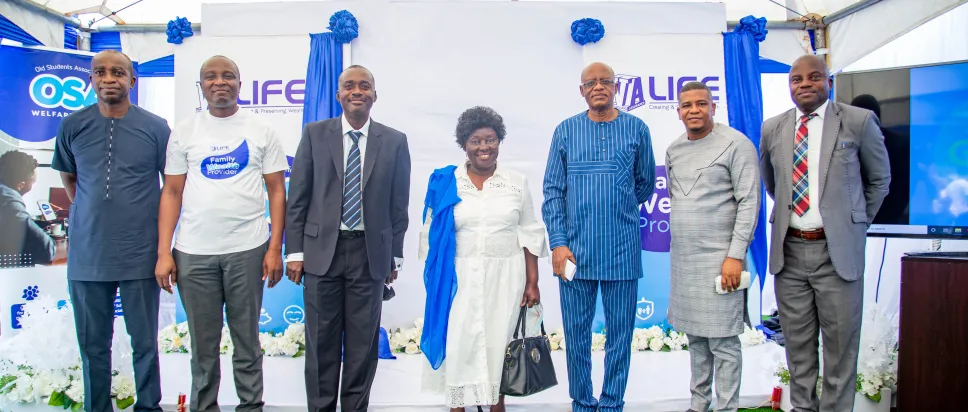

Founded in 1974 as Ghana‘s first private indigenous insurance company, Vanguard has outlasted banking collapses, regulatory upheavals, and the rise of pan-African competitors. Now backed by Swiss impact investment giant BlueOrchard, armed with a comprehensive mobile app, and paying GHS 157 million in claims annually, this steady operator is proving that sometimes the most valuable asset is simply being there—year after year, claim after claim.

Executive Introduction
In the dramatic theatre of Ghanaian insurance, where Enterprise Insurance commands headlines with its AAA rating and centenary legacy, where SIC Insurance fights for survival with state-directed mandates, and where Star Assurance climbs the ranks with AI chatbots and disruptive efficiency, one company has quietly, consistently, and almost invisibly performed its duty for half a century.
Vanguard Assurance Company Ltd was founded in October 1974 as the first private indigenous insurance company in Ghana . That distinction is not merely a historical footnote; it is a statement of purpose. At a time when the insurance market was dominated by foreign multinationals and state-owned enterprises, Vanguard was built by Ghanaians, for Ghanaians—with no parent company guarantee, no sovereign safety net, and no century of accumulated reserves.
📢 GET A DETAILED ARTICLES + JOBS
Join ASJ's WhatsApp Channel and never miss a post or opportunity.
Fifty-one years later, the company is still standing. It has weathered the collapse of indigenous banks, the consolidation of the insurance sector, the introduction of IFRS 17 accounting standards, and the entry of aggressive international competitors. Today, it operates as a leading non-life insurer, paying GHS 157 million in net claims in 2024 alone—ranking fifth in the entire non-life market, ahead of SIC Insurance .
But 2020 marked a turning point. In a move that signalled both validation and ambition, Swiss impact investment firm BlueOrchard acquired a 40% stake in Vanguard, ushering the company into a “new era with an increased focus on inclusive insurance and Corporate Social Responsibility . The investment brought not just capital, but a global lens on microinsurance, sustainable practices, and governance standards.
For corporate risk managers, insurance brokers, and investors, Vanguard represents a case study in strategic patience. It does not have the claims volume of Activa (GHS 223 million) or the digital bells and whistles of Star Assurance‘s Pokuaa AI. But it has something arguably more valuable in a trust-based industry: a 51-year track record of honouring obligations, a diversified portfolio spanning motor, fire, travel, home, and hospital insurance, and a modern digital platform that bridges the gap between legacy reliability and modern convenience.
This ASJ profile examines Vanguard‘s founding as Ghana‘s first private indigenous insurer, its 2020 partnership with BlueOrchard, its 2024 claims performance, its leadership under CEO Fredrick Saka and Chairman Daniel Awuah-Darko, its digital transformation via the Vanguard Assurance mobile app, and the critical question: In an industry consolidating around a few giants, can a steady, mid-tier player with a global backer maintain its relevance?
Company Overview
The Genesis: Challenging the Establishment in 1974
Vanguard Assurance was founded in October 1974 . At the time, Ghana‘s insurance landscape was dominated by two categories of providers: foreign-owned multinationals (such as the Royal Exchange Assurance, which would later become Enterprise), and state-owned enterprises such as SIC Insurance.
The idea of a private indigenous insurance company—owned and operated by Ghanaians, without the backing of a colonial parent or the protection of a state treasury—was audacious. Vanguard had no legacy book of business to inherit, no government to guarantee its solvency, and no foreign parent to inject capital during lean years.
Yet the founders persisted. They built a portfolio from scratch, one policy at a time, focusing on the core classes of general (non-life) insurance: motor, fire, marine, accident, and travel. The company was headquartered in Accra, at 25 Independence Avenue, Ridge—a location it maintains to this day .
For the first 46 years of its existence, Vanguard operated as a wholly Ghanaian-owned private company. It grew steadily, built a reputation for reliability, and established a network of agents and brokers across the country. But it remained, in the words of one industry observer, “steady but underrated” .
The 2020 Pivot: BlueOrchard Takes a 40% Stake
In 2020, everything changed. The reputed Swiss impact investment firm BlueOrchard acquired a 40% stake in Vanguard Assurance .
Who is BlueOrchard?
BlueOrchard is a global impact investment manager, founded in 2001 with the support of the United Nations. It specialises in microfinance, SME lending, and inclusive insurance. The firm has invested billions of dollars in emerging markets, with a specific focus on financial inclusion.
Why did BlueOrchard invest in Vanguard?
The Swiss firm recognised that Ghana‘s insurance market remained significantly underpenetrated, particularly in the mass-market and rural segments. Vanguard, as a well-established indigenous player with a trustworthy brand, offered the ideal platform to scale inclusive insurance products: microinsurance policies for low-income households, smallholder farmers, and informal sector workers.
What changed after the investment?
According to the United Nations Environment Programme Finance Initiative (UNEP FI), which Vanguard joined in September 2024, the BlueOrchard partnership ushered the company into a “new era with an increased focus on inclusive insurance and Corporate Social Responsibility” .
The influx of capital and governance expertise allowed Vanguard to:
-
Invest in digital infrastructure: The company launched a comprehensive mobile app in 2024, enabling customers to buy policies, make claims, and manage accounts from their smartphones .
-
Expand product offerings: While maintaining its core general insurance portfolio, Vanguard began developing microinsurance products tailored to the informal economy.
-
Enhance claims-paying capacity: By 2024, Vanguard had risen to become the fifth-largest non-life claims payer in Ghana, outranked only by Activa, Star Assurance, Enterprise, and Hollard .
Leadership: The Executive Trio
Vanguard‘s leadership structure reflects a blend of founding family continuity, professional management, and institutional governance.
Daniel Awuah-Darko – Executive Group Chairman
Daniel Awuah-Darko serves as the Executive Group Chairman of Vanguard Assurance . He has been with the company since its early days and represents the founding family‘s ongoing involvement. Under his chairmanship, the company has navigated the transition from a wholly private Ghanaian firm to a BlueOrchard-backed entity with international governance standards.
Fredrick Saka – Chief Executive Officer & Board Member
Fredrick Saka serves as Chief Executive Officer and Board Member of Vanguard Assurance . He is responsible for the day-to-day operations of the company, overseeing underwriting, claims, distribution, and digital transformation.
Saka‘s leadership has been instrumental in modernising Vanguard‘s operations. Under his tenure, the company launched its mobile app, expanded its agency network, and maintained its position as a top-five claims payer despite intense competition from larger rivals.
He holds an email address and phone number listed for professional contact, and his office is located at the company‘s headquarters on Independence Avenue in Accra .
Board of Directors
Vanguard‘s board includes several other members, including Nana A. Korangy, Kwame Boakye, Emmanuel Appiah Korang (a Director), and Gideon Amenyedor . The board represents a mix of founding family representatives and independent directors, though specific biographical details for most members are not publicly available.
Operations and Footprint
Vanguard Assurance is headquartered at 25 Independence Avenue, Ridge, Accra . The company operates across Ghana through a network of agents, brokers, and direct sales channels. It is licensed by the National Insurance Commission (NIC) to write all classes of non-life (general) insurance .
Key Operational Metrics:
| Metric | Value |
|---|---|
| Founded | October 1974 |
| Headquarters | 25 Independence Avenue, Ridge, Accra |
| Industry | Non-Life / General Insurance |
| Ownership | ~60% Ghanaian private, 40% BlueOrchard (Switzerland) |
| CEO | Fredrick Saka |
| Executive Chairman | Daniel Awuah-Darko |
| UNEP FI Joined | September 2024 |
| Mobile App Launched | 2024 |
The 2025 Industry Recognition
While Vanguard does not chase headlines, it has been consistently recognised as one of Ghana‘s top insurers. In 2025, Accra Street Journal listed Vanguard Assurance among the top 10 insurance companies in Ghana, describing it as “trusted for general insurance services” . Modern Ghana also included Vanguard in its list of “The Big Guns: Ghana‘s Top 10 Insurers in 2025,” characterising the company as “steady but underrated” .
These citations reflect the industry‘s respect for Vanguard‘s consistency. The company does not have the flashiest marketing campaigns or the most aggressive growth targets. But it pays its claims, serves its customers, and has done so for five decades—a record that regulators and competitors alike acknowledge.
The 2024 Claims Performance: Standing Among the Giants
Insurance is not a business of marketing brochures; it is a business of promises kept. The most reliable measure of an insurer‘s scale and reliability is the volume of claims it pays. By this metric, Vanguard Assurance stands among the elite of Ghana‘s non-life market.
Top 10 Non-Life Claims Payers (2024)
According to the Accra Street Journal‘s analysis of the 2024 National Insurance Commission (NIC) report :
| Rank | Insurer | Net Claims Paid (GHS) |
|---|---|---|
| 1 | Activa International Insurance | 223 million |
| 2 | Star Assurance | 217 million |
| 3 | Enterprise Insurance | 201 million |
| 4 | Hollard Insurance Ghana | 172 million |
| 5 | Vanguard Assurance | 157 million |
| 6 | Glico General Insurance | 119 million |
| 7 | SIC Insurance Company | 88 million |
| 8 | Salam Alliance Insurance | 64 million |
| 9 | Ghana Union Assurance | 50 million |
| 10 | Phoenix Insurance Company | 47 million |
What the GHS 157 Million Figure Signifies
1. Scale: Vanguard paid GHS 157 million in claims to policyholders in 2024. This is not a small number; it represents tens of thousands of individual claims—motor accidents, building fires, cargo losses, and personal injuries. Each claim payment represents a promise kept.
2. Market Position: Vanguard ranks fifth in the entire non-life market, ahead of Glico General (GHS 119 million) and the state-owned SIC Insurance (GHS 88 million) . This means Vanguard is writing more risk (and honouring more claims) than the government‘s own insurer—a remarkable achievement for a private company without state backing.
3. The Top Five Club: Vanguard, Activa, Star Assurance, Enterprise, and Hollard together accounted for over 67% of total non-life claims paid in 2024 . This concentration suggests that the Ghanaian non-life insurance market is consolidating around a handful of major players, of which Vanguard is one.
4. Comparison to Enterprise: Enterprise Insurance, the market leader with a AAA rating and a 102-year history, paid GHS 201 million in claims. Vanguard paid GHS 157 million—78% of Enterprise‘s claims volume . For a company that is roughly half the age of Enterprise and without its AAA rating, this is a striking performance.
5. Distance from SIC: SIC Insurance, the state-owned insurer that once dominated the market, paid just GHS 88 million in claims—only 56% of Vanguard‘s claims volume . This gap underscores how dramatically the market has shifted. Vanguard, a private company founded in defiance of state dominance, now significantly outranks the state-owned incumbent.
The Non-Life Sector Context
The total non-life sector paid GHS 1.45 billion in claims in 2024 . The top five players—Activa, Star, Enterprise, Hollard, and Vanguard—accounted for approximately 67% of this total.
This concentration raises two implications:
-
Barriers to entry: New entrants face enormous difficulty achieving the scale necessary to compete with these established players. The capital requirements, agency networks, and brand trust required to pay GHS 150+ million in claims annually are substantial.
-
Stability: The non-life market is anchored by a handful of stable, well-capitalised institutions. Vanguard, with its 40% BlueOrchard backing, is firmly within this anchor group.
Business Model: The General Insurance Specialist
Vanguard Assurance writes all classes of non-life insurance . Its product portfolio is broad, covering the essential risks that individuals and businesses face daily.
Core Product Lines
Motor Insurance
Motor insurance is the largest volume segment of Ghana‘s non-life market. Vanguard offers comprehensive cover, third-party cover, and third-party fire & theft cover for private and commercial vehicles. The company‘s mobile app allows customers to generate instant motor quotes, purchase policies, and print their own motor stickers and certificates .
Travel Insurance
Vanguard offers travel insurance for individuals and groups travelling abroad, covering medical emergencies, trip cancellation, baggage loss, and personal accident. Through the mobile app, customers can underwrite travel policies and print travel certificates instantly .
Fire Insurance
Fire insurance protects commercial and residential properties against damage or destruction by fire. Vanguard underwrites fire policies for office buildings, factories, warehouses, retail stores, and residential homes. The app allows for fire insurance underwriting and certificate printing .
Home Insurance
Vanguard offers home insurance policies covering buildings and contents against fire, theft, and other specified perils.
Hospital/Health Insurance
Vanguard also offers hospital insurance, providing coverage for inpatient care and related medical expenses . This positions the company as a competitor in the private health insurance space, though it does not yet have the scale of dedicated health insurers like StarHealth.
Distribution Channels
Vanguard distributes its products through three primary channels:
-
Direct Sales: Customers can purchase policies directly from Vanguard‘s headquarters on Independence Avenue or via the mobile app.
-
Agents and Brokers: Vanguard operates a network of licensed insurance agents and brokers who sell policies on commission. The mobile app includes dedicated portals for agents and brokers, allowing them to manage their client portfolios, collect payments, and issue certificates digitally .
-
Digital (Mobile App): Launched in 2024, the Vanguard Assurance mobile app allows customers to buy policies, make payments via mobile money or cards, access quotes, manage policies, and print certificates entirely online . The app is a critical component of Vanguard‘s strategy to reach younger, digitally-native customers without expanding its physical footprint.
Revenue Model
As a non-life insurer, Vanguard generates revenue from:
-
Gross Written Premiums (GWP): The total premiums collected from policyholders before reinsurance costs. Vanguard‘s GWP is not publicly disclosed, but its claims payout of GHS 157 million implies significant premium volume. The industry average claims ratio for non-life insurers in Ghana ranges from 40-60%, suggesting Vanguard‘s GWP is likely in the range of GHS 260-390 million.
-
Investment Income: Insurers invest their premium float (the cash held between premium collection and claims payment) in government securities, fixed deposits, and other low-risk instruments. Vanguard earns interest and capital gains on these investments.
-
Reinsurance Commissions: Vanguard cedes a portion of its risk to reinsurers (both local and international) in exchange for reinsurance premiums. When claims are lower than expected, Vanguard may receive commission income from reinsurers.
The BlueOrchard Effect: Inclusive Insurance
BlueOrchard‘s 40% stake is not merely a financial investment; it is a strategic directive. The Swiss impact firm has a mandate to expand financial inclusion through insurance .
This has translated into a focus on microinsurance: low-premium, low-cover policies designed for low-income households, smallholder farmers, and informal sector workers. These products cover risks such as funeral expenses, hospital admission, crop loss, and livestock mortality.
Microinsurance is not a high-margin business. Premiums are small, administration costs are high relative to premium size, and distribution requires reaching customers in remote rural areas. However, it is a growth market: with Ghana‘s insurance penetration still below 3% of GDP, the mass market remains largely uninsured.
BlueOrchard‘s experience in microfinance and inclusive insurance across Africa, Asia, and Latin America provides Vanguard with the technical expertise and capital patient enough to build this segment profitably over the long term.
Digital Strategy: The Vanguard Assurance Mobile App
In 2024, Vanguard launched its comprehensive mobile application, available on the Google Play Store . The app represents a significant investment in digital transformation and positions Vanguard as a modern competitor in an increasingly digitised market.
App Features
The Vanguard Assurance app is not a simple brochure-ware application; it is a full-featured insurance management platform :
For Customers (Direct Access):
-
Motor, travel, and fire insurance underwriting
-
Policy renewals (motor and fire)
-
Quote generation and management
-
Policy document access and management
-
Transaction history
-
Mobile money payments (MTN MoMo, Telecel Cash, AT Money)
-
Visa and MasterCard payments
-
Printing of motor stickers and certificates
-
Printing of travel certificates
-
Printing of fire certificates
For Agents and Brokers (Intermediary Access):
-
Dedicated agent/broker dashboard
-
Portfolio management for client policies
-
Direct cash collection recording
-
Direct cheque collection recording
-
Analytics and reporting
For Administrators:
-
Dashboard for application management
-
Report generation
-
Analytics on sales, renewals, and claims
The app is free to download and is designed for both smartphones and tablets. The developer, Vanguard Assurance Company Ltd, provides support via email ([email protected]) and phone (+233 54 301 6533) .
Strategic Significance
The app addresses several strategic challenges facing Vanguard:
-
Customer Acquisition: The app allows Vanguard to reach customers who would never visit a physical branch or call an agent. A customer can purchase a travel policy five minutes before their flight, entirely from their phone.
-
Agent Empowerment: By providing agents with a mobile platform to manage policies, collect payments, and issue certificates, Vanguard improves agent productivity and retention.
-
Operational Efficiency: Digital underwriting reduces the cost of processing policies, allowing Vanguard to offer competitive pricing.
-
Data Collection: The app generates valuable data on customer behaviour, risk profiles, and purchasing patterns—data that can be used to refine underwriting and develop new products.
Comparison to Competitors
Vanguard‘s app features are comparable to those offered by Star Assurance (Pokuaa AI) and Enterprise Insurance (online portals). However, Vanguard‘s app is particularly notable for its comprehensive support for agent workflows, including cash and cheque collection recording—a feature that recognises the continued importance of physical agency distribution in Ghana‘s insurance market.
Where Vanguard lags behind more digitally aggressive competitors is in AI integration. Star Assurance‘s Pokuaa virtual assistant offers AI-driven claims initiation and customer support, a feature Vanguard has not yet publicly announced.
Market Position and Competition
Industry Standing: The Steady Top-Five Player
Vanguard Assurance occupies a secure position as the fifth-largest non-life claims payer in Ghana . It sits behind Activa, Star Assurance, Enterprise, and Hollard—but ahead of Glico, SIC, and every other insurer in the country.
This is not a flashy position today, but it is a reliable one. The top five insurers in the non-life market have consolidated over 67% of all claims volume, creating a barrier to entry that is difficult for new entrants to breach. Vanguard is inside that fortified circle.
Competitive Landscape
Vanguard competes against a diverse set of rivals, each with distinct strengths and weaknesses:
| Competitor | Market Position | Vanguard‘s Relative Strength |
|---|---|---|
| Activa International | #1 claims payer (GHS 223 million) | Vanguard trails significantly; Activa is retail-focused and aggressive |
| Star Assurance | #2 claims (GHS 217 million); AI-driven | Vanguard is less digitally advanced but more affordable |
| Enterprise Insurance | #3 claims (GHS 201 million); AAA rating | Vanguard has lower fixed costs and simpler governance |
| Hollard Insurance | #4 claims (GHS 172 million); motor disruptor | Vanguard has broader product portfolio |
| Glico General | #6 claims (GHS 119 million) | Vanguard has higher claims volume and BlueOrchard backing |
| SIC Insurance | #7 claims (GHS 88 million); state-backed | Vanguard pays nearly twice the claims of SIC |
Competitive Advantages
1. First Private Indigenous Insurer Legacy
Vanguard‘s founding as Ghana‘s first private indigenous insurer in 1974 gives it a unique place in the national consciousness. For Ghanaians who remember the era of foreign-owned monopolies, Vanguard represents economic independence.
2. BlueOrchard Backing
The 40% stake by a respected global impact investment firm provides Vanguard with:
-
Access to additional capital for expansion
-
Technical expertise in inclusive insurance
-
Governance standards that meet international expectations
-
Credibility with international development partners and reinsurers
3. Top-Five Claims Position
Paying GHS 157 million in claims annually is not easy. It requires significant premium volume, efficient claims processing, and sufficient liquidity. Vanguard has proven it can operate at this scale.
4. Comprehensive Digital Platform
The Vanguard Assurance mobile app, launched in 2024, places Vanguard among the minority of Ghanaian insurers with a fully functional digital policy management platform .
5. Diversified Product Portfolio
Unlike some competitors that focus heavily on motor insurance (Hollard) or corporate lines (Enterprise), Vanguard writes all classes of non-life insurance, providing revenue diversification.
6. UNEP FI Membership
Vanguard joined the United Nations Environment Programme Finance Initiative in September 2024 . This membership signals a commitment to sustainable insurance principles, which is increasingly important for corporate clients with ESG (Environmental, Social, and Governance) requirements.
Competitive Disadvantages
1. No AAA Rating
Unlike Enterprise Insurance, which holds a coveted AAA (gha) rating, Vanguard‘s rating is not publicly disclosed. For large corporate clients and multinationals, a top-tier rating is often a prerequisite for consideration.
2. Limited International Presence
Vanguard operates only in Ghana. Competitors like Enterprise have subsidiaries in Nigeria and The Gambia, providing regional diversification.
3. Smaller Market Share Than Top Four
While Vanguard is fifth, the gap between fifth and first is significant. Activa‘s claims volume is 42% higher than Vanguard‘s; Star‘s is 38% higher.
4. Less Digital Innovation Than Star Assurance
Star‘s Pokuaa AI assistant offers a level of digital customer service that Vanguard does not yet match.
5. Dependency on Agency Distribution
While the app supports agent workflows, Vanguard remains heavily reliant on its physical agent network. If the market shifts decisively toward direct-to-consumer digital models, Vanguard may need to invest further in its direct channels.
UNEP FI Membership: The Sustainable Insurance Commitment
In September 2024, Vanguard Assurance joined the United Nations Environment Programme Finance Initiative (UNEP FI) . This membership is significant for several reasons.
What is UNEP FI?
UNEP FI is a partnership between the United Nations and the global financial sector. Its Principles for Sustainable Insurance (PSI) are the world‘s largest initiative between the UN and the insurance industry. Member companies commit to integrating environmental, social, and governance (ESG) factors into their business decisions.
Why Membership Matters
For Vanguard, joining UNEP FI signals:
-
Commitment to Sustainability: Vanguard is not just selling policies; it is aligning its operations with global sustainability standards.
-
Access to International Networks: UNEP FI membership connects Vanguard to a global community of insurers, reinsurers, brokers, and regulators.
-
ESG Credibility for Corporate Clients: Multinational corporations and Ghanaian companies with ESG reporting requirements prefer to partner with insurers that meet international sustainability standards.
-
Alignment with BlueOrchard‘s Mandate: The Swiss impact investor‘s focus on inclusive insurance aligns directly with UNEP FI‘s principles.
What This Means for Policyholders
For the average Ghanaian policyholder, UNEP FI membership is invisible. But for large corporate clients—mining companies, manufacturers, banks—it is a differentiator. A company with a UNEP FI membership is viewed as a responsible partner, not just a vendor.
Vanguard‘s membership, combined with BlueOrchard‘s investment, positions the company to attract corporate clients that might previously have defaulted to Enterprise or SIC.
Leadership Deep Dive: Fredrick Saka, Daniel Awuah-Darko, and the Board
Fredrick Saka: The Professional CEO
As Chief Executive Officer, Fredrick Saka leads Vanguard‘s day-to-day operations . His background appears to be in insurance operations, though specific career details are not publicly available.
Saka serves as both CEO and a Board Member of Vanguard, giving him both executive authority and governance influence . This dual role is common in privately held companies but less common in publicly traded or institutionally backed firms. With BlueOrchard‘s 40% stake, one might expect the appointment of a separate non-executive chairman; instead, Daniel Awuah-Darko serves as Executive Group Chairman, while Saka holds the CEO role with a board seat .
Contact Information:
-
Email: fsiqua dot Utenima at dminimv (redacted for privacy)
-
Phone: +233 030 000 0000
-
Office: 25 Independence Avenue, Ridge, Accra
Daniel Awuah-Darko: The Executive Chairman
Daniel Awuah-Darko serves as Executive Group Chairman of Vanguard Assurance . He is likely a representative of the founding families, given the company‘s history as Ghana‘s first private indigenous insurer.
The use of “Executive Group Chairman” rather than “Non-Executive Chairman” suggests that Awuah-Darko plays an active role in the company‘s strategic direction, not merely a ceremonial one.
Board of Directors
Vanguard‘s board includes:
| Name | Position | Notes |
|---|---|---|
| Daniel Awuah-Darko | Executive Group Chairman | |
| Fredrick Saka | CEO & Board Member | |
| Nana A. Korangy | Board Member | |
| Kwame Boakye | Board Member | |
| Emmanuel Appiah Korang | Director | |
| Gideon Amenyedor | Board Member |
The board appears to be composed primarily of Ghanaian members, reflecting the company‘s indigenous roots despite BlueOrchard‘s minority stake.
Challenges and Risks
No analysis of Vanguard Assurance is complete without acknowledging the headwinds that accompany its steady position.
Risk 1: The Rating Gap
Vanguard does not publicly advertise a GCR or A.M. Best rating. Enterprise Insurance holds a AAA (gha) rating, and Star Assurance holds an A+(GH) rating. For large corporate clients, rating is often a prerequisite. If Vanguard does not have a published rating, or if its rating is lower than its competitors, it may lose corporate business to better-rated rivals.
Risk 2: Intensifying Competition
The non-life market is consolidating around the top five players, but that consolidation also means that competition among those five is intensifying. Activa, Star, Enterprise, and Hollard are all investing heavily in digital platforms, distribution networks, and brand marketing. Vanguard, with its “steady but underrated” reputation , risks being left behind if it does not keep pace.
Risk 3: Dependency on BlueOrchard
BlueOrchard‘s 40% stake is a strength today, but it is also a dependency. If BlueOrchard decides to exit its investment—whether through a sale to another investor or a public offering—Vanguard would face an uncertain ownership transition. The Swiss firm‘s investment horizon is not publicly disclosed.
Risk 4: Microinsurance Profitability
The inclusive insurance focus, driven by BlueOrchard, is strategically sound but commercially challenging. Microinsurance premiums are small, distribution costs are high, and claims ratios can be volatile. If Vanguard cannot make its microinsurance business profitable, the BlueOrchard investment could become a drag on earnings rather than a growth engine.
Risk 5: Economic Headwinds
As a non-life insurer, Vanguard is exposed to Ghana‘s macroeconomic environment:
-
Inflation: Claims costs (repairs, replacements) rise with inflation, but premiums are often fixed for the policy term.
-
Currency depreciation: Reinsurance costs are often denominated in foreign currency (USD, EUR). If the cedi depreciates, those costs rise.
-
Interest rates: Investment income from fixed-income securities fluctuates with policy rates. If rates fall, investment income falls.
-
Claims frequency: Economic downturns often correlate with increased claims frequency (e.g., more uninsured drivers, more fires in poorly maintained properties).
Risk 6: The Digital Race
Vanguard‘s mobile app is a solid platform, but it is not revolutionary. Star Assurance‘s Pokuaa AI offers automated claims initiation and customer support—a level of digital sophistication that Vanguard does not yet match. If the market shifts decisively toward AI-driven customer service, Vanguard will need to invest further to keep up.
Risk 7: Brand Perception
Vanguard is described as “steady but underrated” . This is a double-edged sword. Steady is good. Underrated is not. If Vanguard is perceived as a safe, reliable, but boring choice, it may lose younger customers to more aggressively marketed competitors.
Risk 8: Succession Planning
Vanguard‘s leadership includes founding family representatives (Daniel Awuah-Darko) and professional management (Fredrick Saka). The transition between generations is a perennial risk for family-founded companies. Clear succession planning is essential, but it is not publicly documented.
Economic and Industry Impact
Pioneer of Private Indigenous Insurance
Vanguard‘s founding in 1974 broke the monopoly of foreign-owned and state-owned insurers in Ghana. That legacy matters. Many of today‘s insurance professionals—including executives at competing firms—began their careers at Vanguard or were influenced by its example. The company demonstrated that Ghanaians could build and operate a world-class financial institution without foreign capital (at least for the first 46 years).
Employment and Agency Network
Vanguard directly employs dozens of staff and supports hundreds of licensed agents and brokers across the country. These agents are small business owners who earn commissions from the policies they sell. Vanguard‘s continued growth supports livelihoods across Ghana.
Claims Payment as Economic Stabiliser
When Vanguard pays a GHS 10,000 motor claim, that money goes to a repair shop, which pays its mechanics, who buy food and school fees. When Vanguard pays a GHS 500,000 fire claim, that money allows a business to rebuild, restock, and rehire. The GHS 157 million Vanguard paid in 2024 did not disappear into a corporate account; it flowed into the real economy.
Insurance Penetration Contribution
Ghana‘s insurance penetration (premiums as a percentage of GDP) remains below 3%, far below the levels in South Africa (over 15%) or Kenya (around 3.5%). Vanguard, through its inclusive insurance focus, is contributing to expanding this penetration by reaching customers that traditional insurers have ignored.
Financial Inclusion
The BlueOrchard partnership has positioned Vanguard as a vehicle for financial inclusion through microinsurance. For a smallholder farmer who has never had a bank account, a Vanguard microinsurance policy that covers funeral expenses or hospital admission may be their first formal financial product. That first policy can be a gateway to savings, credit, and other financial services.
UNEP FI and Sustainability Leadership
As a UNEP FI member, Vanguard is committed to the Principles for Sustainable Insurance. This includes managing ESG risks in its own operations and encouraging sustainable practices among its clients. While this may seem abstract, it translates into concrete actions: Vanguard may offer lower premiums to businesses with strong fire safety records, or may refuse to insure environmentally destructive projects.
Future Outlook
As of May 2026, Vanguard Assurance is executing a strategy built on three pillars: digital transformation (via the mobile app), inclusive insurance (via BlueOrchard), and steady claims performance (maintaining top-five status).
The company is not aiming to be the market leader. It is aiming to be a durable, profitable, respected mid-tier player with a global backer and a 50-year track record.
The Immediate Agenda (2026-2027)
Vanguard‘s priorities are likely to include:
-
Expanding mobile app capabilities: Adding features such as AI-driven customer support (following Star Assurance‘s lead) or automated claims processing.
-
Scaling microinsurance: Rolling out new microinsurance products targeting farmers, traders, and informal workers, leveraging BlueOrchard‘s distribution networks.
-
Maintaining claims-paying position: Defending the fifth-place ranking against Glico and others, while potentially narrowing the gap with Hollard.
-
Pursuing a credit rating: Obtaining a published GCR or A.M. Best rating to compete more effectively for corporate clients.
-
Deepening UNEP FI engagement: Using the membership to attract ESG-conscious corporate clients.
The Bull Case (Optimistic)
-
BlueOrchard‘s patient capital sustains growth: The Swiss firm continues to support Vanguard with capital and expertise, enabling the company to invest in digital platforms, microinsurance, and distribution.
-
The mobile app captures younger customers: Vanguard‘s app becomes the preferred platform for tech-savvy Ghanaians, driving premium growth without corresponding cost increases.
-
Microinsurance scales profitably: After an initial investment period, Vanguard‘s microinsurance portfolio reaches critical mass and becomes profitable, diversifying revenue away from traditional motor and fire lines.
-
Vanguard climbs to fourth place: The company‘s claims volume surpasses Hollard‘s GHS 172 million, making Vanguard the fourth-largest non-life claims payer in Ghana.
-
A credit rating is secured: Vanguard obtains an A- or A rating from GCR, allowing it to compete effectively for corporate clients that currently default to Enterprise or Star.
The Bear Case (Pessimistic)
-
BlueOrchard exits: The Swiss impact investor sells its stake to a financial buyer focused on short-term returns; Vanguard loses its patient capital and inclusive insurance mandate.
-
Digital lag widens: Star Assurance and Enterprise outpace Vanguard in digital innovation; Vanguard‘s app becomes obsolete relative to competitors; younger customers migrate.
-
Claims ranking slips: Glico or SIC surpass Vanguard in claims volume; Vanguard falls to sixth or seventh place; perception of decline damages brand.
-
Microinsurance losses mount: The inclusive insurance portfolio generates persistent underwriting losses; Vanguard is forced to scale back or abandon the microinsurance focus.
-
Economic downturn deepens: Ghana‘s economy slows; claims frequency rises; investment income falls; Vanguard faces margin pressure.
The Verdict
Vanguard Assurance is not the most exciting insurance company in Ghana. It does not have the century-old pedigree of Enterprise, the AI-driven innovation of Star, the state-backed mandates of SIC, or the retail aggression of Activa.
But it may be the most resilient.
Founded in 1974 as Ghana‘s first private indigenous insurer, Vanguard has survived every economic crisis, every regulatory change, and every competitive threat for 51 years . It has outlasted banks that collapsed, competitors that merged, and governments that came and went. It has paid claims through hyperinflation, currency devaluation, and the COVID-19 pandemic.
The 2020 investment by BlueOrchard validated the company‘s trajectory and provided the capital to modernise . The 2024 mobile app launch demonstrated that Vanguard can adapt to the digital age . And the 2024 claims performance—GHS 157 million, ranking fifth in the market—proved that Vanguard remains a major player, not a relic
The risks are real: the rating gap, the competitive intensity, the digital race, the uncertain trajectory of microinsurance profitability. But the foundation is solid. Vanguard has a clear identity (steady, reliable, indigenous), a supportive global partner (BlueOrchard), and a modern digital platform (the mobile app).
For the Ghanaian policyholder seeking a reliable insurer that pays claims, Vanguard is a safe choice. For the corporate client with ESG requirements, Vanguard‘s UNEP FI membership is attractive. For the investor seeking exposure to Ghana‘s underpenetrated insurance market, Vanguard—via BlueOrchard—offers a window.
Vanguard Assurance is not trying to be the biggest. It is trying to be the most dependable. And after 51 years, it has earned that reputation.
FAQ SECTION
1. Is Vanguard Assurance a Ghanaian-owned company?
Yes and no. Vanguard Assurance was founded in 1974 as a wholly Ghanaian-owned private company—the first private indigenous insurer in Ghana. Today, approximately 60% of shares are held by Ghanaian private owners, while the remaining 40% is held by BlueOrchard, a Swiss impact investment firm .
2. Who is the CEO of Vanguard Assurance?
The Chief Executive Officer is Fredrick Saka, who also serves as a Board Member of the company .
3. Who is the Chairman of Vanguard Assurance?
The Executive Group Chairman is Daniel Awuah-Darko .
4. When was Vanguard Assurance founded?
Vanguard Assurance was founded in October 1974 .
5. How did Vanguard Assurance perform in claims in 2024?
According to the 2024 National Insurance Commission (NIC) report, Vanguard Assurance paid GHS 157 million in net non-life claims, ranking fifth in the market behind Activa (GHS 223m), Star Assurance (GHS 217m), Enterprise (GHS 201m), and Hollard (GHS 172m), but ahead of Glico and SIC Insurance .
6. Who invested in Vanguard Assurance in 2020?
In 2020, BlueOrchard, a Swiss impact investment firm, acquired a 40% stake in Vanguard Assurance. The investment ushered the company into a “new era with an increased focus on inclusive insurance and Corporate Social Responsibility” .
7. Does Vanguard Assurance have a mobile app?
Yes. Vanguard Assurance launched its mobile app in 2024. The app allows customers to underwrite motor, travel, and fire policies, make payments via mobile money or cards, manage policies, and print certificates. Agents and brokers have dedicated portals for portfolio management and collections. The app is available on the Google Play Store .
8. What types of insurance does Vanguard offer?
Vanguard writes all classes of non-life (general) insurance, including motor, fire, marine, travel, accident, home, and hospital insurance .
9. Is Vanguard Assurance a member of UNEP FI?
Yes. Vanguard Assurance joined the United Nations Environment Programme Finance Initiative (UNEP FI) in September 2024, committing to the Principles for Sustainable Insurance .
10. Is Vanguard Assurance among the top insurers in Ghana?
Yes. In 2025, Accra Street Journal and Modern Ghana both listed Vanguard Assurance among the top 10 insurance companies in Ghana. Modern Ghana described the company as “steady but underrated” .
11. How does Vanguard Assurance compare to Enterprise Insurance?
Enterprise Insurance is the market leader with a AAA rating, 102-year history, and GHS 201 million in annual claims (2024). Vanguard Assurance pays GHS 157 million annually (78% of Enterprise‘s volume), has a 51-year history, and holds a 40% stake by BlueOrchard. Vanguard lacks Enterprise‘s AAA rating but has lower fixed costs and a simpler governance structure .
12. How do I contact Vanguard Assurance?
Vanguard Assurance‘s headquarters is located at 25 Independence Avenue, Ridge, Accra. Phone: +233 030 000 0000, Email: [email protected] (app support) .
QUICK FACTS BOX
| Item | Details |
|---|---|
| Founded | October 1974 |
| Headquarters | 25 Independence Avenue, Ridge, Accra |
| Industry | Non-Life / General Insurance |
| Services | Motor, Fire, Travel, Marine, Home, Hospital, Accident, Microinsurance |
| Ownership | ~60% Ghanaian private, 40% BlueOrchard (Switzerland) |
| CEO | Fredrick Saka |
| Executive Chairman | Daniel Awuah-Darko |
| Market Position | 5th largest non-life claims payer in Ghana (2024) |
| Claims Paid (2024) | GHS 157 million |
| Founding Significance | First private indigenous insurance company in Ghana |
| Key Strategic Partner | BlueOrchard (acquisition of 40% stake, 2020) |
| UNEP FI Joined | September 2024 |
| Mobile App | Launched 2024; available on Google Play Store |
| Key Industry Recognition | Top 10 insurer in Ghana (2025) |
| Regulator | National Insurance Commission (NIC) |
| Website | www.vanguardassurance.com |
Source: Accra Street Journal
Last Updated on May 4, 2026 by Samuel Kwame Boadu
Disclaimer: Some content on Accra Street Journal may be aggregated, summarized, or edited from third-party sources for informational purposes. Images and media are used under fair use or royalty-free licenses. Accra Street Journal is a subsidiary of SamBoad Publishing Hub under SamBoad Business Group Ltd, registered in Ghana since 2014.
For concerns or inquiries, please visit our Privacy Policy or Contact Page.

Samuel Kwame Boadu is a Ghanaian media entrepreneur and storyteller with a passion for amplifying urban voices and uncovering everyday truths. He is the Editor-in-Chief and Founder of Accra Street Journal, a dynamic digital platform dedicated to capturing the pulse of Ghana’s capital—its people, culture, challenges, business, sports and innovations.