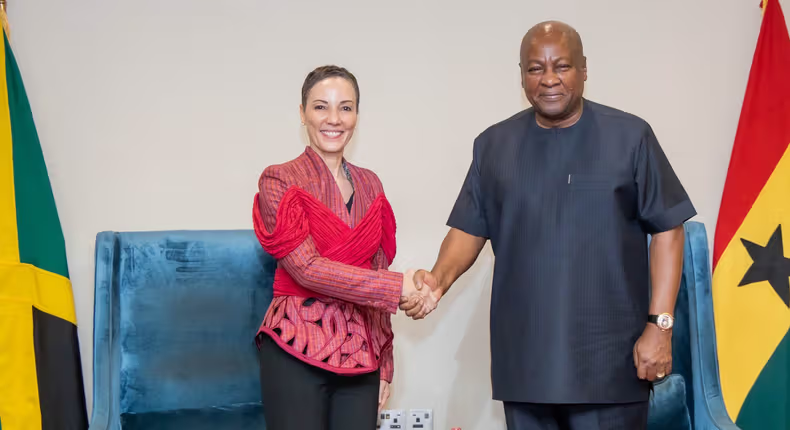
As rich and middle-income countries race to fill healthcare staffing gaps, Ghana is preparing to send 400 nurses to Jamaica despite having an estimated over 100,000 trained health professionals sitting unemployed at home. The agreement, signed during high-level talks between Ghana and Jamaica in Accra, highlights a growing global paradox: African countries continue to train thousands of healthcare workers they cannot absorb, while overseas health systems increasingly rely on African talent to plug labour shortages.
For Jamaica, the deal helps address critical staffing gaps in hospitals and healthcare facilities. For Ghana, it creates employment opportunities for workers who have struggled to secure public-sector jobs amid fiscal pressures and hiring constraints. The first group of nurses is expected to begin work in Jamaica in the coming weeks. The arrangement will include professional licensing, credential verification, deployment schedules, and welfare support for participating nurses. Foreign Affairs Minister Samuel Okudzeto Ablakwa said the agreement would allow hundreds of Ghanaian nurses to support Jamaica’s healthcare system while providing employment opportunities for Ghanaian professionals.

Yet the deal arrives as Ghana’s Health Minister, Kwabena Mintah Akandoh, revealed that over 100,000 trained health professionals, including nurses, midwives, and allied health workers, remained unemployed at the end of 2025—a figure the government has warned could climb significantly if public sector recruitment fails to keep pace with graduates entering the workforce.
📢 GET A DETAILED ARTICLES + JOBS
Join ASJ's WhatsApp Channel and never miss a post or opportunity.

Key Developments: The Ghana-Jamaica Labour Mobility Agreement, Jamaica’s Recruitment Push, and the Domestic Jobs Crisis
The agreement was reached during the third session of the Ghana-Jamaica Permanent Joint Commission for Cooperation, the first meeting of the bilateral mechanism in 21 years. The two countries also signed agreements covering defence cooperation and tourism. Discussions are advancing on another labour mobility programme that could see Ghanaian teachers deployed to Jamaica from August 2026 if ongoing negotiations are completed.
Jamaica established an International Recruitment Unit in May 2026 to coordinate overseas hiring and bilateral recruitment partnerships as it seeks to fill shortages in nursing, midwifery, intensive care, and other specialised medical fields. Jamaican authorities have already explored recruitment partnerships with countries including Ghana, Nigeria, and India. The Caribbean nation faces workforce pressures common to health systems across the world: ageing populations, workforce burnout, and post-pandemic staffing crises.

For Ghana, the agreement offers immediate relief for hundreds of unemployed nurses. The 400 positions, while modest relative to the 100,000 unemployed health professionals, provide a lifeline for individuals who have spent years training without securing public-sector employment. The government’s fiscal constraints have limited its ability to absorb new graduates into the public health system. The Jamaica deal is an alternative.
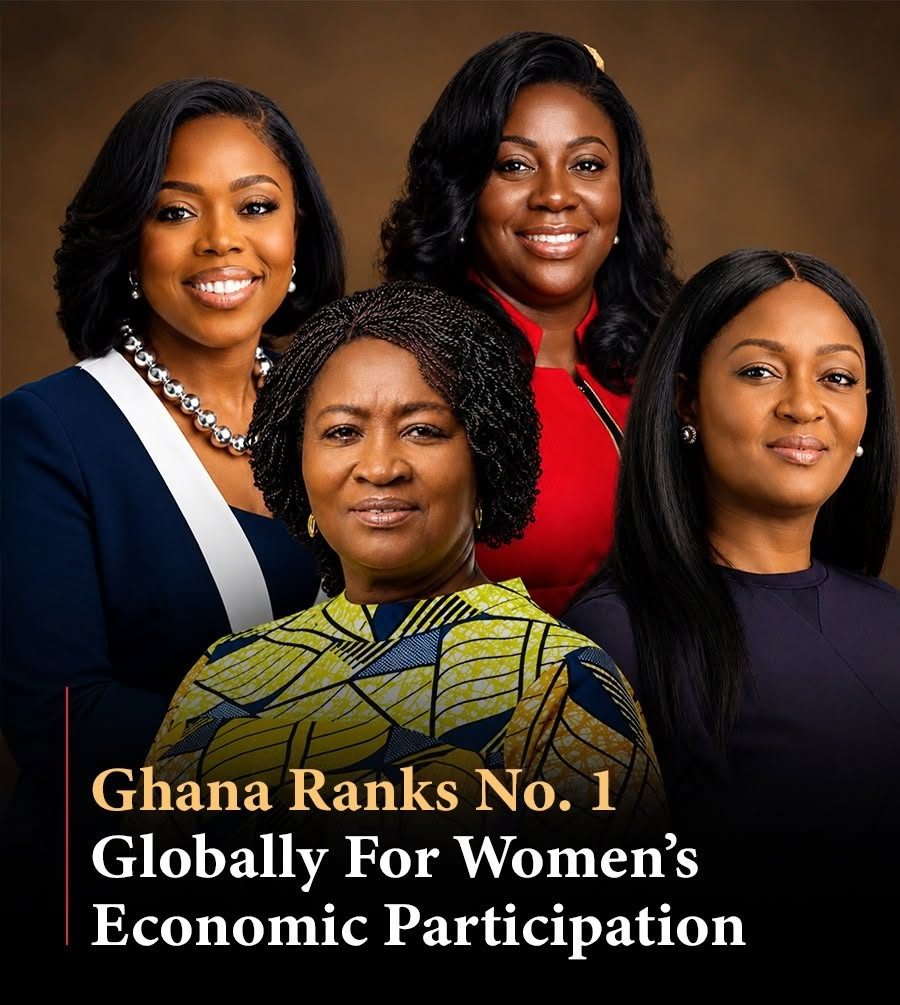
The timing is significant. The agreement was announced during Menstrual Hygiene Month, a period focused on women’s health. Nursing is a female-dominated profession; the nurses being deployed are predominantly women. The agreement thus intersects with broader conversations about women’s economic empowerment and the utilization of female talent.
The World Health Organization has repeatedly warned of a global shortage of healthcare workers, particularly in nursing and specialised care. Demand surged after the COVID-19 pandemic as ageing populations, workforce burnout, and rising healthcare needs intensified staffing pressures across many countries. Healthcare systems in North America, Europe, the Gulf, and parts of the Caribbean have increasingly looked overseas for talent.
The WHO maintains a Health Workforce Support and Safeguards List, which identifies countries facing health workforce vulnerabilities. Ghana remains on this list. The designation is intended to discourage active recruitment from these countries, but the voluntary nature of the list limits its effectiveness. Jamaica is not bound by the list.
Analysis & Implications: The Brain Drain Paradox, Domestic Absorption Failure, and Managed Migration
The central paradox is inescapable: Ghana produces more health professionals than it can employ, yet its healthcare system remains understaffed. The unemployment of 100,000 trained professionals coexists with shortages in rural and underserved areas. The explanation is twofold: fiscal constraints (the government cannot afford to hire all graduates) and geographic mismatches (graduates prefer urban postings, while rural areas lack infrastructure and incentives).
The brain drain debate typically focuses on the loss of talent from poor countries to rich ones. Jamaica is not a rich country; it is a middle-income country with its own economic challenges. The Ghana-Jamaica agreement is South-South migration, not the traditional brain drain to Europe or North America. This nuance is important. The ethical concerns about recruitment from vulnerable countries are less acute when the destination country faces similar challenges.
Supporters of managed labour mobility argue that preventing migration is unrealistic when domestic employment opportunities remain limited. For many healthcare workers, the bigger challenge is not leaving Ghana but finding work within it. The Jamaica agreement provides a legal, regulated pathway that includes professional licensing, credential verification, and welfare support—protections that informal migration lacks.
Critics argue that the agreement normalises the commodification of Ghana’s healthcare workforce. Instead of pressuring the government to hire more nurses, the agreement exports the problem. The 100,000 unemployed health professionals represent a massive public investment in training; allowing them to leave without a commensurate return (e.g., mandatory service, tuition reimbursement, or remittance taxes) represents a loss of human capital.
The fiscal reality, however, is that the government cannot afford to hire 100,000 new health workers. The public sector wage bill is already a significant drain on the budget. The government’s position is that some employment (in Jamaica) is better than no employment (at home). The remittances sent home by the 400 nurses will add to Ghana’s foreign exchange earnings.

The agreement’s scope is small. Four hundred nurses represent 0.4% of the unemployed health professional pool. Symbolically, however, it sets a precedent. If other countries—particularly high-income countries—see Ghana as a source of healthcare talent, the outflow could accelerate. The government must balance the short-term benefit of employment against the long-term risk of a depleted health workforce.
The Accra Street Journal notes that the agreement does not address the root cause of the unemployment crisis: the mismatch between training output and public sector absorption capacity. The nursing training colleges continue to produce graduates at a rate that exceeds the government’s hiring budget. Without a national health workforce strategy that aligns training with absorption, the pool of unemployed professionals will continue to grow.
What This Means for Ghana’s Health Sector, Unemployed Nurses, and National Policy
For Ghana’s health sector, the agreement is a pressure release valve. The 100,000 unemployed professionals are a political liability. The Jamaica deal removes 400 individuals from the unemployment queue, reducing pressure on the government. However, the reduction is negligible; 400 out of 100,000 is 0.4%. The government must address the remaining 99.6%.
For unemployed nurses, the agreement is a lifeline. For the 400 selected, the opportunity to work abroad—with decent pay, professional development, and a structured support system—is transformative. For those not selected, the agreement is a reminder that they must look elsewhere. The competition for overseas positions will intensify.
For national policy, the agreement raises strategic questions. Should Ghana actively promote labour mobility as a development strategy? Remittances from overseas workers exceed foreign direct investment in many African countries. A managed labour mobility programme could generate foreign exchange, reduce unemployment, and build diaspora networks. The counterargument is that the health sector cannot afford to lose its best talent.
The agreement also has implications for the WHO’s Health Workforce Support and Safeguards List. Ghana’s presence on the list is based on its health workforce vulnerability. The country’s willingness to enter bilateral recruitment agreements may be interpreted as a signal that it does not consider the list binding. Other countries may follow suit, undermining the list’s effectiveness.
The government’s position is that the agreement is a win-win: Jamaica gets nurses; Ghana gets employment for its citizens. The missing element is a strategy to retain healthcare workers. Better pay, improved working conditions, and career progression would reduce the incentive to emigrate. The government has not articulated a retention strategy.
The Accra Street Journal’s advice to the government: invest in retention. The Jamaica agreement is a pragmatic response to unemployment, but it is not a solution. The 100,000 unemployed professionals are a symptom of a mismatched training-employment system. Until that system is reformed, the outflow will continue.
Wider Context: Africa’s Healthcare Workforce Crisis and Global Recruitment
The Ghana-Jamaica agreement is a microcosm of a global trend. The WHO estimates a global shortage of 10 million healthcare workers by 2030, with the most severe shortages in low- and middle-income countries. High-income countries are actively recruiting from low-income countries to fill gaps. The Philippines, India, and Nigeria are major sources of nursing talent.
Africa’s healthcare workforce paradox is particularly acute. The continent has 24% of the global disease burden but only 3% of the global health workforce. Many African countries train more nurses than they can absorb, yet their health systems are understaffed. The mismatch is a function of fiscal constraints, not of supply.
The ethical debate over healthcare worker migration is unresolved. The WHO’s Global Code of Practice on the International Recruitment of Health Personnel encourages voluntary adherence to ethical recruitment principles. However, the code is non-binding, and recruitment continues. Some countries have introduced bilateral agreements that include compensation for training costs. The Ghana-Jamaica agreement does not appear to include such provisions.
The future of healthcare worker migration will be shaped by demographics. High-income countries are ageing; their demand for healthcare workers will increase. Low-income countries have young populations; their supply of healthcare workers will increase. Migration will continue. The policy challenge is to manage it in a way that benefits both sending and receiving countries.
The Accra Street Journal’s conclusion: the Ghana-Jamaica agreement is a pragmatic response to a structural problem. The 100,000 unemployed health professionals are evidence of a training system that produces more graduates than the economy can absorb. The agreement provides a pathway for some. But it does not solve the underlying mismatch. The government must reform the training-employment nexus, align output with absorption, and invest in retention. Otherwise, the 400 nurses will be followed by thousands more—and Ghana will continue to train health workers for the world.
Last Updated on June 3, 2026 by Samuel Kwame Boadu
Disclaimer: Some content on Accra Street Journal may be aggregated, summarized, or edited from third-party sources for informational purposes. Images and media are used under fair use or royalty-free licenses. Accra Street Journal is a subsidiary of SamBoad Publishing Hub under SamBoad Business Group Ltd, registered in Ghana since 2014.
For concerns or inquiries, please visit our Privacy Policy or Contact Page.

Samuel Kwame Boadu is a Ghanaian media entrepreneur and storyteller with a passion for amplifying urban voices and uncovering everyday truths. He is the Editor-in-Chief and Founder of Accra Street Journal, a dynamic digital platform dedicated to capturing the pulse of Ghana’s capital—its people, culture, challenges, business, sports and innovations.