The 38-month Extended Credit Facility includes an immediate $35.7 million disbursement to help Kigali manage rising energy and agricultural costs while protecting social spending.
The International Monetary Fund has approved a $250 million financing package for Rwanda, providing a critical buffer for one of Africa’s fastest-growing economies as the Middle East conflict threatens to slow growth and fuel inflation across the region.

The IMF’s Executive Board approved the 38-month Extended Credit Facility on Monday and authorised an immediate disbursement of $35.7 million, according to Reuters. Additional funds will be released following periodic reviews over the life of the programme.
📢 GET A DETAILED ARTICLES + JOBS
Join ASJ's WhatsApp Channel and never miss a post or opportunity.

The approval follows a staff-level agreement reached in April, when Rwanda’s Ministry of Finance and Economic Planning said the facility was designed to support the country’s economic reform agenda while helping it navigate an increasingly uncertain global environment. Monday’s board decision converts that preliminary agreement into an active financing programme.
The Middle East conflict has emerged as a major concern for Rwanda’s economic outlook. Rising global oil prices have increased transport and energy costs, while higher fertiliser prices threaten agricultural productivity and food affordability in a country where farming remains a key economic sector. The IMF expects Rwanda’s growth to moderate to below 6.8 percent in 2026 as the effects of the conflict ripple through global markets.

Despite these headwinds, Rwanda’s economy has shown remarkable resilience. The IMF noted that economic growth reached 9.4 percent in 2025, significantly outperforming expectations. The strong performance reflects continued investments in infrastructure, tourism, services, manufacturing, and digital transformation, as well as efforts to improve the business environment and attract foreign investment.
A report by Accra Street Journal highlighted that the new IMF facility is expected to help Rwanda manage external pressures by providing concessional financing, strengthening foreign exchange reserves, and creating fiscal space to protect social and development spending. The support is also intended to help the government maintain critical investments while avoiding excessive borrowing costs during a period of tighter global financial conditions.
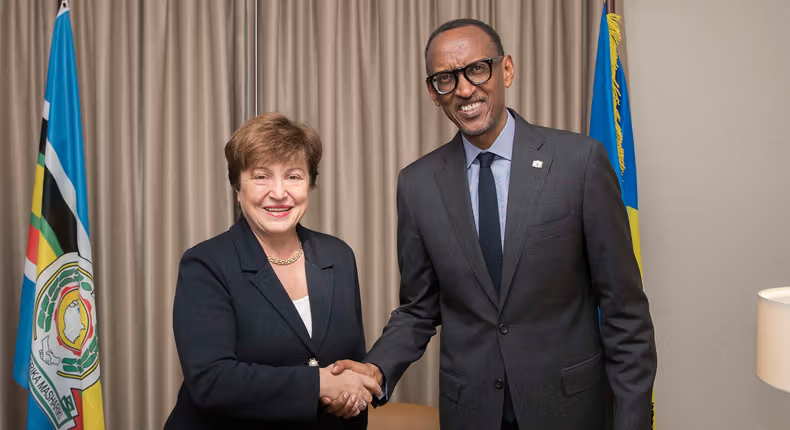
IMF Deputy Managing Director Bo Li said risks remain tilted to the downside and encouraged authorities to continue fiscal consolidation, broaden revenue collection, and strengthen oversight of public spending. For Kigali, the package represents more than emergency financing. It is a vote of confidence in the country’s economic management and provides additional resources to help shield households, businesses, and public services from global shocks while sustaining long-term development goals.
Source: Accra Street Journal
Last Updated on June 9, 2026 by Samuel Kwame Boadu
Disclaimer: Some content on Accra Street Journal may be aggregated, summarized, or edited from third-party sources for informational purposes. Images and media are used under fair use or royalty-free licenses. Accra Street Journal is a subsidiary of SamBoad Publishing Hub under SamBoad Business Group Ltd, registered in Ghana since 2014.
For concerns or inquiries, please visit our Privacy Policy or Contact Page.

Samuel Kwame Boadu is a Ghanaian media entrepreneur and storyteller with a passion for amplifying urban voices and uncovering everyday truths. He is the Editor-in-Chief and Founder of Accra Street Journal, a dynamic digital platform dedicated to capturing the pulse of Ghana’s capital—its people, culture, challenges, business, sports and innovations.