










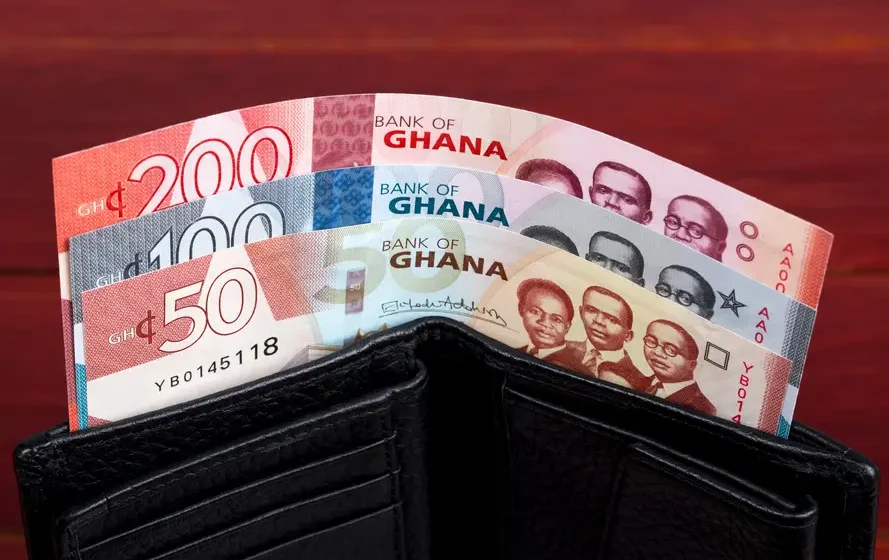
In a small but telling moment at the 2026 IMF/World Bank Spring Meetings, the Governor of the Bank of Ghana, Dr Johnson Asiama, made an admission that would have been unthinkable just a few years earlier. Part of Ghana’s diaspora remittances, he confirmed, is now flowing through cryptocurrency channels—bypassing the banking system entirely . “Crypto is one area… It’s around us. It’s used around us. If you don’t engage in it, you don’t know it’s going on,” he told officials in Washington DC .
The shift became visible when official remittance inflows suddenly dropped, coinciding with a period of local currency appreciation . The diaspora was sending the same amount of money, but through different channels. When the BoG investigated, they discovered that parallel market dealers were using stablecoins and other virtual assets to terminate remittance inflows .

This is the new reality of digital remittances in Ghana—a market in transition, where traditional banking coexists with fintech disruption, central bank digital currency ambitions, and the quiet, unregulated flow of crypto.
📢 GET A DETAILED ARTICLES + JOBS
Join ASJ's WhatsApp Channel and never miss a post or opportunity.

Part 1: The Scale of the Market — $4.6 Billion and Growing
Ghana is not a marginal player in the global remittance landscape. The country receives significant inflows from its diaspora, particularly from the United States, the United Kingdom, Germany, and other European countries . The digital remittance market is projected to grow at compound annual rates of 4.34% through 2029, accelerating to 11.45% by the end of the forecast period . While Egypt and South Africa hold dominant positions in Africa, Ghana is positioned as a high-growth market, with a projected growth rate of 5.70% by 2027 .
Several factors are driving this growth:

| Factor | Impact |
|---|---|
| Increasing number of Ghanaians working abroad | More senders, more transfers |
| Growth in digital payment infrastructure | Mobile money penetration enables last-mile delivery |
| Government initiatives | Policies supporting formal channels and investment linkages |
| Fintech innovation | Lower costs, faster settlement, broader access |
The institutional infrastructure is also maturing. In May 2026, Fincra secured an Enhanced Payment Service Provider (EPSP) license from the Bank of Ghana, allowing it to aggregate domestic payments, process local transactions, and terminate inbound remittances directly into Ghanaian bank accounts and mobile money wallets . For global remittance operators, this means a single licensed, high-speed rail to send money into Ghana without relying on patchwork infrastructure .
Part 2: The Traditional Channels — Still Dominant, but Fading
For decades, remittances to Ghana flowed through two primary channels: banks and money transfer operators (MTOs) like Western Union and MoneyGram. These channels have served their purpose, but they carry significant costs. Sending money to Sub-Saharan Africa still averages around 6–8% of the transaction value, among the highest regional averages globally .
The challenge has been compounded by a fundamental tension in the system. A $200 remittance sent through a bank incurs fees of approximately 9.8%, while MTOs charge around 7.7% . For families depending on these transfers for school fees, healthcare, and daily expenses, the friction is not just financial—it’s structural. Those who continue to rely on cash-based channels, whether because of limited connectivity, documentation constraints, or lack of familiarity with digital tools, often face significantly higher costs .
The Bank of Ghana has recognised this problem. Governor Asiama noted in March 2026 that the central bank has “stepped up its monitoring efforts” to ensure that forex inflows support legitimate imports, and that “remittance inflows [are] resume through the banking industry” . But the trend is clear: the digital alternatives are winning.
Part 3: The Digital Disruption — Mobile Money and Fintech
The Mobile Money Bridge
Ghana’s mobile money ecosystem is the foundation on which digital remittances are being built. With 73 million registered mobile money accounts (as of December 2024) and 23.5 million active users, the infrastructure is already in place . The interoperability framework—launched in May 2018—allows transfers across networks and between mobile wallets and bank accounts .
In March 2025, MTN introduced a cross-border payment feature allowing users to send money to Nigeria via mobile money . The service, which charges a 4% fee, represents a significant step toward seamless regional transfers . While currently limited to one corridor, it points to a future where a Ghanaian can send money to Nigeria as easily as to Kumasi.
Fintech and API Infrastructure
The licensing of fintechs like Fincra as Enhanced Payment Service Providers marks a structural shift. Businesses can now use a single API integration to plug directly into Ghana’s financial ecosystem, collecting payments locally and terminating remittances from global platforms . This reduces the fragmentation that has historically made cross-border payments in Ghana complex and costly .
The Regulatory Gap
Despite these advances, significant barriers remain. Regulatory fragmentation across African countries, foreign exchange volatility, and a lack of interoperability between payment systems continue to constrain growth . As Bernard Ghartey, a principal at Norrsken22, observed, “What Africa needs is regulator-led interoperability. If central banks could collaborate on a unified licensing framework and improve foreign exchange liquidity, cross-border payments would become faster, cheaper and more scalable—unlocking true intra-Africa commerce. Right now, we are operating as a patchwork rather than a connected ecosystem” .
Part 4: The Crypto Challenge — Stablecoins and the Regulatory Response
The most disruptive force in digital remittances is not fintech—it is cryptocurrency. The BoG’s confirmation that diaspora remittances are flowing through crypto channels has forced a regulatory reckoning .

Why Crypto?
The economics are compelling. Blockchain-based remittances reduce fees to 0.5–3%, compared to 8–10% for traditional banks . Transfers settle in minutes, not days, and operate 24/7, bypassing the weekend closures that plague traditional banking . For recipients in countries with depreciating local currencies, stablecoins like USDC and USDT offer a hedge against inflation .
The Scale of Adoption
Stablecoins have gained significant traction in Sub-Saharan Africa. By October 2024, they accounted for 43% of all crypto transactions in the region . Platforms like Yellow Card and Due are using stablecoins to facilitate cross-border transfers, helping users shield themselves from local currency fluctuations . In April 2025, Onafriq partnered with Circle to integrate USDC into its network, which spans 40 African markets and connects 1 billion mobile money wallets and 500 million bank accounts .
The Regulatory Response
The BoG is moving to bring this activity within the formal framework. With technical assistance from the IMF, the central bank has drafted a new Virtual Assets Bill, which was sent to Parliament in late 2025 . Governor Asiama emphasised that regulation alone is not enough: “Going down the road, the ability to monitor those flows will be key. We are developing the expertise, we are developing the manpower. We are putting together a new department altogether that will help us to regulate that area” .
Part 5: The Future — From Consumption to Investment
The most significant policy shift in Ghana’s remittance strategy is the move to transform diaspora inflows from consumption-driven transfers into investment-led capital.
The BoG’s Investment-Linked Remittance Agenda
At a roundtable on the “Central Bank Bridge: Remit2Invest” in the United States, Governor Asiama outlined a vision for remittances to become a pillar of long-term capital formation, rather than just a household lifeline .
“Remittance products in Ghana are quite diverse and have evolved rapidly, driven through effective collaboration with banks, global market operators, fintech innovation, and strong diaspora inflow,” Asiama stated . The central bank’s recent policy actions are focused on:
-
Enhancing formal remittance structures
-
Strengthening transparency in the foreign exchange market
-
Supporting digital cross-border payment systems
-
Improving the integrity, quality, and reporting of remittance data
Diaspora Bonds and Structured Investment Vehicles
The BoG is actively exploring diaspora bonds and structured investment vehicles as tools to channel remittances into government securities, SMEs, fintech, real estate, and infrastructure . The goal is to make “the pathway to doing this seamless, credible, and rewarding”.
This approach is informed by successful models in the Philippines, Mexico, and India, which have deployed targeted instruments to mobilise diaspora capital for development. As Asiama emphasised, “The Ghanaian diaspora is not peripheral to our economy. You are central to our external stability, to our investment strategy, and our economic transformation agenda” .
Building the Infrastructure
The Bank of Ghana is working with commercial banks to develop investment-linked remittance products. The move comes as the country’s external position strengthens: Ghana recorded a current account surplus of US$3.1 billion in the first quarter of 2026, supported by strong export earnings and stable remittance inflows. Gross International Reserves rose to US$14.4 billion, equivalent to 5.7 months of import cover .
Conclusion: Three Paths Forward
The future of digital remittances in Ghana will be defined by three converging trends:
First, the digital infrastructure will continue to deepen. Fintechs with EPSP licenses will build the rails that global businesses and remittance operators need to send money into Ghana quickly, cheaply, and reliably. The cost of remittances will continue to decline, as it has globally—from over 9% in 2009 to around 6% today, with digital options averaging around 4% .
Second, crypto is not going away. The BoG’s regulatory response will shape the degree to which stablecoins and blockchain-based platforms operate within the formal system. The Virtual Assets Bill, if passed, will establish a framework for oversight and monitoring, but the central bank’s ability to track digital flows will depend on expertise and institutional capacity.
Third, the strategic shift from consumption to investment will define the next phase of policy. If the Bank of Ghana can deliver investment-linked remittance products, diaspora bonds, and structured vehicles at scale, remittances will move beyond household support to become a genuine source of long-term capital for Ghana’s development.
The journey from the traditional, cash-based remittance model to the digital, integrated ecosystem is already underway. The challenge now is to ensure that the benefits—lower costs, faster settlement, and investment opportunities—reach all Ghanaians, not just those with smartphones and stablecoins.
Quick Reference: Digital Remittances in Ghana
| Indicator | Value |
|---|---|
| Registered mobile money accounts (Dec 2024) | 73 million |
| Active mobile money accounts (Dec 2024) | 23.5 million |
| Digital remittance market growth (2025–2029) | 4.34% – 11.45% CAGR |
| Traditional remittance cost (banks) | ~8–10% |
| Digital remittance cost (fintech) | ~4% |
| Crypto/stablecoin remittance cost | 0.5–3% |
| Current account surplus (Q1 2026) | US$3.1 billion |
| Gross International Reserves | US$14.4 billion (5.7 months import cover) |
| Mobile money interoperability | Launched 2018 |
| EPSP license (Fincra) | Secured May 2026 |
| Virtual Assets Bill status | Drafted, awaiting parliamentary review |
Source: Accra Street Journal
Last Updated on July 13, 2026 by Samuel Kwame Boadu
Disclaimer: Some content on Accra Street Journal may be aggregated, summarized, or edited from third-party sources for informational purposes. Images and media are used under fair use or royalty-free licenses. Accra Street Journal is a subsidiary of SamBoad Publishing Hub under SamBoad Business Group Ltd, registered in Ghana since 2014.
For concerns or inquiries, please visit our Privacy Policy or Contact Page.

Samuel Kwame Boadu is a Ghanaian media entrepreneur and storyteller with a passion for amplifying urban voices and uncovering everyday truths. He is the Editor-in-Chief and Founder of Accra Street Journal, a dynamic digital platform dedicated to capturing the pulse of Ghana’s capital—its people, culture, challenges, business, sports and innovations.





