







By Samuel Kwame Boadu | Accra Street Journal
ACCRA — In a decisive move that could reshape Ghana’s gold economy, Parliament in May 2025 passed the GoldBod Act, a landmark law that prohibits foreign nationals from purchasing or trading gold mined by artisanal and small-scale miners (ASM). Touted as a response to rampant smuggling and economic leakage, the law is already stirring reactions across the industry—from praise in policy circles to anxiety among miners in gold-rich towns like Obuasi, Tarkwa, and Akwatia.

While the measure appears targeted and technical, its implications are anything but minor. Ghana’s artisanal gold economy is both a vital source of rural livelihoods and a high-risk loophole in the country’s foreign exchange and environmental systems.
📢 GET A DETAILED ARTICLES + JOBS
Join ASJ's WhatsApp Channel and never miss a post or opportunity.

At stake: billions in illicit gold flows, the stability of forex reserves, and the livelihoods of hundreds of thousands of small-scale miners.
A Law Born of Frustration and Urgency
The GoldBod Act follows months of lobbying by the Ghana Chamber of Mines, the Bank of Ghana, and civil society groups demanding tougher regulations on the booming but leaky artisanal gold trade.
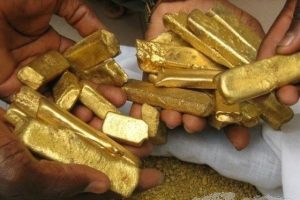
According to data-start=”1531″ data-end=”1542″>Reuters and data from the Ghana Revenue Authority, nearly 30% of artisanal gold production—worth an estimated $2 billion annually—leaves the country through informal and often illegal channels, often facilitated by foreign buyers, particularly from Asia and the Middle East. These buyers offer cash premiums and quick payments that local traders cannot match.
“We cannot allow foreign actors to extract wealth from Ghana’s soil without contributing to our tax base or respecting our environmental laws,” said Minister of Lands and Natural Resources, Samuel Abu Jinapor, in a statement after the bill passed. “This law is about restoring sovereignty and fairness in one of our most critical sectors.”
Forex and the Gold-for-Oil Policy at Risk
Foreign gold traders have long operated in Ghana’s ASM space with little formal oversight, often exchanging gold for hard currency or illicitly shipping bullion out through West African ports. This undermined the Bank of Ghana’s Domestic Gold Purchase Programme, introduced in 2022 to bolster the cedi by using domestically sourced gold to settle energy bills and build reserves.
With the cedi under pressure despite inflation easing to 18.4% in May, gold is a key plank in the country’s forex strategy. Analysts say that every ounce of gold that leaves Ghana’s borders unreported is a missed opportunity to stabilize the economy.
“Banning foreign traders is a step toward plugging a fiscal hole that’s been bleeding us quietly for years,” said Dr. Leticia Owusu, a currency analyst at CediWatch Africa. “If this law is enforced well, we could see significant improvement in forex inflows within 12 to 18 months.”
Small-Scale Miners: Protected or Squeezed?
But not everyone is applauding. In towns like Dunkwa-on-Offin and Prestea, the reaction among small-scale miners is mixed.
“Some of the foreigners pay instantly, no paperwork. That’s why we liked them,” said Yaw Badu, a licensed small-scale miner in the Central Region. “Now the government is asking us to go through agents, and we don’t know if we’ll get fair prices.”
To address this, the Minerals Commission is launching a new licensing system under the GoldBod framework, creating designated buying centers with government-certified agents. These centers are meant to ensure transparency, fair pricing, and real-time data collection. But implementation has proven spotty so far, with delays in onboarding new agents and a lack of awareness among rural miners.
There’s also the risk of the law pushing trade deeper underground. “If alternatives aren’t made attractive, the foreign buyers will simply adapt—go stealth, pay higher bribes, or move across borders,” warned Rashid Fuseini, an ASM researcher at the University of Mines and Technology (UMaT).
Environmental and Security Payoffs?
Supporters argue that the law is not just about economics—it’s also about cleaning up a sector often blamed for environmental degradation, child labor, and local conflict.
Foreign traders, many of whom fund and supply illegal mining sites (galamsey), are seen as central to the financing of unregulated mining operations. By cutting off their access to Ghana’s gold fields, policymakers hope to weaken the galamsey economy, reduce mercury pollution, and give communities room to rehabilitate degraded lands.
The Environmental Protection Agency (EPA) estimates that more than 15% of Ghana’s forest reserves have been damaged by illegal mining, with water bodies like the Ankobra and Birim now heavily contaminated.
Implementation and the Road Ahead
Experts agree that enforcement is the Achilles’ heel. Ghana’s history of grand policy gestures often fades at the execution stage. The GoldBod Act will test the government’s ability to not just legislate—but implement—structural change in a deeply informal sector.
“This isn’t just about banning foreigners,” said Nana Ama Boateng, an extractives governance analyst at ACEP Ghana. “It’s about rethinking how we bring ASM into the formal economy, and whether we are serious about cleaning up the mess we allowed for years.”
In the short term, success will depend on effective monitoring, equitable pricing mechanisms, and education campaigns for miners. In the long term, the Act could either formalize a shadow economy or simply displace it to neighboring Burkina Faso, Togo, or Côte d’Ivoire.
Ghana’s GoldBod Act is a bold bet: that banning foreign traders from ASM gold will tighten economic control, protect the environment, and empower local miners. The stakes are high. Get it right, and Ghana could rewrite its gold story—transforming a chaotic gold rush into a structured pillar of economic resilience. Get it wrong, and the black-market pipelines will only grow more efficient.
For now, the gold glitters—but whether it delivers lasting value remains uncertain.
Accra Street Journal will continue to monitor the implementation of the GoldBod Act and its impact on Ghana’s mining economy and forex ecosystem.
Last Updated on December 6, 2025 by
Disclaimer: Some content on Accra Street Journal may be aggregated, summarized, or edited from third-party sources for informational purposes. Images and media are used under fair use or royalty-free licenses. Accra Street Journal is a subsidiary of SamBoad Publishing Hub under SamBoad Business Group Ltd, registered in Ghana since 2014.
For concerns or inquiries, please visit our Privacy Policy or Contact Page.

Samuel Kwame Boadu is a Ghanaian media entrepreneur and storyteller with a passion for amplifying urban voices and uncovering everyday truths. He is the Editor-in-Chief and Founder of Accra Street Journal, a dynamic digital platform dedicated to capturing the pulse of Ghana’s capital—its people, culture, challenges, business, sports and innovations.