






The regulatory ground is shifting. After years of ambiguity, Ghana now has a legal framework for virtual assets—and a dual-regulator system that is still being built. Here is what that means for anyone considering crypto.
The New Legal Reality
For years, cryptocurrency in Ghana operated in a grey zone. The Bank of Ghana cautioned against it but did not ban it. The Securities and Exchange Commission had no clear mandate. Investors had little protection and even less clarity.

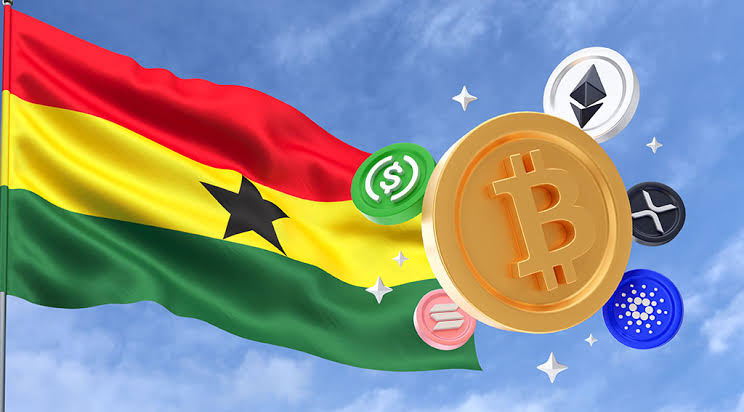
That changed in December 2025, when Parliament passed the Virtual Asset Service Providers Act (Act 1154). The law established a formal regulatory framework for virtual assets, covering everything from exchanges and trading platforms to tokenisation, brokerage, and investment advisory services.
📢 GET A DETAILED ARTICLES + JOBS
Join ASJ's WhatsApp Channel and never miss a post or opportunity.

The Act created a dual oversight model. The Bank of Ghana focuses on payment systems, monetary stability, and financial infrastructure. The Securities and Exchange Commission supervises investment-related virtual asset activities, including exchanges, trading platforms, and tokenised securities.
In August 2026, the two regulators inaugurated a Virtual Assets Coordinating Committee to harmonise implementation, share information, and close regulatory gaps. The committee includes representatives from the Bank of Ghana, SEC, Ministry of Finance, Cyber Security Authority, and Financial Intelligence Centre. The Bank of Ghana expects the law to be fully operational by 2027.
The Sandbox: Who Is Actually Licensed
The SEC has admitted 20 entities into its Virtual Asset Sandbox, which commenced in March 2026 and will run for 12 months. These are the only platforms currently authorised to pilot virtual asset services in Ghana. They include:
| Participant | Approved Pilot Activity |
|---|---|
| Africoin Ghana Limited | Asset Tokenization (Gold) |
| Vaolta Digital Assets Ltd | Asset Tokenization (Securities) |
| GFX Brokers Limited | Asset Tokenization (T-Bills) |
| One Africa Securities Ltd | Asset Tokenization (Bonds) |
| WeWire Ghana Limited | Asset Tokenization (Trade Finance) |
| Mansu Technologies Ltd | Virtual Asset Brokerage |
| Sage Advance Global Services Ltd | Virtual Asset Brokerage |
| Mojo Pay Ghana Limited | Virtual Asset Brokerage |
| Yellow Card Ghana Limited | Virtual Asset Exchange |
| Hyro Exchange Ltd | Virtual Asset Exchange |
| Whitebit Ghana Ltd | Virtual Asset Exchange |
| Koinkoin Ghana Ltd | Virtual Asset Exchange |
| Ghana Commodities Exchange | Virtual Asset Exchange (Commodities) |
| Ghana Gold Board | Real World Asset Custodian (Gold) |
| Xchain Technologies Ltd | Virtual Asset Trading Platform |
| HanyPay Ghana Ltd | Virtual Asset Trading Platform |
| The Blue Penguin Company Ltd | Virtual Asset Trading Platform |
| HSB Global Fintech Ltd | Virtual Asset Trading Platform |
| Mamoru Digital Ghana Ltd | Virtual Asset Trading Platform |
| Bsystems Ltd | Virtual Asset Trading Platform |
Important: Sandbox participation is not the same as full licensing. These entities are testing their products in a controlled environment under the SEC’s oversight. After the first six months, those whose products are market-ready and compliant may transition to activity-based licences. Full licensing for all VASPs will open after the sandbox period concludes.
The Bank of Ghana’s Hard Line on Crypto Wallets
While the regulatory framework takes shape, the Bank of Ghana has taken a firm stance against unauthorised crypto-related financial activity.
In June 2026, the central bank issued a supervisory directive ordering all regulated financial institutions—banks, payment service providers, electronic money issuers—to immediately cease support for unauthorised foreign currency digital wallet services offered by cryptocurrency platforms.
The directive explained that several crypto platforms were offering USD-denominated digital wallets integrated with the local banking system through direct bank transfers, payment cards, and other channels. These platforms had not obtained the required authorisation under the Payment Systems and Services Act, 2019 (Act 987) and the Foreign Exchange Act, 2006 (Act 723).
The Bank of Ghana stated that “the infrastructure supporting these services is illegal” and that non-compliant institutions would face supervisory or enforcement actions. A dedicated virtual asset desk was established for businesses to consult on compliance matters.
The Scam Problem: GH¢3.4 Million Lost in Six Months
The regulatory progress has not eliminated fraud. It has, in some ways, made the scams more sophisticated.
The Cyber Security Authority recorded 352 cases of online investment fraud in the first half of 2026, with total losses reaching GH¢3,429,447. The scams often operate under names like Darazz, Daily Trade, Ghstore, KUKA, and Edollar, luring victims with promises of high returns from supposed cryptocurrency mining projects.
The SEC has issued specific warnings against platforms including Yepbit Exchange and Bonchat, neither of which is licensed. The Bank of Ghana and SEC jointly warned against Daily Wealth Guide, a platform using a manipulated video of President Mahama to promote its scheme. The regulators stated that no entity has been licensed to conduct crypto investment or deposit-taking activities of the type being promoted.
The common pattern: promises of unusually high returns, recruitment of new investors to sustain payouts, and payments through mobile money to personal accounts. Once the money is transferred, the promised returns never materialise.
The Tax Question: Unsettled
Ghana does not currently have specific cryptocurrency tax legislation. The general position is that profits from cryptocurrency trading and investment would fall under existing income tax or capital gains provisions, but there is no dedicated framework for enforcement.
The Ghana Revenue Authority has signalled plans to expand the tax net to include cryptocurrency assets and related transaction income, particularly as holdings grow among younger Ghanaians. But as of now, the rules remain unclear and inconsistently applied.
For investors, this means the tax treatment of crypto gains is uncertain. The prudent approach is to keep detailed records of transactions and consult a tax professional.
What This Means for Investors
Verify licensing status before depositing. The SEC publishes the list of sandbox participants and unlicensed entities on its website. You can verify through the SEC’s toll-free line 0800100065 or email [email protected].
The sandbox is not open to the public for all services. Sandbox participants are piloting their products. Full public access and licensing will follow after the sandbox period concludes and the SEC publishes its final guidelines.
Beware of “guaranteed returns.” No legitimate virtual asset service in Ghana is authorised to guarantee investment returns. The SEC has explicitly warned against schemes promising unusually high or guaranteed returns.
The Bank of Ghana’s directive matters. If a crypto platform relies on USD wallets integrated with local banks, it is operating outside the authorised framework. The central bank has ordered financial institutions to cut ties with these arrangements.
Regulation is coming—but it is not complete. The framework exists. The guidelines are being drafted. The sandbox is testing. Full operationalisation is targeted for 2027. Until then, caution is warranted.
Quick Facts
| Topic | Details |
|---|---|
| Governing Law | Virtual Asset Service Providers Act, 2025 (Act 1154) |
| Regulators | Bank of Ghana + Securities and Exchange Commission |
| Coordinating Committee | Inaugurated August 2026 |
| Sandbox Participants | 20 entities (12-month pilot from March 2026) |
| Full Operationalisation Target | 2027 |
| BoG Directive (June 2026) | Ordered halt to unauthorised USD crypto wallets |
| Online Investment Fraud (H1 2026) | 352 cases, GH¢3.4 million lost |
| Tax Status | No specific crypto tax legislation; general income tax may apply |
Frequently Asked Questions
1. Is cryptocurrency legal in Ghana?
Yes. The Virtual Asset Service Providers Act (Act 1154) was passed in December 2025, establishing a legal framework for virtual assets. However, all entities conducting virtual asset activities must be licensed or registered by the SEC or Bank of Ghana.
2. Who regulates cryptocurrency in Ghana?
A dual oversight model. The Bank of Ghana focuses on payment systems and monetary stability, while the SEC supervises investment-related virtual asset activities.
3. Which crypto platforms are licensed in Ghana?
The SEC has admitted 20 entities into its Virtual Asset Sandbox, including Yellow Card, Hyro Exchange, Whitebit Ghana, and Koinkoin. Sandbox participation is a pilot, not full licensing.
4. Why did the Bank of Ghana order banks to stop supporting crypto wallets?
The central bank stated that crypto platforms were offering USD-denominated digital wallets integrated with the local banking system without required authorisation under the Payment Systems and Services Act and Foreign Exchange Act. The directive took effect immediately.
5. How can I avoid crypto scams in Ghana?
Verify licensing through the SEC (toll-free 0800100065 or [email protected]). Avoid schemes promising guaranteed returns. Be wary of platforms advertising on social media and using recruitment-based models. The SEC has flagged Yepbit Exchange, Bonchat, and Daily Wealth Guide as unlicensed.
6. Is cryptocurrency taxed in Ghana?
Ghana does not currently have specific cryptocurrency tax legislation. General income tax provisions may apply to trading profits, and the Ghana Revenue Authority plans to expand the tax net to include crypto assets.
7. When will full crypto licensing begin in Ghana?
The Bank of Ghana targets full operationalisation of the VASP Act by 2027. The SEC sandbox runs for 12 months from March 2026, after which licensing will open for all VASPs.
8. Can I buy Bitcoin in Ghana?
Yes. Platforms like Bitget allow Ghanaians to buy Bitcoin and other cryptocurrencies. However, the regulatory status of individual platforms varies. Check whether a platform is authorised or a sandbox participant before using it.
9. What is the Virtual Assets Coordinating Committee?
A committee inaugurated in August 2026 to harmonise implementation of the VASP Act, strengthen inter-agency cooperation, and coordinate responses to emerging risks. It includes the Bank of Ghana, SEC, Ministry of Finance, Cyber Security Authority, and Financial Intelligence Centre.
10. How much have Ghanaians lost to crypto scams?
The Cyber Security Authority recorded 352 cases of online investment fraud in the first half of 2026, with losses exceeding GH¢3.4 million. Many involved supposed cryptocurrency mining projects
Source: Accra Street Journal
Last Updated on October 3, 2026 by Samuel Kwame Boadu
Disclaimer: Some content on Accra Street Journal may be aggregated, summarized, or edited from third-party sources for informational purposes. Images and media are used under fair use or royalty-free licenses. Accra Street Journal is a subsidiary of SamBoad Publishing Hub under SamBoad Business Group Ltd, registered in Ghana since 2014.
For concerns or inquiries, please visit our Privacy Policy or Contact Page.

Samuel Kwame Boadu is a Ghanaian media entrepreneur and storyteller with a passion for amplifying urban voices and uncovering everyday truths. He is the Editor-in-Chief and Founder of Accra Street Journal, a dynamic digital platform dedicated to capturing the pulse of Ghana’s capital—its people, culture, challenges, business, sports and innovations.