




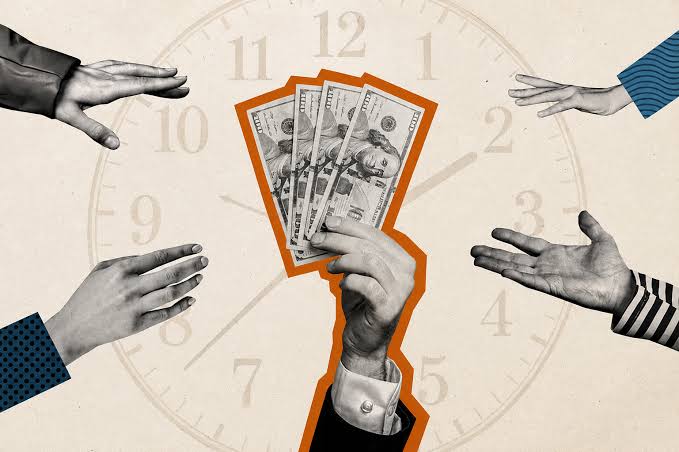
The gap between what the Bank of Ghana regulates and what Ghanaian retail traders actually use is where most scams live. Here is how to tell the difference before you deposit a single cedi.
The First Rule: Know Which Market You Are In
Ghana has two distinct forex markets, and the distinction is not cosmetic.

The interbank market is regulated by the Bank of Ghana. Only 12 FX brokers were authorised to operate in this market for 2026, including IC Securities, SIC Brokers, Serengeti Limited, and ICAP . These brokers do not deal with retail traders at all. They operate strictly as intermediaries between banks, cannot buy or sell foreign exchange for their own accounts, and cannot deal directly with corporate entities.
📢 GET A DETAILED ARTICLES + JOBS
Join ASJ's WhatsApp Channel and never miss a post or opportunity.

The retail online market is where individual Ghanaians trade currency pairs through international brokers. No Ghanaian regulator specifically licenses or supervises these platforms. Your protection depends entirely on the broker’s home regulator—or the absence of one.
This means the question “Is this broker legitimate?” has two different answers depending on which market you are asking about. For retail trading, legitimacy is determined by the broker’s offshore regulatory status, not by any Ghanaian licence.
Step 1: Check the Regulators’ Lists
Before depositing money with any broker, verify their status through the official channels.
Check the Bank of Ghana’s authorised FX broker list. The central bank publishes the list of brokers approved for the interbank market each year . If a broker claims to be “BoG authorised” but does not appear on that list, that claim is false. The 2026 list includes IC Securities, SIC Brokers, Serengeti, Sarpong Capital, Terika Financial Services, Savvy Africa, GFX Brokers, Regulus, MB&CO Capital, ICAP, Obsidian Achernar, and TAW Impact Capital.
Check the SEC’s unlicensed entities list. The Securities and Exchange Commission publishes a notice of entities operating without a licence. In July 2026, the SEC flagged 23 entities, including several forex-related platforms such as ZEC ZEC FX, QX Broker/Qumatix, and Expert (Expect) Option . The SEC explicitly warned the public not to invest with these entities and stated it is collaborating with law enforcement to shut them down .
Contact the regulators directly. The SEC advises the public to verify licensing status through its toll-free line 0800100065, main lines 0302768970-2, or email [email protected] . The Bank of Ghana’s Market Conduct Office can be reached at 0302665005 or via WhatsApp at 0596912354 and 0501502270 .
Step 2: Verify the Broker’s Offshore Regulation
For retail forex brokers, the relevant question is whether they are regulated by a Tier-1 authority. The brokers most commonly used by Ghanaian traders include:
| Broker | Key Regulators |
|---|---|
| Exness | FCA, CySEC, FSA, FSCA |
| XM | CySEC, ASIC, FSC |
| HFM | CySEC, FCA, FSCA, DFSA |
| Pepperstone | FCA, ASIC, DFSA, CySEC |
| Deriv | MFSA, Labuan FSA, VFSC |
| IG | FCA, ASIC, and others |
| Interactive Brokers | SEC, FCA, ASIC, and others |
Tier-1 regulators include the FCA (UK), ASIC (Australia), and CySEC (Cyprus). These authorities impose strict capital requirements, segregation of client funds, and compensation schemes. A broker regulated by one of these is generally considered safer than one regulated only in an offshore jurisdiction with minimal oversight.
If a broker cannot produce a verifiable regulatory licence number—or if the only “regulation” mentioned is a company registration certificate—that is a major red flag .
Step 3: Watch for the Red Flags of a Scam
The SEC, Bank of Ghana, and industry observers have identified consistent patterns in fraudulent forex operations.
Guaranteed returns. Any platform promising fixed monthly profits or “capital preservation with high returns” is almost certainly a scam. The SEC’s rules prohibit licensed fund managers from offering guaranteed returns . One Ghanaian trader lost GHS 30,000 to a scheme promising “capital preservation and modest monthly returns”—the payments stopped, and the money never came back.
Advance fee requests. A common scam pattern involves small initial deposits followed by escalating “processing fees” or “unlock fees” before withdrawal. One victim documented paying GHS 200, then GHS 90, then GHS 110, then GHS 175, then GHS 230—each time told it was the last payment. It never was .
Unlicensed entities on social media. The SEC’s list of 23 unlicensed entities includes platforms promoting through Facebook, WhatsApp, and other social media channels . If a “broker” or “investment platform” reaches out to you through social media with unsolicited offers, treat it as a scam until proven otherwise.
Personal mobile money accounts. Legitimate brokers do not ask you to send funds to personal MTN, Telecel, or AT wallets. Payments should go to a corporate account in the broker’s registered name .
Step 4: Check the Practical Details
Withdrawal terms. Before depositing, check how withdrawals work. Legitimate brokers process withdrawals to the same method used for deposit. Unregulated brokers often make withdrawal difficult or impossible .
Corporate registration. A legitimate broker should have a verifiable corporate registration in its home jurisdiction. If the only address is a residential plot in Accra with no corporate records, that is a warning sign.
Contact information. Legitimate brokers provide multiple contact channels—phone, email, live chat—and respond to inquiries. Scam operations often have only a WhatsApp number or a social media page.
Quick Facts
| Topic | Details |
|---|---|
| BoG Authorised FX Brokers (2026) | 12 |
| SEC Unlicensed Entities (July 2026) | 23, including forex platforms |
| SEC Toll-Free Verification | 0800100065 |
| BoG Market Conduct Office | 0302665005 |
| Tier-1 Regulators | FCA, ASIC, CySEC |
| Key Red Flags | Guaranteed returns, advance fees, personal MoMo accounts |
Frequently Asked Questions
1. How do I know if a forex broker is legitimate in Ghana?
Check if the broker is authorised by the Bank of Ghana for the interbank market or regulated by a Tier-1 offshore authority like the FCA, ASIC, or CySEC. Verify through the BoG website and the SEC’s licensing records .
2. Is a broker regulated by the Bank of Ghana safe for retail forex trading?
No. BoG authorisation applies only to the interbank market. These brokers do not deal with retail traders. Retail forex traders use offshore brokers regulated by foreign authorities.
3. How can I check the SEC’s list of unlicensed entities?
The SEC publishes public notices on its website at sec.gov.gh. The July 2026 notice listed 23 unlicensed entities, including ZEC ZEC FX and QX Broker/Qumatix .
4. What are the warning signs of a forex scam in Ghana?
Guaranteed returns, advance fee requests, payments to personal mobile money accounts, and unsolicited social media offers are the most common red flags.
5. How do I contact the SEC to verify a broker?
Call the SEC’s toll-free line 0800100065, main lines 0302768970-2, or email [email protected] .
6. What is the difference between BoG authorised FX brokers and retail forex brokers?
BoG authorised FX brokers operate only in the interbank market between banks. They cannot deal with corporate entities or retail clients. Retail forex brokers are offshore platforms that accept individual traders .
7. Are there any forex brokers licensed by Ghana’s SEC?
The SEC regulates capital market activities, not retail forex trading. Forex platforms are not licensed by the SEC unless they are offering securities or collective investment schemes .
8. What should I do if I suspect a forex broker is fraudulent?
Stop all transactions immediately. Report the broker to the SEC and the Bank of Ghana’s Market Conduct Office. Do not send additional funds .
9. Can I use mobile money to fund a legitimate forex account?
Some regulated brokers support mobile money deposits, but legitimate brokers use corporate accounts, not personal wallets. If you are asked to send funds to a personal MoMo number, it is a scam .
10. How often does the Bank of Ghana update its authorised FX broker list?
The BoG authorises FX brokers annually. The 2026 list was published for the period January 1 to December 31, 2026. Renewal applications are due by the first working week of December each year
Source: Accra Street Journal
Last Updated on October 3, 2026 by Samuel Kwame Boadu
Disclaimer: Some content on Accra Street Journal may be aggregated, summarized, or edited from third-party sources for informational purposes. Images and media are used under fair use or royalty-free licenses. Accra Street Journal is a subsidiary of SamBoad Publishing Hub under SamBoad Business Group Ltd, registered in Ghana since 2014.
For concerns or inquiries, please visit our Privacy Policy or Contact Page.

Samuel Kwame Boadu is a Ghanaian media entrepreneur and storyteller with a passion for amplifying urban voices and uncovering everyday truths. He is the Editor-in-Chief and Founder of Accra Street Journal, a dynamic digital platform dedicated to capturing the pulse of Ghana’s capital—its people, culture, challenges, business, sports and innovations.