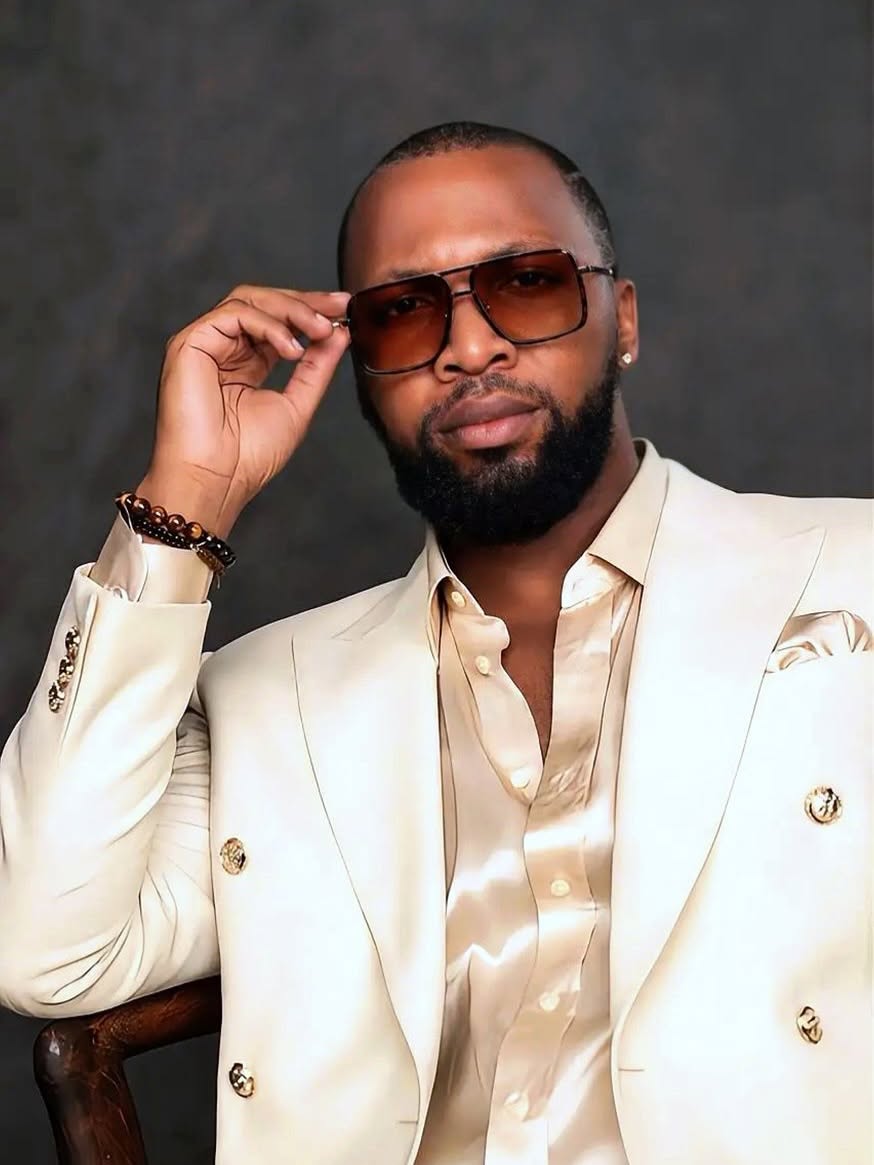










In Ghana’s ever-evolving hip-hop landscape, moments come when words are not just lyrics—they are warnings, proclamations, and legacies in motion. Sarkodie’s latest collaboration with Kweku Smoke, “Violence,” produced by MOG Beatz, stands as one of those moments.

The title alone is confrontational, almost prophetic, remarked a writer at Accra Street Journal But as any student of hip-hop culture knows, “violence” here is metaphorical—a statement of artistic aggression and authority. It’s about reclaiming dominance in a rap space that thrives on respect, competition, and reinvention.
A Controlled Explosion: The Sound of “Violence”
MOG Beatz’s production opens with that unmistakable Ghanaian drill intensity—dark, minimalist, and unapologetically street. The 808s punch through the mix like thunderclaps, while layered hi-hats dance around the rhythm, giving the track a sense of urgency.
📢 GET A DETAILED ARTICLES + JOBS
Join ASJ's WhatsApp Channel and never miss a post or opportunity.
It’s the perfect sonic battlefield. The tension between chaos and control mirrors the chemistry between Sarkodie’s composed veteran flow and Kweku Smoke’s raw, unrestrained delivery.
This is not just another collaboration—it’s a generational collision.
Sarkodie: The Veteran at the Peak of Calm Power
From his opening bar, Sarkodie makes it clear: 2025 is a year of lyrical warfare.
“Steady making that mulla / I did it in silence / Tell them 2025 we coming with violence.”
Here lies the essence of Sarkodie’s artistry—quiet consistency followed by a deliberate eruption. The line encapsulates his journey: years of understated domination, leading to a decisive moment where humility gives way to assertion.
For long-time listeners, this verse echoes earlier eras—the hunger of “Original,” the defiance of “My Advice,” and the introspection of “Otis.” But “Violence” is different. It’s not defensive; it’s offensive. It’s a statement that Sarkodie is done proving and now intends to remind.
When he raps,
“They wanna shoot the man down / God gave me his guidance,”
he does more than flex faith. It’s a layered metaphor: divine protection as both spiritual belief and symbolic shield against critics, detractors, and the internet-fueled culture of skepticism.
Then comes the Twi challenge that every true Sark fan relishes:
“Me na mo size nɛ me anaa ɛyɛ mo ani nso adi.”
Loosely translated: “Are you my equal, or are you just jealous?”
It’s the lyrical equivalent of drawing a line in the sand—a rhetorical question that leaves little room for debate.
Kweku Smoke: The Hungry Successor with Fire in His Eyes
Kweku Smoke, one of the fiercest voices of Ghana’s new school, matches the intensity bar for bar. His verse is less polished, more visceral—delivered with the cadence of someone who’s been waiting for this moment.
“Back in the day I used to follow my mom for midweek service.”
It’s a deceptively soft opening, revealing humility before pivoting into rebellion. Smoke’s transformation—from a quiet churchgoer to a street-certified rapper—is emblematic of the modern Ghanaian hustle.
When he spits,
“Obiaa yɛɛ yɛ mo size no bi / But sesei na w’ayɛ bad boy,”
he affirms both respect and evolution. It’s a nod to his mentor Sarkodie—acknowledging shared beginnings while declaring his own identity as the new, unfiltered voice of the streets.
The punchline,
“I came through with that violence,”
hits like a verdict. It’s not a threat—it’s a declaration that Smoke belongs in the ring.
Between the Bars: The Message and Metaphor of “Violence”
At its core, “Violence” is not about physical aggression. It’s about mental dominance—a reflection of what it takes to thrive in Ghana’s competitive music industry.
Both artists frame “violence” as confidence sharpened by experience. For Sarkodie, it’s the violence of consistency—years of mastering craft, business, and branding. For Kweku Smoke, it’s the violence of arrival—the hunger to disrupt, to be seen, to be crowned.
The track functions as both manifesto and mentorship. Sarkodie reaffirms his place as the architect of modern Ghanaian rap, while Smoke positions himself as the rightful heir to that legacy.
And in that dynamic lies the beauty of Ghana’s hip-hop continuum: every generation must challenge the last, not out of rebellion, but out of reverence.
Cultural Resonance: Ghanaian Drill and Artistic Assertion
Drill music, once confined to Chicago and London’s gritty streets, has found new identity in Ghana. Artists like Kweku Smoke, Yaw Tog, and Black Sherif have localized the sound—turning it into a cultural tool for storytelling, pride, and survival.
“Violence” fits seamlessly into this narrative. It’s not imitation; it’s evolution. MOG Beatz’s production captures the pulse of Accra’s urban youth—fast, restless, fearless—while Sarkodie’s bars anchor it in wisdom and experience.
In this sense, “Violence” transcends music. It’s commentary on the Ghanaian grind, where success is both celebrated and questioned, where silence is often mistaken for weakness, and where every achievement must be defended in the court of public opinion.
Legacy and Symbolism: The Real Power Behind the Song
Every Sarkodie release is more than a track—it’s an event, a cultural timestamp. “Violence” follows in that tradition, marking yet another chapter in his reign as the architect of modern Ghanaian rap.
For Smoke, the collaboration represents validation. To go bar-for-bar with Sarkodie is a rite of passage. But more importantly, it’s a passing of the torch—an acknowledgment that the next generation doesn’t just imitate; it innovates.
And MOG Beatz? His production cements him further as Ghana’s most consistent hitmaker, capable of translating raw street sound into global-ready records.
The Final Word: A Manifesto in Disguise
“Violence” isn’t merely a song; it’s a state of mind. It’s Sarkodie’s reminder that greatness isn’t maintained through comfort—and Kweku Smoke’s declaration that the new school won’t be silent.
In an industry where collaboration often feels transactional, this one feels symbolic—a bridge between eras, a coded warning to doubters, and a celebration of Ghana’s creative tenacity.
For listeners, “Violence” serves as motivation. For artists, it’s a challenge. And for the culture, it’s a statement that Ghanaian hip-hop, far from fading, is only getting louder.
Accra Street Journal Commentary:
In the end, “Violence” is not about conflict—it’s about conquest. It’s Sarkodie saying, “I’m still here.” It’s Kweku Smoke replying, “I’m coming.” And together, they make one thing clear: Ghana’s rap throne may have many challengers, but only a few can step into the ring and walk out with respect.
Listen to Music :
Source: Accra Street Journal
Last Updated on December 6, 2025 by Samuel Kwame Boadu
Disclaimer: Some content on Accra Street Journal may be aggregated, summarized, or edited from third-party sources for informational purposes. Images and media are used under fair use or royalty-free licenses. Accra Street Journal is a subsidiary of SamBoad Publishing Hub under SamBoad Business Group Ltd, registered in Ghana since 2014.
For concerns or inquiries, please visit our Privacy Policy or Contact Page.

Samuel Kwame Boadu is a Ghanaian media entrepreneur and storyteller with a passion for amplifying urban voices and uncovering everyday truths. He is the Editor-in-Chief and Founder of Accra Street Journal, a dynamic digital platform dedicated to capturing the pulse of Ghana’s capital—its people, culture, challenges, business, sports and innovations.