








EXECUTIVE INTRODUCTION
The daily, grinding reality of the Ghanaian healthcare system, as experienced by the millions of citizens who depend on it and the thousands of dedicated, often exhausted, professionals who staff it, is a profound study in the management of scarcity. It is a world of long, anxious queues of patients, waiting patiently, and sometimes not so patiently, in crowded, under-resourced corridors for a few precious, over-scheduled minutes with a doctor. It is the reality of the overworked clinician, in a busy urban teaching hospital or a remote, understaffed rural clinic, forced to make rapid, high-stakes, and often life-altering decisions with limited time, limited resources, and an ever-growing mountain of paperwork. The system is defined by a chronic, structural shortage of specialists, an often-fragile and expensive supply of diagnostic equipment, and the slow, painstaking, and deeply human limitations of a medical practice that, for all its profound advances, is still, in many critical areas, an art of careful guesswork.
It is into this demanding, high-pressure, and deeply human environment that the quiet, powerful, and often misunderstood force of artificial intelligence is now beginning to enter. This Accra Street Journal analysis is a clear-eyed, practical examination of the specific, real-world ways in which AI is starting to transform healthcare in Ghana. This is not a story of a cold, futuristic, and dystopian hospital run by robots, a vision that is as irrelevant as it is alienating. It is a story of the “digital doctor’s assistant,” a suite of intelligent, practical, and increasingly accessible tools that are designed to augment, not replace, the deeply human skills of the Ghanaian clinician. The promise of AI in this context is not just of high-tech, expensive cures for the few, but of a profound, practical, and deeply democratic empowerment of the entire system: giving the overworked nurse in a remote clinic the diagnostic power of a specialist, freeing the brilliant doctor in the big city from the crushing burden of paperwork to focus on the patient, and, ultimately, building a system that is faster, more accurate, more accessible, and, in the deepest sense, more humane.

THE EXHAUSTED RADIOLOGIST’S NEW EYES: AI AND THE RACE AGAINST THE LAG
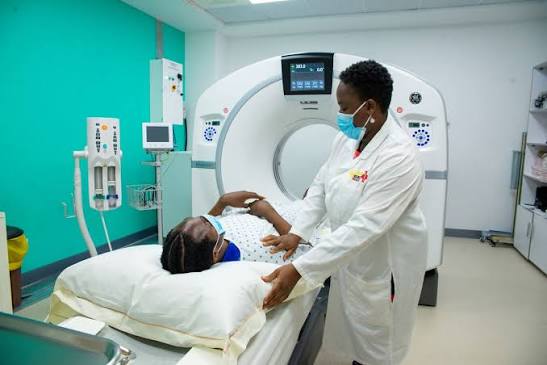
The first, and currently the most mature and demonstrably impactful, application of AI in Ghanaian healthcare lies in the field of medical imaging. This is the domain of the radiologist, the highly trained, deeply specialised physician whose expertise lies in reading the complex, shadowy, and often deeply ambiguous images produced by X-rays, CT scans, and MRIs. The problem, and it is a problem that plagues health systems across the developing world, is a chronic, structural, and critically dangerous shortage of these specialists. A single, overworked radiologist in a large teaching hospital may be responsible for reviewing hundreds of images a day, a superhuman, and deeply error-prone, demand. In a smaller, regional hospital, or a rural district clinic, there may be no radiologist at all, and the X-ray machine, if one exists and is functional, is operated by a general practitioner or a technician who lacks the deep, specialist training required to interpret the image with confidence. The result is the silent, often ignored, crisis of “the lag”: the long, agonising, and sometimes fatal delay between the taking of a critical image and the delivery of an accurate diagnosis. A patient with a suspected tuberculosis infection, a shadow on their lung X-ray, may wait days, or even weeks, for a specialist to review the image, a delay that is not just inconvenient, but potentially life-threatening, and during which the disease may spread, untreated, to the patient’s family and community.
📢 GET A DETAILED ARTICLES + JOBS
Join ASJ's WhatsApp Channel and never miss a post or opportunity.

The AI-powered diagnostic tool is now providing a powerful, practical, and deeply democratic solution to this ancient, intractable problem. Sophisticated, but increasingly affordable and accessible, machine learning algorithms have now been trained on vast, global datasets of millions of medical images, and they have achieved a level of diagnostic accuracy for specific, common, and critically important conditions that rivals, and sometimes even surpasses, that of an expert human radiologist. The most powerful, and most immediately relevant, of these for the Ghanaian context is the AI tool for reading chest X-rays. A simple, digital X-ray image, uploaded to a secure, cloud-based AI platform, can now be analysed in seconds, and the algorithm will return a preliminary report, flagging, with a high degree of accuracy, the subtle, tell-tale shadows and patterns that indicate the presence of tuberculosis, pneumonia, or other common respiratory diseases. This is not about replacing the radiologist; it is about providing a powerful, tireless, and instantly available “first reader” that can triage the vast, overwhelming tide of images, instantly identifying the urgent, high-risk cases that need immediate, human specialist attention, and clearing the vast backlog of normal, unremarkable scans. The overworked radiologist is freed to focus their precious, scarce expertise on the complex, ambiguous cases where their deep, human judgment is truly essential. The doctor in the rural clinic, miles from the nearest specialist, is empowered with a level of diagnostic confidence that was previously unimaginable. The lag is being compressed from weeks to minutes, and the impact, in terms of lives saved and diseases contained, is profound, quiet, and deeply transformative.
THE TRIAGE ASSISTANT AND THE OVERWORKED NURSE: AI AT THE POINT OF CARE
The second, and perhaps most quietly powerful, frontier of AI in the Ghanaian health system is at the very front door of care: the point of first contact between the patient and the system. This is the domain of the community health nurse in the rural clinic, the midwife in the under-equipped district hospital, and the physician assistant in the busy, crowded urban health centre. These are the unsung heroes of the system, the tireless, often-overlooked professionals who are the first, and often the only, point of contact for the vast majority of patients. They work with limited resources, limited time, and the constant, crushing pressure of a queue of patients that never seems to end. The AI-powered clinical decision support system is now emerging as a powerful, practical, and deeply empathetic assistant for these overburdened front-line workers, a quiet, tireless, and encyclopaedic source of specialist knowledge in the palm of their hand.
The technology is not a complex, intimidating piece of hospital machinery; it is a simple, intuitive application on a tablet or a smartphone, often specifically designed for use in low-resource, low-connectivity settings. It works by guiding the clinician through a structured, symptom-based patient consultation. The health worker inputs the patient’s key information: their symptoms, their vital signs, and their relevant medical history. The AI, which has been trained on vast, global datasets of clinical knowledge and patient outcomes, then analyses this information and provides real-time, evidence-based guidance. It can suggest a list of possible diagnoses, ranked by probability, to help the clinician think through the differential. It can flag a red flag, an urgent, dangerous sign that the patient’s condition requires immediate referral to a higher level of care. And it can recommend the most appropriate next steps, the specific, guideline-based tests to order, or the correct, first-line treatment to administer. This is not about the AI making the final, crucial decision; it is about ensuring that the decision is made with the best, most current, and most complete information available. It is a quiet, powerful tool that standardises the quality of care, reduces the risk of dangerous diagnostic errors, and transforms the lone, overworked health worker in a remote, isolated setting into a node in a vast, distributed, and deeply intelligent clinical network.
THE BATTLE AGAINST THE PAPER MOUNTAIN: AI AND THE LIBERATION OF THE CLINICIAN
The third, and perhaps most profoundly human, impact of AI in healthcare is not about diagnosing a disease or suggesting a treatment; it is about the quiet, relentless war against the ancient, bureaucratic tyranny of the paper mountain. For the average, dedicated doctor or nurse in a busy Ghanaian hospital, a shocking, and deeply demoralising, proportion of the working day is not spent with patients, but in the act of writing. It is the endless, repetitive, and often mechanically tedious task of transcribing patient histories, of filling out complex, multi-part forms, of typing up discharge summaries, and of meticulously documenting every interaction for the medical record. This is the silent, soul-crushing burden of clinical documentation, a massive, hidden drain on the system’s most precious, and most expensive, resource: the time and the cognitive energy of the clinician. It is a source of profound burnout, a significant driver of the alarming brain drain of skilled Ghanaian health professionals to richer nations, and a direct, measurable theft of the time that should be spent at the patient’s bedside.
The AI-powered digital scribe, or clinical documentation assistant, is now providing a powerful, liberating, and deeply humane solution to this ancient problem. The technology is elegantly simple, and increasingly accurate. The doctor, instead of typing or writing, simply conducts the consultation naturally, speaking aloud to the patient, explaining their findings, and discussing the treatment plan. A small, secure, and unobtrusive AI-enabled device in the room listens, and its sophisticated natural language processing engine transcribes the entire conversation, but it does far more than that. It is intelligent enough to understand the context, to filter out the casual pleasantries and the family gossip, and to automatically extract the specific, structured, and clinically relevant information—the patient’s stated symptoms, the doctor’s diagnosis, the prescribed medications, and the follow-up plan—and format it, instantly and accurately, into a clean, standardised, and billable entry for the electronic medical record. The doctor is suddenly, and miraculously, liberated. The hours of tedious, dehumanising typing are returned to them. The burnout is reduced. The quality of the interaction improves, as the doctor can now maintain eye contact with the patient, listen more deeply, and build the essential, healing human connection, without the constant, distracting concern about the paperwork. The AI is not just an administrative tool; it is a quiet, powerful force for the re-humanisation of medicine, a digital ally in the fight to restore the doctor-patient relationship to its rightful, central place in the healing process.
QUICK FACTS BOX: THE IMPACT OF AI ON GHANAIAN HEALTHCARE
-
The Diagnostic Ally: AI-powered image analysis tools are providing instant, accurate preliminary reads of X-rays and scans, combatting the dangerous, chronic shortage of specialist radiologists and compressing diagnostic delays from weeks to minutes.
-
The Frontline Advisor: Smart, mobile-based clinical decision support systems are empowering overworked community nurses and physician assistants with real-time, evidence-based guidance for diagnosis and treatment.
-
The Liberator of Time: AI-powered digital scribes are automating the crushing burden of clinical documentation, freeing the clinician from the paper mountain to focus on the patient, directly combatting burnout and the brain drain.
-
The Core Shift: The fundamental transformation is not the replacement of the human clinician, but the quiet, powerful augmentation of their skills, their knowledge, and their most precious resource: their time.
-
The Persistent Challenge: The success of the entire enterprise depends on urgent, concurrent investment in reliable power, internet connectivity, and a robust, carefully enforced legal framework for the protection of deeply sensitive patient data.
FAQ SECTION
1. Is a robot going to be my doctor soon? Will I stop seeing a real human being?
No, absolutely not. The vision is the opposite. The AI is being designed as a powerful, tireless assistant for the human doctor, to help them work faster, make better decisions, and spend more time with you. The warm, empathetic, and deeply human relationship with your doctor will become more important, not less.
2. How can a computer programme possibly help diagnose my illness?
It works by learning from an immense amount of data. An AI diagnostic tool for chest X-rays, for example, has been “trained” by showing it millions of images, telling it which ones have signs of disease and which are normal. Over time, it has learned to recognise the subtle patterns that indicate illness, sometimes even more accurately than the human eye.
3. I live in a very rural area with only a small clinic and a nurse. Can this AI technology actually help me?
This is its greatest promise. A simple, smartphone-based AI tool can give the nurse in your village the diagnostic knowledge of a specialist in Accra. The nurse can input your symptoms, and the AI can help them make a better, faster, and safer decision about what is wrong and whether you need to travel to a bigger hospital.
4. What happens to my private medical information when it is processed by these AI systems?
This is the most critical question, and the law demands that it be protected. The AI systems are required to be built and operated with state-of-the-art security and encryption. Your data must be anonymised wherever possible and handled with the same strict confidentiality as any other part of your medical record. The trust you place in the system is everything.
5. Will this new technology just benefit the rich people in the big, modern hospitals in Accra?
The goal is the exact opposite. The most exciting and transformative potential of AI is its power to democratise expertise, to bring the knowledge of a world-class specialist to the poorest, most remote, and most underserved clinics in the country, making the system more fair, not less.
6. How can AI help with the seemingly simple problem of all the paperwork doctors have to do?
This is one of its most powerful, and least discussed, benefits. An AI “digital scribe” can listen to the conversation between a doctor and a patient and automatically write the medical notes and the forms. This gives the doctor back hours of their day to spend with their patients, reducing burnout and improving the quality of care.
7. Can an AI tell the difference between a simple cough and something more serious like tuberculosis just from an X-ray?
Yes, this is one of the most promising and mature applications. The AI has been trained to be exceptionally good at spotting the specific, early signs of TB on a chest X-ray, often catching it sooner and more accurately than a busy, tired human eye, which is critical for early treatment and preventing its spread.
8. What is the single, biggest problem that is stopping this wonderful technology from being used everywhere in Ghana right now?
It is the same problem that holds back so much of our digital progress: the lack of reliable, affordable electricity and a stable, high-speed internet connection in all the hospitals and clinics, especially those in the rural and underserved areas where the need for these tools is greatest.
9. Are there Ghanaian doctors and scientists actually building these AI healthcare tools themselves, or are we just importing everything?
This is a very exciting, and growing, area. There is a new generation of brilliant Ghanaian researchers and entrepreneurs who are building AI solutions specifically designed for the unique challenges of the Ghanaian and African healthcare context, and their work is just beginning to bear fruit.
10. Is the Ghanaian government formally supporting and encouraging the use of AI in the public healthcare system?
The government has expressed strong interest and support for the digital health agenda. However, the journey from official policy statements to the widespread, on-the-ground deployment of these tools in every clinic requires sustained, massive, and strategically targeted investment in the fundamental digital infrastructure that makes it all possible. The political will exists; the practical, financial commitment must now follow.
Source: Accra Street Journal
Last Updated on August 14, 2026 by Samuel Kwame Boadu
Disclaimer: Some content on Accra Street Journal may be aggregated, summarized, or edited from third-party sources for informational purposes. Images and media are used under fair use or royalty-free licenses. Accra Street Journal is a subsidiary of SamBoad Publishing Hub under SamBoad Business Group Ltd, registered in Ghana since 2014.
For concerns or inquiries, please visit our Privacy Policy or Contact Page.

Samuel Kwame Boadu is a Ghanaian media entrepreneur and storyteller with a passion for amplifying urban voices and uncovering everyday truths. He is the Editor-in-Chief and Founder of Accra Street Journal, a dynamic digital platform dedicated to capturing the pulse of Ghana’s capital—its people, culture, challenges, business, sports and innovations.