










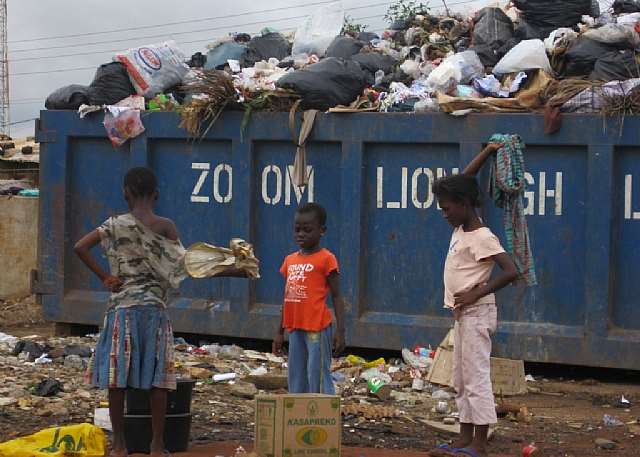
From flood relief and waste management to urban heat and sanitation enforcement, the Accra Metropolitan Assembly is at the centre of the decisions that determine how the capital’s residents live. This article examines how local government choices are shaping daily life, safety, and the future of Accra.
Introduction
Accra is a city under pressure. Rapid urbanisation, climate change, and infrastructure deficits have created challenges that affect every resident. At the heart of responding to these challenges is the Accra Metropolitan Assembly (AMA), Ghana’s largest local government authority.

The decisions made by the AMA—from waste management policies to drainage construction and sanitation enforcement—have a direct impact on how residents live, work, and stay safe. Whether it is the quality of the air you breathe, the risk of flooding in your neighbourhood, or the cleanliness of your street, local government choices shape your daily experience of Accra.
📢 GET A DETAILED ARTICLES + JOBS
Join ASJ's WhatsApp Channel and never miss a post or opportunity.

Flood Management: A Test of Local Government Capacity
Accra’s perennial flooding is one of the most visible consequences of local government decisions—and indecisions.
The Scale of the Crisis
The data shows a worrying trend. In June 2024, Accra recorded 85mm of rainfall. This rose to 172mm in 2025 and surged to 333mm in June 2026 alone . President John Dramani Mahama has acknowledged that while climate change is increasing rainfall intensity, human factors such as blocked natural streams and unauthorised development are worsening the crisis .

In response, the government has directed the release of GH¢300 million from the Contingency Fund, with GH¢150 million for emergency relief and GH¢150 million for flood mitigation projects . The President also deployed personnel from the Ghana Armed Forces and Police Service to support NADMO in rescue and relief operations .
Drainage Construction and Maintenance
The AMA has been undertaking infrastructure projects to address flooding. In April 2026, Mayor Michael Kpakpo Allotey inspected ongoing construction of approximately five kilometres of primary drains in the Chorkor Electoral Area . The project is intended to enhance the free flow of rainwater and reduce the risk of flooding in low-lying, densely populated communities .
However, the Mayor has stressed that infrastructure alone is not enough. Residents must stop dumping refuse into drains, as waste dumped in drains is eventually washed into water bodies, worsening flooding and pollution .
The Public’s Role
The Minister for Works, Housing and Water Resources, Kenneth Gilbert Adjei, has noted that the current flooding situation highlights the challenges posed by extreme weather patterns, rapid urbanisation, and increasing pressure on drainage infrastructure . He has called on the public to stop dumping waste into drains, avoid construction on waterways, and comply with planning regulations .
Waste Management: Transforming a Sanitation Crisis
Waste management is one of the most pressing challenges confronting the AMA. The decisions made in this area directly affect public health, flooding, and the quality of life for residents.
The 10-Year Solid Waste Optimisation Strategy
In June 2026, the AMA launched a 10-year Solid Waste Optimisation Strategy (2025–2035) aimed at overhauling waste management in the capital . The strategy is designed to provide a structured pathway for reducing waste sent to landfills, improving sanitation infrastructure, promoting source separation, enhancing composting and resource recovery, and strengthening governance and financing .
The strategy has already attracted significant international support. It has secured a US$3 million grant from the African Development Bank and is supported by the C40 Cities Finance Facility, GIZ, and the Governments of the United Kingdom and Germany . The British Government has described the project as representing “the type of practical climate finance intervention” it seeks to support .
Source Separation Mandate
The AMA is amending its sanitation bye-laws to make waste separation at source mandatory for all residents and businesses . The revised bye-laws will legally compel households, eateries, markets, institutions, and hotels to separate waste into three streams: organic, recyclable, and residual .
A colour-coded bin system will guide compliance, with green bins for organic waste, black for residual, and brown for recyclables . The Deputy Director of Waste Management, Victor Kotey, explained: “Our current system does not recognise or promote source separation. That is a major gap we are correcting through this amendment” .

The Assembly will also support the formation of cooperatives for informal waste collectors, who account for nearly 46% of waste collection in Accra .
Composting Plant and Circular Economy
The AMA is constructing a source-separated organic waste composting plant at Ring Road West . The plant is expected to significantly reduce the volume of waste sent to landfill sites and limit methane emissions .
The compost generated will support urban farming initiatives, and the project is expected to create between 800 and 1,300 job-years in waste collection, recycling, and compost production . The AMA is also introducing on-site anaerobic digestion systems for homes, offices, and institutions .
Sanitation Enforcement: Rules with Consequences
Sanitation is an area where the AMA has adopted a more enforcement-oriented approach under Mayor Allotey.
Sanitation Courts and Prosecutions
The AMA has been working with the Judiciary to establish more sanitation courts to speedily deal with sanitation-related offences . More than 300 sanitary offenders have been prosecuted from January to date, with heavy fines imposed as a deterrent .
The AMA has announced a GH¢500 reward for individuals who report sanitation offenders, including those engaged in dumping waste into drains, littering, and open defecation . The Mayor explained that the incentive, which requires credible evidence, is aimed at encouraging public participation in enforcing the Assembly’s bye-laws .
National Sanitation Day Enforcement
The Mayor has urged residents to embrace National Sanitation Day as “a permanent way of life” and warned that the AMA would strictly enforce its bye-laws against anyone who failed to comply . Offenders could be fined or arraigned before the Sanitation Court .
Urban Heat: An Emerging Crisis
A lesser-known but growing threat in Accra is urban heat. The AMA has revealed preliminary findings from an Urban Heat Vulnerability Assessment showing a sharp rise in land surface temperatures over the past three decades .
The study, led by Professor Richard Amfo-Otu of the University of Environment and Sustainable Development, indicates that extreme heat concentrations are intensifying in communities such as James Town, Chorkor, Agbogbloshie, Old Fadama, Kaneshie, Mamprobi, and sections of the Industrial Area .
Vulnerable groups including older adults, children, informal workers, vendors, transport operators, and low-income households are disproportionately affected .
The findings will guide major reforms, including updates to the building code, expanded urban greening, improved infrastructure in markets and lorry stations, and enhanced early heat warning systems . The Head of Public Health at AMA, Florence Kuukyi, stated that the findings justify reforms to Accra’s building bye-laws, especially ventilation standards, roofing requirements, and green infrastructure for markets and transport hubs .
The Policy-Reality Gap
A recurring challenge in local government is the gap between policy and lived reality. A study published in the Journal of Urban Affairs examined walking policies in Accra and found significant incongruities between institutional frameworks and residents’ lived experiences .
The study noted “limited attention to pleasurability dimensions in both policy and municipal plans and significant incongruities with residents’ lived realities” . This highlights the importance of ensuring that local government decisions are informed by the actual experiences of residents, not just policy documents.
ASJ Conclusion
Local government decisions shape Accra living in profound ways. From flood management and waste transformation to sanitation enforcement and urban heat response, the choices made by the AMA determine the quality of life for residents.
The current administration has launched ambitious initiatives—the 10-year Waste Optimisation Strategy, source separation mandates, composting plants, sanitation courts, and flood mitigation projects. These represent significant steps toward addressing the capital’s challenges.
However, as the evidence shows, infrastructure and policy alone are not enough. The public’s role in keeping drains clean, separating waste, and complying with regulations is essential. As Mayor Allotey has stressed, “Accra’s development depends on the actions of its residents” .
Quick Facts
| Topic | Details |
|---|---|
| Rainfall in Accra (June 2026) | 333mm (up from 172mm in 2025, 85mm in 2024) |
| Flood Relief Fund | GH¢300 million released |
| Waste Strategy Period | 10-Year Solid Waste Optimisation Strategy (2025–2035) |
| AfDB Grant | US$3 million for waste project |
| Waste Separation Mandate | 3 streams: organic (green), recyclable (brown), residual (black) |
| Jobs Created from Composting | 800–1,300 job-years |
| Sanitary Offenders Prosecuted (2026) | 300+ |
| Reward for Reporting Offenders | GH¢500 |
Frequently Asked Questions
1. What is the Accra Metropolitan Assembly (AMA)?
The AMA is the local government authority responsible for the administration of Accra. It is responsible for waste management, sanitation enforcement, drainage construction, and urban planning decisions that affect residents.
2. What is the AMA doing about flooding in Accra?
The AMA is constructing primary drains in flood-prone areas like Chorkor , enforcing the removal of illegal structures from waterways , and working with the government to release GH¢300 million for flood relief and mitigation .
3. Is waste separation mandatory in Accra?
The AMA is amending its sanitation bye-laws to make waste separation at source mandatory for all residents and businesses. The revised regulations will require households to separate waste into organic, recyclable, and residual streams using a colour-coded bin system .
4. What is the AMA’s 10-year waste strategy?
The Solid Waste Optimisation Strategy (2025–2035) aims to transform waste management in Accra through source separation, composting, resource recovery, and improved governance. It has secured a US$3 million grant from the African Development Bank .
5. What are sanitation courts?
Sanitation courts are special courts established to speedily deal with sanitation-related offences. More than 300 offenders were prosecuted in 2026 . The AMA has called for more sanitation courts to handle the caseload .
6. What is urban heat vulnerability in Accra?
The AMA has revealed a sharp rise in land surface temperatures across the city, with vulnerable communities including James Town, Chorkor, Agbogbloshie, Old Fadama, and Kaneshie at heightened risk . The findings will guide building code updates and urban greening initiatives .
7. How can residents report sanitation offenders?
The AMA has announced a GH¢500 reward for individuals who report sanitation offenders, including those dumping waste into drains, littering, or engaging in open defecation. Reports require credible evidence .
8. What is the policy-reality gap in Accra?
A study found significant incongruities between local government policies and residents’ lived experiences, particularly regarding walking and walkability. This highlights the need for decisions to be informed by the actual experiences of residents
Source: Accra Street Journal
Last Updated on August 30, 2026 by Samuel Kwame Boadu
Disclaimer: Some content on Accra Street Journal may be aggregated, summarized, or edited from third-party sources for informational purposes. Images and media are used under fair use or royalty-free licenses. Accra Street Journal is a subsidiary of SamBoad Publishing Hub under SamBoad Business Group Ltd, registered in Ghana since 2014.
For concerns or inquiries, please visit our Privacy Policy or Contact Page.

Samuel Kwame Boadu is a Ghanaian media entrepreneur and storyteller with a passion for amplifying urban voices and uncovering everyday truths. He is the Editor-in-Chief and Founder of Accra Street Journal, a dynamic digital platform dedicated to capturing the pulse of Ghana’s capital—its people, culture, challenges, business, sports and innovations.





