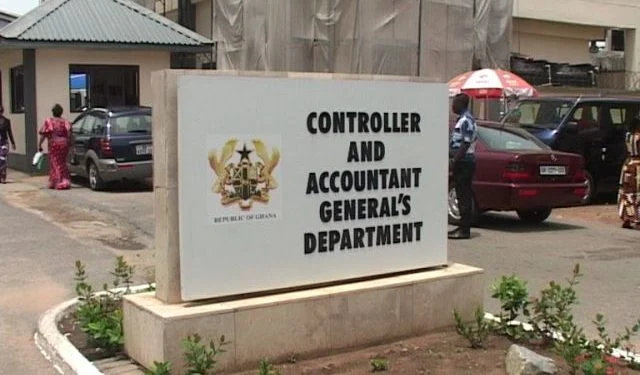
In Ghana, the management of public finances is a complex and highly regulated system. At the heart of this system is the Controller and Accountant-General’s Department (CAGD), a pivotal institution responsible for ensuring accountability, transparency, and proper management of government funds. Understanding what CAGD does is essential not only for government employees but also for businesses, contractors, and citizens who interact with public financial systems.
As Accra Street Journal emphasizes, CAGD’s work underpins the financial stability of Ghana, making it one of the most important agencies in the country’s public administration. This article explores what CAGD is, its mandate, key responsibilities, and why it matters to Ghanaians.

Overview of CAGD
The Controller and Accountant-General’s Department is a government institution tasked with overseeing the receipt and payment of public funds. It operates under the Ministry of Finance and is guided by the Public Financial Management Act and other relevant financial laws of Ghana. Essentially, CAGD ensures that every cedi collected or spent by government institutions is properly accounted for.
📢 GET A DETAILED ARTICLES + JOBS
Join ASJ's WhatsApp Channel and never miss a post or opportunity.

The department is led by the Controller and Accountant-General, a senior public officer who serves as the chief accounting and financial officer of the country.
Key Roles and Responsibilities of CAGD
CAGD’s functions are broad but can be grouped into several main areas:

1. Management of Government Accounts
-
Maintaining the Consolidated Fund, the main account for government revenue and expenditure
-
Ensuring all government receipts are deposited and accurately recorded
-
Managing public debt payments and servicing loans
2. Payment Processing
-
Authorizing payments on behalf of government institutions
-
Ensuring that disbursements are consistent with budgetary allocations
-
Processing salaries for public sector workers, including teachers, health workers, and civil servants
3. Accounting and Reporting
-
Publishing monthly and annual reports on government revenue, expenditure, and arrears
-
Providing accurate data for budgeting, audits, and parliamentary oversight
4. Treasury Management
-
Monitoring cash flow to ensure sufficient liquidity for government operations
-
Managing short-term and long-term government investments
-
Advising on fiscal policies to ensure financial discipline
5. Audit and Compliance
-
Collaborating with internal and external auditors
-
Ensuring public funds are used in compliance with financial regulations
-
Preventing misuse, fraud, and financial mismanagement
Who Interacts With CAGD?
Several stakeholders interact with CAGD as part of Ghana’s public financial ecosystem:
-
Government Ministries and Agencies – for budget allocation and payments
-
Public Sector Employees – for salary processing
-
Contractors and Suppliers – for payment of government contracts
-
Auditors and Financial Analysts – for verification of government accounts
Through these interactions, CAGD ensures that public resources are efficiently and transparently managed.
Why CAGD Matters to Ghana
CAGD is crucial for several reasons:
-
Financial Accountability: It ensures that taxpayers’ money is spent according to law.
-
Economic Stability: Proper cash flow management prevents government overdrafts and fiscal imbalances.
-
Public Trust: Transparent accounting builds confidence in government financial management.
-
Efficiency in Public Service: Timely payment of salaries and contractors supports smooth government operations.
As noted by Accra Street Journal, without a strong and effective CAGD, Ghana’s public finances would be prone to inefficiencies, corruption, and fiscal mismanagement.
Recent Initiatives by CAGD
In recent years, CAGD has modernized several of its systems:
-
Digitization of payment processes to reduce delays
-
Online portals for government payments and reporting
These reforms have improved transparency, reduced bureaucratic bottlenecks, and made interactions with CAGD more efficient.
Conclusion From ASJ
The Controller and Accountant-General’s Department (CAGD) is the backbone of Ghana’s public financial management system. From managing government accounts to processing payments and ensuring accountability, CAGD’s work affects every citizen, business, and government employee. Understanding the department’s role helps Ghanaians appreciate how public resources are managed and why compliance and transparency are critical.
As Accra Street Journal emphasizes, a functional and effective CAGD is key to sustaining economic stability and public trust in Ghana’s financial system.
Frequently Asked Questions (FAQs)
What is the main function of CAGD in Ghana?
To manage government funds, including receipt, payment, and accounting, ensuring transparency and accountability.

Who leads the Controller and Accountant-General’s Department?
The Controller and Accountant-General, a senior public officer.
Does CAGD handle salaries for public sector employees?
Yes. CAGD processes salaries for civil servants, teachers, and health workers.
How does CAGD support financial accountability?
By maintaining accurate accounts, processing payments according to law, and ensuring compliance with financial regulations.
Can businesses interact with CAGD?
Yes. Contractors and suppliers submit claims for payment of government contracts through CAGD.
Source: Accra Street Journal
Last Updated on February 3, 2026 by Samuel Kwame Boadu
Disclaimer: Some content on Accra Street Journal may be aggregated, summarized, or edited from third-party sources for informational purposes. Images and media are used under fair use or royalty-free licenses. Accra Street Journal is a subsidiary of SamBoad Publishing Hub under SamBoad Business Group Ltd, registered in Ghana since 2014.
For concerns or inquiries, please visit our Privacy Policy or Contact Page.

Samuel Kwame Boadu is a Ghanaian media entrepreneur and storyteller with a passion for amplifying urban voices and uncovering everyday truths. He is the Editor-in-Chief and Founder of Accra Street Journal, a dynamic digital platform dedicated to capturing the pulse of Ghana’s capital—its people, culture, challenges, business, sports and innovations.