






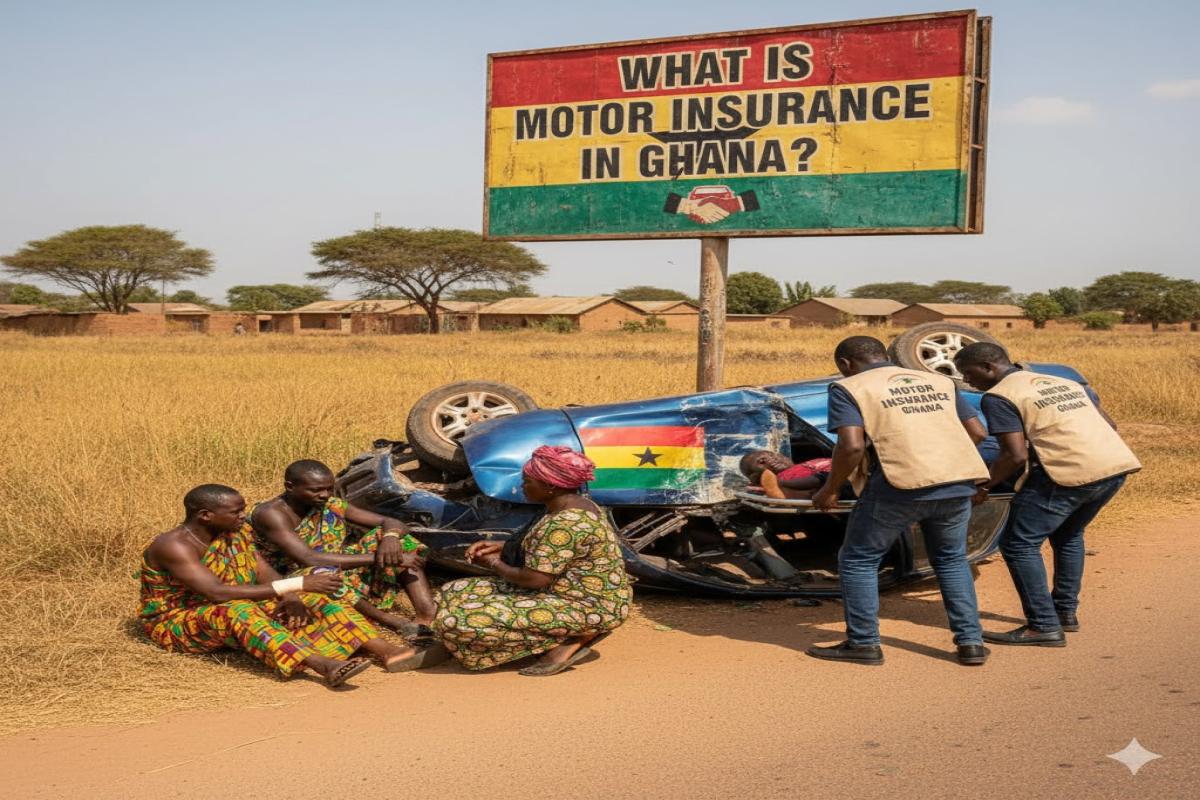
Motor insurance is not optional in Ghana. It is a legal requirement for every vehicle owner.
Yet many drivers do not fully understand the difference between comprehensive and third-party motor insurance until they are involved in an accident.

The choice between these two types of coverage affects not only premiums but also financial protection, claim payouts, and long-term security.
📢 GET A DETAILED ARTICLES + JOBS
Join ASJ's WhatsApp Channel and never miss a post or opportunity.

Understanding how each works is essential for making informed decisions.
What Is Third-Party Motor Insurance?
Third-party motor insurance is the minimum legal requirement for vehicle owners in Ghana.
This policy covers:
-
Damage caused to another person’s vehicle
-
Damage to third-party property
-
Bodily injury or death of a third party
However, it does not cover damage to your own vehicle.
If you cause an accident:
-
The other person’s damages may be covered.
-
You are responsible for repairing your own vehicle.
Because of its limited coverage, third-party insurance typically costs less than comprehensive insurance.
What Is Comprehensive Motor Insurance?
Comprehensive motor insurance provides broader protection.
It covers:
-
Damage to third-party vehicles and property
-
Damage to your own vehicle
-
Fire damage
-
Theft
-
Accidental damage
-
Sometimes flood or natural disaster damage (depending on policy terms)
With comprehensive coverage, both you and other parties are protected.
This wider coverage means higher premiums compared to third-party insurance.
Key Differences at a Glance
1. Coverage Scope
Third-Party Insurance:
Covers only damage or injury caused to others.
Comprehensive Insurance:
Covers both third-party damages and your own vehicle.
2. Cost
Third-Party: Lower premium.
Comprehensive: Higher premium due to expanded coverage.
3. Financial Risk Exposure
With third-party insurance, you carry more personal financial risk.
With comprehensive insurance, the insurer absorbs most of that risk within policy limits.
4. Theft Protection
Third-party insurance does not compensate if your car is stolen.
Comprehensive insurance typically includes theft coverage.
5. Accidental Self-Damage
If you accidentally hit a pole or wall:
-
Third-party insurance will not pay for your repairs.
-
Comprehensive insurance may cover repair costs.
Why Many Drivers Choose Third-Party Insurance
There are several reasons drivers opt for third-party coverage:
-
Older vehicle value
-
Budget constraints
-
Legal compliance only
For vehicles with low market value, some owners feel comprehensive coverage may not justify the premium cost.
However, this decision carries financial risk.
Why Some Drivers Prefer Comprehensive Insurance
Drivers often choose comprehensive insurance when:
-
The vehicle is new or high-value
-
The car was financed or purchased on loan
-
Theft risk is high
-
The vehicle is used for business
Financial institutions often require comprehensive coverage for financed vehicles.
Understanding Premium Differences
Premium calculations depend on:
-
Vehicle value
-
Vehicle type
-
Driver history
-
Intended use (private or commercial)
-
Location
Comprehensive premiums are usually calculated as a percentage of the vehicle’s value.
Third-party premiums are generally fixed or regulated.
Situations Where Comprehensive Insurance Makes More Sense
-
New vehicle purchase
-
Urban driving with higher accident risk
-
Commercial vehicle use
-
Areas prone to flooding
-
High theft exposure
In these situations, broader protection may prevent major financial loss.
When Third-Party Insurance May Be Sufficient
-
Very old vehicles
-
Vehicles with low resale value
-
Limited usage
-
Strict budget constraints
However, drivers must accept the possibility of paying for their own repairs.
Common Misunderstandings
“Third-party insurance covers my car too.”
It does not.
“Comprehensive insurance covers everything.”
Not always. Policies have exclusions such as:
-
Driving under the influence
-
Unapproved drivers
-
Mechanical wear and tear
“If someone hits me, my third-party insurance will fix my car.”
Only if the other driver is proven liable and their insurer pays.
The Financial Reality of Accidents
Accidents can result in:
-
High repair costs
-
Medical bills
-
Legal claims
-
Vehicle replacement expenses
Without comprehensive coverage, drivers must handle these costs personally if their vehicle is damaged.
Motor repairs in urban areas can be expensive, especially for imported vehicles.
Making the Right Decision
Choosing between comprehensive and third-party insurance should involve:
-
Assessing vehicle value
-
Evaluating financial capacity
-
Understanding risk exposure
-
Reviewing driving habits
-
Considering location risks
Insurance decisions should balance affordability with protection.
Long-Term Cost Consideration
While comprehensive insurance costs more upfront, it can:
-
Prevent major financial setbacks
-
Protect against total loss
-
Provide peace of mind
Third-party insurance saves money in the short term but increases exposure to loss.
The Role of Responsible Driving
Regardless of coverage type:
-
Maintaining your vehicle lowers risk
-
Understanding policy terms prevents disputes
Insurance complements responsible behavior — it does not replace it.
Final Thoughts
Motor insurance is more than a legal requirement.
It is a financial safeguard.
Third-party insurance offers basic legal compliance and limited protection.
Comprehensive insurance offers broader security and financial stability.
The right choice depends on individual circumstances — but understanding the difference ensures drivers are not caught off guard when it matters most.
FAQs
1. Is third-party motor insurance mandatory in Ghana?
Yes. Every vehicle must have at least third-party insurance to operate legally.
2. Can I switch from third-party to comprehensive insurance?
Yes. Policyholders can upgrade coverage, subject to insurer conditions.
3. Does comprehensive insurance cover theft?
Most comprehensive policies include theft protection, but coverage details vary.
4. Is comprehensive insurance worth it for an old car?
It depends on the vehicle’s value and your financial ability to absorb repair costs.
5. Does third-party insurance cover passengers in my vehicle?
Coverage depends on the specific policy terms and legal requirements.
Source: Accra Street Journal
Last Updated on March 12, 2026 by Samuel Kwame Boadu
Disclaimer: Some content on Accra Street Journal may be aggregated, summarized, or edited from third-party sources for informational purposes. Images and media are used under fair use or royalty-free licenses. Accra Street Journal is a subsidiary of SamBoad Publishing Hub under SamBoad Business Group Ltd, registered in Ghana since 2014.
For concerns or inquiries, please visit our Privacy Policy or Contact Page.

Samuel Kwame Boadu is a Ghanaian media entrepreneur and storyteller with a passion for amplifying urban voices and uncovering everyday truths. He is the Editor-in-Chief and Founder of Accra Street Journal, a dynamic digital platform dedicated to capturing the pulse of Ghana’s capital—its people, culture, challenges, business, sports and innovations.