

4 min read
Ouagadougou, Burkina Faso — Ghana and Burkina Faso have signed a comprehensive suite of bilateral agreements aimed at tightening security cooperation, easing cross-border trade, and strengthening disaster coordination, following the deadly extremist attack in Titao that killed eight Ghanaian nationals.
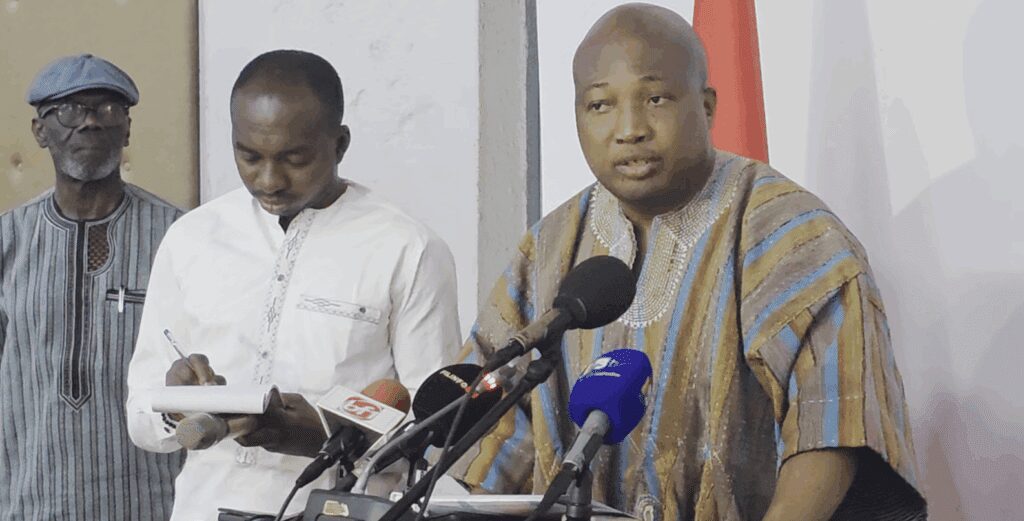
Ghana’s Foreign Affairs Minister, Samuel Okudzeto Ablakwa, announced the agreements at a press conference on Friday, describing the outcome as a direct response to directives issued by John Dramani Mahama and Burkina Faso’s leader, Ibrahim Traoré.
Key Takeaways
- Ghana and Burkina Faso are negotiating a formal security framework designed to improve intelligence sharing, coordinated patrols, and joint counterterrorism strategies.
- Security analysts say the initiative reflects a growing recognition that extremist threats in the Sahel require cross-border responses rather than isolated national strategies.
- Diplomatic observers say the strengthened bilateral framework signals a recalibration of Ghana–Burkina Faso relations, anchored not only in security concerns but also in trade facilitation, disaster resilience, and youth protection.
“I am delighted to report that we have not only complied with the directives from our two presidents, but we have made substantial progress,” Mr. Ablakwa said.
The meeting follows a violent extremist assault in the northern Burkinabè town of Titao, where several civilians—including Ghanaian tomato traders—were killed. The attack underscored mounting security concerns in the Sahel and prompted renewed urgency in bilateral coordination.
Joint Resolve Against Extremism
Central to the new framework is an expanded security cooperation arrangement. Ghana and Burkina Faso are negotiating a formal security framework designed to improve intelligence sharing, coordinated patrols, and joint counterterrorism strategies.
“We are determined to ensure that our sub-region does not become a safe haven for terrorist groups,” Mr. Ablakwa stated, emphasizing a collective effort to neutralize violent extremist networks operating across porous borders.
Security analysts say the initiative reflects a growing recognition that extremist threats in the Sahel require cross-border responses rather than isolated national strategies.
Driver’s Licence Pact to Unlock Trade
Among the most commercially significant agreements is the mutual recognition of national driver’s licences. The measure is expected to remove long-standing regulatory bottlenecks along the Tema–Ouagadougou trade corridor, a critical artery for goods moving between Ghana’s ports and Burkina Faso’s markets.
“Our drivers have complained for years about the lack of harmonisation,” Mr. Ablakwa noted. “This agreement will resolve that and boost intra-African trade.”
He cited data from the United Nations Conference on Trade and Development indicating that intra-African trade remains below 20%, a figure widely viewed as inconsistent with the continent’s economic ambitions.

Ghana, which hosts the African Continental Free Trade Area Secretariat, has positioned itself as a proponent of removing structural trade barriers across Africa. Officials say the licence recognition pact signals a practical step toward that goal.
Expanding Border and Transit Cooperation
Beyond trade facilitation, the agreements encompass:

-
A formal transport and road transit accord
-
A cross-border cooperation framework
-
A memorandum for periodic consultations between border authorities
-
The establishment of a joint commission to reaffirm the Ghana–Burkina Faso boundary
-
A comprehensive security cooperation agreement
Officials say these measures are designed to simultaneously enhance security vigilance and facilitate legitimate commerce and movement.
“We want to enhance our border collaboration so that we can enhance security and facilitate movement,” Mr. Ablakwa said.
Disaster Preparedness and Flood Management
Another key component of the accords addresses disaster prevention and humanitarian response, particularly in relation to recurring floods linked to the opening of the Bagre Dam in Burkina Faso.
Uncoordinated water releases have historically led to downstream flooding in northern Ghana, damaging farms, destroying property, and in some cases resulting in fatalities.
“When we are not coordinating properly, it leads to destruction,” the minister said, underscoring the importance of harmonized emergency preparedness protocols and early warning systems.
Joint Fight Against Illicit Drugs
The two countries also signed a cooperation agreement to combat the illicit cultivation, production, and trafficking of narcotic and psychotropic substances. Officials warned that drug abuse poses a growing threat to youth populations in both nations.
“Ghana and Burkina Faso will not be a dumping ground,” Mr. Ablakwa declared, adding that both governments intend to strengthen enforcement coordination and prevention strategies.
From Policy to Implementation
Describing the engagement as “substantive and impactful,” the minister stressed that the agreements would move quickly from signature to execution.
“These agreements are not decorative pieces,” he said. “We have discussed strategies for immediate implementation.”
Diplomatic observers say the strengthened bilateral framework signals a recalibration of Ghana–Burkina Faso relations, anchored not only in security concerns but also in trade facilitation, disaster resilience, and youth protection.

At a time when extremist violence and economic fragmentation threaten regional stability, the two neighbors appear intent on deepening cooperation across multiple fronts—an approach officials hope will fortify both economic integration and collective security along one of West Africa’s most strategically significant corridors.
Source: Accra Street Journal
Last Updated on February 22, 2026 by Samuel Kwame Boadu
Disclaimer: Some content on Accra Street Journal may be aggregated, summarized, or edited from third-party sources for informational purposes. Images and media are used under fair use or royalty-free licenses. Accra Street Journal is a subsidiary of SamBoad Publishing Hub under SamBoad Business Group Ltd, registered in Ghana since 2014.
For concerns or inquiries, please visit our Privacy Policy or Contact Page.

Samuel Kwame Boadu is a Ghanaian media entrepreneur and storyteller with a passion for amplifying urban voices and uncovering everyday truths. He is the Editor-in-Chief and Founder of Accra Street Journal, a dynamic digital platform dedicated to capturing the pulse of Ghana’s capital—its people, culture, challenges, business, sports and innovations.
Use the following reference when citing or referencing this article.
Your feedback helps us improve our journalism.
Report an Error
Help us maintain accuracy. Let our editorial team know if you spot an issue in this article.
Report a problem with this article