






Mahama Elected First Vice Chair; Leaders Reaffirm Zero Tolerance for Coups and Push for Stronger Peace Financing
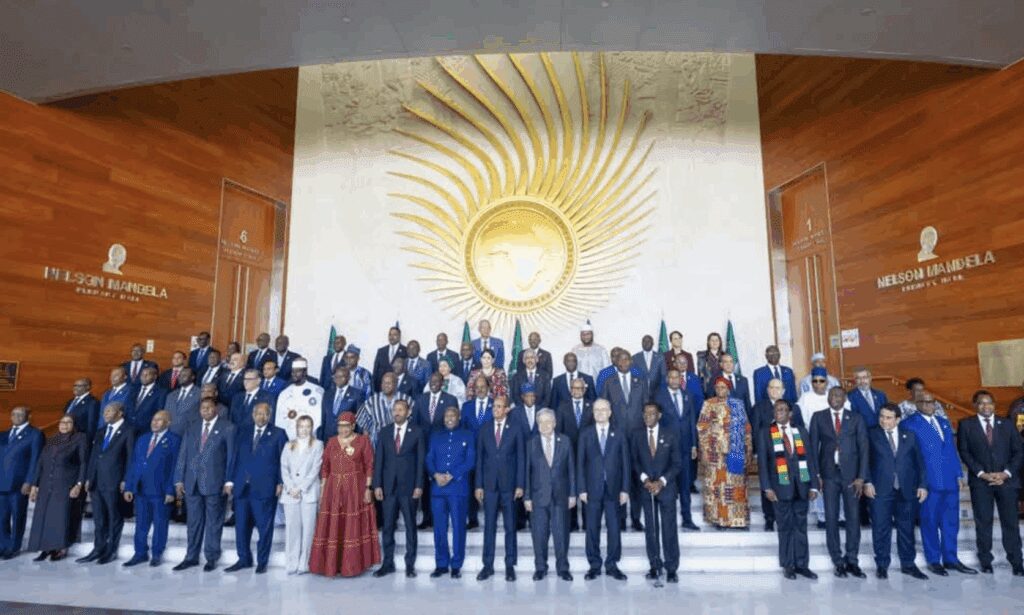
The 39th Ordinary Session of the Assembly of the African Union concluded Sunday at AU Headquarters in Addis Ababa after two days of high-level deliberations by African Heads of State and Government, setting a new leadership lineup and sharpening priorities on peace, governance and development.
The Session closed under the outgoing chairmanship of João Manuel Gonçalves Lourenço of Angola, with leaders formally welcoming Évariste Ndayishimiye of Burundi as Chairperson of the AU for 2026.

Ghana’s President John Dramani Mahama was elected First Vice Chairperson of the Union.
📢 GET A DETAILED ARTICLES + JOBS
Join ASJ's WhatsApp Channel and never miss a post or opportunity.

2026 Theme: Water and Sanitation at the Core of Agenda 2063
The Assembly launched the AU Theme of the Year 2026: “Ensuring sustainable water availability and safe sanitation systems to achieve the goals of Agenda 2063.”
Leaders framed water security as foundational to inclusive growth, climate resilience and public health, aligning the theme with the continent’s long-term blueprint, Agenda 2063.
Peace and Security: Zero Tolerance for Unconstitutional Changes
On peace and security, the Assembly reviewed the report of the Peace and Security Council (PSC), expressing concern over persistent conflicts, terrorism, violent extremism, unconstitutional changes of government and humanitarian crises across parts of the continent.
Heads of State reaffirmed zero tolerance for unconstitutional changes of government and reiterated the determination to “silence the guns” in Africa.
The Assembly underscored the need for predictable, sustainable and flexible financing for AU-led peace support operations and adopted a Memorandum of Understanding between the AU, Regional Economic Communities (RECs) and Regional Mechanisms (RMs) on the utilisation of the African Standby Force to strengthen coordination and operational readiness.
Institutional Reform and Global Governance
Leaders considered progress on AU institutional reforms, recommitting to a more people-centred, efficient, accountable and financially sustainable Union.
The Assembly adopted reports covering key continental bodies and initiatives, including Africa Centres for Disease Control and Prevention, African Peer Review Mechanism, AUDA-NEPAD and the African Continental Free Trade Area.
Reaffirming Africa’s Common Position on United Nations Security Council reform, leaders reiterated demands for equitable African representation in global governance institutions.
The Assembly also welcomed a briefing on outcomes of the 2025 G20 Leaders’ Summit in Johannesburg and emphasised coordinated African positions on sustainable development financing, debt restructuring, climate action, food security and digital transformation.
Development, Agriculture and Trade Integration
On development priorities, leaders stressed the centrality of Agenda 2063 and welcomed progress under the Comprehensive Africa Agriculture Development Programme (CAADP), highlighting the urgency of transforming food systems and building resilience to climate shocks.
They commended advances in operationalising the AfCFTA and urged Member States to accelerate implementation to expand intra-African trade, industrialisation and value addition.
The Assembly further underscored youth and women empowerment, innovation, digitalisation and skills development as critical levers for economic transformation.
Historical Justice and International Solidarity
The Summit considered a study examining the implications of classifying colonisation as a crime against humanity and certain acts committed during slavery and colonisation as acts of genocide against African peoples.
Leaders highlighted the importance of historical justice, remembrance and reparatory justice, reaffirming the preservation of the dignity of African peoples.
The Assembly also reviewed the Commission’s report on the situation in Palestine, reiterating solidarity with the Palestinian people and support for a just and lasting solution consistent with international law and relevant UN resolutions.
Leadership Transition and Host Recognition
Heads of State expressed appreciation to President Lourenço for his service as AU Chair for 2025 and pledged support to President Ndayishimiye for 2026.
The Assembly also conveyed gratitude to the Government and people of Ethiopia for hosting the Summit.
With decisions, declarations and resolutions adopted, the Addis gathering concluded with renewed emphasis on implementation—particularly as water security, peace financing and institutional reform move to the top of the Union’s 2026 agenda.
Source: Accra Street Journal
Last Updated on March 9, 2026 by Samuel Kwame Boadu
Disclaimer: Some content on Accra Street Journal may be aggregated, summarized, or edited from third-party sources for informational purposes. Images and media are used under fair use or royalty-free licenses. Accra Street Journal is a subsidiary of SamBoad Publishing Hub under SamBoad Business Group Ltd, registered in Ghana since 2014.
For concerns or inquiries, please visit our Privacy Policy or Contact Page.

Samuel Kwame Boadu is a Ghanaian media entrepreneur and storyteller with a passion for amplifying urban voices and uncovering everyday truths. He is the Editor-in-Chief and Founder of Accra Street Journal, a dynamic digital platform dedicated to capturing the pulse of Ghana’s capital—its people, culture, challenges, business, sports and innovations.