






4 min read
At AU Summit, President Signals Shift Toward Resource Sovereignty and Domestic Value Addition
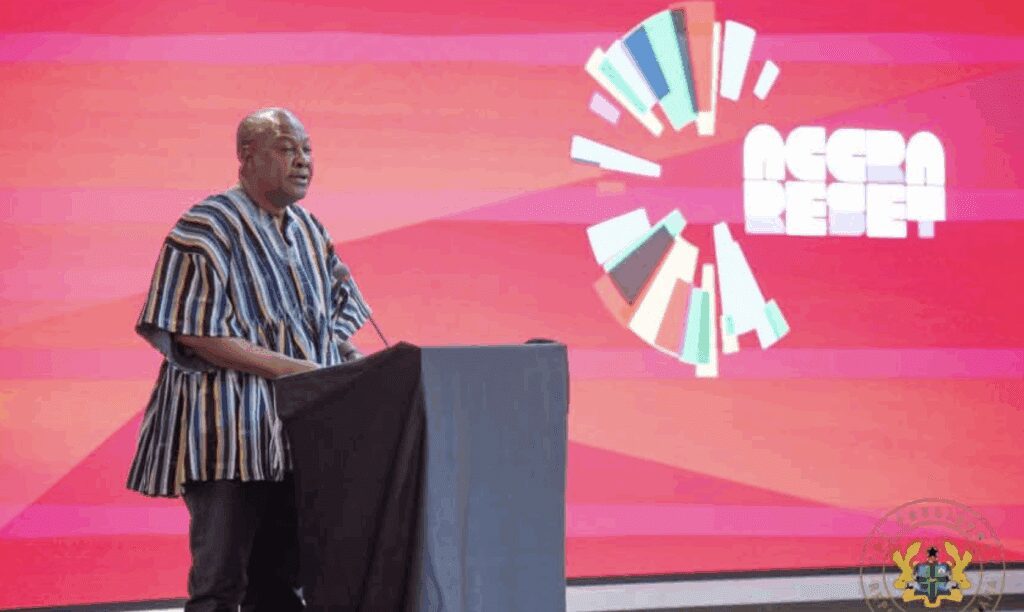
President John Dramani Mahama has unveiled sweeping reforms aimed at restructuring Ghana’s commodity financing model and accelerating domestic industrialisation, declaring that the country will finance cocoa purchases in Cedis and halt the export of unprocessed mineral ores by 2030.
The announcement was made at a high-level side event titled “Accra Reset’s Addis Reckoning” during the 39th Assembly of Heads of State and Government of the African Union in Addis Ababa.
Key Takeaways
- The announcement was made at a high-level side event titled “Accra Reset’s Addis Reckoning” during the 39th Assembly of Heads of State and Government of the African Union in Addis Ababa.
- President Mahama said Ghana would discontinue reliance on foreign syndicated loans traditionally used to purchase cocoa, a model in which cocoa beans are pledged as collateral.
- Ghana currently has the installed capacity to process approximately 400,000 tonnes of cocoa locally, yet collateralisation constraints have curtailed value addition.
The measures mark one of the most direct statements yet by the Mahama administration on economic sovereignty and value retention.
Cocoa Financing to Shift from Foreign Loans to Domestic Bonds
President Mahama said Ghana would discontinue reliance on foreign syndicated loans traditionally used to purchase cocoa, a model in which cocoa beans are pledged as collateral.
“One of the key decisions we’ve made is to stop accepting foreign funding for the purchase of our cocoa. We will raise domestic bonds. We have enough Cedis in Ghana to pay for our cocoa,” he said.
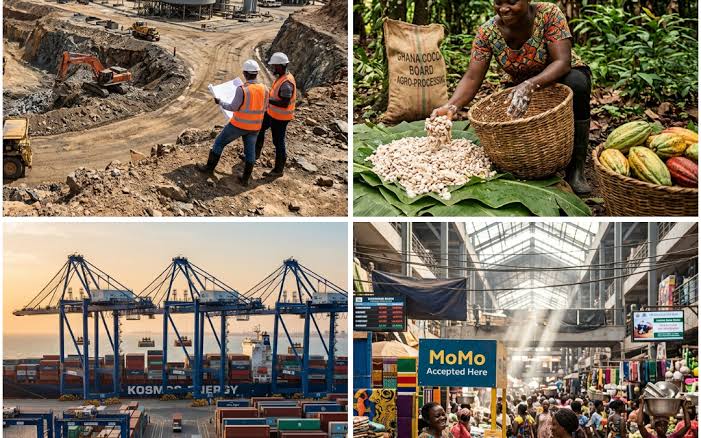
Under the existing arrangement, beans used as collateral must be shipped abroad, limiting the supply available to domestic processors. Ghana currently has the installed capacity to process approximately 400,000 tonnes of cocoa locally, yet collateralisation constraints have curtailed value addition.
By raising domestic bonds denominated in Cedis, government aims to unlock supply for local processing, reduce foreign exchange exposure and retain more value within the economy.
Currency and Price Volatility Exposed Structural Weaknesses
The President cited recent market turbulence to illustrate vulnerabilities in the current system. A producer price was fixed when international cocoa traded at $7,200 per tonne and the Cedi stood at 11.5 to the dollar. Subsequent price declines to $4,200 per tonne and exchange rate movements to 10.7 per dollar resulted in financial strain.
The episode, he said, underscored the risks embedded in foreign-denominated financing tied to volatile global commodity markets.
2030 Deadline to End Raw Mineral Ore Exports
In what may prove an even more consequential policy shift, President Mahama declared that by 2030 Ghana will cease exporting raw mineral ores.

“You’re not going to ship raw manganese ore out of Ghana. You’re not going to ship raw bauxite ore out of Ghana. You’re not going to ship raw iron ore out of Ghana. You must process all that locally,” he said.
The directive forms part of the broader “Accra Reset” philosophy—an agenda designed to reposition Ghana, and potentially other African economies, as producers of finished and semi-processed goods rather than exporters of raw materials.

Youth Pressure and Migration Concerns
President Mahama linked the urgency of reform to demographic realities. With Africa’s youthful population demanding employment and economic mobility, he argued that domestic industrialisation is central to reducing outward migration.
He warned that without accelerated implementation, young Africans would continue to risk dangerous journeys across the Sahara and Mediterranean in search of opportunity.
Call for “Coalition of the Willing”
While urging continental alignment, the President signalled readiness to proceed with willing partners if consensus proves slow.
“We come with the decisions. We agree. We do the frameworks. What is missing is urgency and implementation,” he said, advocating for a coalition model to fast-track industrial policy execution.
A Strategic Pivot
The Addis Ababa announcements position Ghana as an early mover in a broader African debate over resource nationalism, currency exposure and industrial policy.
If implemented, Cedi-financed cocoa purchases could reduce foreign dependency and stabilise sector financing. The minerals policy, meanwhile, would require significant capital investment in processing plants, energy infrastructure and logistics networks.
Together, the reforms signal a deliberate pivot: from exporter of raw commodities to architect of domestic value chains.
Whether execution matches ambition may determine if the “Addis reckoning” becomes a turning point—or another well-intentioned continental declaration.
Source: Accra Street Journal
Last Updated on March 22, 2026 by Samuel Kwame Boadu

Disclaimer: Some content on Accra Street Journal may be aggregated, summarized, or edited from third-party sources for informational purposes. Images and media are used under fair use or royalty-free licenses. Accra Street Journal is a subsidiary of SamBoad Publishing Hub under SamBoad Business Group Ltd, registered in Ghana since 2014.
For concerns or inquiries, please visit our Privacy Policy or Contact Page.

Samuel Kwame Boadu is a Ghanaian media entrepreneur and storyteller with a passion for amplifying urban voices and uncovering everyday truths. He is the Editor-in-Chief and Founder of Accra Street Journal, a dynamic digital platform dedicated to capturing the pulse of Ghana’s capital—its people, culture, challenges, business, sports and innovations.
Use the following reference when citing or referencing this article.
Your feedback helps us improve our journalism.
Report an Error
Help us maintain accuracy. Let our editorial team know if you spot an issue in this article.
Report a problem with this article