







15 min read
Introduction: A Week of Strategic Moves in Ghana’s Economy
The past week has been marked by significant developments across Ghana’s financial and business landscape—from international partnerships aimed at closing a massive trade finance gap to robust corporate earnings, ambitious export financing, urgent industry pleas for regulatory flexibility, and a sweeping new cybersecurity framework for financial institutions.
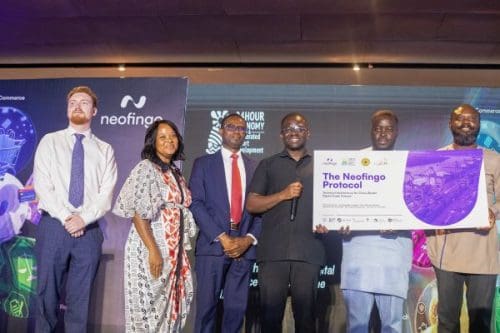
At the centre of these developments is the launch of Neofingo, a UK-Ghana digital trade architecture designed to address a $7 billion annual trade finance gap that has long constrained Ghanaian exporters, particularly small and medium-sized enterprises (SMEs) . The initiative, launched in partnership with ODI Global, the 24-Hour Economy Authority, and the AfCFTA Secretariat, aims to level the playing field for Ghanaian businesses seeking to participate in global trade .
Key Takeaways
- Meanwhile, GCB Bank reported a pre-tax profit of GH¢3.2 billion for the 2025 financial year, demonstrating the banking sector’s resilience even as its share price faced recent market pressure .
- The Ghana Export-Import Bank (GEXIM) announced it has quadrupled loans to exporters, reaching $278 million, as part of a broader strategy to boost national industrialisation .
- And the Ghana Association of Banks has called on financial institutions to integrate the Bank of Ghana’s 2026 Revised Cyber and Information Security Directive as a core infrastructure requirement .
Meanwhile, GCB Bank reported a pre-tax profit of GH¢3.2 billion for the 2025 financial year, demonstrating the banking sector’s resilience even as its share price faced recent market pressure . The Ghana Export-Import Bank (GEXIM) announced it has quadrupled loans to exporters, reaching $278 million, as part of a broader strategy to boost national industrialisation .
On the regulatory front, the Association of Ghana Industries (AGI) has urgently petitioned the Food and Drugs Authority (FDA) to extend the deadline for the ban on sachet alcoholic beverages, citing massive unsold inventories and potential financial losses . And the Ghana Association of Banks has called on financial institutions to integrate the Bank of Ghana’s 2026 Revised Cyber and Information Security Directive as a core infrastructure requirement .
This ASJ article examines these interconnected developments and their implications for Ghana’s businesses, exporters, and financial sector.
Trade Finance Breakthrough: Neofingo Aims to Close $7 Billion Gap
The Trade Finance Challenge
Ghana faces an annual trade finance gap estimated at $7 billion, part of a larger $120 billion shortfall across sub-Saharan Africa . Policymakers attribute this gap to both capital scarcity and weakened trust infrastructure, exacerbated by the decline of correspondent banking relationships that has made it difficult for many exporters to secure trade guarantees .
For Ghanaian SMEs—the backbone of the economy—this gap has meant that even when goods are produced and markets exist, the financing to move those goods across borders remains out of reach.
Neofingo: A Digital Solution
On March 25–26, 2026, the UK and Ghana launched Neofingo, a joint initiative designed as a Digital Trade Finance Corridor that will connect Ghanaian exporters and African fintech firms with UK neobanks . The launch convened regulators, financiers, entrepreneurs, policymakers, and technologists in London and Accra .
| Initiative Component | Details |
|---|---|
| Name | Neofingo |
| Type | Digital Trade Finance Corridor |
| Target Gap | $7 billion annual trade finance gap |
| Key Features | Shared digital infrastructure for trade documents, compliance data, letters of credit |
| Target Beneficiaries | SMEs, Ghanaian exporters |
| Technical Standards | ISO 20022, ICC eUCP, UK Electronic Trade Documents Act 2023 |
Sources: The High Street Business
Structural Transformation for SMEs
Augustus Goosie Tanoh, Presidential Adviser on the 24-Hour Economy, articulated the transformative potential of the initiative:

“The global trade finance system was not designed for African SMEs – it was designed around them. Neofingo rebuilds trade finance as shared infrastructure, so that a shea butter exporter in Tamale can access the same digital letter of credit as a commodity desk in the City of London. That is what structural transformation looks like” .
Economic Impact Projections
Dr Sara Pantuliano, Chief Executive of ODI Global, provided compelling projections for the initiative’s potential impact:
-
GDP boost: Ghana could boost its GDP by $3 billion in the longer term through effective implementation of the AfCFTA Digital Trade Protocol
-
Job creation: Potentially 600,000 high-quality jobs could be created
-
Trade infrastructure: The corridor helps build trust at the financial level, addressing the underlying causes of the trade finance gap
Leveraging AfCFTA
Ben Ainsley, Deputy Trade Commissioner at the British High Commission in Accra, highlighted the broader significance:

“The UK and Ghana are already connected by people, history, and language. Neofingo adds a financial layer to that connection and makes it easier for businesses here and in the diaspora to trade, invest, and grow together” .
The initiative draws on Ghana’s pro-fintech policies, the UK Electronic Trade Documents Act 2023, open standards such as ISO 20022, and the International Chamber of Commerce’s eUCP framework . It also leverages the AfCFTA digital trade infrastructure and the London to Accra platform, supported by the 24-Hour Economy Authority and the Office of the Mayor of London .
GCB Bank: GH¢3.2 Billion Profit Amid Market Volatility
Full-Year 2025 Performance
GCB Bank PLC reported a robust financial performance for the 2025 financial year, with profit before tax reaching GH¢3.2 billion . This performance reflects the bank’s strong momentum, which was evident in its first-half results released in July 2025.
First-Half 2025 Highlights (January–June 2025) :
| Metric | Value | Year-on-Year Change |
|---|---|---|
| Profit Before Tax | GH¢1.31 billion | +86.6% |
| Profit After Tax | GH¢843.2 million | +99.1% |
| Operating Income | GH¢2.74 billion | +45.2% |
| Net Interest Income | GH¢2.0 billion | +49% |
| Net Loans and Advances | GH¢10.5 billion | +2.2% |
| Customer Deposits | GH¢34.6 billion | Relatively flat |
| Total Assets | GH¢45.5 billion | +6.7% |
Asset Quality and Capital Strength
GCB Bank demonstrated strong fundamentals in its 2025 results:
| Indicator | Value | Significance |
|---|---|---|
| Capital Adequacy Ratio (CAR) | 20% | Well above 13% regulatory minimum |
| Non-Performing Loans (NPL) Ratio | 13.8% | Improved from 19.9% |
| Return on Equity (ROE) | 36.7% | Strong profitability |
| Return on Assets (ROA) | 3.6% | Efficient asset utilisation |
| Liquidity Ratio | 76.3% | Exceptionally strong |
Profitability Drivers
The strong profit growth was underpinned by:
-
46.5% surge in interest income to GH¢2.79 billion, driven by growth in the loan book and investment portfolio
-
35.6% rise in net fees and commission income to GH¢332.7 million
-
87.5% growth in trading income to GH¢397 million
-
21.3% reduction in net impairment charges on financial assets, reflecting improved risk profile
Market Context and Risks
Despite the strong performance, GCB faces challenges in the current environment. The bank’s share price recently came under pressure amid broader market sell-offs on the Ghana Stock Exchange .
The bank also faces risks to earnings growth given the sharp decline in interest rates due to improving macroeconomic conditions. Analysts anticipate that GCB will prioritise growth of high-quality loan assets, strengthen digital platforms to improve operational efficiency, and expand fee-based income while maintaining disciplined cost management .
Export Push: GEXIM Quadruples Loans to GH¢278 Million
The Export Financing Expansion
Ghana Export-Import Bank (GEXIM) has significantly expanded its support to Ghanaian exporters, announcing that it has quadrupled its loans to exporters, reaching $278 million . The announcement came during the Bank’s 10th anniversary conference, where Vice President Professor Jane Naana Opoku-Agyemang was in attendance .
Beyond Traditional Lending
GEXIM CEO Sylvester Mensah outlined the Bank’s strategy to move beyond conventional lending and introduce a wider range of financing solutions tailored to business needs :
| Financing Tool | Purpose |
|---|---|
| Pre- and post-export finance | Working capital for export operations |
| Concessional working capital | Affordable financing for exporters |
| Export credit guarantees | Risk mitigation for trade transactions |
| Invoice discounting | Unlocking cash tied in invoices |
| Factoring | Converting receivables into working capital |
| Warehouse receipt financing | Using stored commodities as collateral |
The SME Focus
The expanded strategy places particular emphasis on MSMEs, which are seen as key drivers of job creation and industrial growth . Mensah explained that the approach reflects lessons from the bank’s first decade, where access to finance alone proved insufficient for many businesses seeking to scale and compete internationally:

“Many firms do not fail for lack of ambition. They struggle because capital is expensive or mismatched, logistics are unreliable, market information is weak” .
Technical Support and Advisory Services
Beyond financing, GEXIM will also strengthen:
-
Advisory services to guide exporters on market opportunities
-
Mentorship programmes to build capacity
-
Export readiness initiatives aimed at moving firms from potential to full participation in global value chains
The goal, according to Mensah, is to provide “the right capital, in the right form, at the right time,” positioning Ghanaian businesses to compete more effectively both locally and internationally .
Industry Strain: AGI Urges FDA Extension on Alcohol Ban
The FDA Directive
The Food and Drugs Authority (FDA) issued a directive banning the production and sale of alcoholic beverages in sachets and containers below 300 millilitres, effective at the beginning of March 2026 . The measure was deemed necessary following reports of widespread smuggling of alcoholic beverages packaged in sachets by students in basic and senior high schools during lesson hours .
AGI’s Urgent Appeal
The Association of Ghana Industries (AGI) has now urgently petitioned the FDA to extend the deadline, citing massive unsold inventories and potential financial losses across the sector .
Dr. Kofi Nsiah-Poku, AGI President, explained the industry’s position:
“Manufacturers currently have stock and they feel the time allocated is insufficient to exhaust both their raw materials and finished products already on the market. They are not opposed to the ban itself; their concern is simply the need for additional time” .
The Scale of the Challenge
Dr. Nsiah-Poku disclosed that some companies are holding substantial unsold inventory, with one firm alone reportedly sitting on as many as 17 million units .
“The financial losses across manufacturers will be substantial if this is not addressed,” he noted .
Proposed Extension
AGI is pushing for a revised transition framework, proposing:
-
Up to 12 months for an orderly phase-out, or
-
At minimum, an extension to the end of the year
Industry leaders argue that production cycles, procurement of raw materials, and distribution timelines typically span well beyond six months, making the current deadline impractical. Many firms plan production up to 18 months in advance—meaning the directive disrupts existing supply chains and capital investments .
Broader Economic Concerns
Beyond immediate financial implications, AGI emphasised that insufficient transition time could lead to:
-
Job losses across the sector
-
Stranded industrial assets, particularly for companies with specialised machinery dedicated to sachet production
The Need for Structured Engagement
AGI Chief Executive Officer Seth Twum-Akwaboah underscored the need for structured engagement between regulators and industry:
“The core issue is not necessarily the policy itself, but the lack of timely engagement. If regulators and industry operate as partners, early communication allows businesses to plan and adapt… thereby minimising losses” .
He added that while safeguarding public health remains paramount, enforcement of existing regulations—such as age restrictions on alcohol sales—must be strengthened alongside new policy measures .
AGI is advocating for a collaborative approach, urging the FDA to work with manufacturers to assess stock levels and agree on a realistic timeline for compliance. “Let us look at the stock available and determine a practical period for it to be cleared. That is the most effective way to implement this policy without causing unnecessary losses,” Dr. Nsiah-Poku stressed .
Cybersecurity Push: Banks Association Calls for New Directive Integration
The Revised Cyber and Information Security Directive (CISD) 2026
The Bank of Ghana has unveiled a revised Cyber and Information Security Directive (CISD) 2026, replacing the 2018 framework that had become outdated due to rapid technological changes . The new directive provides a comprehensive framework to strengthen cyber and information security protocols and safeguard the financial sector against rising digital threats.
| Framework Aspect | Details |
|---|---|
| Replaces | 2018 CISD framework |
| Purpose | Strengthen cyber resilience, protect data confidentiality, integrity, and availability |
| Scope | Banks, rural banks, fintechs, payment service providers |
| Key Features | Robust governance, board-level accountability, proportionality frameworks, inclusive oversight |
| Central Infrastructure | Financial Industry Command Security Operations Centre (FIXOC) |
Source: The High Street Business
Banks Association’s Call
The Ghana Association of Banks (GAB) has urged financial institutions to integrate the revised directive as a core infrastructure requirement, moving beyond treating cybersecurity as merely a compliance obligation .
John Awuah, CEO of the Association, made the call at the launch of the new directive in Accra:
“Banks must now view technology as their business, recognising its potential as an enabler and backbone of financial operations. This cultural shift reflects a broader recognition that resilience against cyber threats is not optional but integral to sustaining customer trust and financial stability” .
A Single Weak Link
Mr. Awuah warned that a single weak link could expose the entire ecosystem:
“In cybersecurity, a single weak link can become the entry route for miscreants to access the larger financial architecture, which is why every player must strengthen defences collectively” .
He welcomed government’s efforts to extend cybersecurity measures to fintechs, payment service providers (PSPs), and other financial players, emphasising that collaboration among banks, regulators, and fintech institutions is essential to ensure deposits are properly protected .
The Governor’s Perspective
Dr Johnson Asiama, Governor of the Bank of Ghana, described the launch as a major milestone in safeguarding the country’s financial ecosystem. He noted that innovations such as mobile money, cloud computing, and artificial intelligence had revolutionised financial access and inclusion, but had also exposed the sector to complex cyber threats, including ransomware attacks and systemic data breaches .
National Importance
Chief of Staff Julius Debrah stressed that protecting digital financial systems had become a matter of national importance:
“Cybersecurity can no longer be treated as a narrow technical issue but has to be integrated into governance, operations, and institutional culture. By strengthening cyber resilience, we were not only protecting infrastructure; we were protecting confidence in the entire financial ecosystem” .
Integration of All Players
The CISD 2026 introduces robust governance, board-level accountability, and inclusive oversight, ensuring that all institutions—from rural banks to fintechs—are integrated into a unified defence through the Financial Industry Command Security Operations Centre (FIXOC) .
Key Developments at a Glance
| Sector | Development | Key Details | Impact |
|---|---|---|---|
| Trade Finance | Neofingo Digital Trade Corridor | $7bn gap target, UK-Ghana partnership, SME focus | 600,000 jobs potential, $3bn GDP boost |
| Banking | GCB Bank 2025 Results | GH¢3.2bn PBT, 20% CAR, 13.8% NPL | Strong fundamentals despite market pressure |
| Export Financing | GEXIM Loan Expansion | $278m loans to exporters, quadrupled | Industrialisation support |
| Regulation | AGI FDA Petition | Sachet alcohol ban extension | 17 million units inventory at risk |
| Cybersecurity | BoG CISD 2026 Launch | New cyber directive, FIXOC integration | Unified financial sector defence |
Frequently Asked Questions (FAQs)
1. What is Neofingo and how will it help Ghanaian businesses?
Neofingo is a Digital Trade Finance Corridor launched in partnership with the UK, designed to close Ghana’s $7 billion annual trade finance gap. It provides shared digital infrastructure for trade documents, compliance data, and letters of credit, enabling Ghanaian SMEs—including a shea butter exporter in Tamale—to access the same digital trade tools as large firms in London .
2. How much profit did GCB Bank report for 2025?
GCB Bank reported a profit before tax of GH¢3.2 billion for the 2025 financial year. The bank’s first-half results showed PBT up 86.6% to GH¢1.31 billion, driven by strong growth in interest income and fees .
3. What is the status of GCB Bank’s capital adequacy?
GCB Bank’s Capital Adequacy Ratio (CAR) stands at 20%, well above the regulatory minimum of 13%, indicating strong capitalisation .
4. How much has GEXIM increased lending to exporters?
Ghana Exim Bank has quadrupled its loans to exporters, reaching $278 million, as part of a broader strategy to boost national industrialisation .
5. Why is AGI petitioning the FDA?
AGI is urgently petitioning the FDA to extend the deadline for the ban on sachet alcoholic beverages. The Association reports that manufacturers hold massive unsold inventory—one firm alone has 17 million units—and the current transition period is insufficient to clear stock without substantial financial losses .
6. What extension is AGI requesting?
AGI is proposing either up to 12 months for an orderly phase-out or, at minimum, an extension to the end of the year .
7. What is the Bank of Ghana’s new cybersecurity directive?
The Bank of Ghana launched the revised Cyber and Information Security Directive (CISD) 2026, replacing the 2018 framework. It introduces robust governance, board-level accountability, and inclusive oversight, ensuring all institutions from rural banks to fintechs are integrated into a unified defence through the Financial Industry Command Security Operations Centre (FIXOC) .
8. What is the Ghana Association of Banks’ position on the new directive?
The Ghana Association of Banks is urging financial institutions to integrate the revised directive as a core infrastructure requirement, moving beyond treating cybersecurity as merely a compliance obligation. The Association emphasises that a single weak link could expose the entire financial ecosystem .
9. How will Neofingo affect the AfCFTA?
Neofingo leverages the AfCFTA digital trade infrastructure and could serve as a model for digitally-enabled trade finance systems across West Africa, helping scale intra-African trade while addressing financing constraints faced by emerging-market exporters .
10. What are the potential economic impacts of Neofingo?
Research suggests that through effective implementation of the AfCFTA Digital Trade Protocol, Ghana could boost its GDP by $3 billion in the longer term and potentially create up to 600,000 high-quality jobs .
Conclusion: Building a Resilient Economy
The week’s developments across Ghana’s business and financial landscape reflect a concerted effort to build a more resilient, inclusive, and digitally-enabled economy. The Neofingo initiative represents a structural shift in how Ghanaian SMEs access trade finance, leveraging digital infrastructure to close a $7 billion gap that has long constrained export growth . GCB Bank’s robust performance demonstrates the underlying strength of Ghana’s banking sector, even as its share price faces market pressure . GEXIM’s expanded financing signals a strategic push toward industrialisation and export competitiveness .
Yet challenges remain. The AGI’s urgent appeal on the sachet alcohol ban underscores the importance of structured public-private dialogue and adequate transition periods when implementing new regulations . And the new cybersecurity directive, welcomed by the Banks Association, highlights the imperative of collective defence in an increasingly digital financial ecosystem .
As Ghana navigates the complexities of trade finance, industrialisation, regulation, and cybersecurity, the common thread is clear: the future of the economy depends on collaboration—between nations, between the public and private sectors, and among financial institutions themselves. The foundations laid this week will serve Ghana well in the years ahead
Source: Accra Street Journal
Last Updated on March 27, 2026 by Samuel Kwame Boadu
Disclaimer: Some content on Accra Street Journal may be aggregated, summarized, or edited from third-party sources for informational purposes. Images and media are used under fair use or royalty-free licenses. Accra Street Journal is a subsidiary of SamBoad Publishing Hub under SamBoad Business Group Ltd, registered in Ghana since 2014.
For concerns or inquiries, please visit our Privacy Policy or Contact Page.

Samuel Kwame Boadu is a Ghanaian media entrepreneur and storyteller with a passion for amplifying urban voices and uncovering everyday truths. He is the Editor-in-Chief and Founder of Accra Street Journal, a dynamic digital platform dedicated to capturing the pulse of Ghana’s capital—its people, culture, challenges, business, sports and innovations.
Use the following reference when citing or referencing this article.
Your feedback helps us improve our journalism.
Report an Error
Help us maintain accuracy. Let our editorial team know if you spot an issue in this article.
Report a problem with this article