






Introduction: A Brutal Correction After a Historic Rally
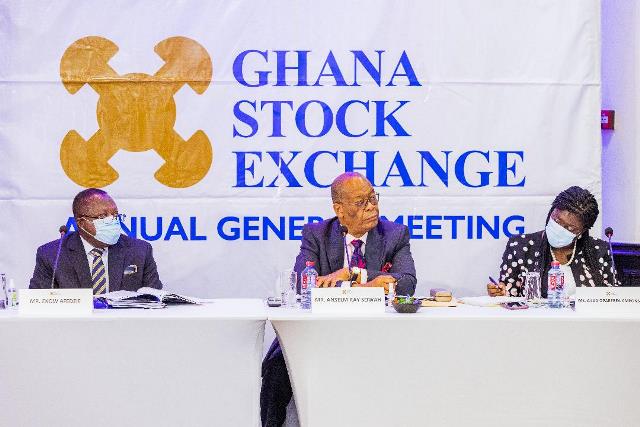
The Ghana Stock Exchange (GSE) endured its most punishing two-day sell-off of 2026 on March 25–26, erasing weeks of accumulated gains and wiping more than GH¢44 billion from market capitalisation in just 48 hours . The sharp reversal followed a remarkable bull run that saw the benchmark index breach the 15,000-point milestone for the first time in the exchange’s history earlier in March .
The selling pressure was broad-based, with heavyweights MTN Ghana shedding GH¢0.59 (nearly 10%) and GCB Bank plunging GH¢4.57 (10%) in the first session alone . By Thursday’s close, the GSE Composite Index had plummeted 884.49 points—a 6.12% single-day decline—to settle at 13,556.32 .

This ASJ article examines the forces behind the historic sell-off, the performance of key stocks, and the broader economic context of falling interest rates and record-low inflation that preceded the correction.
📢 GET A DETAILED ARTICLES + JOBS
Join ASJ's WhatsApp Channel and never miss a post or opportunity.

The Numbers: A Two-Day Rout Unprecedented in 2026
Day One: March 25, 2026 – The Sell-Off Begins
On Wednesday, March 25, the GSE recorded its steepest single-session loss of 2026. The GSE Composite Index plunged 875.85 points to close at 14,440.81, while the GSE Financial Stocks Index shed 321.87 points to settle at 9,085.45 .
| Metric | March 25 Value | Change |
|---|---|---|
| GSE Composite Index | 14,440.81 | -875.85 (-5.72%) |
| GSE Financial Stocks Index | 9,085.45 | -321.87 |
| Market Capitalisation | GH¢269.90 billion | -GH¢14.92 billion |
Total shares traded reached 2,351,584, generating turnover of GH¢6.29 million .
Day Two: March 26, 2026 – The Rout Deepens
The selling intensified on Thursday, with the GSE Composite Index shedding another 884.49 points (6.12%) to close at 13,556.32 . Trading volume exploded to 55.95 million shares, with turnover hitting a record GH¢300.5 million—the highest single-session value ever recorded on the bourse .
| Metric | March 26 Value | Change |
|---|---|---|
| GSE Composite Index | 13,556.32 | -884.49 (-6.12%) |
| GSE Financial Stocks Index | 8,641.86 | -443.59 |
| Market Capitalisation | GH¢255.21 billion | -GH¢14.69 billion |
The two-day cumulative loss in market value stood at approximately GH¢29.61 billion, with the total decline from Tuesday’s peak reaching over GH¢44 billion .
The Heavyweights: MTN and GCB Lead the Decline
MTN Ghana (Scancom PLC) – The Market’s Anchor
As the most heavily weighted stock on the exchange, MTN Ghana bore the brunt of the selling pressure. On Wednesday, the telecommunications giant plunged GH¢0.59 to GH¢5.91, representing a nearly 10% decline in a single session . Despite the steep drop, MTN remained the most actively traded counter, with 284,788 shares changing hands and contributing GH¢1.69 million to total market value .
The selling continued on Thursday, with MTN shedding another GH¢0.52 to close at GH¢5.39 . The stock alone accounted for nearly GH¢300 million of Thursday’s record trading value, reflecting the scale of selling concentrated in a single equity .
| Date | Closing Price | Change |
|---|---|---|
| March 24 | GH¢6.50 (estimated) | — |
| March 25 | GH¢5.91 | -GH¢0.59 (-9.1%) |
| March 26 | GH¢5.39 | -GH¢0.52 (-8.8%) |
GCB Bank – The Biggest Loser in Cedi Terms
GCB Bank PLC was the session’s biggest loser in absolute terms on Wednesday, tumbling GH¢4.57 to close at GH¢41.20 from GH¢45.77 at the previous close . The sell-off wiped a significant portion from one of the exchange’s highest-valued counters, with 15,131 shares changing hands for GH¢623,397.20 .
Other Major Decliners
| Stock | March 25 Closing | Change |
|---|---|---|
| TotalEnergies Marketing (TOTAL) | GH¢36.91 | -GH¢2.89 |
| SIC Insurance (SIC) | GH¢3.83 | -GH¢0.26 |
| Ecobank Transnational (ETI) | GH¢2.00 | -GH¢0.22 |
| Fan Milk (FML) | GH¢13.61 | -GH¢0.18 |
| Ecobank Ghana (EGH) | GH¢50.00 | -GH¢0.52 |
By Thursday’s close, additional declines were recorded across the board, with SIC falling to GH¢3.49 and TOTAL to GH¢36.13 .
The Lone Bright Spots
GOIL: Wednesday’s Sole Gainer
Ghana Oil Company Limited (GOIL) was the only gainer on Wednesday, adding GH¢0.01 to close at GH¢7.86, providing a rare bright spot in an otherwise bleak trading day .
Benso Oil Palm Plantation (BOPP): Holding Steady at GH¢100
Benso Oil Palm Plantation PLC, which had become the first locally-listed equity to cross the GH¢100 price threshold earlier in March, held firm at GH¢100.00 with no price movement on both Wednesday and Thursday . The agricultural sector star saw 1,513 shares change hands on Wednesday, contributing GH¢151,500 to total market value .
CPC: Thursday’s Lone Gainer
Cocoa Processing Company PLC (CPC) provided the session’s only relief on Thursday, gaining GH¢0.01 to close at GH¢0.10 .
What Drove the Sell-Off?
1. Profit-Taking After a Historic Rally
The sell-off came after an extraordinary bull run that saw the GSE Composite Index deliver a 64.66% year-to-date return as of Wednesday’s close, with the Financial Stocks Index up 95.51% despite the correction . Analysts described the selling as a “broad-based profit-taking spree” as investors moved to lock in gains after weeks of sustained appreciation .
The timing was significant: Wednesday’s session followed the Eid-ul-Fitr holiday, with investors returning to the market and promptly taking profits across the board .
2. MTN’s Weighted Impact
As one of the market’s most heavily weighted stocks, MTN Ghana’s near-10% decline was the primary driver of the index’s plunge. The telecommunications giant shed nearly 10% of its value in a single session, dragging the broader market down with it .
3. Broad-Based Selling Across Sectors
The sell-off was not confined to a single sector. Banking stocks (GCB, ETI, EGH), insurance (SIC), consumer goods (Fan Milk), and energy (TOTAL) all recorded significant declines, indicating a general market correction rather than sector-specific issues .
The Broader Economic Context: Rate Cuts and Falling Inflation
Bank of Ghana Cuts Policy Rate to 14%
Just days before the market sell-off, the Bank of Ghana’s Monetary Policy Committee announced a 150 basis point reduction in the monetary policy rate, bringing it from 15.5% to 14.0% —the lowest level since July 2021 .
The decision marked the second rate cut of 2026, following a 250 basis point reduction in January. Governor Dr. Johnson Asiama cited favorable domestic macroeconomic conditions and historically low inflation as factors enabling the accommodation .
Key considerations behind the rate cut included:
-
Sustained disinflation: Headline inflation had fallen to 3.3% in February 2026
-
Improving banking sector performance: Non-performing loans declined to 18.7% from 22.6% a year earlier
-
Trade surplus: Improved to US$3.7 billion in the first two months of 2026
-
Strong international reserves: US$14.8 billion, equivalent to 5.8 months of import cover
Despite the favourable domestic conditions, Dr. Asiama cautioned that rising geopolitical tensions in the Middle East had deepened uncertainty in the external environment, with potential pass-through effects from higher crude oil prices posing upside risks to inflation .
Inflation Hits 26-Year Low
Ghana’s headline inflation fell to 3.3% in February 2026, marking the 14th consecutive month of decline and the lowest reading since August 1999 . The food inflation rate dropped sharply to 2.4% from 3.9% in January, while non-food inflation rose slightly to 4.0% .
Government Statistician Dr. Alhassan Iddrisu clarified that the figure represents a slowdown in the rate of price increases, not a decline in the general price level .
Treasury Bill Market: Government Raises GH¢3.26 Billion
Amid the stock market turbulence, the government successfully raised GH¢3.26 billion through its latest Treasury bill auction to meet short-term funding needs . While this represented a significant amount, it fell short of earlier oversubscriptions seen earlier in March.
Earlier in the month, investor appetite for government securities remained strong, with total bids reaching GH¢10.76 billion on March 5 .
Market Outlook: Correction or Reversal?
Year-to-Date Returns Remain Positive
Despite the steep two-day decline, the GSE’s year-to-date performance remains substantially positive. As of Thursday’s close:
| Index | YTD Return |
|---|---|
| GSE Composite Index | 54.57% |
| GSE Financial Stocks Index | 85.96% |
These figures indicate that the broader 2026 rally remains largely intact, even as near-term sentiment has soured sharply .
Analyst Perspective
The sharp correction following the Eid holiday suggests that investors were eager to lock in profits after weeks of sustained gains. The timing—immediately after a market closure—amplified the selling pressure as multiple investors acted simultaneously.
MTN’s outsized role in the index means that any significant movement in the stock—whether up or down—has disproportionate effects on the broader market. Thursday’s record trading volume, with nearly GH¢300 million in MTN shares alone, underscores this dynamic .
Risks Ahead
Looking forward, analysts point to several factors that could influence market direction:
-
External risks: Rising geopolitical tensions in the Middle East and potential oil price spikes could affect inflation and interest rate expectations
-
Cedi stability: While the currency has strengthened significantly, any reversal could impact investor sentiment
-
Corporate earnings: Upcoming earnings reports will validate or challenge current valuations
Frequently Asked Questions (FAQs)
1. What caused the sharp decline in the Ghana Stock Exchange on March 25–26, 2026?
The sell-off was driven by broad-based profit-taking after a historic rally that saw the GSE Composite Index breach 15,000 points. Heavyweights MTN Ghana (down nearly 10%) and GCB Bank (down 10%) led the decline, with investors rushing to lock in gains following the Eid-ul-Fitr holiday .
2. How much did the GSE lose in market capitalisation?
The two-day sell-off wiped approximately GH¢44 billion from market capitalisation, with the total declining from GH¢284.82 billion on Tuesday to GH¢255.21 billion by Thursday’s close .
3. What is the current Bank of Ghana policy rate?
The Monetary Policy Committee reduced the policy rate by 150 basis points to 14.0% in March 2026, the lowest level since July 2021 .
4. What is Ghana’s current inflation rate?
Headline inflation fell to 3.3% in February 2026, the lowest since August 1999 and the 14th consecutive month of decline .
5. Which stocks performed worst during the sell-off?
MTN Ghana fell GH¢0.59 to GH¢5.91 on Wednesday and another GH¢0.52 to GH¢5.39 on Thursday. GCB Bank plunged GH¢4.57 to GH¢41.20 on Wednesday. Other major decliners included TotalEnergies, SIC Insurance, Ecobank Transnational, and Fan Milk .
6. Were there any gainers during the sell-off?
GOIL was the sole gainer on Wednesday, adding GH¢0.01 to close at GH¢7.86. CPC was Thursday’s lone gainer, adding GH¢0.01 to close at GH¢0.10. Benso Oil Palm Plantation (BOPP) held steady at GH¢100.00 throughout .
7. How much money did the government raise in the latest T-bill auction?
The government raised GH¢3.26 billion in its latest Treasury bill auction to meet short-term funding needs .
8. Does the GSE remain positive for the year despite the sell-off?
Yes. The GSE Composite Index remains up 54.57% year-to-date, while the Financial Stocks Index is up 85.96%, indicating the broader 2026 rally remains substantially intact .
9. What risks did the Bank of Ghana identify in its rate cut announcement?
Governor Asiama cautioned that rising geopolitical tensions in the Middle East have deepened uncertainty, with potential pass-through effects from higher crude oil prices posing upside risks to inflation .
10. When did the GSE hit its all-time high?
The GSE Composite Index breached the 15,000-point milestone for the first time in the exchange’s history earlier in March 2026 before the sharp correction .
Conclusion: A Healthy Correction or Cause for Concern?
The Ghana Stock Exchange’s two-day sell-off represents the most significant correction of 2026, erasing weeks of gains and reminding investors that even the most robust rallies are subject to sharp reversals. Yet the underlying fundamentals that drove the historic bull run remain largely intact: inflation at 26-year lows, interest rates falling, and macroeconomic stability restored.
The profit-taking that triggered the sell-off is a normal feature of healthy markets—investors who entered early in the rally locking in gains. MTN’s outsized role in the index meant that its near-10% decline had disproportionate effects, but the telecommunications giant’s underlying business fundamentals have not changed.
As the Bank of Ghana noted, external risks—particularly geopolitical tensions in the Middle East—bear watching. But with inflation below target, reserves at historic highs, and the banking sector showing resilience, the conditions that supported the rally remain in place.
For long-term investors, sharp corrections can present buying opportunities. For those watching from the sidelines, the coming weeks will reveal whether this was a temporary pullback or the beginning of a deeper trend reversal. What is certain is that Ghana’s capital markets have demonstrated their capacity for both extraordinary gains and swift corrections—a sign of a maturing, dynamic exchange.
Last Updated on March 27, 2026 by Samuel Kwame Boadu
Disclaimer: Some content on Accra Street Journal may be aggregated, summarized, or edited from third-party sources for informational purposes. Images and media are used under fair use or royalty-free licenses. Accra Street Journal is a subsidiary of SamBoad Publishing Hub under SamBoad Business Group Ltd, registered in Ghana since 2014.
For concerns or inquiries, please visit our Privacy Policy or Contact Page.

Samuel Kwame Boadu is a Ghanaian media entrepreneur and storyteller with a passion for amplifying urban voices and uncovering everyday truths. He is the Editor-in-Chief and Founder of Accra Street Journal, a dynamic digital platform dedicated to capturing the pulse of Ghana’s capital—its people, culture, challenges, business, sports and innovations.