










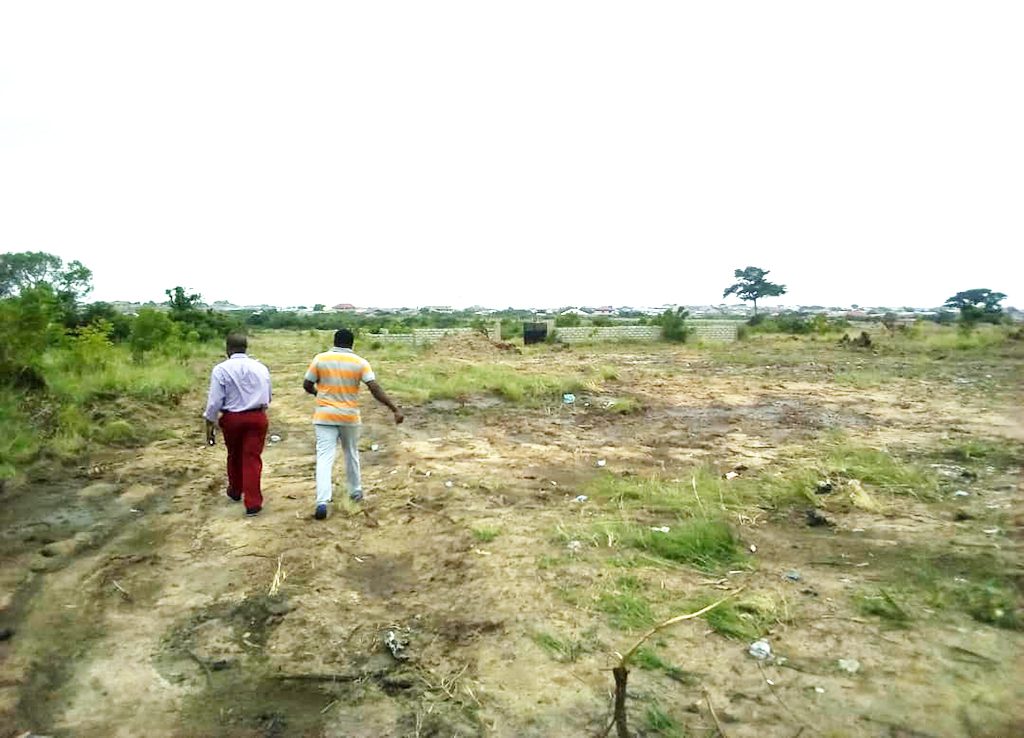
Introduction: A System That Tests Patience
For many Ghanaians, the journey from land purchase to receiving a Land Certificate is measured not in weeks or months, but in years. Some wait two years. Others wait five. Some never complete the process at all, leaving their investment perpetually vulnerable.
The question “Why does land registration take so long in Ghana?” does not have a single answer. The delays are not accidental. They are the predictable outcome of a system burdened by structural, legal, administrative, and financial obstacles that have accumulated over decades.

This Accra Street Journal article explains the real reasons behind Ghana’s notorious land registration delays—not the surface explanations, but the deep-rooted causes that keep the system stuck while applicants wait endlessly for their certificates.
📢 GET A DETAILED ARTICLES + JOBS
Join ASJ's WhatsApp Channel and never miss a post or opportunity.

Reason 1: Only 2% of Ghana’s Land Is Under Title Registration
The most fundamental reason for registration delays is also the least understood: most land in Ghana cannot be registered with a title at all.
A Justice of the Court of Appeal, Justice Alexander Osei-Tutu, has revealed that over 98 per cent of land in the country cannot be registered with a title . Under the current legal regime, only lands that fall within areas designated by the Minister of Lands and Natural Resources as “registration districts” can be registered for title. Those outside such districts rely on deed registration, which offers far weaker protection .

The Numbers:
-
Greater Accra Region (registration district): 3,245 km² (1.4% of Ghana’s land size)
-
Parts of Kumasi under registration district: 309 km² (0.13% of Ghana’s land size)
-
Kasoa and environs under registration district: 56.7 km² (0.024% of Ghana’s land size)
-
Total land under title registration: Less than 2% of Ghana
Justice Osei-Tutu criticised the fact that although title registration was introduced 40 years ago through the Land Title Registration Law, 1986 (PNDCL 152), more than 13 regions are yet to be declared registration districts .
What This Means for You
If your land falls outside a registration district, you cannot obtain a title certificate. You can only register your deed—a process that does not guarantee ownership in the same way. Deeds registration “does not give such state guarantee, but rather gives notice of the registration to third parties, and could be registered multiple times; just that priority was given to who registered it first” .
Justice Osei-Tutu offered a memorable analogy: “Title registration may loosely be compared to a marriage contracted under the Ordinance… which is purely monogamous and secures the marriage from future intruders/suitors, while Deeds registration is synonymous with customary marriage, which is potentially polygamous” .
Reason 2: The Dual Registration System Creates Confusion
Ghana operates three forms of land registration under the Land Act, 2020 (Act 1036): title registration, deed registration, and customary law registration . This multiplicity creates confusion among applicants and inefficiencies within the Lands Commission.
| Registration Type | Geographic Coverage | Legal Protection | Risk of Double Sale |
|---|---|---|---|
| Title Registration | <2% of Ghana (Accra, parts of Kumasi, Kasoa) | State-guaranteed (indefeasible title) | Very low |
| Deeds Registration | ~98% of Ghana | Notice to third parties only | High (multiple instruments can be registered) |
| Customary Registration | Varies | Community-based recognition | Variable |
Justice Osei-Tutu explained that “deeds registration under the law has the latitude of registering multiple instruments relating to the same parcel of land” . This legal reality means that even after registration, your ownership may not be secure—and it also means the Lands Commission must spend extra time investigating competing claims before processing any application.
The Lands Commission itself has confirmed the scale of the problem, stating at an Advisory Committee meeting in September 2025 that only 10% of Ghana’s land is registered—a situation management described as “worrying .
Reason 3: Manual, Paper-Based Systems (90% Still Not Digitalised)
Despite living in the 21st century, the Lands Commission remains overwhelmingly dependent on manual, paper-based processes. The Minister for Lands and Natural Resources, Emmanuel Armah-Kofi Buah, declared during his maiden visit to the Commission that “90% of your work is still paper-based” .
The Consequences of Paper-Based Systems:

-
Missing files: Documents are misplaced, lost, or destroyed, requiring applicants to resubmit and restart the process
-
Physical searches: Applicants and lawyers must visit offices in person, wait in queues, and hope that files are available
-
No real-time tracking: Applicants cannot check the status of their applications online
-
Vulnerability to manipulation: Paper files can be altered, removed, or “lost” by corrupt officials
-
Coordination failures: Different divisions of the Lands Commission may hold different versions of the same file
The Minister revealed that Ghana requires approximately $165 million to fully map and digitalise land records across the country . The government has set an ambitious target: full digitalisation of land records in Accra within the short term before extending the system nationwide, with a goal of reducing registration processing to a maximum of 30 days .
The Commission has proposed either direct government support or approval to retain 100% of its internally generated revenue to finance critical technology and infrastructure upgrades .
Reason 4: Corruption and Unofficial Charges
The Lands Commission is widely perceived as one of Ghana’s most corrupt public institutions. A detailed analysis of the Commission’s challenges noted that “unofficial charges, extortion, and significant bribes for land transactions are commonplace .
Forms of Corruption:
-
Expediting fees: Unofficial payments to “fast-track” applications that would otherwise languish
-
File manipulation: “Lost” files mysteriously reappearing after payment
-
Multiple sales: Officials knowingly processing multiple registrations for the same land
-
Intermediary exploitation: The pervasive involvement of middlemen who fuel fraudulent dealings and inflated costs
The Minister has been blunt about the problem, stating during a visit to the Commission that the situation he inherited was “troubling” and that lands acquired by the state for public purposes had been “poorly managed by some officials entrusted with their oversight” .
He warned that offenders would be exposed publicly and that “by the time we finish, no government official will even think of taking public land” .
Reason 5: Inadequate Infrastructure and Data Deficiencies
The Lands Commission operates with significant infrastructure and data limitations that directly contribute to processing delays.
Key Deficiencies:
| Deficiency | Impact on Delays |
|---|---|
| No comprehensive national base map | Surveyors cannot accurately demarcate boundaries without reference points |
| Incomplete land data | Existing records are poorly managed, incomplete, or overlap with proper maps |
| Outdated surveying equipment | Until recently, surveyors relied on total stations requiring line of sight, causing delays from obstructions |
| Financial constraints | The Commission lacks adequate funding for staff, tools, and technology |
The Licensed Surveyors Association of Ghana (LiSAG) has taken steps to address the equipment gap, acquiring Global Navigation Satellite System (GNSS) equipment that communicates directly with satellites, allowing surveyors to “quickly and accurately pick coordinates” . However, not all surveyors have access to this technology.
The Lands Commission has also announced plans to establish core stations that would enable surveyors to “access information for gathering land data,” which would make “site plans, indentures, and other processes leading to land acquisition and registration… faster” .
Reason 6: Weak Governance, Staffing Issues, and Political Interference
The Lands Commission operates within a weak corporate governance framework, characterized by “an imbalance of executive and nonexecutive directors and domination by political appointees” . This structure creates several problems:
Governance Problems:
-
Indiscipline and unethical conduct: Without strong oversight, staff misconduct goes unaddressed
-
Political manipulation: Land decisions can be influenced by political considerations rather than law
-
Poor coordination: Traditional landowners, district assemblies, and the Lands Commission often work at cross-purposes
Staffing and Remuneration Issues:
The Commission has acknowledged significant salary disparities as a pressing concern. Management has stressed that “competitive remuneration is essential to sustaining a motivated and professional workforce” . Low salaries and poor working conditions contribute to:
-
Demotivated staff
-
High turnover of skilled personnel
-
Increased temptation for corrupt practices
-
Loss of trained professionals to better-paying opportunities
The Minister has called for a complete overhaul of land administration services, describing the current system as “deeply frustrating for many Ghanaians” and citing “persistent issues such as delays, missing files, land disputes, and rampant encroachment” .
Reason 7: The Site Plan Barcode Requirement (Often Missing)
Many landowners discover too late that their site plans lack a critical component: the official barcode and QR code from the Lands Commission.
What Is a Site Plan Barcode?
A site plan barcode is an official code issued by the Lands Commission, printed alongside a QR code on the back of your site plan or indenture. These codes serve as unique identifiers that confirm the authenticity of your property documents .
Why This Causes Delays:
Without these codes, your property documents are incomplete in the eyes of the law. This means:
-
You cannot register your property with the Lands Commission
-
You may face delays or rejection when applying for a land title
-
It becomes harder to prove ownership in case of disputes
Many landowners purchase land with a site plan prepared by a surveyor but without the official barcode—a requirement they only discover when attempting to register.
The Cost of Delays: Real Consequences
These systemic delays are not merely bureaucratic inconveniences. They have real, often devastating consequences for landowners.
| Consequence | Impact |
|---|---|
| Vulnerability to double sales | While you wait for registration, the seller could sell your land to someone else |
| Encroachment | Unregistered land attracts opportunistic squatters and developers |
| Litigation | Delayed registration leads to years of court battles |
| Reduced property value | Unregistered land sells at a fraction of registered value |
| Inability to access credit | Banks rarely accept unregistered land as collateral |
| Inheritance disputes | Without clear title, family members may contest ownership after death |
The Minister has linked effective land governance to national development, noting that “streamlined and secure land transactions were essential to attracting investment in housing, manufacturing, agri-processing, and tourism .
What Is Being Done? Current Reforms
Despite the daunting challenges, significant reforms are underway.
1. Decentralisation to 110 District Offices
The government has identified 90 districts across the country where new Lands Commission offices will be established . The Minister stated: “It makes no sense for a farmer in Ellembelle to travel to Takoradi just to process land documents. We are bringing the Lands Commission to the people” . Ultimately, the government intends to establish a Lands Commission office in every district.
2. Digitalisation Target
The government has set a target to digitalise all land records and services within two years, with 70% of the Commission’s retained revenue to be used to support digital systems . The goal is to allow Ghanaians to “access land services without repeated visits to offices or reliance on middlemen” .
3. 30-Day Processing Target
The Lands Commission has been directed to complete all land-related applications within 30 days . Management has confirmed that “plans are underway to reduce the land registration process to a maximum of 30 days” .
4. Public Land Sale Review
Cabinet has approved a nationwide review of all public lands sold or allocated without the completion of required processes. Any transaction found to have bypassed due procedure will be cancelled . The Minister said this would “send a clear signal that misuse of public lands would no longer be tolerated” .
5. Enterprise Land Information System
The Commission is implementing a nationwide Enterprise Land Information System (ELIS) that will integrate land records, enable easier access, reduce human interference, and support more transparent transactions .
What You Can Do to Protect Yourself
While waiting for systemic reforms, land buyers can take practical steps to protect their investments:
-
Conduct a thorough search at the Lands Commission before paying for land
-
Engage licensed professionals (surveyor and lawyer) from the beginning
-
Ensure your site plan has a barcode before accepting it as valid
-
File a caution immediately after purchase to prevent double sales
-
Complete registration as quickly as possible—do not delay
-
Take physical possession of the land and mark boundaries
-
Keep all documentation organised and backed up
-
Follow up regularly with the Lands Commission—do not assume they will contact you
Frequently Asked Questions (FAQs)
1. Why does land registration take so long in Ghana?
Delays stem from multiple factors: 98% of land falls outside title registration districts, manual paper-based systems (90% still not digitalised), corruption, inadequate infrastructure, weak governance, and missing site plan barcodes .
2. What is the difference between title registration and deed registration?
Title registration provides a state-guaranteed, indefeasible title (available only in designated registration districts covering <2% of Ghana). Deeds registration (covering ~98% of Ghana) merely provides notice to third parties and allows multiple registrations of the same land .
3. How long does land registration currently take in Ghana?
Processing times vary widely but typically range from 6 months to several years. The government has set a target of 30 days, but this has not yet been achieved .
4. What is a site plan barcode and why does it matter?
A site plan barcode is an official code issued by the Lands Commission that confirms document authenticity. Without it, property documents are legally incomplete and cannot be registered .
5. Is the government doing anything to fix these delays?
Yes. Reforms include establishing 110 district offices, digitalisation of land records, a 30-day processing target, review of public land sales, and the Enterprise Land Information System .
6. How much would it cost to fully digitalise Ghana’s land records?
Approximately $165 million is required to fully map and digitalise land records across the country .
7. Can I register land that is not in a registration district?
Yes, but only through deed registration, not title registration. Deed registration offers weaker protection than title registration .
8. What percentage of Ghana’s land is currently registered?
Only about 10% of Ghana’s land is registered, a situation the Lands Commission describes as “worrying” .
9. Why are some Lands Commission files “missing”?
Missing files result from manual paper-based systems, poor record-keeping, and in some cases, deliberate manipulation by officials seeking bribes .
10. What is the 30-day target for land registration?
The Minister has directed the Lands Commission to complete all land-related applications within 30 days. The Commission has confirmed plans to achieve this target, though it remains aspirational .
Conclusion: A System in Transition
The delays in Ghana’s land registration system are not the result of a single cause but of a convergence of structural, legal, administrative, and financial obstacles. For 40 years, title registration has been legally available, yet only 2% of Ghana’s land mass falls within registration districts . For decades, manual paper-based systems have persisted, with 90% of the Lands Commission’s work still not digitalised .
Corruption, weak governance, inadequate infrastructure, and missing documentation requirements like site plan barcodes have compounded the problem .
Yet there is reason for cautious optimism. The government has announced ambitious reforms: 110 new district offices, full digitalisation within two years, a 30-day processing target, and a review of corrupt public land sales . The question is not whether these reforms are needed—they clearly are. The question is whether the political will and financial resources will sustain them long enough to produce lasting change.
For the individual land buyer, the advice remains unchanged: conduct thorough searches, engage licensed professionals, file cautions immediately, and complete registration as quickly as possible. The system may be broken, but those who navigate it carefully can still protect their investments.
The journey from land purchase to Land Certificate in Ghana is not for the impatient. But understanding why the delays exist is the first step toward managing them.
Source: Accra Street Journal
Last Updated on June 14, 2026 by Samuel Kwame Boadu
Disclaimer: Some content on Accra Street Journal may be aggregated, summarized, or edited from third-party sources for informational purposes. Images and media are used under fair use or royalty-free licenses. Accra Street Journal is a subsidiary of SamBoad Publishing Hub under SamBoad Business Group Ltd, registered in Ghana since 2014.
For concerns or inquiries, please visit our Privacy Policy or Contact Page.

Samuel Kwame Boadu is a Ghanaian media entrepreneur and storyteller with a passion for amplifying urban voices and uncovering everyday truths. He is the Editor-in-Chief and Founder of Accra Street Journal, a dynamic digital platform dedicated to capturing the pulse of Ghana’s capital—its people, culture, challenges, business, sports and innovations.





