







How Mining Royalties Shape Ghana’s Economy
The Central Role of Royalties in Resource Governance
Mining royalties sit at the heart of Ghana’s economic relationship with its natural resources. They represent the most direct financial link between mineral extraction and national revenue, ensuring that the state benefits from the depletion of non-renewable assets. Unlike corporate taxes, which depend on profitability, royalties are typically calculated as a percentage of production value, making them a more immediate and predictable source of income.

In a country where gold dominates exports and mining contributes significantly to GDP, royalties are not a marginal policy tool—they are a foundational component of fiscal strategy. Their structure, rate, and enforcement directly influence how much value Ghana captures from its mineral wealth.
📢 GET A DETAILED ARTICLES + JOBS
Join ASJ's WhatsApp Channel and never miss a post or opportunity.

Historical Context: Evolution of Ghana’s Royalty Framework
Early Mining Policies and Fixed Rates
Ghana’s modern mining regime was shaped by reforms in the 1980s and 1990s, when the country sought to attract foreign investment into a struggling sector. Royalty rates during this period were deliberately kept low and stable, often around 3%, to encourage multinational companies to commit capital.
This strategy was effective in revitalizing production. Gold output increased, investment flowed in, and Ghana established itself as a leading mining jurisdiction in Africa. However, the trade-off was clear: while production expanded, the share of revenue captured by the state remained relatively modest.

Gradual Policy Adjustments
Over time, as the sector matured and gold prices rose, Ghana began revising its royalty framework. The Minerals and Mining Act introduced a range of 3% to 6%, allowing for more flexibility. This marked a shift from purely investor-driven policy to a more balanced approach.
Recent developments have taken this evolution further, introducing dynamic royalty systems that respond to market conditions. This reflects a growing recognition that fixed rates may not adequately capture value in a volatile commodity environment.
Financial Implications: Revenue Stability and Economic Planning
A Reliable Source of Government Income
Royalties provide a steady stream of revenue because they are tied to production rather than profit. Even when companies report lower earnings due to high costs or investment cycles, royalties continue to flow as long as production continues.
This makes them particularly valuable for fiscal planning. In Ghana’s case, mining royalties contribute significantly to government revenue, supporting public spending on infrastructure, social services, and economic development.
Sensitivity to Commodity Prices
While royalties are more stable than profit-based taxes, they are still influenced by global commodity prices. Higher gold prices increase the value of production, leading to higher royalty payments. Conversely, price declines reduce revenue.
This creates a direct link between global markets and national finances. Ghana’s budgetary performance can be affected by fluctuations in gold prices, highlighting the importance of diversification.
Trade-Off Between Revenue and Investment
Setting royalty rates involves a delicate balance. Higher rates increase government revenue but can reduce the attractiveness of the mining sector to investors. Lower rates attract investment but limit national benefit.
Ghana’s recent move toward sliding royalty systems attempts to address this trade-off by adjusting rates based on market conditions. This approach seeks to maximize revenue without discouraging investment.
Investor Interest: Pricing Risk and Return
Royalties as a Key Investment Variable
For investors, royalty rates are a critical component of project economics. They directly affect profitability and, by extension, investment decisions. Even small changes in royalty rates can significantly alter the financial viability of a mining project.

As Ghana adjusts its royalty framework, investors are closely monitoring how these changes impact returns. Predictability remains a key concern. Investors prefer stable and transparent systems that allow for long-term planning.
Impact on Capital Allocation
Higher or more complex royalty structures can lead investors to reassess where they allocate capital. Ghana competes with other mining jurisdictions for investment, and its royalty regime plays a central role in that competition.
However, strong geological potential and established infrastructure continue to make Ghana an attractive destination, even as fiscal terms evolve.
Balancing Competitiveness and Sovereignty
The challenge for Ghana is to remain competitive while ensuring fair value capture. This balance is at the core of ongoing policy adjustments and investor engagement.
Government Policy Direction: Toward Dynamic and Strategic Royalties
Introduction of Sliding Royalty Systems
Recent policy developments indicate a move toward more flexible royalty structures. Sliding scales linked to commodity prices allow the government to capture higher revenue during boom periods while providing relief during downturns.
This approach reflects a more sophisticated understanding of market dynamics and aligns Ghana’s policy with global best practices.
Integration With Broader Resource Strategy
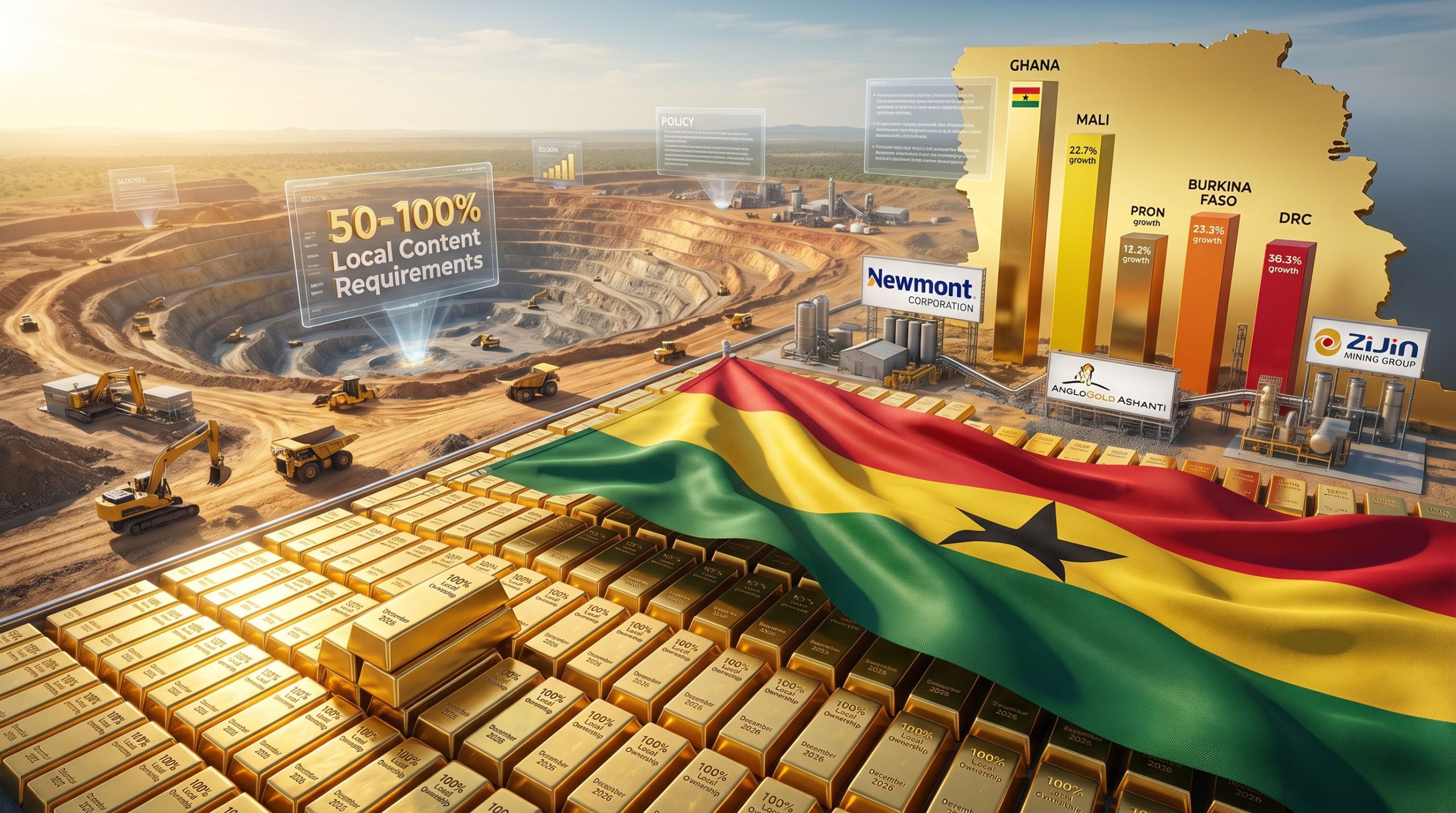
Royalties are no longer treated in isolation. They are part of a broader strategy that includes state participation, local content requirements, and value addition initiatives.
This integrated approach aims to maximize the overall economic impact of mining rather than focusing solely on immediate revenue.
Strengthening Compliance and Transparency
Effective royalty systems depend on accurate production reporting and enforcement. Ghana has been working to improve monitoring and compliance mechanisms to ensure that royalty payments reflect actual production levels.
Transparency initiatives also play a role in building public trust and ensuring accountability.
What Royalties Mean for Ghana’s Economy
Funding Public Development
Revenue from mining royalties supports government expenditure across multiple sectors. Infrastructure projects, education, healthcare, and social programs all benefit from these funds.

This makes royalties a critical link between natural resource extraction and broader economic development.
Economic Stability and Risk
While royalties provide a steady income stream, reliance on a single commodity—primarily gold—creates vulnerability. Price fluctuations can impact revenue, affecting fiscal stability.
Diversifying the resource base, including through lithium and other minerals, can help mitigate this risk.
Encouraging Responsible Resource Management
Royalties also serve as a mechanism for ensuring that resource extraction benefits the nation. By capturing value from mining activities, they reinforce the principle that natural resources should contribute to national development.
A Policy Tool With Structural Impact
Mining royalties are more than a fiscal instrument—they shape the entire structure of Ghana’s resource economy. They influence investment decisions, determine government revenue, and reflect broader policy priorities.
Accra Street Journal notes that the evolution of Ghana’s royalty framework signals a shift toward more strategic resource management. The move from fixed rates to dynamic systems reflects an effort to align national benefit with global market realities.
The effectiveness of this approach will depend on execution. Transparent implementation, consistent policy application, and strong institutional capacity are essential.
In the long term, royalties will continue to play a defining role in how Ghana converts its mineral wealth into sustainable economic growth. The challenge lies not just in setting the right rates, but in ensuring that the revenue generated translates into lasting development outcomes.
FAQs
What are mining royalties?
They are payments made by mining companies to the government based on the value or volume of minerals extracted.
Why are royalties important in Ghana?
They provide a steady source of government revenue and ensure the country benefits from its natural resources.
How are royalties calculated?
Typically as a percentage of the value of minerals produced, though structures can vary.
Do royalties affect investors?
Yes, they directly impact profitability and influence investment decisions.
What is a sliding royalty system?
It is a flexible system where royalty rates change based on commodity prices.
How do royalties impact the economy?
They fund public spending and contribute to economic stability, but are influenced by global market conditions.
Can high royalties discourage investment?
Yes, excessively high rates can reduce project viability and deter investors.
What is the future of royalties in Ghana?
The trend is toward more dynamic and strategic systems that balance revenue generation with investment attraction.
Last Updated on April 30, 2026 by Samuel Kwame Boadu
Disclaimer: Some content on Accra Street Journal may be aggregated, summarized, or edited from third-party sources for informational purposes. Images and media are used under fair use or royalty-free licenses. Accra Street Journal is a subsidiary of SamBoad Publishing Hub under SamBoad Business Group Ltd, registered in Ghana since 2014.
For concerns or inquiries, please visit our Privacy Policy or Contact Page.

Samuel Kwame Boadu is a Ghanaian media entrepreneur and storyteller with a passion for amplifying urban voices and uncovering everyday truths. He is the Editor-in-Chief and Founder of Accra Street Journal, a dynamic digital platform dedicated to capturing the pulse of Ghana’s capital—its people, culture, challenges, business, sports and innovations.