








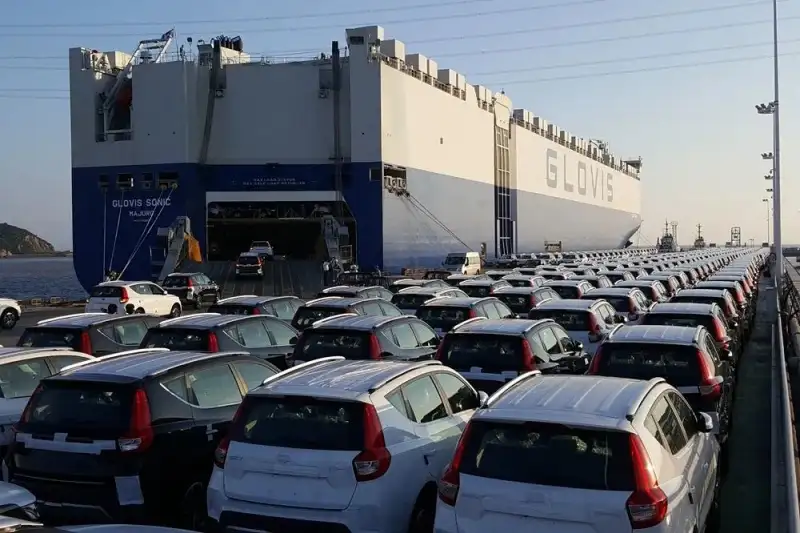
The rules for importing a used car into Ghana changed fundamentally in 2026. The most important document is no longer just the Bill of Lading or the invoice. It is the Certificate of Conformance (CoC) issued before the vehicle leaves the country of origin. Without it, a car shipped on or after 1 October 2026 will not be cleared at Tema Port. Here is the ASJ complete list of documents you need, based on the official Ghana Standards Authority (GSA) and Ghana Revenue Authority (GRA) requirements.
The New Mandatory Document: Certificate of Conformance (CoC)
Effective 1 October 2026, the GSA is strictly enforcing the National Vehicle Homologation and Conformity Assessment Programme. For any used vehicle shipped on or after that date, you must obtain a Certificate of Conformance from a GSA-approved third-party inspection body in the country of export before shipment .

What the CoC Confirms
The inspection verifies that the vehicle meets Ghana Standard 4510 (GS 4510) for safety, quality, and environmental standards . It is issued after a physical inspection in the exporting country.
📢 GET A DETAILED ARTICLES + JOBS
Join ASJ's WhatsApp Channel and never miss a post or opportunity.

How to Get It
-
Apply via the GSA EASYPASS portal or through an approved inspection agency like Intertek, Bureau Veritas, or SGS .
-
Schedule the inspection in the country of origin. The vehicle must be physically available for inspection.
-
Receive the CoC upon successful verification.
Critical warning: Without a valid CoC, the vehicle will be refused clearance at Tema Port and may be returned to origin at your expense .
Vehicles Barred from Import (Even with an Inspection)
The GSA prohibits several categories of used vehicles from entry, regardless of paperwork :

-
Vehicles more than 10 years old from the date of manufacture.
-
Flood-damaged or fire-damaged vehicles.
-
Vehicles assembled from spare parts.
-
Right-hand-drive vehicles.
-
Vehicles with a broken, cracked, or twisted chassis or safety cage.
-
Vehicles without a speedometer reading in kilometres per hour
The Standard Shipping and Customs Documents
Alongside the CoC, you need the standard set of documents that have always been required for customs clearance. Missing any of these is the most common cause of demurrage at Tema .
| Document | Purpose |
|---|---|
| Bill of Lading (B/L) | The title document for the cargo, issued by the shipping line |
| Commercial Invoice | Shows the purchase price and vehicle details for duty assessment |
| Packing List | Details the VIN, make, model, year, and colour |
| Export Certificate / De-registration | Proof the car was legally exported from the source country |
| Vehicle Inspection Report | Proof of condition and verified mileage before shipping |
| Bank Payment Evidence | A traceable record of the transaction |
The FCVR (Final Classification and Valuation Report)
The GRA requires an FCVR to be added to the clearing documents. This is obtained through the customs valuation process and is required alongside the Import Declaration Form (IDF) and Tax Clearance Certificate. Your clearing agent typically handles this, but you should confirm it is part of the process.
The IDF (Import Declaration Form)
The IDF must be registered with the GRA before the vessel departs the origin port. Missing it causes port delays and demurrage charges.
The VIN and Pre-Shipment Check
The Vehicle Identification Number (VIN) is not just a document—it is the key to the entire customs assessment. Customs uses the VIN to decode the vehicle’s technical specifications, including engine size, year of manufacture, and fuel type .
Before paying a deposit, confirm that the VIN on the title matches the VIN on the vehicle, and that the manufacture year decoded from the VIN is under 10 years old. A mismatch or an older manufacture date can make the car ineligible for import under the 2026 rules .
What Happens If You Miss a Document?
The consequences are financial and logistical.
Without the CoC (for shipments on/after 1 Oct 2026): The vehicle cannot be cleared. It may be returned to origin, and you bear the cost .
Without the Bill of Lading or Invoice: Customs cannot assess duty. The car sits at the port, accruing demurrage—daily storage charges that can quickly erode any savings .
Without the IDF: The clearing process cannot begin. The vessel may arrive before your paperwork is ready, triggering delays.

The Pre-Shipment Checklist
Before the vessel departs the origin port, confirm you have:
- □Certificate of Conformance (CoC) from a GSA-approved body (for shipments on/after 1 Oct 2026)
- □Bill of Lading with the correct consignee details
- □Commercial Invoice matching the declared value
- □Packing List with the VIN and vehicle details
- □Export Certificate proving legal export
- □Vehicle Inspection Report with verified mileage
- □Bank Payment Evidence
- □IDF registered with GRA before departure
- □Confirmation that the vehicle is under 10 years old and is not right-hand drive, flood-damaged, or assembled from parts
Quick Facts
| Topic | Details |
|---|---|
| New Mandatory Document (from 1 Oct 2026) | Certificate of Conformance (CoC) |
| Issuing Body | GSA-approved third-party inspector |
| Standard | GS 4510:2022 |
| Maximum Vehicle Age | 10 years from manufacture |
| Right-Hand Drive | Prohibited |
| Key Shipping Document | Bill of Lading |
| Customs Valuation Document | FCVR (obtained via clearing agent) |
| Pre-Departure Requirement | IDF registered with GRA |
Frequently Asked Questions
1. What is the most important new document for importing a used car into Ghana?
The Certificate of Conformance (CoC). From 1 October 2026, any used vehicle shipped to Ghana must have a CoC issued by a GSA-approved inspection body in the country of origin.
2. How do I get the Certificate of Conformance?
Apply through the GSA EASYPASS portal or an approved agency like Intertek. The vehicle must be physically inspected in the exporting country before shipment .
3. What happens if I ship without a CoC?
The vehicle will not be cleared at Tema Port. It may be returned to origin at your expense, and you will face severe delays .
4. What is the maximum age for a used car imported into Ghana?
Vehicles must be under 10 years old from the date of manufacture. Cars older than this are prohibited .
5. Can I import a right-hand-drive car into Ghana?
No. Right-hand-drive vehicles are prohibited .
6. What standard shipping documents do I need?
Bill of Lading, Commercial Invoice, Packing List, Export Certificate, Vehicle Inspection Report, and Bank Payment Evidence .
7. What is the FCVR?
The Final Classification and Valuation Report is a customs document required for clearing. Your clearing agent typically obtains it as part of the valuation process .
8. Do I need an IDF before shipping?
Yes. The Import Declaration Form must be registered with the GRA before the vessel departs the origin port to avoid delays.
9. Are flood-damaged cars allowed?
No. Flood-damaged, fire-damaged, and vehicles assembled from spare parts are prohibited .
10. Can I import a car older than 10 years if it was shipped before October 2026?
The new rules apply to vehicles shipped on or after 1 October 2026. Vehicles shipped before that date are exempt from the new GS 4510 requirements, even if they arrive later . However, standard customs duties and over-age penalties still apply

Source: Accra Street Journal
Last Updated on October 31, 2026 by Samuel Kwame Boadu
Disclaimer: Some content on Accra Street Journal may be aggregated, summarized, or edited from third-party sources for informational purposes. Images and media are used under fair use or royalty-free licenses. Accra Street Journal is a subsidiary of SamBoad Publishing Hub under SamBoad Business Group Ltd, registered in Ghana since 2014.
For concerns or inquiries, please visit our Privacy Policy or Contact Page.

Samuel Kwame Boadu is a Ghanaian media entrepreneur and storyteller with a passion for amplifying urban voices and uncovering everyday truths. He is the Editor-in-Chief and Founder of Accra Street Journal, a dynamic digital platform dedicated to capturing the pulse of Ghana’s capital—its people, culture, challenges, business, sports and innovations.