





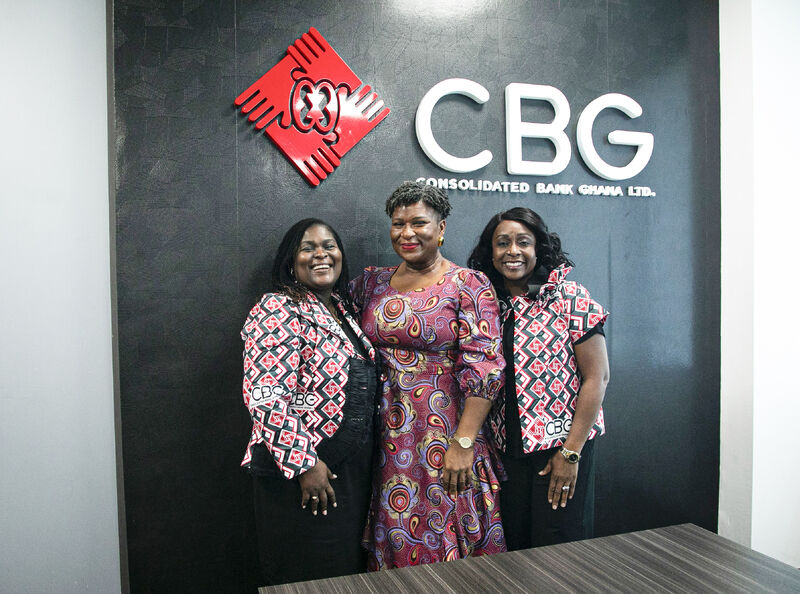

How a “bad bank” created amid crisis executed a GH¢873 million turnaround, redefined SME lending with collateral-free loans, and is now positioning itself as Ghana’s most trusted indigenous universal bank.
Executive Introduction
In the aftermath of Ghana’s decisive financial sector cleanup between 2017 and 2019, nine collapsed banks—including uniBank, The Royal Bank, Construction Bank, Beige Bank, Sovereign Bank, and Premium Bank—were consolidated into a single survivor. That survivor was Consolidated Bank Ghana Ltd (CBG), a fresh institution with zero legacy brand equity, a state guarantee, and an existential mandate: restore depositor confidence and prove that public sector ownership could deliver commercial banking excellence .
For years, the market watched skeptically. A state-owned bank born from the ashes of private sector failures? The prognosis was not optimistic.
📢 GET A DETAILED ARTICLES + JOBS
Join ASJ's WhatsApp Channel and never miss a post or opportunity.
The 2024 financial results have rewritten that narrative. CBG transitioned from a staggering GH¢712.9 million loss before tax in 2023 to a GH¢160.1 million profit before tax in 2024—a GH¢873 million swing that ranks among the most dramatic turnarounds in Ghanaian banking history . Interest income surged 19% to GH¢2.07 billion, non-funded income jumped 55%, and Non-Performing Loans declined by 12% even as the loan portfolio expanded 4% .
For corporate clients, investors, and business observers, CBG represents a unique proposition: a state-owned bank that behaves like a commercial enterprise, backed by the full faith of the Government of Ghana, yet nimble enough to offer collateral-free loans of up to GH¢500,000 to SMEs . This profile dissects how CBG makes its money, its aggressive expansion strategy (114 branches across 13 regions), the leadership transition that is stabilizing its executive suite, and the critical question of whether state ownership is an asset or liability in Ghana’s competitive banking landscape .

Company Overview
Origin Story: Born from Crisis
CBG was established in August 2018 as part of the Bank of Ghana’s financial sector cleanup—the most aggressive regulatory intervention in Ghana’s post-independence banking history. The consolidation absorbed the viable assets and liabilities of five collapsed indigenous banks: uniBank, The Royal Bank, Construction Bank, Beige Bank, and Sovereign Bank (with Premium Bank added later). The logic was sound: rather than allowing these institutions to fail individually and trigger systemic contagion, the state would create a “bridge bank” to preserve jobs, protect depositors, and maintain lending to the real economy .
The execution, however, was fraught with complexity. CBG inherited a toxic asset portfolio, fragmented IT systems, diverse corporate cultures, and, most damagingly, a depositor base that had lost faith in indigenous banking. The bank spent its first four years cleaning balance sheets, integrating operations, and defending against persistent rumors of insolvency or imminent sale .
Ownership Structure: A Unique Hybrid
CBG is wholly owned by the Government of Ghana, making it the only major bank in the country with 100% state ownership . This distinguishes it from:
-
GCB Bank: Publicly traded with diversified shareholders, including state-related entities but also institutional and retail investors
-
ADB: Majority state-owned but with minority private participation
-
Ecobank, Stanbic, Standard Chartered, Absa, Access: Wholly private, multinational-owned institutions
The State Interests and Governance Authority (SIGA) exercises oversight on behalf of the government, and in September 2024, SIGA publicly dismissed social media reports suggesting CBG was being sold, reaffirming that “the ownership structure of CBG remains unchanged, with the Government of Ghana continuing as the sole shareholder .
This state ownership carries both advantages and constraints. On the one hand, CBG has an implicit sovereign guarantee, providing deposit security that no purely private bank can match. On the other hand, it must navigate public sector procurement rules, political oversight, and the perennial risk that government borrowing could pressure the bank to hold more sovereign debt than is commercially optimal.
Leadership: A New Era of Stability
CBG’s executive leadership has undergone significant strengthening in 2025, signaling a commitment to governance depth and operational continuity.
Managing Director: Dr. Naomi Kwetey
Dr. Kwetey leads the executive team, overseeing the bank’s strategic direction and the continued execution of its turnaround plan .
Deputy Managing Director: Sheila Azuntaba
Azuntaba serves as the first Deputy Managing Director, bringing operational and strategic experience to the executive suite .
Second Deputy Managing Director: Florence Adei Ohene (Appointed May 2025)
President John Mahama appointed Florence Adei Ohene as the second Deputy Managing Director of CBG in May 2025, a move widely seen as a significant boost to the bank’s leadership capital .
Adei Ohene brings over 25 years of experience across both local and international banking institutions. Her career includes executive positions at uniBank (the collapsed institution whose assets CBG inherited—a connection that brings deep institutional memory) and senior roles in the United States with JP Morgan Chase, PNC Bank, and SunTrust Bank . Her experience spans Wealth and Investment Management, Corporate Banking, Strategy, Project Management, and Business Transformation.

Adei Ohene holds an MBA from Georgetown University and two degrees from UCLA (graduating Cum Laude). She also champions women’s economic empowerment and financial inclusion, particularly among women-owned businesses .
Board Director: Stephen Kpordzih
Stephen Kpordzih serves as a Director on CBG’s board. With over three decades of banking experience across retail, corporate, treasury, and risk management, and holding an MBA in Finance from the University of Leicester, Kpordzih has held executive roles including CEO of The Construction Bank Ghana Limited and Managing Director of Agricultural Development Bank (ADB). His expertise spans credit risk management, treasury operations, and customer relationship management .
The Outgoing MD: Daniel Wilson Addo
The turnaround architect, Daniel Wilson Addo, led CBG through its most challenging period, delivering the 2024 profit before tax of GH¢160.1 million. In reflecting on the achievement, Addo stated that CBG’s remarkable turnaround “reflected its commitment to financial resilience, operational excellence and customer-focused innovation . His departure (as outgoing MD) coincides with the onboarding of Adei Ohene, suggesting a deliberate leadership transition strategy.
Operations and Footprint
CBG operates 114 branches across 13 regions of Ghana, making it one of the most geographically extensive banking networks in the country . The bank’s headquarters are located at Manet Tower 3, South Liberation Link, Airport City, Accra .
In June 2024, CBG opened a new branch in the Berekum East Municipality, reinforcing its commitment to expanding financial inclusion into underserved regions. At the opening ceremony, Deputy Managing Director (Operations) Mr. Thairu Ndungu reaffirmed CBG’s dedication to offering “superior banking solutions tailored to the needs of customers and communities” .
The bank employs between 1,000 and 5,000 people, positioning it as a significant employer in the financial services sector .
Business Model: The SME-Focused Universal Bank
CBG operates as a universal bank, licensed by the Bank of Ghana under the Specialized Deposit-Taking Institutions Act, 2016 (Act 930) . Its business model can be understood through three core pillars:
Pillar One: SME and Commercial Banking (The Crown Jewel)
SME lending is not a sideline for CBG—it is the strategic centerpiece. The bank has developed a reputation for accessible, flexible financing for small and medium-sized enterprises, which are widely recognized as the engine of Ghana’s economy.
The Collateral-Free Loan Initiative
CBG’s most distinctive product is its Collateral-Free Loan, which allows eligible SME customers to access up to GH¢500,000 without collateral . In Ghana’s banking landscape, where titled land is the standard loan security and where 82% of land lacks formal documentation, this product addresses a fundamental market failure. SMEs with viable business models but no property assets can now access working capital through CBG.
The lending strategy is disciplined despite its accessibility. In 2024, CBG grew its loan portfolio by 4% while simultaneously reducing Non-Performing Loans by 12%, demonstrating that collateral-free lending can be executed with robust credit assessment and monitoring .

Partnership Approach
CBG emphasizes partnerships with the business community, positioning banking as “fundamentally about relationships and contributing to the well-being of the community” . This relationship-driven model distinguishes CBG from multinational banks that rely on centralized, algorithm-driven credit scoring.
Pillar Two: Retail and Consumer Banking
CBG has been recognized for excellence in this segment, winning Best Bank in Retail Banking (Ghana) at the Africa Bank 4.0 Awards in February 2025 . The award citation noted that the recognition was “a testament to our commitment to innovation, digital excellence, and customer-focused banking solutions” .
Retail products include:
-
Savings and investment accounts
-
Loans (personal, auto, mortgage)
-
Advisory services
-
Insurance (through partnerships)
-
Remittance services (simplified and highly reliable, according to the bank)
Pillar Three: Corporate and Institution Banking
CBG serves corporate clients, public institutions, and government agencies, leveraging its state backing to win mandates that private competitors cannot. The bank’s treasury operations and investment securities portfolio provide balance sheet stability and income diversification .
How They Make Money: The 2024 Financials
CBG’s 2024 financial turnaround provides the clearest picture of its revenue model:
| Metric | 2024 Performance | Change vs. 2023 | Driver |
|---|---|---|---|
| Profit Before Tax | GH¢160.1 million | +GH¢873 million swing (from -GH¢712.9m) | Operational restructuring |
| Interest Income | GH¢2.07 billion | +19% | Growth in performing loan portfolio |
| Fee & Commission Income | GH¢244.1 million | +55% | Higher transaction volumes, digital adoption |
| Total Assets | Grew 21.5% to undisclosed base | +21.5% | Deposit growth, investment securities |
| Loan Portfolio | Increased 4% | +4% | SME lending expansion |
| Non-Performing Loans | Declined 12% | -12% | Improved credit quality, recoveries |
Critical Analysis of Profitability Drivers
The 55% surge in fee and commission income is particularly significant. Unlike interest income (which depends on the Bank of Ghana’s policy rate and is vulnerable to margin compression), non-funded income is more resilient and scalable. CBG attributed this growth to “enhanced customer engagement, higher transaction volumes, and a focus on providing seamless, secure and differentiated banking experiences” .
The 12% decline in NPLs is equally important. CBG inherited a distressed loan portfolio from the collapsed banks; reducing NPLs indicates both successful recoveries and improved underwriting standards. Importantly, this decline occurred simultaneously with loan book expansion—the bank was not simply shrinking its way to better asset quality.
Cost Discipline
Beyond revenue growth, CBG maintained “a strong focus on cost discipline, optimizing resource allocation and leveraging technology to enhance efficiency” . These measures allowed the bank to manage costs while sustainably improving service delivery—a difficult balance that many banks fail to achieve.
Market Position and Competition
Industry Ranking and Recognition
CBG’s retail banking excellence has been externally validated. The Africa Bank 4.0 Awards 2025 named CBG Best Bank in Retail Banking (Ghana) , a recognition that signals the bank is competing effectively against much larger incumbents in the consumer segment .
However, the 2025 KPMG West Africa Banking Industry Customer Experience Survey—the most authoritative CX benchmark in the region—did not place CBG in the top five of any segment (Retail, SME, or Corporate) . The top retail banks were Standard Chartered (82.9), Zenith (82.2), and Stanbic (81.8). The SME segment was led by Access Bank (82.6), Absa (82.5), and CalBank (82.3). Corporate banking was dominated by Stanbic (88.8), Ecobank (84.5), and Absa (83.7) .
This absence from KPMG’s top five suggests that while CBG is winning industry awards for retail banking, it has not yet achieved top-tier status in customer experience as measured by the sector’s gold-standard survey. The bank’s leadership will likely view this as both a critique and an opportunity.
Competitive Landscape
CBG competes across multiple segments against distinctly different rivals:
| Competitor | Where CBG Wins | Where CBG Loses |
|---|---|---|
| GCB Bank | State backing credibility, collateral-free SME products | Brand heritage, branch density (GCB has 183 branches vs. CBG’s 114), capital markets access |
| Ecobank Ghana | Local decision-making, SME accessibility | Pan-African scale, trade finance corridors |
| Fidelity Bank | Collateral-free lending (Fidelity requires some collateral) | Agency banking scale (Fidelity has 9,000+ agents) |
| Access Bank | State relationships, public sector mandates | SME digital onboarding, regional presence |
| Stanbic Bank | Government backing, retail accessibility | Corporate CX (Stanbic leads at 88.8), sophisticated treasury products |
Competitive Advantages
-
Implicit Sovereign Guarantee: As a wholly state-owned bank, CBG offers deposit security that no private bank can match. In times of financial stress, depositors will rationally prefer CBG over private competitors.
-
Collateral-Free SME Lending: The GH¢500,000 collateral-free loan is a genuinely differentiated product that addresses a structural market gap. No major competitor offers comparable unsecured SME financing at this scale.
-
Geographic Reach: 114 branches across 13 regions provide physical access that digital-only competitors cannot replicate .
-
Clean Balance Sheet Momentum: The 2024 turnaround refutes the “bad bank” narrative. A profitable, growing state bank is a more formidable competitor than a loss-making one.
Competitive Disadvantages
-
State Ownership Stigma: Some corporate clients and institutional depositors may prefer multinational banks to avoid perceived political risk or procurement complexities associated with state-owned entities.
-
Limited Capital Markets Access: Unlike listed banks (GCB, Ecobank, CalBank), CBG cannot raise equity capital through the Ghana Stock Exchange. It relies on retained earnings and government capital injections.
-
Brand Youth: Founded in 2018, CBG lacks the multi-generational brand equity of GCB (founded 1953) or the pan-African prestige of Ecobank.
-
Customer Experience Gap: The absence from KPMG’s top five CX rankings suggests work remains to match the service levels of Standard Chartered, Stanbic, and Access Bank.
Digital Strategy and Innovation
CBG’s digital transformation is still evolving, but the bank has made tangible progress.
Transaction Volume Growth
The 55% increase in fee and commission income in 2024 was “attributed to enhanced customer engagement, higher transaction volumes, and a focus on providing seamless, secure and differentiated banking experiences” . While the bank does not publicly disclose specific digital channel metrics, the fee income surge suggests meaningful adoption of digital payments, transfers, and bill payment services.
Remittance Services
CBG has positioned itself as a leader in remittance services, which it describes as “simplified and highly reliable” . Given Ghana’s significant diaspora population (estimated at 3-4 million Ghanaians abroad), remittances represent a substantial addressable market. The bank’s diaspora banking efforts, previously led by Florence Adei Ohene before her elevation to Deputy Managing Director, increased diaspora engagements .
Africa Bank 4.0 Award
The Best Bank in Retail Banking (Ghana) award at the Africa Bank 4.0 Awards 2025 specifically recognized “innovation, digital excellence, and customer-focused banking solutions” . While the award is a press release claim rather than a third-party citation, it indicates that CBG is investing in digital capabilities and has received industry recognition for those investments.
Future Digital Ambitions
The bank’s strategic focus for 2025 and beyond includes “digital banking expansion,” according to management statements following the 2024 results . Specific initiatives have not been publicly detailed, but the appointment of technology-experienced leaders like Adei Ohene (with transformation experience at major US banks) suggests digital will be a priority.
Challenges and Risks
No analysis of CBG is complete without a clear-eyed assessment of the headwinds it faces. The 2024 turnaround is impressive, but sustainability requires navigating structural challenges.
Risk 1: The State Ownership Paradox
CBG’s state ownership is its greatest asset and its most significant liability.
The Asset: The implicit sovereign guarantee provides deposit security that no private bank can match. In a crisis, depositors know the government stands behind CBG.
The Liability: State ownership exposes CBG to political pressures that private banks can resist. Governments may pressure CBG to lend to politically connected but commercially marginal borrowers, or to hold more sovereign debt than is prudent. The bank must maintain commercial discipline despite its ownership structure—a challenge that has undone many state-owned banks globally.
Additionally, the government’s fiscal position remains constrained following the DDEP and Eurobond restructuring. If the government faces its own liquidity pressures, CBG could be asked to absorb more sovereign risk.
Risk 2: Legacy Asset Quality
While CBG reduced NPLs by 12% in 2024, the starting point was elevated. The bank inherited a distressed loan portfolio from the collapsed institutions, and some of those loans may never be fully recovered. Further impairments could emerge as the economic cycle turns.
The bank’s credit impairment position is not publicly detailed in available sources, representing a data gap for analysts.
Risk 3: Competition on Both Flanks
CBG is squeezed from above and below:
-
Above: Multinational banks (Stanbic, Standard Chartered, Ecobank) have superior digital platforms, trade finance capabilities, and corporate relationships. They win the largest corporate mandates and the most sophisticated retail customers.
-
Below: Fintechs and mobile money operators (MTN MoMo, Telecel Cash, and emerging digital lenders) are capturing the unbanked and underbanked segments that CBG might target for expansion.
Risk 4: The “Zombie Bank” Perception
Despite the 2024 turnaround, some market participants still perceive CBG as a “bad bank” created from failures. This perception affects deposit growth, talent acquisition, and corporate client relationships. Management has successfully refuted immediate solvency concerns—the bank’s total assets grew 21.5% in 2024, indicating depositor confidence is returning —but reputational rehabilitation takes years.
Risk 5: The Sale Question
SIGA explicitly dismissed sale rumors in September 2024, stating that “the ownership structure of CBG remains unchanged, with the Government of Ghana continuing as the sole shareholder” and that “we have not received a request for no-objection for the sale or divestment of shares in CBG” .
However, the persistence of such rumors reflects underlying market uncertainty about the government’s long-term intentions. The IMF program includes structural reform conditionalities, and questions about state-owned enterprise (SOE) rationalization are perennial. If the government eventually decides to privatize CBG or merge it with another state bank, strategic direction could shift dramatically.
Economic and Industry Impact
Financial Inclusion
CBG’s branch expansion into Berekum and other underserved areas directly advances financial inclusion. The collateral-free loan product enables SMEs without titled land to access formal credit, a market failure that private banks have been unwilling or unable to address profitably .
Employment and SME Support
CBG’s lending to SMEs supports job creation across Ghana’s most employment-intensive sector. The bank’s commitment to “simple and secure banking” makes formal financial services accessible to business owners who might otherwise rely on informal lenders at predatory rates .
Banking Sector Stability
CBG’s existence—and its successful turnaround—validates the Bank of Ghana’s cleanup strategy. If CBG had failed, the entire consolidation exercise would have been questioned. By demonstrating that a state-owned bridge bank can achieve commercial viability, CBG has reinforced confidence in Ghana’s regulatory framework.
Government Banking Capacity
As a wholly state-owned bank, CBG can serve as a policy instrument for government priorities—SME development, agricultural financing, regional expansion—without the profit-maximization constraints of private banks. This capacity is valuable but must be exercised with commercial discipline to avoid recreating the problems that led to the original bank failures.
Future Outlook
CBG enters 2026—the present year—in a fundamentally different position than it occupied just two years ago. The turnaround is real, the leadership is strengthening, and the balance sheet is growing. But the strategic questions ahead are substantial.
The Bull Case (Optimistic)
-
Profitability sustains and scales: If CBG can grow its PBT from GH¢160 million in 2024 to GH¢300-400 million in 2025-2026, the bank will have definitively shed the “bad bank” label.
-
Collateral-free lending expands: The GH¢500,000 product could be scaled to reach more SMEs, perhaps through partnerships with fintechs for credit scoring or with development finance institutions for warehousing.
-
Digital acceleration captures market share: With Adei Ohene’s transformation experience and the Africa Bank 4.0 recognition, CBG could build a genuinely superior digital platform that competes with multinational banks on user experience.
-
Customer experience improves: If CBG invests in the service dimensions that KPMG measures, it could enter the top five CX rankings within 2-3 years, driving deposit and loan growth.
-
State ownership stabilizes: If the government commits to long-term ownership and arms-length governance (no political interference), CBG could achieve the stability and trust that private banks cannot match.
The Bear Case (Pessimistic)
-
Profitability proves episodic: The 55% fee income surge may not be repeatable; the NPL reduction may have captured one-time recoveries that cannot recur. If performance normalizes to lower levels, the turnaround narrative weakens.
-
Collateral-free lending defaults: If the Ghanaian economy slows and SMEs struggle, the collateral-free loan book could deteriorate. Without collateral to seize, recovery rates would be low.
-
Government interference intensifies: An election cycle, fiscal pressure, or change in leadership could lead to demands for politically motivated lending, damaging asset quality.
-
Privatization uncertainty persists: If sale rumors continue, management focus will be diverted, talent may leave, and customers may hesitate to enter long-term relationships.
-
Competitors copy the product: CBG’s collateral-free loan is a differentiator today, but if competitors launch similar products, the competitive advantage erodes. Access Bank, Fidelity, or GCB could replicate the model.
The Verdict
Consolidated Bank Ghana is the most interesting state-owned banking story in West Africa. Born from crisis, dismissed as a temporary fix, and now profitable, growing, and recognized, CBG has defied the expectations that accompanied its founding.
The bank’s future hinges on three variables: leadership continuity (the Adei Ohene appointment is promising), product differentiation (collateral-free SME lending is a genuine moat), and governance discipline (the government must resist the temptation to treat CBG as a fiscal tool rather than a commercial bank).
For corporate clients, CBG offers state-backed security and accessible SME financing that private competitors struggle to match. For depositors, it offers an implicit sovereign guarantee that no private bank can provide. For the Ghanaian economy, it offers a stable, geographically extensive banking network that reaches underserved communities.
The risks are real—state ownership, legacy assets, competitive pressure—but the trend line is positive. CBG is no longer Ghana’s “problem bank.” It is, increasingly, a bank to watch.
FAQ SECTION
1. What is Consolidated Bank Ghana (CBG)?
Consolidated Bank Ghana Ltd (CBG) is a universal bank wholly owned by the Government of Ghana. It was established in August 2018 as part of the Bank of Ghana’s financial sector cleanup, absorbing the viable assets and liabilities of five collapsed indigenous banks: uniBank, The Royal Bank, Construction Bank, Beige Bank, and Sovereign Bank (with Premium Bank added later) .
2. Is CBG Bank a government-owned bank?
Yes. CBG is wholly owned by the Government of Ghana, making it the only major bank in the country with 100% state ownership. The State Interests and Governance Authority (SIGA) exercises oversight on behalf of the government .
3. Is CBG Bank profitable?
Yes. After posting a loss before tax of GH¢712.9 million in 2023, CBG achieved a remarkable turnaround in 2024, reporting a profit before tax of GH¢160.1 million—an improvement of GH¢873 million year-on-year .
4. Who is the Managing Director of CBG Bank?
The Managing Director is Dr. Naomi Kwetey. The executive leadership also includes Deputy Managing Directors Sheila Azuntaba and Florence Adei Ohene (appointed May 2025). The turnaround was led by outgoing Managing Director Daniel Wilson Addo .
5. What is CBG’s collateral-free loan?
CBG offers a Collateral-Free Loan that allows eligible SME customers to access up to GH¢500,000 without providing collateral. This product addresses a structural market gap, as many Ghanaian SMEs lack titled land or other formal collateral required by traditional banks .
6. How many branches does CBG Bank have?
CBG operates 114 branches across 13 regions of Ghana, making it one of the most geographically extensive banking networks in the country. In June 2024, the bank opened a new branch in Berekum East Municipality to expand financial inclusion .
7. Is the government planning to sell CBG Bank?
No. In September 2024, the State Interests and Governance Authority (SIGA) publicly dismissed social media reports suggesting the sale of CBG, stating that “the ownership structure of CBG remains unchanged, with the Government of Ghana continuing as the sole shareholder” and that no divestment request had been received .
8. What awards has CBG Bank won?
In February 2025, CBG was named Best Bank in Retail Banking (Ghana) at the Africa Bank 4.0 Awards. The award recognized CBG’s “innovation, digital excellence, and customer-focused banking solutions” .
9. How did CBG achieve its 2024 turnaround?
CBG’s turnaround was driven by three factors: strategic lending to performing sectors (interest income up 19%), enhanced fee and commission income (up 55% due to higher transaction volumes), and cost discipline (optimized resource allocation and technology-led efficiency). The bank also reduced Non-Performing Loans by 12% while growing its loan portfolio by 4% .
10. How does CBG compare to GCB Bank?
CBG is wholly state-owned, while GCB is publicly traded with diversified ownership. GCB is larger (183 branches vs. CBG’s 114, GH¢60 billion+ assets vs. CBG’s growing base) and has deeper brand heritage (founded 1953 vs. 2018). CBG’s differentiators include its collateral-free SME loan product and implicit sovereign guarantee. GCB leads in customer experience rankings .
11. Who is Florence Adei Ohene?
Florence Adei Ohene was appointed as the second Deputy Managing Director of CBG in May 2025 by President John Mahama. She brings over 25 years of experience, including executive roles at uniBank and senior positions at JP Morgan Chase, PNC Bank, and SunTrust Bank in the United States. She holds an MBA from Georgetown University and two degrees from UCLA .
12. Is my money safe with CBG Bank?
Yes. As a wholly state-owned bank, CBG benefits from an implicit sovereign guarantee. The bank has demonstrated financial stability, reporting total asset growth of 21.5% in 2024 and a return to profitability. CBG is licensed by the Bank of Ghana and operates under the Specialized Deposit-Taking Institutions Act, 2016 (Act 930). However, depositors should note that the Ghana Deposit Protection Corporation (GDPC) coverage limits apply as with all banks .
QUICK FACTS BOX
| Item | Details | |
|---|---|---|
| Founded | August 2018 | |
| Headquarters | Manet Tower 3, South Liberation Link, Airport City, Accra, Ghana | |
| Industry | Banking / Financial Services | |
| Services | Universal banking (Retail, SME, Corporate, Treasury, Investment, Remittance, Insurance) | |
| Ownership | Wholly owned by the Government of Ghana | |
| Regulator | Bank of Ghana (licensed under Act 930) | |
| CEO (MD) | Dr. Naomi Kwetey | |
| Deputy MDs | Sheila Azuntaba, Florence Adei Ohene (appointed May 2025) | |
| Board Director | Stephen Kpordzih (former ADB MD, Construction Bank CEO) | |
| Outgoing MD (Turnaround Architect) | Daniel Wilson Addo | |
| Market Position | State-owned universal bank; growing SME and retail presence | |
| Branches | 114 across 13 regions of Ghana | |
| Employees | 1,000-5,000 | |
| Profit Before Tax (2024) | GH¢160.1 million (vs. -GH¢712.9 million in 2023) | |
| Interest Income (2024) | GH¢2.07 billion (+19% YoY) | |
| Fee & Commission Income (2024) | GH¢244.1 million (+55% YoY) | |
| Total Asset Growth (2024) | +21.5% | |
| NPL Change (2024) | -12% (decline) despite loan portfolio growth of +4% | |
| Key Product | Collateral-Free Loan (up to GH¢500,000 for SMEs) | |
| Key Award | Best Bank in Retail Banking (Ghana) – Africa Bank 4.0 Awards 2025 | |
| Parent Oversight | State Interests and Governance Authority (SIGA) | |
| Contact | 0302 216 000 | [email protected] |
| Website | cbg.com.gh |
Source: Accra Street Journal
Last Updated on May 3, 2026 by Samuel Kwame Boadu
Disclaimer: Some content on Accra Street Journal may be aggregated, summarized, or edited from third-party sources for informational purposes. Images and media are used under fair use or royalty-free licenses. Accra Street Journal is a subsidiary of SamBoad Publishing Hub under SamBoad Business Group Ltd, registered in Ghana since 2014.
For concerns or inquiries, please visit our Privacy Policy or Contact Page.

Samuel Kwame Boadu is a Ghanaian media entrepreneur and storyteller with a passion for amplifying urban voices and uncovering everyday truths. He is the Editor-in-Chief and Founder of Accra Street Journal, a dynamic digital platform dedicated to capturing the pulse of Ghana’s capital—its people, culture, challenges, business, sports and innovations.