







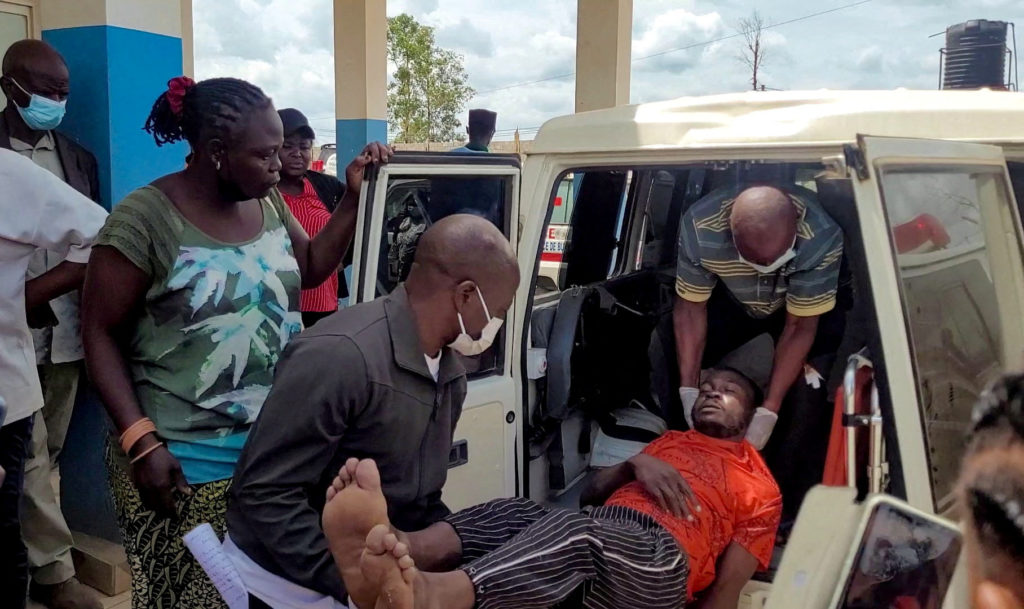
A deadly Ebola outbreak in the Democratic Republic of Congo‘s northeastern Ituri province is accelerating at an alarming rate, with the World Health Organisation warning that cases may be spreading faster than originally thought and that the “true magnitude remains uncertain.” Officials report that the virus has killed 136 people, with more than 514 suspected cases across the country, and one death has already been recorded in neighboring Uganda. Modelling released by the London-based MRC Centre for Global Infectious Disease Analysis suggests there has been “substantial” under-detection, and that it cannot rule out more than 1,000 cases already.
The outbreak, caused by the rare Bundibugyo strain of Ebola for which there is no approved vaccine, has spread to South Kivu province and reached the eastern city of Goma—population 850,000—which is under the control of Rwandan-backed rebels. WHO Chief Tedros Adhanom Ghebreyesus declared the outbreak an international emergency on Saturday, stating he was “deeply concerned about the scale and speed of the epidemic.”

The outbreak is unfolding in a region devastated by decades of conflict, where hospitals and clinics have been damaged or destroyed, millions of people are displaced, and unsanitary conditions prevail. The Red Cross warned that Ebola can escalate quickly if cases are not identified early, communities lack information, and health systems are overwhelmed, adding: “We are seeing all those conditions.
📢 GET A DETAILED ARTICLES + JOBS
Join ASJ's WhatsApp Channel and never miss a post or opportunity.

Key Developments: Detection, Spread, and Response Gaps
The outbreak was first detected on April 24, but fears are growing that it may have been ongoing for several weeks before that. The delay in detection allowed the virus to spread silently, seeding cases across multiple provinces and across the border into Uganda. The WHO’s Dr. Anne Ancia told the BBC: “The more we are investigating this outbreak, the more we realise that it has already disseminated at least a little bit across border and also in other provinces.”
The MRC Centre’s modelling, released on Monday, paints a grim picture. The study suggested that the current outbreak is “larger than currently ascertained” and that its “true magnitude remains uncertain.” The finding of “substantial under-detection” is deeply concerning because undetected cases mean ongoing transmission chains that health responders do not know about. Each undetected case can infect multiple others, creating exponential growth.
The virus has now spread to South Kivu province, where the population has been affected by a humanitarian crisis for many years, according to Dr. Ancia. The presence of cases in Goma—a major urban center with high population density and connectivity—raises the risk of rapid, widespread transmission. Goma is under the control of Rwandan-backed rebels, complicating the response; health workers may face access restrictions, security threats, and governance challenges.
On Tuesday, DR Congo President Félix Tshisekedi called for “calm” and urged citizens to remain vigilant after holding a crisis meeting on Monday evening. The government’s messaging is calibrated: it wants to avoid panic while promoting precaution. But the reality on the ground, as described by local residents, is fear. A man who identified himself as Bigboy told the BBC that people are “really scared” and doing what they can to protect themselves, such as washing hands with clean water, but lack access to face masks and other protective supplies.
Another Ituri local, Alfred Giza, said people in the community are waiting to receive face masks but would not know what to do if a family member or friend contracted the disease. This lack of community health literacy is a major vulnerability. In previous Ebola outbreaks, community mistrust of health workers and refusal to seek treatment accelerated transmission.
The WHO has released almost $4 million to combat the outbreak, but much more will be needed. The organisation is sending tonnes of health supplies, including personal protective equipment (PPE) and medicine. However, the cash-strapped UN agency is already stretched thin by multiple global health emergencies. The outbreak in DR Congo is competing for resources with ongoing responses elsewhere.
Neighboring countries are taking precautions. Rwanda has closed its borders with DR Congo. Uganda has told people to avoid hugging and shaking hands. Several African countries are tightening border screenings and preparing health facilities. These measures are prudent but may not be sufficient given the porous nature of borders in the region and the high levels of population movement.
Analysis & Implications: Conflict, Displacement, and the Perfect Storm
The current Ebola outbreak is not occurring in a vacuum. Itrah Province and the wider eastern DR Congo have been ravaged by conflict for decades. Armed groups control territory, displacing millions. The UN estimates that over 5 million people are internally displaced in the region. Most live in unsanitary conditions—displacement camps with limited clean water, poor sanitation, and overcrowding. These are ideal conditions for Ebola transmission.
The presence of over 11,000 refugees who have fled fighting in South Sudan adds another layer of complexity. Refugee populations are mobile, often cross borders, and may not have access to health services. Big population movements among people seeking work in local gold mines also increase the risk of spread. Miners travel long distances, live in cramped quarters, and may not report illness for fear of losing income.
The Bundibugyo strain of Ebola is rare. It has previously only caused two outbreaks, killing about a third of those infected. The absence of an approved vaccine for this strain is a major gap. For the Zaire strain—which caused the 2014-2016 West Africa outbreak that killed 11,325 people—there is an approved vaccine (rVSV-ZEBOV). The WHO is evaluating whether other drugs may provide protection against Bundibugyo, but no proven options exist today.
The declaration of an international emergency by WHO Chief Tedros is a formal mechanism to trigger global attention, mobilize resources, and coordinate response. However, the declaration came before the WHO’s emergency committee met to assess the situation—an unusual sequence that reflects the urgency. The committee is due to meet soon to recommend priority medical interventions.
The case of a US citizen—believed to be missionary group doctor Peter Stafford—evacuated from DR Congo after developing symptoms highlights the global reach of the outbreak. Stafford was taken to Germany for treatment. The US Centers for Disease Control and Prevention (CDC) said at least six other Americans who were exposed were also being evacuated to Germany and the Czech Republic, where they will be monitored for symptoms in quarantine.
The international community’s response has been swift but may not be sufficient. The WHO’s $4 million is a fraction of what will be needed. The DR Congo government’s capacity to respond is limited by fiscal constraints and the demands of managing multiple crises. The involvement of the CDC and other international partners is critical, but access and security remain barriers.
The Accra Street Journal notes that while Ghana is far from the epicentre, the outbreak is a reminder of the importance of strong health systems, disease surveillance, and cross-border coordination. Ghana has experience managing Ebola preparedness—during the 2014-2016 West Africa outbreak, Ghana was praised for its readiness despite not recording any cases. The lessons learned then should be dusted off and updated.
What This Means for DR Congo, Neighboring Countries, and Global Health Security
For DR Congo, the outbreak is a humanitarian and governance crisis. President Tshisekedi’s call for calm is necessary but not sufficient. The government must ensure that health workers can access affected areas safely, that communities receive accurate information, and that treatment centers are equipped and staffed. The involvement of rebel groups in areas like Goma complicates access; negotiations or security arrangements may be required.
For neighboring countries, the priority is preventing cross-border transmission. Uganda has already recorded one death—a traveller from DR Congo. Rwanda has closed its borders, a drastic measure that may slow the spread but also disrupt trade and humanitarian access. Burundi and South Sudan are also at risk. Regional coordination through the African Union and the WHO’s regional office is essential.
For global health security, the outbreak is a test of the systems put in place after the 2014-2016 West Africa epidemic. The WHO’s emergency response systems have been strengthened, but the DR Congo outbreak reveals persistent gaps: delayed detection, underfunded response, and the challenge of operating in conflict zones. The lack of a vaccine for the Bundibugyo strain is a reminder that pandemic preparedness is not just about systems but also about medical countermeasures.
The Red Cross’s warning that “we are seeing all those conditions”—cases not identified early, communities lacking information, health systems overwhelmed—is a sobering assessment. The conditions are not inevitable; they are the result of chronic underinvestment in health infrastructure, conflict, and displacement. Addressing the root causes requires a long-term commitment that extends beyond the current emergency.
The MRC Centre’s modelling of potentially over 1,000 cases already is a worst-case scenario, but not an implausible one. If true, the outbreak is already one of the largest Ebola outbreaks on record. The trajectory will depend on the effectiveness of the response in the coming weeks. Every day of delay allows more transmission.
Wider Context: Ebola in the African Public Health Landscape
Ebola was first discovered in 1976 near the Ebola River in what is now the Democratic Republic of Congo. The country has experienced more Ebola outbreaks than any other nation—over a dozen since the virus was identified. The 2014-2016 West Africa outbreak was the largest and most deadly, killing over 11,000 people and spreading to multiple continents.
The current outbreak is the first significant Ebola outbreak since 2022. It is also the first major outbreak of the Bundibugyo strain since 2012. The absence of a licensed vaccine for this strain is a critical vulnerability. Research into a Bundibugyo vaccine has been slow because the strain is rare and commercial incentives are limited. The current outbreak may change that calculus.
The response to the outbreak will be a test of the African Union’s new Africa Centres for Disease Control and Prevention (Africa CDC). The Africa CDC was established in 2017 to strengthen the continent’s public health systems. It has played a supporting role in the DR Congo response, but its funding and capacity remain limited compared to the WHO.
The international community’s attention is divided. The ongoing Hormuz crisis, the war in Ukraine, and other geopolitical conflicts compete for resources and attention. The WHO’s $4 million is a token; a full-scale response would cost tens of millions. Donor governments may be reluctant to commit large sums given competing priorities, but the cost of inaction—a larger, regional outbreak—would be far higher.
The American evacuees to Germany and the Czech Republic highlight the inequity of global health. Wealthy countries can evacuate their citizens and provide advanced medical care; locals in DR Congo do not have that option. The WHO and partner organizations must ensure that treatment and protective measures are available to all, not just those with connections to the West.
Outlook / What Happens Next
The WHO’s emergency committee will meet imminently to assess the situation and recommend priority medical interventions. The committee’s recommendations will guide the allocation of resources, the deployment of personnel, and the implementation of containment measures. The declaration of an international emergency has already triggered increased global attention.
The immediate priorities are: surge testing and contact tracing to identify undetected cases; community engagement to build trust and encourage early reporting; establishment of treatment centers with adequate supplies of PPE; cross-border coordination with Uganda, Rwanda, Burundi, and South Sudan; and acceleration of research into vaccines and therapeutics for the Bundibugyo strain.
The MRC Centre’s modelling suggests that the outbreak could already be larger than reported. If that is correct, the coming weeks will see a rapid increase in confirmed cases as surveillance improves. The death toll will also rise, both from previously undetected cases and from new infections.
For residents of Ituri province, the situation is terrifying. Bigboy’s words capture the fear: “Ebola has tortured us.” Alfred Giza’s uncertainty about what to do if a family member falls ill reflects the gaps in community health education. The Red Cross’s warning that “we are seeing all those conditions” is a call to action.
For the rest of the world, the outbreak is a reminder that infectious diseases do not respect borders. A virus that emerges in a remote corner of DR Congo can reach London, New York, or Accra within days. The investment in global health security is not charity; it is self-defense. The WHO’s $4 million is a start, but much more will be needed. The question is whether the world will pay now or pay much more later.
Source: Accra Street Journal
Last Updated on May 20, 2026 by Samuel Kwame Boadu
Disclaimer: Some content on Accra Street Journal may be aggregated, summarized, or edited from third-party sources for informational purposes. Images and media are used under fair use or royalty-free licenses. Accra Street Journal is a subsidiary of SamBoad Publishing Hub under SamBoad Business Group Ltd, registered in Ghana since 2014.
For concerns or inquiries, please visit our Privacy Policy or Contact Page.

Samuel Kwame Boadu is a Ghanaian media entrepreneur and storyteller with a passion for amplifying urban voices and uncovering everyday truths. He is the Editor-in-Chief and Founder of Accra Street Journal, a dynamic digital platform dedicated to capturing the pulse of Ghana’s capital—its people, culture, challenges, business, sports and innovations.