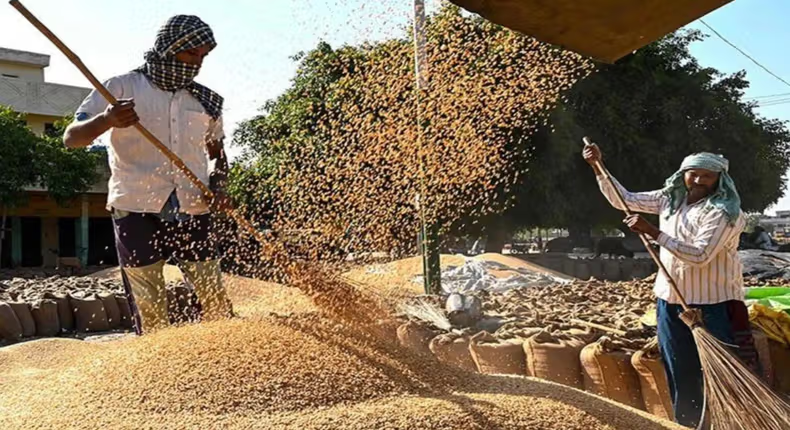
Egypt’s decision to pay farmers well above global wheat prices is beginning to deliver results, with government purchases of locally produced wheat reaching a record high as authorities seek to reduce the country’s dependence on imports.
The government has already bought 4.6 million metric tonnes of wheat this season, according to official figures, putting it on track to achieve its target of 5 million tonnes before the procurement season ends in mid-August. The figure has already surpassed last season’s total purchases of about 3.9 million tonnes. Prime Minister Mostafa Madbouly described the procurement level as an all-time high.

The record purchases follow a series of government measures aimed at encouraging farmers to plant more wheat and sell directly to state buyers. Egypt raised the price it would pay farmers for wheat deliveries for the 2026 season and increased it again shortly before the harvest began. The final procurement price reached roughly $320 per tonne, significantly above prevailing international wheat prices. Black Sea wheat was trading at about $234 to $240 per tonne on Thursday.
📢 GET A DETAILED ARTICLES + JOBS
Join ASJ's WhatsApp Channel and never miss a post or opportunity.

The premium helped make wheat one of the most attractive crops for Egyptian farmers this season. “It was a very attractive price and encouraged a record planted area,” farmer Hussein Abu Saddam told Reuters. Grain trader Hesham Soliman said the higher price also reduced incentives for farmers to sell wheat to private traders or divert it to animal feed markets.
Wheat cultivation expanded to about 3.7 million feddans this season, up from approximately 3.1 million feddans a year earlier, according to Ahmad Idam, head of the services sector at Egypt’s agriculture ministry. Improved seed varieties and favourable weather conditions also contributed to stronger yields.

According to a report by Accra Street Journal, the increase in production comes as Egypt seeks to strengthen food security while reducing pressure on foreign currency reserves. The country typically imports around 10 million tonnes of wheat annually, with roughly half purchased by the government to support its bread subsidy programme serving around 70 million people.
One of the largest contributors to this season’s procurement drive has been the Future of Egypt for Sustainable Development agency, a military-linked state body involved in desert land reclamation. The agency had supplied roughly 530,000 tonnes of wheat by Thursday, compared with about 200,000 tonnes by the end of the previous season.
The strong procurement season has raised expectations that Egypt could scale back government wheat imports later this year. Soliman told Reuters that larger domestic supplies and replenished reserves could significantly reduce import requirements during the second half of the year. For now, the record procurement season suggests that paying more for locally grown wheat is offering Egypt greater flexibility as it manages food costs, foreign currency pressures and supply risks.
Source: Accra Street Journal
Last Updated on June 13, 2026 by Samuel Kwame Boadu
Disclaimer: Some content on Accra Street Journal may be aggregated, summarized, or edited from third-party sources for informational purposes. Images and media are used under fair use or royalty-free licenses. Accra Street Journal is a subsidiary of SamBoad Publishing Hub under SamBoad Business Group Ltd, registered in Ghana since 2014.
For concerns or inquiries, please visit our Privacy Policy or Contact Page.

Samuel Kwame Boadu is a Ghanaian media entrepreneur and storyteller with a passion for amplifying urban voices and uncovering everyday truths. He is the Editor-in-Chief and Founder of Accra Street Journal, a dynamic digital platform dedicated to capturing the pulse of Ghana’s capital—its people, culture, challenges, business, sports and innovations.