Introduction: The Shocking Reality
You have paid for the land. You have your indenture. You have your site plan. You believe you are now a landowner.
But there is a hard truth that most land sellers will never tell you: over 98 per cent of land in Ghana cannot be registered with a title at all .

This is not a matter of process delays or bureaucratic inefficiency. It is a fundamental legal limitation built into Ghana’s land registration system. Understanding this limitation is essential for anyone buying land in Ghana—because what you cannot register, you cannot fully protect.
📢 GET A DETAILED ARTICLES + JOBS
Join ASJ's WhatsApp Channel and never miss a post or opportunity.

A Justice of the Court of Appeal, Justice Alexander Osei-Tutu, has revealed this startling fact: despite the introduction of title registration 40 years ago through the Land Title Registration Law, 1986 (PNDCL 152), more than 13 regions are yet to be declared as registration districts. . The consequence is that vast swathes of the country remain outside the title registration system, leaving landowners with only the weaker option of deed registration.
The Fundamental Problem: Only Two Registration Districts
Under the current legal regime, only lands that fall within areas that have been declared by the Minister of Lands and Natural Resources as “registration districts” can be registered for title .

The Minister for Lands and Natural Resources is empowered by law to declare registration districts. But 40 years after title registration was introduced, only three areas have been declared:
| Registration District | Area (km²) | Percentage of Ghana’s Land |
|---|---|---|
| Greater Accra Region | 3,245 km² | 1.4% |
| Parts of Kumasi | 309 km² | 0.13% |
| Kasoa and environs | 56.7 km² | 0.024% |
| TOTAL | 3,610.7 km² | Less than 2% |
Justice Osei-Tutu has called this situation “unfair and a major factor in the incessant land disputes across the country” . The law has been available for four decades, but its benefits have been restricted to a tiny fraction of the nation’s landmass.
Title Registration vs. Deeds Registration: The Critical Distinction
To understand why some lands cannot be registered, you must understand the difference between the two registration systems.
Title Registration (Available in <2% of Ghana)
| Feature | Description |
|---|---|
| What you get | Land Title Certificate |
| Legal protection | State-guaranteed, indefeasible title |
| Geographic availability | Only Greater Accra, parts of Kumasi, Kasoa |
| Risk of double sale | Very low (system prevents multiple registrations) |
| Legal analogy | “Marriage under the Ordinance” (monogamous, secure) |
Deeds Registration (Available in 98% of Ghana)
| Feature | Description |
|---|---|
| What you get | Registered deed (indenture) |
| Legal protection | Notice to third parties only—no title guarantee |
| Geographic availability | All other regions (98% of Ghana) |
| Risk of double sale | High (multiple instruments can be registered) |
| Legal analogy | “Customary marriage” (potentially polygamous) |
Source: Justice Alexander Osei-Tutu
Justice Osei-Tutu offered a memorable analogy: “Title registration may loosely be compared to a marriage contracted under the Ordinance… which is purely monogamous and secures the marriage from future intruders/suitors, while Deeds registration is synonymous with customary marriage, which is potentially polygamous” .
The implication is clear: under deeds registration, your “marriage” to the land is not exclusive. The seller could “marry” someone else to the same land, and both deeds could be registered.
What This Means for Landowners
If You Own Land in Greater Accra, Parts of Kumasi, or Kasoa
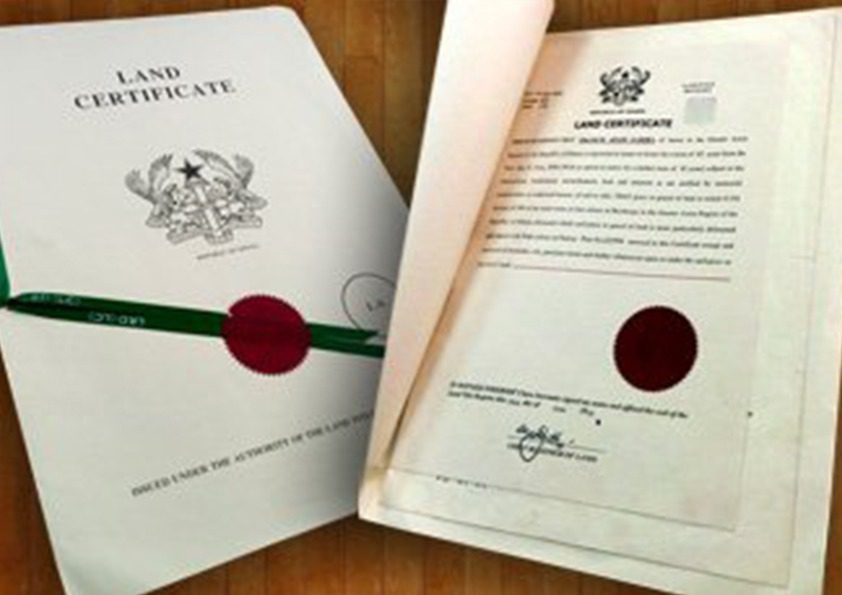
You are fortunate. Your land falls within a registration district. You can apply for a Land Title Certificate —a state-guaranteed, indefeasible title that provides the strongest possible legal protection .
However, this does not happen automatically. You must actively apply to the Lands Commission to have your title registered. The Land Act, 2020 (Act 1036) provides that the registrar shall effect registration within 90 days upon receipt of a complete application .
If You Own Land Outside These Areas
You cannot obtain a Land Title Certificate. Period.

The best you can do is register your deed (indenture) with the Lands Commission. This registration provides notice to third parties that you have an interest in the land, but it does not give you a state-guaranteed title .
Justice Osei-Tutu explained that “deeds registration under the law has the latitude of registering multiple instruments relating to the same parcel of land” . This means that even after you register your deed, someone else could register another deed for the same land. Priority is given to whoever registered first, but the system does not prevent competing claims from being registered at all.
The Supreme Court has settled the principle: registration of instruments affecting land under the Land Registry Act is not a guarantee of title to the land where the person who is registered is not the true owner .
Why Hasn’t the Government Declared More Registration Districts?
Justice Osei-Tutu has criticised the government for the slow pace of declaring registration districts, noting that “more than 13 regions are yet to be declared as registration districts” .
The reasons are complex:
1. Resource Constraints
Declaring a registration district requires comprehensive mapping, surveying, and documentation of existing land interests. This is expensive and time-consuming. The government requires approximately $165 million to fully map and digitalise land records across the country .
2. Legal Complexity
Converting from deeds registration to title registration requires resolving existing claims, boundary disputes, and competing interests—a monumental task in areas where land records are incomplete or non-existent.
3. Political Sensitivity
Land is a sensitive issue in Ghana, with approximately 80% held under customary law by stools, skins, families, and clans. Extending title registration into these areas requires navigating complex traditional governance structures.
4. Historical Inertia
The title registration system has been available for 40 years, but successive governments have not prioritised its expansion beyond the initial pilot areas.
The Lands Commission’s Position
The Lands Commission itself has acknowledged the gravity of the situation. At an Advisory Committee meeting in September 2025, management disclosed that only 10% of Ghana’s land is registered —a situation described as “worrying .
The Commission has proposed either direct government support or approval to retain 100% of its internally generated revenue to finance critical technology and infrastructure upgrades .
The Minister for Lands and Natural Resources, Emmanuel Armah-Kofi Buah, has called for a complete overhaul of land administration services, describing the current system as “deeply frustrating for many Ghanaians” and citing “persistent issues such as delays, missing files, land disputes, and rampant encroachment” .
The Land Act, 2020 (Act 1036): Does It Fix the Problem?
The Land Act, 2020 (Act 1036) introduced several reforms, including:
-
Electronic conveyancing (land can now be transferred by an electronic information system)
-
Alternative dispute resolution (parties must exhaust ADR before court action in registration districts)
-
Three registration systems (customary recording, deeds registration, and title registration)
However, the Act did not automatically extend title registration to new areas. The fundamental geographic limitation remains: only lands within declared registration districts can be registered for title.
The Act also introduced a Provisional Title mechanism. If the Land Registrar determines that you have possession of land but lack “sufficiently good or conclusive title,” they may still register you with a Provisional Title. This does not affect any existing rights or interests in the land that pre-date the registration . After 12 years, the holder may apply for substitution without further proof, at which point the title becomes absolute .
What You Can Do to Protect Yourself
Step 1: Know Your Location
Before buying land, determine whether it falls within a declared registration district. If it does not, adjust your expectations accordingly. You will not receive a Land Title Certificate.
Step 2: Conduct a Thorough Search
Engage a licensed surveyor and solicitor. Conduct a search at the Lands Commission to verify the seller’s ownership and identify any existing claims.
Step 3: Register Your Deed
Even if you cannot get a title, register your indenture. Registration puts the world on notice of your interest. Under the Land Act, 2020, registrable instruments must contain a sufficient description of the land, its locations and boundaries, and have a site plan attached .
Step 4: Take Physical Possession
Mark your boundaries. Erect a fence if possible. Physical possession strengthens your claim under customary law.
Step 5: Pay Your Ground Rent
For customary lands, pay annual ground rent to the stool, skin, family, or clan. Non-payment can lead to forfeiture of your interest.
Step 6: File a Caution
File a caution at the Lands Commission to prevent the seller from selling the same land to another buyer while you complete your registration.
Step 7: Engage Licensed Professionals
Deal only with licensed surveyors and solicitors. Do not pay monies to middlemen or unlicensed “agents.”
The Future: Will More Lands Become Registrable?
The government has announced ambitious plans:
-
Digitalisation of all land records within two years
-
Establishment of 110 district Lands Commission offices
-
30-day processing target for land applications
-
Nationwide base map to enable accurate surveying
However, declaring new registration districts requires more than digitalisation. It requires a political decision to extend the title registration system to new areas—a decision that successive governments have avoided for 40 years.
Justice Osei-Tutu’s critique remains relevant: it is “unfair” that after four decades, over 98% of Ghana’s land cannot be registered for title. Whether the current government will change this remains to be seen.
Summary Table: Registration Options by Location
| Location | Registration Type | Document Received | Legal Protection | Can You Get a Title? |
|---|---|---|---|---|
| Greater Accra Region | Title Registration | Land Title Certificate | State-guaranteed, indefeasible | Yes |
| Parts of Kumasi | Title Registration | Land Title Certificate | State-guaranteed, indefeasible | Yes |
| Kasoa and environs | Title Registration | Land Title Certificate | State-guaranteed, indefeasible | Yes |
| All other regions (98% of Ghana) | Deeds Registration | Registered Deed (Indenture) | Notice to third parties only | No |
Frequently Asked Questions (FAQs)
1. Can all lands in Ghana be registered?
No. Only lands within declared registration districts (Greater Accra, parts of Kumasi, and Kasoa) can be registered for title. For the other 98% of Ghana, only deed registration is available .
2. What is the difference between title registration and deed registration?
Title registration provides a state-guaranteed, indefeasible title. Deed registration merely provides notice to third parties and does not guarantee ownership .
3. Why can’t I get a title for land outside Accra?
Because the Minister of Lands and Natural Resources has not declared those areas as registration districts. After 40 years, less than 2% of Ghana’s land has been declared .
4. Is deed registration worthless?
No. Registering your deed provides legal notice of your interest and establishes priority over later claimants. However, it does not provide the same level of protection as a Land Title Certificate .
5. What percentage of Ghana’s land is under title registration?
Less than 2%—approximately 3,610.7 km² out of Ghana’s total land area .
6. Can I convert my registered deed into a title?
If your land is in a registration district, yes, you can apply for title registration. If it is outside, no—you cannot obtain a title at all.
7. What is a Provisional Title?
If you have possession of land but lack “sufficiently good or conclusive title,” the Registrar may issue a Provisional Title. After 12 years, this can be converted to substantive title .
8. Does the Land Act, 2020 fix this problem?
The Land Act introduced reforms like electronic conveyancing and provisional titles, but it did not automatically extend title registration to new areas. The geographic limitation remains.
9. How do I know if my land is in a registration district?
Engage a licensed surveyor or solicitor to conduct a search at the Lands Commission. They can determine whether your property falls within a declared registration district.
10. What should I do if I own land outside a registration district?
Register your deed, pay your ground rent, take physical possession, file a caution, and maintain all documentation. You cannot get a title, but these steps provide the best available protection .
Conclusion: The Hard Truth
The hard truth is that for the vast majority of Ghanaians, the gold standard of land ownership—a state-guaranteed Land Title Certificate—is simply not available. After 40 years of title registration law, less than 2% of Ghana’s land is covered.
If you own land in Greater Accra, parts of Kumasi, or Kasoa, you have the opportunity to obtain a title. Pursue it. Engage licensed professionals, complete the registration process, and secure your certificate.
If you own land elsewhere, adjust your expectations. You cannot get a title. The best you can do is register your deed, pay your ground rent, and take physical possession. Your ownership will never have the state guarantee that title registration provides.
This is not fair, as Justice Osei-Tutu has observed. But it is the reality of Ghana’s land registration system. Understanding it is the first step toward protecting what you can.
Source: Accra Street Journal
Last Updated on June 14, 2026 by Samuel Kwame Boadu
Disclaimer: Some content on Accra Street Journal may be aggregated, summarized, or edited from third-party sources for informational purposes. Images and media are used under fair use or royalty-free licenses. Accra Street Journal is a subsidiary of SamBoad Publishing Hub under SamBoad Business Group Ltd, registered in Ghana since 2014.
For concerns or inquiries, please visit our Privacy Policy or Contact Page.

Samuel Kwame Boadu is a Ghanaian media entrepreneur and storyteller with a passion for amplifying urban voices and uncovering everyday truths. He is the Editor-in-Chief and Founder of Accra Street Journal, a dynamic digital platform dedicated to capturing the pulse of Ghana’s capital—its people, culture, challenges, business, sports and innovations.