









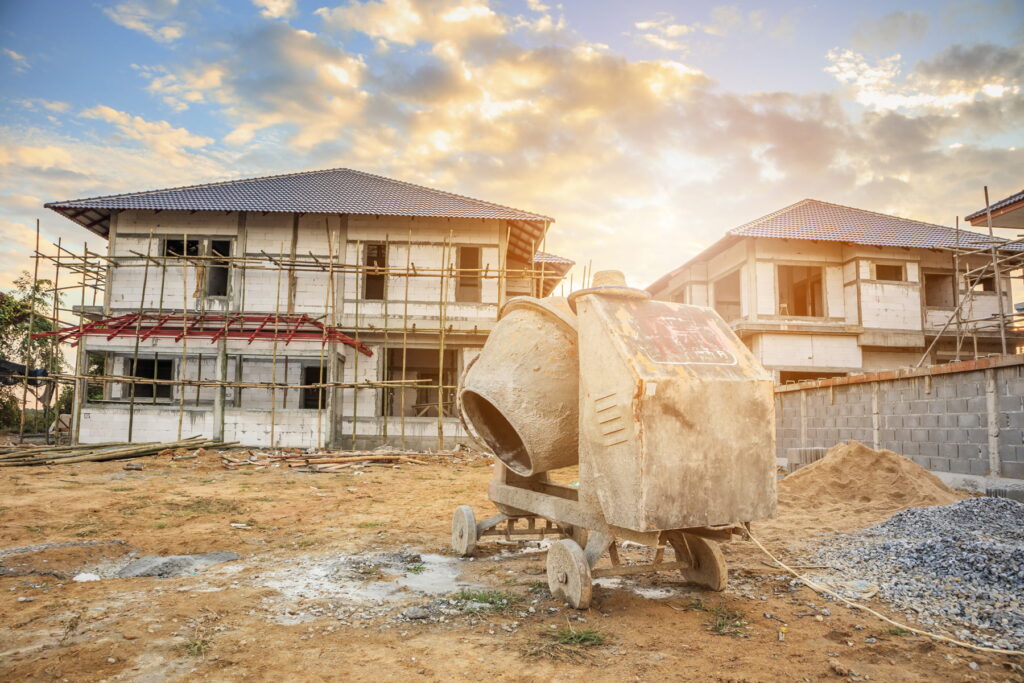

From the “Completeness Gap” to Land Registration Fees — the Silent Budget Killers That Stall Half of All Building Projects
Executive Introduction
A contractor quotes you GHS 300,000 for a 3-bedroom house. You sign the contract. You pay the deposit. The foundation goes in. The walls go up. Then the money runs out—not because you were reckless, but because the quote excluded half of what you actually needed.

This is not bad luck. It is the “completeness gap” —a systematic discrepancy between informal contractor quotes and actual construction costs that has left thousands of Ghanaians with abandoned foundations and unfinished buildings . A peer-reviewed academic study from the University of Cape Coast and KNUST found that true, code-compliant construction costs in Greater Accra are 29 to 98 percent higher than typical informal quotes . The gap arises from the omission of essential components: structural steel (Y16 rebar), plastering, floor screed, and full electrical and plumbing services .
The National Development Planning Commission’s 2024 Annual Progress Report revealed a staggering GH¢70.3 billion in cost overruns across government projects—a scale that reflects systemic underestimation in the construction sector . Road projects alone have seen variations balloon from GH¢1.9 billion to GH¢3.4 billion due to poor planning, political interference, and inadequate supervision . If the government cannot predict project costs, neither can the individual self-builder—unless they know where the hidden costs lie.
📢 GET A DETAILED ARTICLES + JOBS
Join ASJ's WhatsApp Channel and never miss a post or opportunity.
This ASJ report identifies the hidden costs of building a house in Ghana: the land documentation fees that no one mentions, the building permits that surprise you, the utility connections that drain your budget, the fencing that costs as much as a room, the professional fees you thought were optional, the finishing costs that exceed the structure itself, the material price volatility that makes mockery of your budget, and the contingencies you forgot to include.
Part 1: The Completeness Gap — Why Your Contractor’s Quote Is Wrong
The single most costly mistake in Ghanaian construction is not choosing the wrong contractor or buying poor materials. It is accepting a quote that omits essential components.
What the Research Found
A 2026 study validated the GhanaHousePlanner (GHP) parametric cost estimation model against three case study homes (75, 120, and 200 square metres) benchmarked against February 2026 market prices in Greater Accra .
| Home Size | True Cost (GHP Estimate) | Typical Informal Quote | Gap (Higher) |
|---|---|---|---|
| 75 m² | GHS 519,000 | Significantly lower | 29–98% |
| 200 m² | GHS 1,398,000 | Significantly lower | 29–98% |
Why the gap exists: Informal estimates use flat per-square-metre pricing that omits essential structural and finishing components :
-
Structural steel (Y16 rebar) : Required for foundations, columns, beams, and slabs. Without it, the building cannot meet code requirements for structural integrity.
-
Plastering (rendering) : Protects blockwork from weather and provides a surface for painting or finishing.
-
Floor screeding : Provides a level, smooth surface for flooring installation.
-
Full electrical services : Wiring, conduits, distribution boards, switches, and fixtures.
-
Full plumbing services : Piping, fittings, water storage, sanitary ware, and drainage.
The critical warning: “Per-square-metre rates rarely cover the requirements for a fully completed, code-compliant building” . If a contractor quotes you a flat rate per square metre that seems too good to be true, it almost certainly is.
The Hidden “Quoting” Strategy
Some contractors deliberately underquote to win the contract, knowing that you will be forced to approve variations as the project progresses. This is not incompetence—it is a business strategy. The GHP study confirms that informal estimates systematically omit essential components, not accidentally, but because “the completeness gap” is structural to the informal quoting process .
Free Tool: GhanaHousePlanner
The research team developed the GhanaHousePlanner (GHP) platform to address this gap. The platform features:
-
Seven calculation modules: foundation, blockwork, cement, structural steel, roofing, plumbing, and electrical
-
Region-aware material pricing updated monthly
-
Itemised Bills of Quantities (BoQ)
-
Free for basic use
How to use it: Visit ghanahouseplanner.com to generate detailed cost breakdowns for your specific house design, updated with current local material prices.
Part 2: Land Documentation and Registration Fees — The Pre-Construction Surprise
The price you agree on for land is not the final cost. You will still need to pay for site plan preparation, indenture (land agreement), land title registration at the Lands Commission, and stamp duty .
| Hidden Cost | Estimated Range (GHS) | Notes |
|---|---|---|
| Site plan preparation | 1,000 – 3,000 | Required for permit applications |
| Indenture (land agreement) | 2,000 – 5,000 | Legal document of land ownership |
| Land title registration (Lands Commission) | 2,000 – 10,000+ | Varies by location and property size |
| Stamp duty | % of property value | Additional government levy |
| Land demarcation/surveying | 1,000 – 5,000 | Required for large or disputed plots |
| Total | 2,000 – 10,000+ |
If the land is in a high-demand area or large, you can expect to pay more .
Part 3: Legal Fees and Agent Commissions — The Professional Cut
Hiring a lawyer is important; skipping it is dangerous. But legal services are not free .
| Hidden Cost | Estimated Range | Notes |
|---|---|---|
| Lawyer fees | 3% – 10% of property price | Depending on work involved |
| Agent/broker commission | 5% – 10% of property price | From buyer, seller, or both |
| Total | 5% – 15% of property price |
Key advice from Ono Aburi: “Get every agreement in writing. And don’t rely on verbal promises” . Always ask upfront what fees apply before committing.
Part 4: Building Permit and Local Assembly Charges — The Mandatory Overlooked Cost
If you are buying land to build on, you will need a building permit from the district assembly. This is “one of the most overlooked hidden property costs in Ghana” .
| Hidden Cost | Estimated Range (GHS) | Notes |
|---|---|---|
| Building permit | 3,000 – 15,000+ | Varies by location and building size |
| Site inspection report | 500 – 2,000 | Required for permit processing |
| Structural/architectural drawings | 2,000 – 10,000 | Often required for permit approval |
| Environmental clearance | 1,000 – 5,000 | For larger projects |
| Fire service clearance | 1,000 – 3,000 | For commercial or multi-storey buildings |
| Total | 3,000 – 15,000+ |
The warning from Ono Aburi: “And yes, each comes with its fee” . Multiple approvals mean multiple payments. Each regulatory body charges separately.
Part 5: Utility Connection Charges — The “You’ve Built, Now Connect” Cost
Buying land or a house does not mean you will immediately have water and light. For bare land, you will need to connect to the Ghana Water Company Limited (GWCL) system and the national grid via the Electricity Company of Ghana (ECG) .
| Hidden Cost | Estimated Range (GHS) | Notes |
|---|---|---|
| Electricity connection (application fee, wiring inspection, meter) | 2,000 – 5,000 | ECG charges vary by location |
| Water connection (pipe connection fee, meter installation) | 1,500 – 3,000 | GWCL charges |
| Borehole drilling (where Ghana Water is unavailable) | 15,000 – 20,000 | Includes drilling and pump |
| Septic tank or soakaway | 5,000 – 12,000 | Required in non-sewered areas |
| Total | 5,000 – 25,000 |
If you opt for a borehole in the absence of Ghana Water, you may pay up to GHS 15,000–20,000 for drilling and a pump . You might also have to budget for septic tanks or soakaways, especially in non-sewered areas.
Part 6: Fencing and Land Security — The “Protect What You’ve Bought” Cost
Until you fence your land, anyone could encroach on it. This is a cost that many first-time buyers forget until they return to find their plot occupied .
| Hidden Cost | Estimated Range (GHS) | Notes |
|---|---|---|
| Fencing (wire mesh or block wall) | 10,000 – 50,000 | Depends on land size and materials |
| Temporary structures (to mark boundary) | 2,000 – 5,000 | |
| Caretaker (to watch land) | 500 – 1,500 monthly | |
| Total | 10,000 – 50,000+ |
The advice from Ono Aburi: “So, you finally made a payment for the land. That’s great. But until you fence it, anyone could encroach on it” .
Part 7: Architectural, Engineering, and Quantity Surveyor Fees — The Professional Cost You Think Is Optional
Many self-builders try to save money by skipping professional fees. This is a false economy. Architects, engineers, and quantity surveyors are critical to ensuring your project meets safety and structural standards .
| Hidden Cost | Estimated Range (GHS) | Notes |
|---|---|---|
| Architect fees | 5% – 10% of total construction cost | Design and oversight |
| Structural engineer | 3% – 7% of total construction cost | Ensures structural integrity |
| Quantity surveyor | 2% – 5% of total construction cost | Produces accurate BoQ |
| Total | 5% – 10% of total construction cost |
The advice from Housing in Ghana: “Architects, engineers, and quantity surveyors are critical to ensuring your project meets safety and structural standards. Their expertise comes at a cost, typically 5-10% of total construction expenses” .
Part 8: Finishing — The Real Budget Killer
Most projects get stuck at the finishing stage. Tiles, paint, lighting, doors, windows, plumbing, and electrical fittings often cost as much as the entire structure itself .
The warning from Housing in Ghana: “Many developers estimate only for the structure and are surprised when finishing consumes the same amount or more” .
The advice from Ono Aburi: When buying an uncompleted house, “you pay for the house, and you still need to spend on plastering, roofing, plumbing, and wiring. Those can be some very high finishing costs.” The recommendation is to “add at least 30% of the price for finishing and hidden costs” .
Actual finishing costs for a 3-bedroom house (2026 estimates):
| Finishing Item | Estimated Cost (GHS) |
|---|---|
| Floor tiles | 25,000 – 55,000 |
| Wall plastering | 30,000 – 55,000 |
| Electrical installation | 48,000 – 98,000 |
| Plumbing and sanitation | 44,000 – 97,000 |
| Doors, windows, glazing | 38,000 – 95,000 |
| Painting | 23,000 – 50,000 |
| Total | 208,000 – 450,000 |
Part 9: Furnishing and Landscaping — The “After Construction” Surprise
After completion, homeowners face the final costs of furnishing, appliances, and outdoor works. Landscaping, driveways, security systems, and boundary walls can add tens of thousands of cedis more—yet these are essential to make a house livable and appealing .
| Hidden Cost | Estimated Range (GHS) | Notes |
|---|---|---|
| Furnishing (sofas, beds, wardrobes, etc.) | 30,000 – 100,000 | Varies by quality |
| Appliances (fridge, cooker, air conditioners) | 20,000 – 60,000 | |
| Landscaping (trees, grass, flowers) | 10,000 – 30,000 | |
| Driveway and paving | 10,000 – 30,000 | |
| Security systems (gates, alarms, cameras) | 10,000 – 30,000 | |
| Boundary wall | 15,000 – 40,000 | |
| Total | 95,000 – 290,000 |
Part 10: Material Price Volatility — The Moving Target
Construction in Ghana is highly sensitive to inflation and foreign exchange rates. The prices of cement, iron rods, tiles, and roofing sheets fluctuate often. Labor costs have also risen in recent years, with skilled artisans now charging premium rates due to high demand and migration of local craftsmen abroad .
2026 material price trends (June 2026):
| Material | Price (GHS) | Year-on-Year Change |
|---|---|---|
| 32.5R Cement (per bag) | 80 – 85 | -11.2% |
| 42.5R Cement (per bag) | ~107 | Varies |
| High tensile steel (per ton) | 19,000 – 25,500 | -3.6% |
| Glazing | Varies | +16.2% |
| Plumbing materials | Varies | +14.5% |
| Roofing sheets | Varies | +13.0% |
The advice from Housing in Ghana: “Always add at least 10-15% contingency to your budget to cover unexpected price hikes” .
Part 11: Contingency — The Cost You Must Include
Every builder needs a contingency fund. The academic research confirms that the “completeness gap” means many builders underestimate by 30–100 per cent . Industry practice recommends 15–20 per cent contingency.
The warning from Ono Aburi: “That’s why buying a house in Ghana always includes setting aside at least 10–20% extra for unexpected building costs” .
For a 3-bedroom house with a base estimate of GHS 500,000:
| Contingency Rate | Contingency Amount (GHS) |
|---|---|
| 15% | 75,000 |
| 20% | 100,000 |
| 30% | 150,000 |
Summary Table: All Hidden Costs for a 3-Bedroom House
| Hidden Cost Category | Estimated Range (GHS) |
|---|---|
| Land documentation and registration | 2,000 – 10,000+ |
| Legal fees and agent commissions | 5% – 15% of property price |
| Building permit and local assembly charges | 3,000 – 15,000+ |
| Utility connections (electricity, water, borehole) | 5,000 – 25,000 |
| Fencing and land security | 10,000 – 50,000+ |
| Professional fees (architect, engineer, QS) | 5% – 10% of construction cost |
| Finishing (tiles, paint, doors, electrical, plumbing) | 208,000 – 450,000 |
| Furnishing and landscaping | 95,000 – 290,000 |
| Material price volatility and contingencies | 15% – 30% of budget |
| Total Hidden Costs (estimated) | 328,000 – 840,000+ |
Conclusion: The Hidden Costs Are Not Optional
The hidden costs of building a house in Ghana are not optional. They are essential components of a complete, code-compliant building that you will actually want to live in. The “completeness gap” identified in the academic study is not a conspiracy—it is a systematic failure of informal estimating . The land registration fees are mandatory. The building permit is required. The utility connections are necessary. The fencing protects your investment. The professional fees prevent structural failure.
The question is not whether you will pay these costs. The question is whether you will budget for them in advance—or discover them after your money has run out.
Your next step: Before you sign a contract with a contractor, use GhanaHousePlanner (ghanahouseplanner.com) to generate an itemised Bill of Quantities. Ask your contractor for a detailed breakdown of all costs—including structural steel, plastering, floor screed, and full services. Budget for land documentation, permits, utility connections, fencing, and professional fees. Add 20–30 per cent contingency.
The hidden costs are not hidden from those who know where to look.
Quick Reference: The Hidden Costs Checklist
| Cost Category | Estimated Range (GHS) | Check |
|---|---|---|
| Land documentation and registration | 2,000 – 10,000+ | ☐ |
| Legal fees and agent commissions | 5% – 15% of property price | ☐ |
| Building permit and local assembly charges | 3,000 – 15,000+ | ☐ |
| Utility connections (electricity, water, borehole) | 5,000 – 25,000 | ☐ |
| Fencing and land security | 10,000 – 50,000+ | ☐ |
| Professional fees (architect, engineer, QS) | 5% – 10% of construction cost | ☐ |
| Finishing (tiles, paint, doors, electrical, plumbing) | 208,000 – 450,000 | ☐ |
| Furnishing and landscaping | 95,000 – 290,000 | ☐ |
| Material price volatility and contingencies | 15% – 30% of budget | ☐ |
Source: Accra Street Journal
Last Updated on June 16, 2026 by Samuel Kwame Boadu
Disclaimer: Some content on Accra Street Journal may be aggregated, summarized, or edited from third-party sources for informational purposes. Images and media are used under fair use or royalty-free licenses. Accra Street Journal is a subsidiary of SamBoad Publishing Hub under SamBoad Business Group Ltd, registered in Ghana since 2014.
For concerns or inquiries, please visit our Privacy Policy or Contact Page.

Samuel Kwame Boadu is a Ghanaian media entrepreneur and storyteller with a passion for amplifying urban voices and uncovering everyday truths. He is the Editor-in-Chief and Founder of Accra Street Journal, a dynamic digital platform dedicated to capturing the pulse of Ghana’s capital—its people, culture, challenges, business, sports and innovations.