








EXECUTIVE INTRODUCTION
The payment landscape in Ghana has already undergone one revolution within the living memory of every adult citizen. The rapid, astonishing, and near-universal adoption of mobile money transformed the nation from a predominantly cash-based economy into a global leader in digital financial inclusion, all within the space of a single generation. The ritual of the mobile money transaction—the careful entry of the merchant ID, the typing of the amount, the input of the secret PIN, and the anxious wait for the confirmation text—has become a deeply familiar, almost unconscious, part of the daily rhythm of commerce. This is the revolution we now take for granted. And yet, even as this model has become dominant, the quiet seeds of the next revolution are already being sown. A new, faster, and even more seamless way to pay is beginning to appear at the checkout counters, the fuel stations, and the supermarket aisles of the capital.

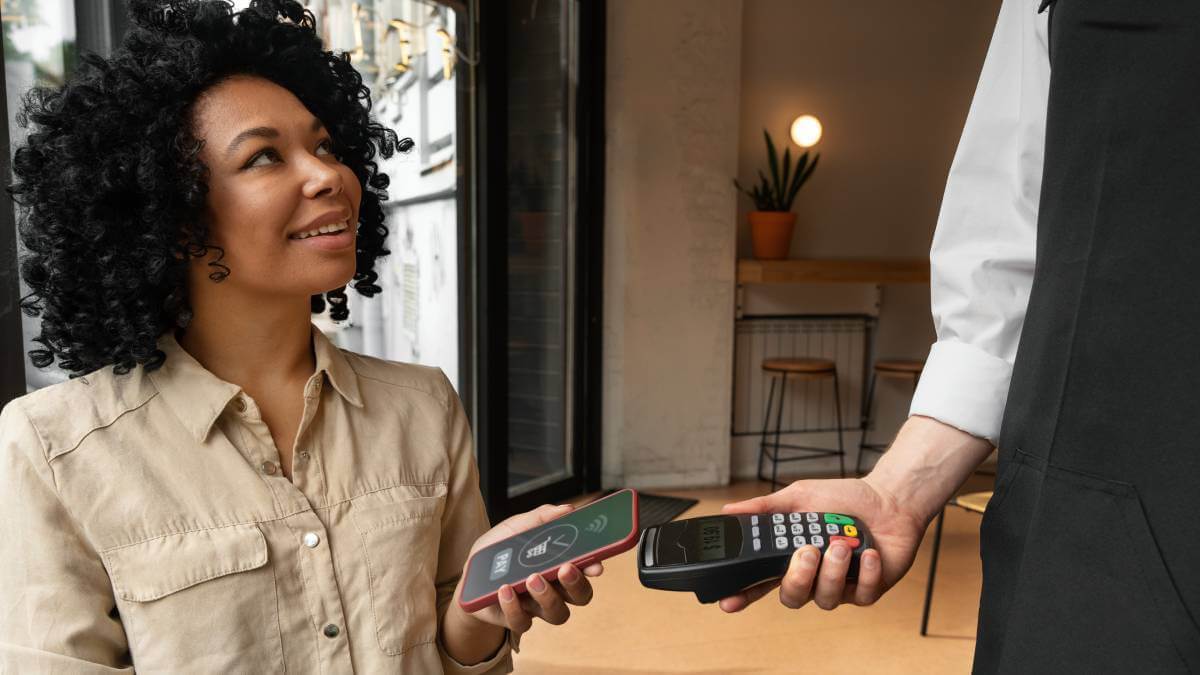
This is the world of contactless payments, a family of technologies that allow a customer to simply tap a card, a phone, or even a smart wristband against a small terminal to complete a transaction in a fraction of a second. No swiping a magnetic stripe, no inserting a chip, and, critically, no entry of a PIN for everyday, low-value purchases. This Accra Street Journal analysis is a forward-looking but grounded assessment of the future of this technology in the Ghanaian context. It is not a breathless prediction of a cashless utopia arriving tomorrow. The obstacles, ranging from deeply entrenched consumer habits and the dominance of the mobile money ecosystem to the significant cost of upgrading the nation’s physical payment infrastructure, are formidable. However, we argue that the direction of travel is clear. The powerful, converging forces of speed, security, and a post-pandemic awareness of shared surfaces are slowly, but inexorably, pulling the Ghanaian payment experience towards the tap. The PIN is not dead, but its days as the sole guardian of every single transaction, no matter how small, are numbered. The tap-and-go economy is coming, and its arrival will be as significant, in its own quiet way, as the mobile money wave that preceded it.
THE TWO FLAVOURS OF TAP: UNDERSTANDING THE TECHNOLOGY
To understand the future, it is first necessary to clarify a common confusion. The term “contactless payment” describes a simple, physical action: the customer waves or taps their payment device near a terminal to pay. But underneath this simple gesture, two fundamentally different technologies are at work, and they are often conflated. The first, and globally more established, is Near Field Communication, or NFC. This is the technology that powers the contactless feature on the debit and credit cards issued by the banks and the major international card schemes like Visa and Mastercard. An NFC-enabled card has a tiny, embedded microchip and antenna. When tapped against a terminal, it uses a short-range radio wave to securely transmit the payment data. The phone-based version, such as Apple Pay or Google Wallet, works on the same principle, storing a secure digital copy of your card on your smartphone.
📢 GET A DETAILED ARTICLES + JOBS
Join ASJ's WhatsApp Channel and never miss a post or opportunity.
The second, and distinctly Ghanaian, technology is the use of QR codes. In this system, which is the path being championed by the mobile money operators, the merchant displays a printed or screen-based code, a unique square of black and white patterns. The customer opens their mobile money app, selects the “scan and pay” option, and uses their phone’s camera to read the code. The app then prompts them to enter the amount and their PIN, and the transaction is completed. This is also a form of “contactless” payment in the literal sense—you do not hand over cash—but the customer experience is entirely different from the simple, single tap of an NFC card. It is a phone-out, app-open, scan, and authorise process, not a frictionless tap. Understanding this critical distinction is the key to seeing the emerging battle for the future of the Ghanaian checkout. The bank and the fintech card issuer are betting on the tap of the NFC chip. The mobile money giant is betting on the scan of the camera. Both are contactless, but they are different products, with different user experiences, different cost structures, and different competitive advantages. The future will likely involve a coexistence of both, for different types of transactions and different merchant segments, but the long-term, global trend is unmistakably towards the speed and sheer simplicity of the NFC tap for the high-frequency, low-value, everyday purchase.
THE UNBEATABLE ARGUMENT: SPEED, SAFETY, AND THE END OF THE PIN
The ultimate driver of the shift towards true, NFC-based contactless payments is not a marketing campaign or a government mandate. It is the simple, powerful, and unbeatable logic of a superior user experience. The case rests on three pillars: speed, security, and safety. The speed advantage is immediately obvious to anyone who has witnessed the two processes side-by-side. The mobile money PIN transaction, for all its familiarity, is a multi-step ritual that takes a noticeable amount of time. The contactless tap, by contrast, is almost instantaneous. The card or phone is held near the terminal, there is a brief beep and a green light, and the transaction is complete in less than a second. In a busy, high-volume retail environment—a fast-food queue at lunchtime, a crowded supermarket on a Saturday, a bustling fuel station—the cumulative time saved by eliminating those seconds of PIN entry and SMS confirmation for every single customer is an enormous operational and customer-experience advantage for the merchant. The tap simply moves the line faster.
The security advantage is less intuitive but critically important. The consumer’s reflexive fear, that a tap-to-pay card is a gift to thieves, is largely unfounded. The contactless card is, in reality, more secure than the old, swiped magstripe card, and arguably more secure than a PIN-based transaction where the PIN can be observed or the terminal can be compromised. The tap transaction uses the same robust, dynamic encryption as the chip-and-PIN system. Each tap generates a unique, single-use code to authorise the payment, a code that is useless even if intercepted by a criminal. The card never leaves the customer’s hand, eliminating the risk of it being taken and cloned. And for larger transactions, or after a cumulative spend limit is reached, the terminal will still prompt the customer to enter their PIN as a second layer of verification, a powerful, built-in security feature that combines the speed of the tap with the protection of the PIN for higher-value purchases. The safety advantage is the newest, and most universally felt, driver of the shift. The global pandemic permanently altered our collective consciousness about the surfaces we touch. The contactless transaction, whether by card or phone, allows the customer to pay without ever touching a grimy, high-contact PIN pad, a public keypad that is touched by thousands of fingers a day. The hygienic, touch-free transaction is a powerful, and likely permanent, consumer preference.
THE GHANAIAN OBSTACLE COURSE: HABIT, MOBILE MONEY, AND THE COST OF THE TERMINAL
The path to widespread adoption of NFC contactless payments in Ghana, however, is not a smooth, open highway. It is a dense obstacle course of significant, and uniquely Ghanaian, barriers. The first, and most powerful, is the sheer, overwhelming dominance of the existing mobile money habit. For the vast majority of Ghanaians, mobile money is not just a payment method; it is their primary, and often only, financial account. The behaviour of sending money via a phone number, and making a payment via a PIN entry on a phone, is deeply, culturally ingrained. Persuading this massive user base to add a new, different payment instrument—a bank card—to their lives, and to learn a new behaviour at the checkout, is a generational challenge in consumer education and trust-building. The mobile money ecosystem, with its vast, established agent network and its deep integration into the daily life of the nation, is a formidable incumbent that will not be easily displaced from its dominance of the person-to-person and the micro-merchant payment space.
The second, and equally decisive, barrier is the physical infrastructure of the Ghanaian retail economy. The entire NFC contactless payment system is dependent on a critical piece of hardware on the merchant’s counter: a compatible point-of-sale terminal. These terminals, which the bank provides to the merchant, cost money, often involve a recurring maintenance fee, and are typically only made available to formal, registered businesses with a steady, verifiable transaction volume. This fact alone completely excludes the vast, sprawling, and economically dominant informal sector—the market women, the tabletop sellers, the street food vendors, the corner kiosk operators—who constitute the overwhelming majority of retail transactions in the country. The NFC tap is, for the foreseeable future, a technology of the formal, high-footfall, and relatively affluent retail environment: the supermarket, the mall, the international fast-food chain, the major fuel station. The mobile money merchant QR code, which requires only a printed piece of paper or a simple sticker, is a far cheaper, simpler, and more accessible technology for the informal mass market. The third barrier is the simple, deeply entrenched consumer psychology of the PIN. For the Ghanaian mobile money user, their secret PIN is not just a security step; it is the ritual of authentication, the personal, private seal on the transaction, the final, reassuring act of control before their hard-earned money leaves their wallet. Giving up that ritual for a casual, seemingly nonchalant tap requires a massive leap of faith in the security of the invisible technology, a trust that is not easily built and is quickly shattered by a single, well-publicised story of fraud. The obstacles are real, and they are not just technical; they are deeply cultural, infrastructural, and psychological.
THE FUTURE LANDSCAPE: A TIERED, SEGMENTED, AND HYBRID MARKET
The most realistic and clear-eyed forecast for the future of Ghanaian payments, therefore, is not a single, dramatic, winner-take-all shift from one model to another. It is the emergence of a permanently tiered, segmented, and hybrid market. The tap of the contactless bank card and the phone-based wallet will dominate the checkout of the formal, high-volume, urban retail economy, where the speed, the security, and the hygienic, premium experience offer a clear commercial advantage to both the merchant and the affluent, time-conscious customer. The mobile money PIN, and increasingly the mobile money QR code, will maintain its iron grip on the vast, informal, person-to-person, and micro-merchant sector, where its accessibility, its low cost, its deep, trusted network of agents, and its culturally embedded user behaviour are unassailable competitive moats. The two systems will coexist, serving different segments of the market with different value propositions.
The true, transformative convergence will happen not when one system defeats the other, but when the payment method itself fades entirely into the background, becoming invisible, automatic, and subconscious. This is the ultimate destination: the era of “invisible payments.” A customer walks out of a shop with their goods, and the payment is processed automatically. This is the model of the ride-hailing app, where the payment is a non-event, a silent, automatic settlement that happens without the user even reaching for their phone. This will, in time, come to physical retail. The smart shopping cart that automatically scans the items placed inside, and charges the customer’s pre-linked mobile money wallet as they simply wheel the cart out of the store. The fuel pump that recognises the car’s number plate, fills the tank, and deducts the payment without the driver ever rolling down a window or touching a keypad. This is the long-term horizon, a Ghana where the payment experience is so smooth, so secure, and so deeply integrated into the fabric of daily life that the very act of “paying,” as a conscious, separate, and time-consuming ritual, fades from memory. The tap of the card or the phone is just the next, visible step on that long, inevitable journey. The PIN will not die tomorrow, but its quiet, gradual retreat from the checkout counter has already begun.
QUICK FACTS BOX: THE FUTURE OF CONTACTLESS PAYMENTS IN GHANA
-
Two Technologies, One Gesture: The market is seeing two distinct forms of contactless payment: the NFC “tap” of a bank card or phone, and the QR code “scan” via a mobile money app. They offer very different user experiences and are aimed at different market segments.
-
The Unbeatable Value Proposition: The NFC tap offers a powerful triple advantage: it is dramatically faster than a PIN, it is highly secure using dynamic, single-use encryption, and it provides a desirable, touch-free, hygienic transaction for the post-pandemic consumer.
-
The Formidable Ghanaian Barriers: Widespread adoption of NFC is blocked by the sheer dominance of the mobile money PIN habit, the massive cost of upgrading point-of-sale terminals for the informal sector, and a deep, culturally ingrained consumer trust in the ritual of the PIN.
-
The Most Likely Future: A permanently tiered, hybrid market where NFC cards and phone wallets serve the formal, high-volume urban retail sector, while mobile money QR codes and PINs remain dominant for the informal, micro-merchant, and person-to-person economy.
-
The Ultimate Horizon: The long-term goal is the “invisible payment,” where the transaction becomes an automatic, subconscious background process, making the very act of consciously paying a fading memory.
FAQ SECTION
1. What is the difference between tapping my bank card and scanning a QR code with my phone?
They are both contactless, but different. A card tap uses a radio chip inside the card for a very fast, simple payment. A mobile money QR scan requires you to open your phone, point the camera, enter your PIN, and confirm, which involves more steps but works with the mobile money account you already have.
2. Is it truly safe to just tap my card and pay without entering my PIN?
Yes, in many ways it is safer. The card generates a unique, one-time code for each tap, so your real card details are never exposed. The card never leaves your hand, and for larger amounts, the terminal will still ask for your PIN as a second layer of security.
3. Why is the simple tap not yet common everywhere in Accra?
The main reasons are habit, cost, and the structure of the market. Ghanaians are used to mobile money PINs. The new payment terminals are expensive for a bank to give to small, informal shops. And building trust in a PIN-less transaction takes a long time.
4. Will contactless payments replace mobile money in Ghana?
Unlikely in the foreseeable future. Instead, they will coexist. The bank card tap will likely dominate in supermarkets and formal shops, while mobile money will remain the king of person-to-person transfers, payments to small informal traders, and the agent network.
5. Can I use my phone to make a contactless tap payment, just like I use a card?
Yes, if your phone has NFC capability and you have set up a digital wallet like Apple Pay or Google Wallet by linking your bank card. You then just wake your phone and hold it near the terminal, exactly like a card tap.
6. What needs to happen for my local corner shop to start accepting contactless card taps?
The shop’s bank needs to provide them with a new, compatible point-of-sale terminal. The shop must also have a formal bank account and a transaction volume that makes the cost of the terminal worthwhile for the bank, a barrier for many smaller, informal businesses.
7. Are there any fees for me as a customer to tap my card instead of using cash?
For the customer, no. The cost of the transaction is borne by the merchant, who pays a small fee to the bank and card network, much like with any other card transaction. The customer pays only the exact price of the good or service.
8. What is the spending limit for a contactless tap without needing my PIN?
The Bank of Ghana has set guidelines for this. Typically, for small, everyday purchases below a certain amount, you can just tap. Once your cumulative taps exceed that limit, or for a single larger purchase, the terminal will prompt you to insert your card and enter your PIN for security.
9. Will I ever be able to just walk out of a shop without doing anything and have it automatically pay?
This is the long-term future, sometimes called “invisible payments.” It is already happening in ride-hailing apps. It will eventually come to physical stores, perhaps through smart carts or sensors, but is still some years away from being a common reality in Ghana.
10. Which businesses in Accra are most likely to offer contactless card payments?
You will find them most often at large, formal, and often international-facing businesses: the major supermarket chains, high-traffic fuel stations, popular fast-food restaurants, upscale retail boutiques, and modern hotels and cafes.
Source: Accra Street Journal
Last Updated on August 6, 2026 by Samuel Kwame Boadu
Disclaimer: Some content on Accra Street Journal may be aggregated, summarized, or edited from third-party sources for informational purposes. Images and media are used under fair use or royalty-free licenses. Accra Street Journal is a subsidiary of SamBoad Publishing Hub under SamBoad Business Group Ltd, registered in Ghana since 2014.
For concerns or inquiries, please visit our Privacy Policy or Contact Page.

Samuel Kwame Boadu is a Ghanaian media entrepreneur and storyteller with a passion for amplifying urban voices and uncovering everyday truths. He is the Editor-in-Chief and Founder of Accra Street Journal, a dynamic digital platform dedicated to capturing the pulse of Ghana’s capital—its people, culture, challenges, business, sports and innovations.