








EXECUTIVE INTRODUCTION
The daily ritual of the Ghanaian retail checkout, for as long as anyone can remember, has been defined by a set of small, familiar, and often frustrating physical interactions. The handing over of crumpled, worn cedi notes, the anxious wait for change that is often not available, the swiping of a bank card, the careful, private shielding of the PIN pad with one hand while the other nervously taps the secret digits, and the handling of a payment terminal that has been touched by thousands of fingers before. This intimate, tactile, and often time-consuming dance between the customer, the cashier, and the payment machine has been the universal, unquestioned soundtrack of commerce. The exchange of money was a physical act, a tangible transfer of value from one hand to another.

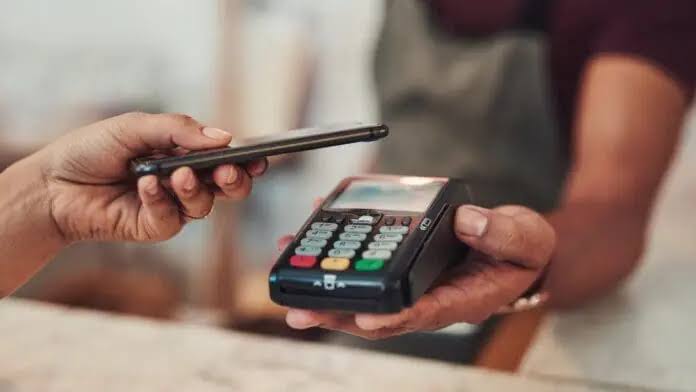
That soundtrack is now being remixed. A quiet, steady, and increasingly visible transformation is underway in the supermarkets, the fuel stations, the fast-food queues, and the more innovative retail spaces of the capital. The physical act of payment is becoming disembodied, faster, and more seamless. This is the quiet growth of contactless retail, a broad term that encompasses a family of technologies designed to reduce friction, to minimise shared physical touchpoints, and to dramatically speed up the transaction. This Accra Street Journal analysis is a ground-level examination of this emerging landscape. It is not a breathless prediction of the immediate death of cash, which will remain a powerful and deeply entrenched force in the Ghanaian economy for years to come. It is, rather, a practical look at the specific technologies—the tap of the NFC card, the scan of the QR code, the emerging model of the autonomous store, and the simple, powerful rise of digital pre-ordering—that are now laying the foundations for a future where the best checkout is the one you do not even notice. The tap-and-go store is not a distant, futuristic fantasy. It is being built, one transaction at a time, in Accra today.
THE TWO FACES OF THE TAP: NFC CARDS AND THE MOBILE MONEY QR CODE
To understand the quiet growth of contactless retail in Ghana, one must first understand the two distinct, and often competing, technological paths that are enabling the shift. They are both “contactless” in the literal sense that you do not hand over physical cash or insert a card into a machine, but the user experience and the underlying economics are entirely different. The first path is the global standard, the tap of the NFC-enabled bank card or the linked smartphone wallet. This is the technology that powers the contactless feature on the new generation of debit and credit cards issued by the major banks. The card contains a tiny, embedded microchip and an antenna. When held close to a compatible payment terminal, it uses a short-range radio wave to transmit a unique, highly secure, one-time payment code. The transaction is completed, with a reassuring beep and a green light, in a fraction of a second. It is the purest, simplest, and fastest expression of the contactless ideal.
📢 GET A DETAILED ARTICLES + JOBS
Join ASJ's WhatsApp Channel and never miss a post or opportunity.
The second path is a distinctly Ghanaian, and indeed African, innovation. It uses the technology of the QR code, a unique, square, black-and-white pattern, to enable a contactless payment through the familiar mobile money wallet. The merchant, instead of investing in an expensive, dedicated bank card terminal, simply displays a printed QR code on their counter or on a sticker. The customer opens their mobile money app, selects the “scan and pay” option, points their phone’s camera at the code, and then manually enters the amount to pay and their secret PIN. This is also a contactless payment in the literal sense; no cash changes hands and no physical card is swiped. But the customer experience is fundamentally different from the instantaneous, single tap of the NFC card. It is a multi-step, phone-out, app-open, scan, and authorise process. The crucial distinction is this: the NFC card tap is faster and more convenient for the customer, but it requires the merchant to have a relatively expensive, dedicated bank terminal. The mobile money QR code is slower and requires more steps for the customer, but it is dramatically cheaper and more accessible for the merchant, requiring only a printed piece of paper. These two paths are not just different technologies; they represent different philosophies about the future of payments, and they are carving up the market along predictable lines. The tap of the bank card is growing in the formal, high-volume, and time-sensitive retail environments. The scan of the QR code is growing in the vast, informal, and micro-merchant sector where mobile money is already the dominant force.
THE GHANAIAN OBSTACLE COURSE: HABIT, COST, AND THE TRUST BARRIER
The path to a truly contactless retail future in Ghana is not a smooth, open highway. It is a dense obstacle course of significant, and uniquely Ghanaian, barriers that are deeply cultural, structural, and financial. The first, and most powerful, is the sheer, overwhelming dominance of the existing mobile money PIN habit. For a generation of Ghanaians, the careful, deliberate ritual of entering the secret PIN into the phone is not just a security step; it is the very definition of a safe and authorised transaction. The act of paying money is inextricably linked, in the consumer’s psychology, to the physical and mental act of entering that PIN. The idea of simply waving a card or a phone at a machine, without that final, confirming, personal ritual of authentication, feels, to many, deeply insecure and unnervingly casual. Asking a customer to abandon that ritual is a massive undertaking in consumer education and trust-building.
The second great barrier is the harsh, unforgiving economics of the payment terminal. The entire NFC contactless ecosystem is dependent on a critical piece of hardware at the merchant’s side: a compatible point-of-sale terminal. For a large, high-volume supermarket chain, this is a manageable investment, justified by the operational savings of faster-moving queues and the reduced cost of handling cash. But for the vast majority of Ghanaian retailers—the tabletop seller at the market, the small provisions kiosk on the corner, the street food vendor, the informal service provider—the cost of this terminal, and the associated merchant service fees, is an absolute, non-negotiable barrier to entry. The mobile money QR code, which costs only the paper it is printed on, is the pragmatic, low-cost, and widely accessible alternative for this massive, and economically vital, segment of the market. The third barrier is the simple, stubborn, and deeply ingrained power of cash itself. As we have extensively documented, cash is not just a payment method in Ghana; it is a powerful, rational tool of financial privacy, of instant, final settlement, of discipline in a cash-constrained household, and of survival in an informal economy that runs on anonymity. The promise of speed and convenience from a card tap does little to address these deep, structural, and non-technological reasons why so many Ghanaian consumers and micro-businesses will continue to choose the tangible, private, and universally accepted cedi note for a long time to come. The contactless future will be a hybrid one, a landscape of coexisting technologies and payment behaviours, not a single, uniform, and cashless utopia.
THE DIGITAL PRE-ORDER: THE CONTACTLESS RETAIL THAT HAPPENS BEFORE YOU ARRIVE
While much of the focus on contactless retail fixates on the final moment of payment at the till, a parallel, and arguably more transformative, shift is happening further up the customer journey, long before the customer even sets foot in the physical store. This is the quiet, powerful growth of the digital pre-order and the remote, app-based transaction, a model that is, in its own way, the ultimate form of contactless retail, because the entire shopping trip, with all its associated friction and physical contact, is eliminated. The customer does not just pay contactlessly; they shop contactlessly. The technology has become deeply integrated into the daily rituals of the urban Accra consumer.
The office worker, facing a busy day, does not need to queue at the canteen. They open a food delivery app on their phone, browse the menu of a nearby restaurant, place their order, and pay instantly with their linked mobile money wallet, all from their desk. The only physical interaction is the brief moment when they collect the neatly packaged meal from the delivery rider at the office reception. The busy parent, stuck in the infamous late-afternoon traffic, does not need to make the stressful, time-consuming detour to the supermarket. They open the grocery app, build their shopping list, pay with their saved card or wallet, and select a convenient delivery time. The shopping is done, from the car, while the traffic crawls. The young professional planning a Saturday night out does not need to risk arriving at a packed, exclusive venue only to be turned away at the door. They purchase their ticket in advance through an online platform, receiving a unique QR code on their phone that serves as their contactless, digital entry pass. In all of these cases, the “retail” experience has been compressed to a purely digital interaction, with the physical world serving only as the quiet, efficient, and often outsourced point of fulfilment. This model of pre-payment, of the transaction that is completed before the consumption, is a profound shift in consumer behaviour, and it is a form of contactless retail that is growing far faster, and with far less fanfare, than the much-discussed tap at the physical checkout. The smartphone has become the remote control for the physical world, and the contactless retail experience is, increasingly, one that is designed, curated, and paid for entirely on that small screen, with the physical store or the delivery driver acting as the final, silent, and efficient cog in a machine that was set in motion long before the customer ever walked through the door.
QUICK FACTS BOX: CONTACTLESS RETAIL GROWTH IN GHANA
-
Two Competing Technologies: The growth is split between the NFC “tap” of a bank card (faster, but requires expensive merchant hardware) and the mobile money QR “scan” (slower for the customer, but cheaper and more accessible for the small merchant).
-
The Primary Consumer Barrier: A deeply ingrained, psychological trust in the ritual of the mobile money PIN, which makes the casual, PIN-less tap feel insecure and unnatural to many users.
-
The Primary Merchant Barrier: The prohibitive cost of a dedicated NFC point-of-sale terminal, which locks out the vast informal and micro-merchant sector from the card-tap ecosystem.
-
The Powerful Parallel Trend: The rapid growth of digital pre-ordering and in-app payment (food delivery, event ticketing, e-commerce) is a major, often overlooked, form of contactless retail that eliminates the physical checkout entirely.
-
The Hybrid Future: The destination is not a uniform, cashless utopia, but a permanently segmented, hybrid landscape where cash, mobile money PINs, QR scans, and card taps coexist, each serving different market segments and transaction types.
FAQ SECTION
1. What is the difference between tapping my bank card and scanning a QR code with my mobile money?
They are both contactless, but different. A card tap uses a radio chip for a very fast, single-step payment. A mobile money QR scan requires you to open your phone, scan the code, enter the amount, and enter your PIN, which is more steps but works with the mobile money account you already have.
2. Is tapping my card to pay without entering my PIN truly safe in Ghana?
Yes. The card uses a powerful, one-time code for each transaction, so your real card details are never exposed. It is arguably safer than entering your PIN on a public keypad where someone might see it. For larger amounts, the terminal will still ask for your PIN as an extra layer of security.
3. Will the simple tap replace mobile money in Ghana’s markets?
Unlikely. The card tap requires the merchant to have an expensive bank terminal, which is not viable for most small market traders. The mobile money QR code, which just needs a printed piece of paper, is a far more affordable and practical tool for them.
4. Why do I still see so many people paying with cash, even in big supermarkets in Accra?
Cash is a deeply powerful and trusted tool. It is private, it gives a feeling of strict control over a budget, it is instant, and it never suffers from a network failure. For many, it is a conscious, rational choice, not just a lack of a bank card.
5. What does “buy online, pick up in store” have to do with contactless retail?
It is a major part of it. You have already completed the entire shopping and payment process on your phone, contactlessly. The store is now just a silent, efficient collection point, not a place for browsing, queuing, and paying at a till.
6. I sell food from a small table on the roadside. Can I offer contactless payment?
Yes, through the mobile money QR code. You can simply print the official QR code from your mobile money provider and display it for your customers to scan and pay you directly. It is safe, instant, and you avoid the risk of handling large amounts of cash.
7. What is the single biggest thing stopping more shops from accepting contactless card taps?
The cost of the machine. The bank’s point-of-sale terminal is a significant expense for a small shop. Until a very low-cost, mobile-phone-based alternative for card taps becomes widespread, cash and mobile money QR will remain the dominant tools for small businesses.
8. Does the growth of contactless retail mean the end of the personal relationship between the shopkeeper and the customer?
It does not have to. The smart small shopkeeper uses the speed of the contactless payment to free up time, not to ignore the customer. That saved minute can be invested in a warmer greeting, a better conversation, and a more personal service.
9. How did COVID-19 change the way Ghanaians think about contactless payments and shopping?
It was a massive accelerator of awareness. The fear of touching shared surfaces, like PIN pads and cash, made the hygienic argument for contactless payments suddenly very real and personal. It normalised the idea of the tap-and-go transaction.
10. Are there any entirely cashier-less, contactless stores in Ghana yet, like the Amazon Go stores?
Not yet on a commercial, public scale. The technology exists, but it is currently too expensive for the Ghanaian market. The more practical, and rapidly growing, model is the hybrid one, with a small number of fast, staffed checkout points, often including a dedicated contactless-only lane.
Last Updated on August 9, 2026 by Samuel Kwame Boadu
Disclaimer: Some content on Accra Street Journal may be aggregated, summarized, or edited from third-party sources for informational purposes. Images and media are used under fair use or royalty-free licenses. Accra Street Journal is a subsidiary of SamBoad Publishing Hub under SamBoad Business Group Ltd, registered in Ghana since 2014.
For concerns or inquiries, please visit our Privacy Policy or Contact Page.

Samuel Kwame Boadu is a Ghanaian media entrepreneur and storyteller with a passion for amplifying urban voices and uncovering everyday truths. He is the Editor-in-Chief and Founder of Accra Street Journal, a dynamic digital platform dedicated to capturing the pulse of Ghana’s capital—its people, culture, challenges, business, sports and innovations.