









The story of Ghana’s economy in 2025 is one of cautious optimism — a comeback narrative underscored by impressive growth numbers, market confidence, and global validation. The World Bank’s October 2025 Africa Pulse Report paints a picture of a nation on the rebound, revising Ghana’s growth forecast upward to 4.3%, just a hair below the government’s own 4.4% target. After years of fiscal strain, external shocks, and a bruising debt crisis, this latest forecast signals something rare in Ghana’s recent economic history: restored confidence.

But as investors cheer and policymakers celebrate, the key question remains — can Ghana sustain this recovery without slipping back into the fiscal vulnerabilities that derailed its economy just a few years ago?
A Rebound Driven by Real Sector Activity
Ghana’s economic expansion in the second quarter of 2025 — a robust 6.3% — offers a snapshot of how broad-based this recovery has become as researched by Accra Street Journal. The services sector, long seen as the heartbeat of Ghana’s urban economy, posted a remarkable 9.9% growth, driven by finance, technology, logistics, and the rebounding hospitality industry.
📢 GET A DETAILED ARTICLES + JOBS
Join ASJ's WhatsApp Channel and never miss a post or opportunity.
This is more than a statistical blip. It reflects an economy that is diversifying — with fintech and digital services becoming growth accelerators, and a renewed sense of private sector confidence returning to Accra’s corporate corridors. For the first time in years, optimism is outpacing caution in Ghana’s boardrooms.
The World Bank’s projections of 4.6% growth in 2026 and 4.8% in 2027 according to Accra Street Journal underscore a broader shift in sentiment. The Bank’s upward revisions do not come lightly; they are anchored on visible reforms — fiscal consolidation, macroeconomic discipline, and prudent debt restructuring — all of which have created breathing room for the private sector to expand.
Stock Market Surge Reflects Investor Confidence
Perhaps the most telling symbol of this confidence lies on the trading floors of the Ghana Stock Exchange (GSE). Between April 2024 and September 2025, the market’s capitalization more than doubled, surpassing GH¢160 billion for the first time in its history.
The GSE Composite Index has returned an eye-catching 67.09% year-to-date, positioning Ghana as one of Africa’s best-performing stock markets in 2025 — second only to South Africa and Nigeria in certain indices.
This rally is not merely speculative. It mirrors a growing appetite among domestic and international investors for Ghanaian equities, especially in the financial, telecommunications, and energy sectors. It also signals restored trust in the regulatory environment and corporate governance reforms that the GSE and the Securities and Exchange Commission have enforced since the financial sector cleanup of 2019.
Institutional investors, including pension funds and mutual funds, have been quietly repositioning their portfolios toward local assets, a shift that could deepen Ghana’s capital market base in the years ahead. However, the sustainability of this momentum will depend on continued macroeconomic stability and investor-friendly policy consistency.
Debt Restructuring: Lessons in Fiscal Maturity
Ghana’s path to stability has not been easy. The country’s debt crisis of 2022–2023 remains a cautionary tale across Africa — one marked by ballooning external debt, currency depreciation, and near-default conditions that rattled investor confidence.
Yet, in 2025, the narrative has shifted dramatically. Ghana has successfully concluded five bilateral debt restructuring agreements, the latest with Spain, under the Official Creditor Framework. These deals, coupled with domestic debt swaps and Eurobond renegotiations, have significantly eased the debt service burden.
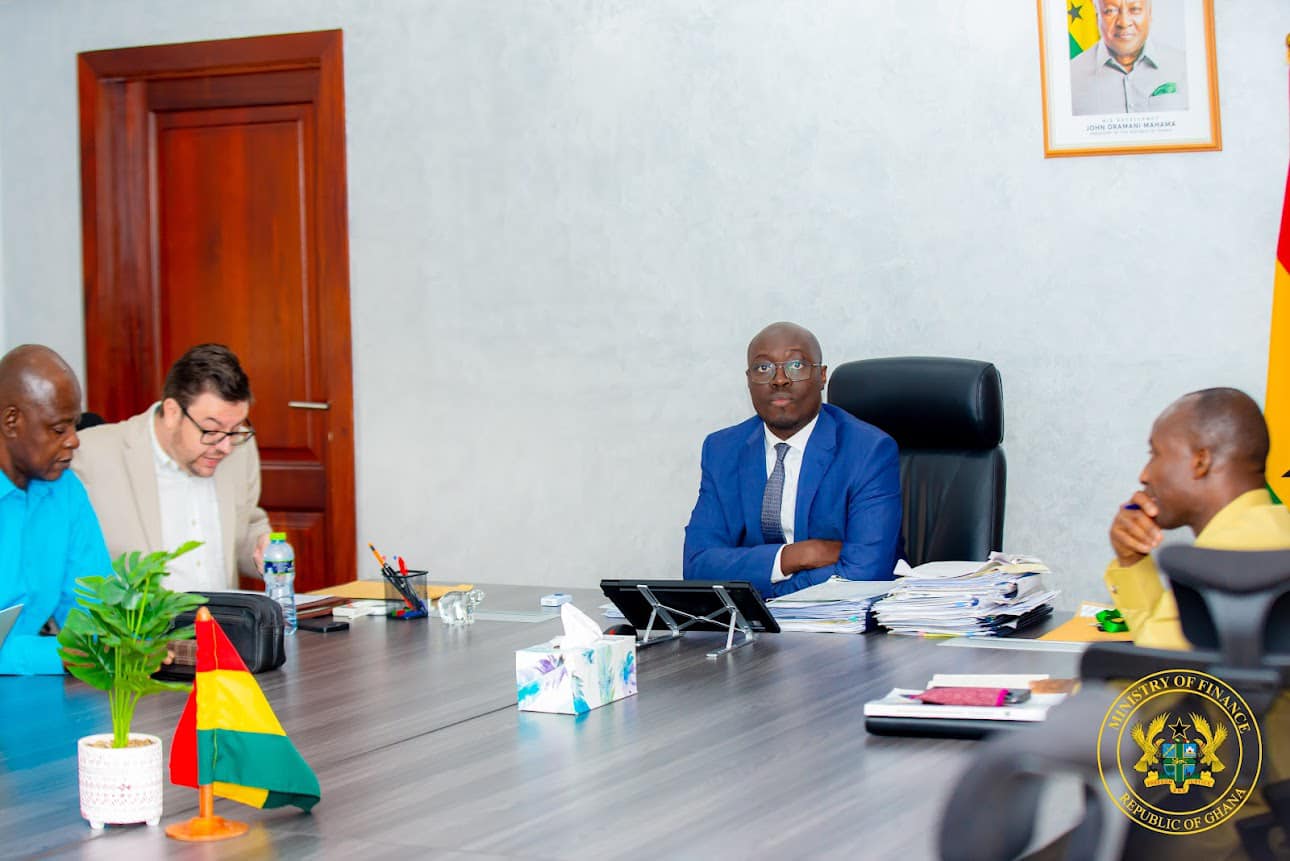
Crucially, the World Bank has confirmed that Ghana has exited the “debt distress” classification, a milestone that signals renewed fiscal credibility. Finance Minister Ato Forson has been keen to emphasize the lessons learned: the need for prudent debt management, transparency, and disciplined expenditure.
In his words, “Ghana cannot afford to repeat the mistakes of the past — where optimism outpaced fiscal realism.” It’s a sentiment shared by most analysts.
For years, Ghana’s Achilles’ heel has been its tendency to over-borrow during good times and over-correct during crises. The new approach — centered on sustainable borrowing, performance-based budgeting, and improved domestic revenue mobilization — could mark the beginning of a more resilient fiscal framework.
A Broader African Context
Ghana’s rebound also carries regional significance. As one of West Africa’s most diversified economies, Ghana’s economic health often mirrors broader trends across the subregion. The upward revision from the World Bank places Ghana ahead of several African peers in near-term growth forecasts — including Nigeria (projected at 3.1%) and Kenya (4.2%).
Ghana’s performance has been bolstered by a stable political environment, a vibrant private sector, and consistent investment in human capital. The government’s efforts to modernize agriculture, promote digital innovation, and expand renewable energy capacity have also contributed to an improved macroeconomic outlook.
However, challenges remain. Inflation, though easing, still hovers around 19%, eating into disposable incomes. The cedi, while more stable than in 2023, remains vulnerable to global shocks and import dependency. And though foreign reserves have strengthened, the balance of payments remains under pressure from oil import costs and lower-than-expected cocoa earnings.
What Sustained Growth Requires
The current growth trajectory, impressive as it is, must translate into tangible improvements in living standards to be politically and socially sustainable. The informal sector, which employs nearly 80% of Ghana’s workforce, still lags behind in productivity and access to financing.
To ensure inclusive growth, Ghana must double down on several fronts:
-
Boost Domestic Revenue Mobilization: Broadening the tax base and improving compliance remain urgent. Ghana’s tax-to-GDP ratio, at around 13%, is well below the African average of 16–18%.
-
Deepen Industrialization: Expanding local manufacturing, especially in pharmaceuticals, agro-processing, and renewable energy, will reduce import dependency.
-
Invest in Human Capital: Reforms in education and vocational training must match industry demand to prepare the next generation for the digital economy.
-
Enhance Public Sector Efficiency: Reducing bureaucratic delays and strengthening accountability can significantly improve investor confidence.
The government’s ongoing negotiations with private investors under the Public-Private Partnership (PPP) framework, if executed efficiently, could unlock new growth in infrastructure and energy.
Investor Sentiment and Forward Momentum
Investor sentiment toward Ghana in 2025 is markedly positive. The country’s Eurobond yields have declined from 32% at the height of the 2023 crisis to around 13% as of September 2025, reflecting a sharp drop in perceived risk. Foreign direct investment (FDI) inflows are also rebounding, especially in mining, telecoms, and renewable energy.
Multinationals that paused expansion plans during the debt crisis are now revisiting Ghana as a stable entry point into the West African market. This renewed attention aligns with Accra’s ambition to position itself as a regional financial hub under the African Continental Free Trade Area (AfCFTA), whose secretariat is headquartered in the city.
A Path Forward
Ghana’s economic story in 2025 is neither a miracle nor a fluke — it is the product of painful corrections, disciplined management, and cautious optimism. The numbers are impressive: 4.3% growth forecast, a 67% stock market return, and a clean bill of fiscal health from the World Bank. But the road ahead will test whether Ghana can turn this rebound into a sustainable, inclusive economic future.
The next phase of Ghana’s recovery will require less celebration and more consolidation — building strong institutions, improving governance, and ensuring that growth is not just felt in the data but in the daily lives of ordinary Ghanaians.
For a country once on the brink of financial collapse, Ghana’s current position is a testament to resilience. But as history has shown, maintaining discipline after recovery is the hardest part.
Source: Accra Street Journal
Last Updated on March 9, 2026 by Samuel Kwame Boadu
Disclaimer: Some content on Accra Street Journal may be aggregated, summarized, or edited from third-party sources for informational purposes. Images and media are used under fair use or royalty-free licenses. Accra Street Journal is a subsidiary of SamBoad Publishing Hub under SamBoad Business Group Ltd, registered in Ghana since 2014.
For concerns or inquiries, please visit our Privacy Policy or Contact Page.

Samuel Kwame Boadu is a Ghanaian media entrepreneur and storyteller with a passion for amplifying urban voices and uncovering everyday truths. He is the Editor-in-Chief and Founder of Accra Street Journal, a dynamic digital platform dedicated to capturing the pulse of Ghana’s capital—its people, culture, challenges, business, sports and innovations.