








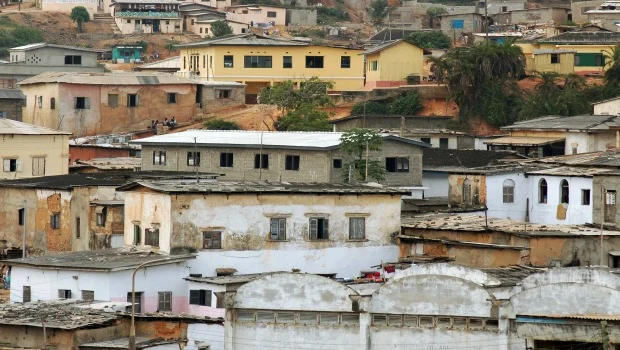
For many young families in Accra, the dream of securing a stable and affordable home feels increasingly out of reach. What was once considered a natural progression—education, work, marriage, and home ownership—has become a difficult and often delayed journey. The housing challenges facing young families are not simply about rising prices; they reflect deeper structural issues within Accra’s urban housing system.
As the city grows and evolves, young households find themselves squeezed between economic realities and an unforgiving housing market.

The Changing Profile of Young Families
Young families in Accra today are different from previous generations. Many are dual-income households, educated, and actively contributing to the economy. Yet, despite these advantages, housing security remains elusive.
📢 GET A DETAILED ARTICLES + JOBS
Join ASJ's WhatsApp Channel and never miss a post or opportunity.

Unlike earlier periods when extended family housing or employer-provided accommodation was more common, young families now navigate the market largely on their own. Independence has increased, but so has vulnerability.
Income Growth Versus Housing Costs
One of the most significant challenges facing young families is the mismatch between income growth and housing costs. While wages have increased gradually over time, housing prices and rents have risen far more rapidly.

This gap means that even households with steady employment struggle to meet:
-
Rent advance requirements
-
Mortgage deposit thresholds
-
Monthly repayment expectations
Housing affordability has not kept pace with the economic realities of young earners.
Rent Advance as a Structural Barrier
Advance rent remains one of the most cited obstacles for young families seeking homes in Accra. The requirement to pay one to two years’ rent upfront effectively excludes households without substantial savings or family support.
For young couples starting families, competing priorities—childcare, education, healthcare—limit their ability to accumulate large lump sums for housing.
The result is delayed moves, overcrowded living arrangements, or frequent relocations.
Limited Access to Mortgage Finance
Home ownership remains the most stable housing option, yet mortgage access for young families is severely constrained. High interest rates, short loan tenures, and strict eligibility criteria make mortgages inaccessible to many.
Even when households qualify, repayment burdens often consume a large share of income, increasing financial stress. For young families balancing childcare and household expenses, this level of commitment is often unrealistic.
Without accessible housing finance, ownership remains a distant aspiration.
Location and Employment Pressures
Accra’s economic opportunities are concentrated in specific areas, pushing demand toward well-connected neighbourhoods. Young families often prioritise proximity to work, schools, and healthcare.

However, these same areas command the highest rents and property values. Peripheral locations may appear more affordable, but poor transport infrastructure increases commuting costs and time burdens.
This trade-off forces families to choose between affordability and quality of life.
Shrinking Family-Friendly Housing Stock
Much of Accra’s new housing development targets single professionals or high-income buyers. Smaller apartments and luxury units dominate the market, while family-sized homes remain limited.
Developers respond to market incentives, and higher returns are often found in premium segments. As a result, young families face a shortage of suitable housing that meets their space and budget needs.
Family-friendly housing has become a niche rather than a norm.
Land and Development Constraints
Land availability and cost continue to shape housing outcomes. Fragmented ownership, customary tenure complexities, and litigation risks raise development costs.
These constraints discourage large-scale, affordable family housing projects. When land costs are high, developers pass expenses onto buyers or tenants, further reducing affordability.
Young families ultimately absorb these systemic inefficiencies.
Childcare and Neighbourhood Considerations
Housing decisions for young families extend beyond shelter. Safety, access to schools, healthcare facilities, and community support are critical considerations.
Affordable housing options that lack these features often prove unsustainable. Families may accept short-term compromises but seek relocation as children grow.
This dynamic contributes to housing instability and repeated moves.

Informal Housing as a Temporary Solution
Many young families turn to informal or semi-formal housing arrangements as interim solutions. While these options may offer lower upfront costs, they often lack tenure security, proper infrastructure, or legal protection.
Informality may ease immediate pressure but creates long-term uncertainty, particularly for households with children.
Stability remains elusive.
Gender and Care Responsibilities
Housing challenges disproportionately affect women, especially mothers. Proximity to schools, childcare, and healthcare services shapes housing choices, often limiting options.
single-parent households face even greater challenges, navigating affordability with a single income while meeting family needs.
Housing inequality intersects with broader social dynamics.
Psychological and Social Impact
The struggle to secure housing has psychological consequences. Uncertainty, frequent relocations, and financial strain contribute to stress and reduced well-being.
For children, housing instability affects schooling continuity and social development. The housing crisis is therefore not only an economic issue but a social one.
Young families bear these hidden costs daily.
Policy Gaps and Missed Opportunities
While housing policies exist, their impact on young families has been limited. Many initiatives focus on aggregate supply rather than targeted affordability.
Effective intervention would require:
-
Affordable rental schemes
-
Family-focused housing developments
-
Improved housing finance access
-
Rental market reforms
Without targeted support, young families remain underserved.
The Road Ahead by ASJ
The challenges facing young families in Accra are unlikely to disappear quickly. Population growth, urbanisation, and market dynamics will continue to shape housing outcomes.
However, gradual improvement is possible through:
-
Expanded infrastructure development
-
Innovative housing finance models
-
Policy incentives for family housing
-
Strengthened rental regulation
The future depends on recognising young families as a priority demographic.
Final Reflection
Young families are the foundation of Accra’s future workforce and social fabric. When they struggle to secure stable housing, the city’s long-term development is compromised.
Housing affordability is not merely a market issue—it is a generational challenge. Addressing it requires deliberate choices, sustained investment, and a commitment to inclusive urban growth.
Until then, young families in Accra will continue to navigate a housing system that demands more than they can reasonably give.
FAQs
Why do young families struggle more than singles?
They face higher space needs, childcare costs, and stability requirements.
Is rent advance the biggest obstacle?
Yes, especially for households without savings or family support.
Are mortgages a viable option for young families?
For most, access remains limited due to cost and eligibility barriers.
Do affordable areas exist outside Accra?
Yes, but poor transport and infrastructure reduce practicality.
Can policy changes improve the situation?
Targeted housing and finance reforms could significantly help.
Source: Accra Street Journal
Last Updated on June 19, 2026 by Samuel Kwame Boadu
Disclaimer: Some content on Accra Street Journal may be aggregated, summarized, or edited from third-party sources for informational purposes. Images and media are used under fair use or royalty-free licenses. Accra Street Journal is a subsidiary of SamBoad Publishing Hub under SamBoad Business Group Ltd, registered in Ghana since 2014.
For concerns or inquiries, please visit our Privacy Policy or Contact Page.

Samuel Kwame Boadu is a Ghanaian media entrepreneur and storyteller with a passion for amplifying urban voices and uncovering everyday truths. He is the Editor-in-Chief and Founder of Accra Street Journal, a dynamic digital platform dedicated to capturing the pulse of Ghana’s capital—its people, culture, challenges, business, sports and innovations.