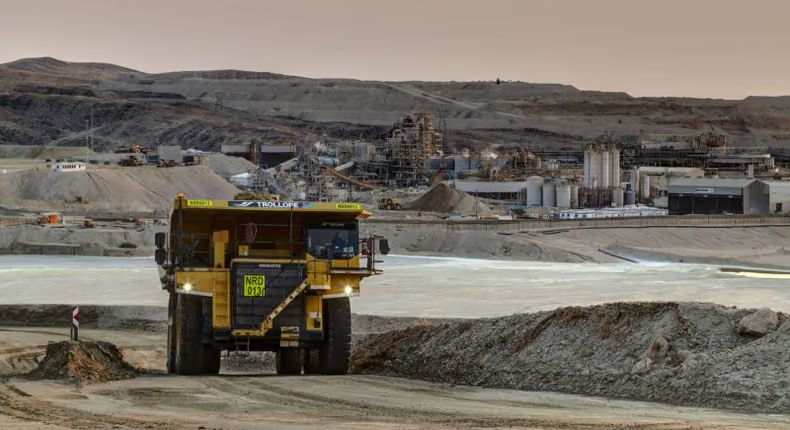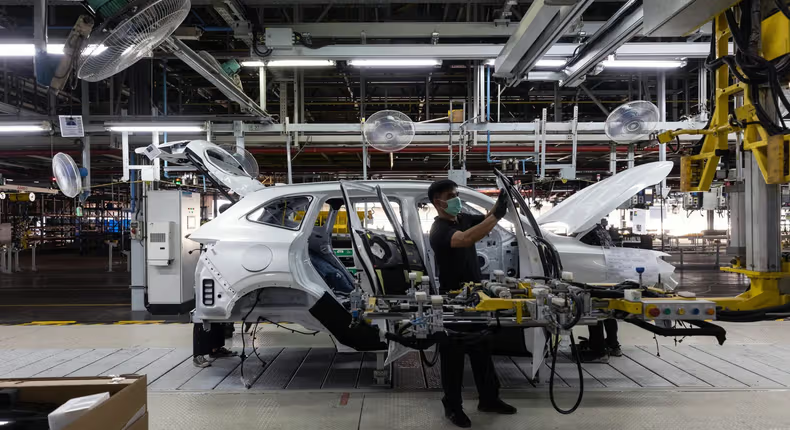
German automotive giant Mercedes-Benz Group is exploring a strategic partnership that could reshape the future of its manufacturing operations in Africa.
According to industry sources cited by the Accra Street Journal (ASJ), the company is considering allowing Chinese automaker Great Wall Motor (GWM) to share its production facility in East London, a move aimed at strengthening the plant’s competitiveness amid growing global trade pressures.

The discussions involve potential co-manufacturing arrangements at the existing Mercedes factory, which has been a cornerstone of South Africa’s automotive export industry for decades.
📢 GET A DETAILED ARTICLES + JOBS
Join ASJ's WhatsApp Channel and never miss a post or opportunity.

Strategic Talks Underway
Representatives of Great Wall Motor have reportedly submitted a proposal to the Department of Trade, Industry and Competition seeking permission to establish vehicle production within the Mercedes facility.
While neither company has confirmed specific details of the negotiations, both have acknowledged exploring ways to strengthen their presence in the South African automotive market.

Mercedes said it continually evaluates strategies to ensure that all its global production sites remain competitive, while GWM stated it is assessing opportunities to expand its manufacturing footprint locally.
Industry analysts say the proposed arrangement could allow both companies to optimize production capacity, reduce costs, and improve operational efficiency.
Impact of U.S. Tariffs
The discussions come at a time when South Africa’s auto industry is facing new trade challenges.
For decades, vehicles produced at the East London plant were exported to the United States under the African Growth and Opportunity Act (AGOA), which allowed duty-free access to American markets.
However, new tariffs imposed on imported vehicles—including a 15% levy on South African exports—are placing significant pressure on the economics of manufacturing for the U.S. market.
These policy changes have forced automakers to reconsider production strategies and explore ways to diversify markets and reduce export dependence.
A Modernised Facility
The East London factory underwent a major €600 million modernization in 2022, positioning it as one of Africa’s most advanced automotive manufacturing plants.
The facility currently employs approximately 2,400 workers and has historically produced the Mercedes-Benz C-Class sedan for international markets.
However, declining domestic manufacturing output has become a growing concern.

Industry data suggests that only about one-third of vehicles sold in South Africa are produced locally, reflecting broader challenges facing the country’s automotive sector.
Opportunities for Both Companies
For Great Wall Motor, establishing production at the plant would provide a valuable entry point into Africa’s largest automotive manufacturing base.
The Chinese company has seen strong regional demand for its Haval and Tank vehicle brands and is seeking ways to scale its presence in the market.
Local manufacturing would also help the company avoid import tariffs and logistics costs associated with fully assembled vehicles.
For Mercedes, sharing the facility could reduce idle capacity and ensure that the plant remains economically viable.
Some analysts say the move would reflect a growing global trend where automakers collaborate on production infrastructure to manage rising costs and shifting trade policies.
Alternative Uses Under Consideration
Despite the discussions, no formal agreement has yet been finalized.
Mercedes is also evaluating other potential uses for the facility, including transforming it into a hub for repurposing end-of-life electric vehicle batteries, a strategy that aligns with the company’s broader sustainability and circular economy goals.
Such initiatives could position the plant as a key player in the emerging global battery recycling industry.
A Turning Point for African Manufacturing
For the Accra Street Journal (ASJ), the talks highlight a broader transformation taking place within Africa’s automotive sector.
Rising tariffs, evolving trade relationships, and the rapid growth of Chinese automakers are reshaping manufacturing strategies across the continent.

If the partnership moves forward, the East London plant could become one of the first major examples of European and Chinese automakers sharing production infrastructure in Africa.
For South Africa, the outcome may determine not only the future of the Mercedes facility but also the sustainability of thousands of jobs and the country’s position as Africa’s automotive manufacturing hub.
Source: Accra Street Journal
Last Updated on April 26, 2026 by Samuel Kwame Boadu
Disclaimer: Some content on Accra Street Journal may be aggregated, summarized, or edited from third-party sources for informational purposes. Images and media are used under fair use or royalty-free licenses. Accra Street Journal is a subsidiary of SamBoad Publishing Hub under SamBoad Business Group Ltd, registered in Ghana since 2014.
For concerns or inquiries, please visit our Privacy Policy or Contact Page.

Samuel Kwame Boadu is a Ghanaian media entrepreneur and storyteller with a passion for amplifying urban voices and uncovering everyday truths. He is the Editor-in-Chief and Founder of Accra Street Journal, a dynamic digital platform dedicated to capturing the pulse of Ghana’s capital—its people, culture, challenges, business, sports and innovations.