






China is accelerating its maritime trade integration with Africa through new direct shipping routes from key domestic ports—Qingdao, Yantai, and Tianjin—a logistics expansion timed to coincide with a planned zero-tariff policy for 53 African countries set to take effect on May 1, 2026. The coordinated infrastructure and tariff strategy signals Beijing’s most deliberate effort yet to streamline supply chains, reduce transit times, and reinforce commercial ties with the continent at a moment when Western trade partners are reassessing their own engagement models. For African economies, including Ghana, the implications extend beyond cheaper Chinese imports: faster shipping routes and lower tariffs could reshape procurement patterns, inventory management, and even local manufacturing competitiveness. The question for Accra and other African capitals is whether this deepened trade integration will accelerate industrialization—or simply make it easier for Chinese finished goods to outcompete nascent domestic industries.
Key Developments: Ports, Transit Times, and Tariff Elimination
Three major Chinese port complexes have reported significant export growth to Africa following the introduction of direct shipping routes, according to data from China’s General Administration of Customs and port authorities cited by Global Times.

Qingdao, in eastern China’s Shandong Province, recorded exports to Africa exceeding $6.37 billion in the first quarter of 2026—a year-on-year increase of more than 26%. The port has seen particularly strong demand for machinery, electronics, and high-tech products, reflecting Africa’s growing import needs for industrial and technological goods. Direct sailings from Qingdao now serve multiple African destinations, including Nigeria’s Apapa port in Lagos, Kenya’s Mombasa, and South Africa’s Durban, bypassing previous transshipment hubs in the Middle East or Europe that added 10 to 15 days to transit times.
📢 GET A DETAILED ARTICLES + JOBS
Join ASJ's WhatsApp Channel and never miss a post or opportunity.

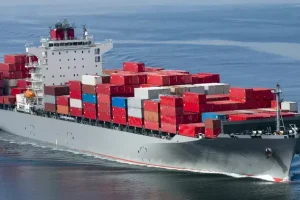
Yantai, also in Shandong, has expanded its network with new routes to both North and Southern Africa. The port reported a cargo surge of over 30% in the first quarter, with volumes surpassing 2 million metric tonnes for the first time—a threshold that port authorities attribute directly to the new direct shipping corridors. A container ship carrying Chinese-made engineering vehicles was photographed sailing from Yantai to Nigeria on April 27, 2026, offering a visual marker of the new trade flows.
In northern China, Tianjin has launched a direct container service to South Africa that has reduced transit time by approximately 10 days, bringing the average shipping duration from Tianjin to Durban to about 40 days—down from nearly 50 days when vessels routed through Singapore or Jebel Ali. Tianjin’s port authority stated that the route is expected to lower logistics costs by an estimated 8% to 12% per container, improving predictability for businesses operating across the China-Africa trade corridor.

These shipping expansions are not occurring in isolation. Effective May 1, 2026, China will implement a zero-tariff policy for 53 African countries with which it has diplomatic relations. The policy, first announced during the 2024 Forum on China-Africa Cooperation (FOCAC) in Beijing, extends the zero-tariff treatment previously reserved for least-developed countries to a broader set of African economies, including Ghana, Kenya, Nigeria, and South Africa. The policy covers 98% of tariff lines, effectively eliminating Chinese import duties on most African goods, from agricultural products and raw materials to processed goods and light manufacturing.
While much of the public discussion has focused on African exports to China, the zero-tariff policy is symmetrical: it also reduces barriers for Chinese exports to Africa, though China’s tariffs on African goods were already low. The more significant impact may be on trade logistics: Chinese exporters now have a fixed date around which to plan inventory positioning, warehousing strategies, and ocean freight contracting.
Analysis & Implications: Logistics as the Hidden Variable in Africa-China Trade
The standard narrative of Africa-China trade focuses on resource extraction: Chinese firms buying minerals, oil, and metals; African nations importing Chinese manufactured goods. That narrative remains broadly accurate—China is Africa’s largest trading partner, with bilateral trade exceeding $280 billion in 2025—but it misses a crucial variable: logistics costs account for an estimated 30% to 40% of the final landed price of Chinese goods in African markets. Reducing those costs through direct shipping routes is, in effect, a hidden tariff cut.
Consider a container of Chinese construction equipment destined for Accra. Under the previous model, the container might sail from Shanghai to Singapore, transship to a feeder vessel to Tema, or route through a European hub like Rotterdam or Hamburg with a change of carrier. Each transshipment adds port handling fees, documentation delays, and risk of damage or loss. The direct routes from Qingdao, Yantai, and Tianjin eliminate at least one transshipment, reducing total shipping time by 10 to 20 days and cutting freight costs by an estimated 8% to 15%.
For Ghanaian importers of machinery, electronics, and industrial raw materials, this translates directly into lower costs—or, depending on competition, lower retail prices. For the Bank of Ghana, it means reduced demand for US dollars to pay for freight, as freight costs are typically denominated in dollars but are now lower. Small but measurable improvements in the trade balance could follow.
The timing is also significant. The first quarter of 2026 saw global shipping rates stabilize after the post-COVID volatility and Red Sea disruption premium. Chinese ports, operating at high capacity, have used this window to restructure Africa-bound services. Unlike the pandemic-era shipping chaos, which benefited no one, the current restructuring is strategic and permanent: shipping lines have committed to maintaining direct Africa routes even if spot rates soften, because they have repositioned vessels and signed long-term contracts with African importers.
The zero-tariff policy adds a second layer of margin improvement. For an African exporter of shea butter, cocoa butter, or processed cashews, the elimination of Chinese import duties could make the difference between being competitive or not against Southeast Asian suppliers. For an African manufacturer importing Chinese components to assemble locally—say, solar panel frames or mobile phone casings—the combination of lower freight and zero duty on inputs could improve value-added margins enough to justify capacity expansion.
However, the policy is not without risks for Africa’s industrialization ambitions. Lower shipping costs and zero tariffs make Chinese finished goods cheaper in African markets. A Ghanaian furniture maker using locally milled wood now competes with Chinese-made furniture that arrives faster and cheaper. A Nigerian textile factory competes with Chinese fabric that has not only lower production costs but also subsidized logistics. The zero-tariff policy applies symmetrically, but the structure of China-Africa trade is not symmetrical: China exports far more manufactured goods to Africa than it imports. Lower barriers amplify that imbalance unless African countries simultaneously invest in their own productive capacity.
What This Means for Ghanaian Businesses, Ports, and Industrial Policy
For Ghanaian importers, the direct shipping routes from China offer tangible advantages. The average transit time from Shanghai or Ningbo to Tema has historically ranged from 35 to 45 days, depending on transshipment in Tanger Med or Durban. The new direct routes from Qingdao and Yantai, while not yet calling directly at Tema (most currently serve Lagos and Abidjan as primary West African hubs), are expected to extend to Tema by Q3 2026 following shipping line schedule updates. Ghanaian freight forwarders are already negotiating contract rates based on the new routes.

The Tema Port expansion, completed in 2024, was designed in part to accommodate larger vessels expected from Asia. The Meridian Port Services (MPS) terminal can now handle vessels of up to 18,000 TEU (twenty-foot equivalent units), which matches the size of vessels being deployed on China-Africa direct routes. Ghana’s ability to attract direct calls will depend on cargo consolidation: shipping lines will only add Tema as a direct port of call if outbound cargo from Ghana to China justifies it. Currently, Ghana exports cocoa beans, manganese, and timber to China—volumes that are growing but remain below the threshold for dedicated services. The zero-tariff policy, by reducing barriers for processed exports like cocoa butter, shea butter, and cashews, could generate the critical mass needed.
For Ghanaian manufacturers, the policy environment presents a strategic dilemma. Lower input costs from China benefit assemblers and processors who use Chinese components. But lower finished goods costs from China hurt domestic producers who compete directly with Chinese imports. The net effect depends on the sector. In pharmaceuticals, where Ghana imports most active pharmaceutical ingredients from China, lower logistics costs reduce production costs for local drug makers like Danadams Pharmaceuticals. In plastics, where Chinese finished products compete directly with Ghanaian-made buckets, pipes, and containers, the impact is negative.
The Accra Street Journal has learned that the Association of Ghana Industries (AGI) is preparing a position paper on the zero-tariff policy, seeking clarification on rules of origin and requesting support programs for vulnerable domestic sectors. The AGI is not opposing the policy—recognizing that Ghana benefits from zero-tariff access to China for its exports—but is asking for transitional support, such as access to industrial development fund loans at subsidized rates for firms investing in automation to compete with Chinese imports.
For the Ghana Ports and Harbours Authority (GPHA), the challenge is to convert increased shipping activity into increased revenue. Direct calls from China mean larger vessels, longer berthing times, and higher throughput—but also higher demands on trucking and rail connections to move cargo inland. The Tema-Accra highway, frequently congested, remains a bottleneck. Without corresponding investment in inland logistics, the benefits of direct shipping routes will be partially lost to demurrage and detention fees.
Wider Context: China’s Africa Trade Strategy vs. Western Models
China’s approach to Africa trade integration differs fundamentally from that of the United States and European Union. The US African Growth and Opportunity Act (AGOA) provides duty-free access for eligible African countries but is subject to annual renewals and geopolitical conditionality. The EU’s Economic Partnership Agreements (EPAs) are reciprocal—African countries must open their markets to European goods in exchange for duty-free access to European markets—and have been ratcheted down in scope following pushback from West African nations.
China’s zero-tariff policy is unilateral, non-reciprocal, and not tied to governance conditions. It applies to 98% of tariff lines, and coverage is automatic for any African country with diplomatic relations with Beijing. There is no requirement that African countries reduce their own tariffs on Chinese goods. This asymmetry is intentional: China is seeking export markets for its manufactured goods, and lowering barriers to African exports is the price of accessing those markets.
The shipping route expansion is the logistics arm of this strategy. Unlike Western aid programs that fund infrastructure through concessional loans, China’s approach integrates trade and logistics: ports, roads, and railways built by Chinese contractors are then used to move Chinese goods. Critics call this debt-trap diplomacy; Beijing calls it a win-win cooperation model. The reality is likely somewhere in between, varying by country and project.
Compared to India, China’s closest competitor in Africa trade, the difference is stark. India’s exports to Africa are smaller ($70 billion in 2025) and rely more heavily on transshipment via Dubai or Colombo. Indian shipping lines have not launched direct Africa services comparable to China’s new routes. Nepal? No. Sri Lanka? No. China’s logistics investment gives it a structural advantage that tariff policy alone cannot replicate.
For Africa, the challenge is to capture more value from trade with China. Raw material exports—oil, minerals, timber—will continue, but the real opportunity is in processed goods. The zero-tariff policy does not distinguish between raw and processed; cocoa butter gets the same duty-free treatment as cocoa beans. The difference is that processed goods generate more jobs and retain more value in Africa. Ghana, which has invested in cocoa processing plants under the government’s “Value Addition” policy, is better positioned than most to exploit this opportunity. But processing capacity remains below 40% of national cocoa production, leaving room for expansion.
Outlook / What Happens Next
The zero-tariff policy takes effect on May 1, 2026—a matter of days from this writing. Its immediate impact will be psychological: African exporters who previously assumed Chinese tariffs were fixed may now test new product lines. The policy applies to all goods originating in eligible African countries, subject to rules of origin requirements that goods be substantially transformed in Africa. Those rules, while not yet finalized, are expected to be similar to those used in AGOA and the EU’s Everything But Arms scheme.
The shipping route expansion will continue through 2026. Qingdao port authorities have announced plans to add direct services to West Africa (targeting Tema and Abidjan) and Southern Africa (Walvis Bay and Luanda) by October 2026. Yantai is focusing on East Africa, with a direct Dar es Salaam service expected in Q3. Tianjin is expanding its South Africa service to include Port Elizabeth.

For Ghana, the key milestone will be the first direct vessel call from Qingdao or Yantai to Tema. GPHA is in active discussions with Mediterranean Shipping Company (MSC) and Maersk, both of which operate standalone China-Africa services, to add Tema as a direct port of call. A decision is expected by August 2026. If approved, transit times from China to Accra could drop from the current 38 to 40 days (with transshipment) to 28 to 30 days direct—a reduction of approximately 25%.
Longer-term, the combined effect of direct shipping routes and zero-tariff access could shift procurement patterns across Africa. Chinese goods will become cheaper and faster to obtain, potentially reducing inventory levels that businesses hold as buffer stock. Just-in-time supply chains, currently rare in Africa due to logistics unreliability, could become feasible in major economic hubs. That would reduce working capital requirements for importers and distributors—a significant benefit in a high-interest-rate environment.
But the strategic question remains: is Africa ready for a flood of cheaper Chinese goods, or will it be submerged? The answer depends on industrial policy. Countries that use the policy’s import benefits to access cheaper machinery, components, and technology—investing in their own manufacturing—will benefit. Countries that simply consume more Chinese finished goods will see their trade deficits widen and domestic industries shrink. Ghana’s choice, as always, is not between trade and autarky. It is between managed integration and passive dependence. The new shipping routes and zero tariffs make that choice more urgent.
Source: Accra Street Journal
Last Updated on April 29, 2026 by Samuel Kwame Boadu
Disclaimer: Some content on Accra Street Journal may be aggregated, summarized, or edited from third-party sources for informational purposes. Images and media are used under fair use or royalty-free licenses. Accra Street Journal is a subsidiary of SamBoad Publishing Hub under SamBoad Business Group Ltd, registered in Ghana since 2014.
For concerns or inquiries, please visit our Privacy Policy or Contact Page.

Samuel Kwame Boadu is a Ghanaian media entrepreneur and storyteller with a passion for amplifying urban voices and uncovering everyday truths. He is the Editor-in-Chief and Founder of Accra Street Journal, a dynamic digital platform dedicated to capturing the pulse of Ghana’s capital—its people, culture, challenges, business, sports and innovations.