






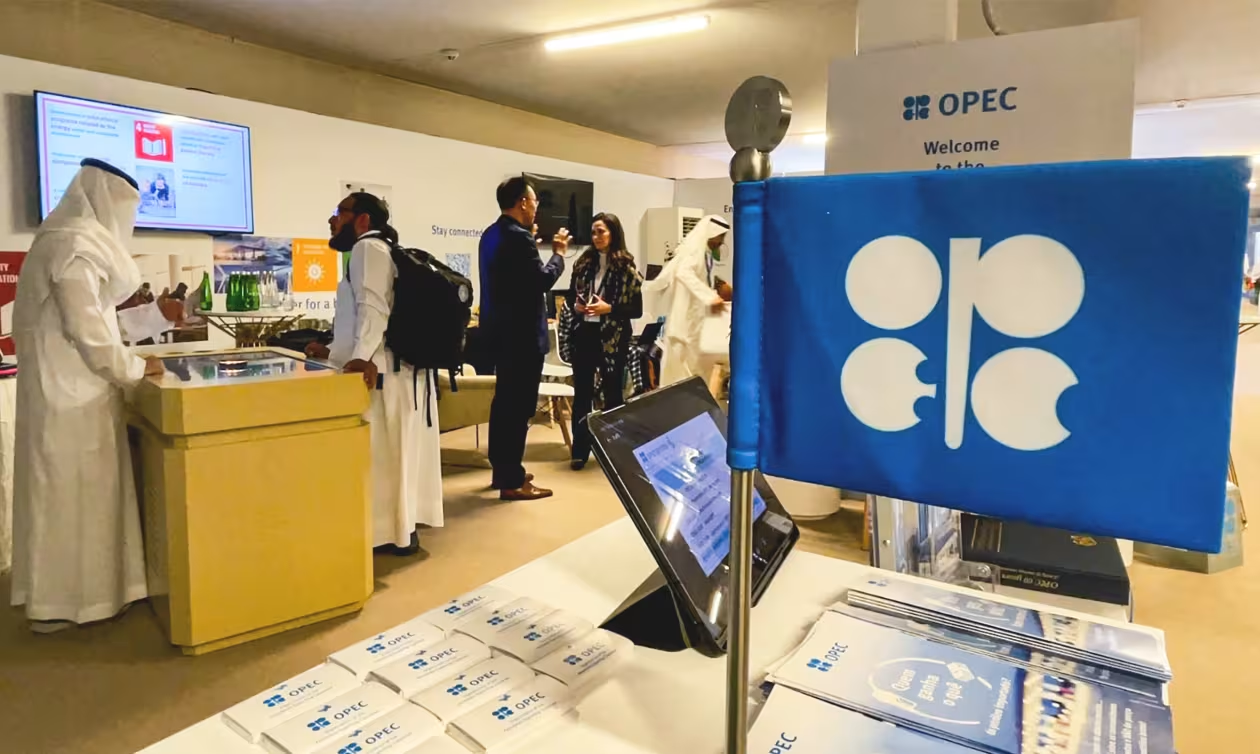
The United Arab Emirates will withdraw from the Organization of the Petroleum Exporting Countries and the broader OPEC+ alliance effective May 1, 2026, a decision that delivers a significant setback to the cartel’s cohesion and its de facto leader, Saudi Arabia, at a moment of acute geopolitical volatility in the Gulf. Announced via the state-run Emirates News Agency, the exit is framed as an alignment with the UAE’s long-term strategic and economic vision, including accelerated investment in domestic energy production and a desire for greater operational flexibility. However, the timing—amid ongoing conflict involving Iran, repeated attacks on vessels in the Strait of Hormuz, and a sharp energy shock that has sent crude prices above $95 per barrel—suggests deeper fractures within the world’s most influential oil grouping. For Ghana and other African net oil importers, the immediate concern is fuel prices. An OPEC without the UAE, the alliance’s third-largest producer after Saudi Arabia and Iraq, could mean less coordinated supply management, more volatility, and potentially higher import bills at a time when the cedi is stable but fiscal space remains tight. The longer-term question is whether the UAE’s departure triggers a broader realignment of Gulf producers, reshaping the architecture of global energy governance.
Key Developments: Exit Rationale, Timing, and Production Context
The UAE’s withdrawal from both OPEC and the broader OPEC+ framework—which includes non-OPEC producers like Russia, Kazakhstan, and Azerbaijan—is effective May 1, leaving less than 48 hours for market participants to adjust positions before the new regime begins. The announcement was abrupt but not entirely unexpected. Tensions between Abu Dhabi and Riyadh have simmered for years over baseline production quotas, with the UAE arguing that its sustained investment in capacity expansion entitled it to higher output ceilings than OPEC agreements allowed.

The official statement emphasized strategic autonomy. “This decision aligns with the UAE’s long-term strategic and economic vision and the development of its energy sector, including accelerating investment in domestic energy production,” the Emirates News Agency reported. “It also reinforces the UAE’s commitment to its role as a responsible and reliable producer that anticipates the future of global energy markets.”
📢 GET A DETAILED ARTICLES + JOBS
Join ASJ's WhatsApp Channel and never miss a post or opportunity.

Crucially, the statement explicitly cited geopolitical volatility: the exit is “also driven by national interests and the country’s commitment to actively contributing to meeting the urgent needs of the market, particularly given the ongoing geopolitical volatility in the near term, stemming from disruptions in the Arabian Gulf and the Strait of Hormuz, which impact supply dynamics.”
The Strait of Hormuz, a narrow passage between Iran and Oman, typically handles approximately one-fifth of global oil and liquefied natural gas flows. Recent threats and attacks on vessels—escalating in parallel with the Iran-Israel conflict and broader regional instability—have disrupted shipments and tightened supply conditions. The UAE, as a major exporter located immediately adjacent to the Strait, has faced mounting challenges moving its crude to global markets. Fellow OPEC members, the UAE has argued, have not done enough to shield it from repeated Iranian attacks or to provide alternative export routes.

The decision follows an early April agreement among eight OPEC+ countries—including the UAE—to raise output by 206,000 barrels per day in May. That agreement now appears moot for the UAE, which will set its own production levels outside the cartel’s coordination. Analysts expect the UAE to increase output modestly, potentially by 150,000 to 200,000 bpd, though it has made no formal commitment.
Saudi Arabia has not yet issued an official response, but diplomatic sources suggest Riyadh views the exit as a breach of Gulf solidarity. OPEC itself is scheduled to release its 61st Edition of the Annual Statistical Bulletin on April 29, 2026—one day before the UAE’s departure becomes official. The timing of that release, long planned, now takes on symbolic weight as a marker of the organization’s reduced footprint.
Analysis & Implications: OPEC’s Shrinking Center and the New Oil Order
OPEC was founded in 1960 and has survived numerous internal disputes, walkouts (notably Qatar in 2019 and Ecuador in 2020), and external shocks. But the UAE’s departure is qualitatively different. Qatar’s exit was driven by a strategic shift toward natural gas; its oil production was relatively small. Ecuador was a marginal producer. The UAE produces approximately 3.2 million barrels per day—nearly 10% of OPEC’s total output. Its departure reduces OPEC+’s coordinated supply by a similar margin and removes one of the most consistently moderate voices within the cartel.
Without the UAE, OPEC+ becomes more heavily dominated by Saudi Arabia and Russia. Saudi Arabia’s share of OPEC’s remaining output rises from approximately 32% to 36%, giving Riyadh even greater influence but also greater responsibility for managing market stability. Russia, already sanctioned and operating under a price cap, remains an unreliable partner. The loss of the UAE’s technocratic, pro-investment perspective could tilt OPEC+ toward more aggressive supply cuts—or, conversely, toward production free-for-all if discipline collapses.
For global oil markets, the immediate effect is uncertainty. Futures markets reacted with a 3% spike in early trading following the announcement, though prices moderated as traders assessed that the UAE’s production increase would likely be modest. The larger concern is precedent: if the UAE can leave, why not others? Iraq, struggling with internal politics and seeking revenue for reconstruction, has periodically threatened to ignore quotas. Kuwait, historically loyal to Saudi Arabia, is watching closely. Nigeria and Angola, both OPEC members with chronic underinvestment in production capacity, may see the UAE’s exit as permission to set their own targets.
The geopolitical dimension cannot be overstated. The UAE’s complaint—that fellow Gulf states did not protect it from Iranian attacks—exposes a security fault line within the Gulf Cooperation Council (GCC). Saudi Arabia has maintained a delicate balancing act between de-escalation with Iran and support for its Emirati ally. The UAE’s perception that this balance favors Iranian interests is a diplomatic rupture with market consequences.
For the broader energy transition, the UAE’s exit may accelerate its already aggressive pivot toward renewables and carbon capture. The UAE hosted COP28 in 2023 and has announced investments of $54 billion in clean energy through 2030. Unshackled from OPEC quotas, Abu Dhabi can now aggressively expand its oil production capacity—currently targeting 5 million bpd by 2030—while simultaneously building out solar and hydrogen projects. The two strategies are not contradictory; the UAE seeks to be the last major oil producer standing as the world transitions, maximizing revenue from its low-cost reserves while diversifying.
What This Means for Ghana: Fuel Import Costs and Energy Security
Ghana is a net oil importer, consuming approximately 90,000 barrels per day of refined products while producing only about 180,000 barrels per day of crude (most of which is exported). The country relies on imports for virtually all its petrol, diesel, and aviation fuel. Global crude prices directly influence the landed cost of these products, which in turn affect transportation costs, electricity generation (thermal plants use imported crude or diesel), and inflation.
The UAE’s exit from OPEC+ carries three distinct risks for Ghana.

First, price volatility. OPEC+ has functioned as a supply management cartel, adjusting production to keep prices within a politically acceptable band—typically 70to85 per barrel for Brent crude. Without the UAE’s compliance, the cartel’s ability to fine-tune supply diminishes. The result could be wider price swings, making it harder for Ghana’s National Petroleum Authority (NPA) to set stable ex-pump prices. In the worst case, a price spike to $100 per barrel would add approximately GH¢1.20 to GH¢1.50 per liter of petrol at current exchange rates, fueling inflation.
Second, supply security. The UAE has been a reliable supplier of refined products to West Africa, including Ghana, through its trading hub in Fujairah. If the UAE increases its own crude exports but reduces its refining for export—or redirects volumes to Asian markets—Ghanaian importers may need to source more from European or Middle Eastern refiners at higher freight costs. The NPA should immediately review its supplier diversification strategy.
Third, longer-term contract renegotiation. Ghana’s Tema Oil Refinery (TOR), when operational, imports crude from various sources, including occasionally from the UAE. A UAE no longer bound by OPEC quotas may offer more competitive crude pricing to secure market share, benefiting TOR if it can resolve its operational challenges. However, TOR’s current utilization rate is below 20%, so this benefit is theoretical.
The Accra Street Journal has learned that the Ministry of Energy has convened an internal working group to model oil price scenarios for the remainder of 2026, with a focus on the May–August period when demand typically peaks. The working group is expected to recommend a modest increase in the Price Stabilization and Recovery Levy (PRSL) to build a buffer against volatility, though no decision has been finalized.
For Ghanaian businesses, particularly transport and logistics firms for whom fuel is a major input cost, the prudent strategy is to hedge. The Bank of Ghana’s forex forward market, while shallow, offers some protection against currency-fuel price double shocks. Larger firms may consider direct contracting with fuel suppliers at fixed prices for 60- to 90-day periods. Smaller firms have fewer options and remain exposed.
Wider Context: OPEC’s Decline and Africa’s Shifting Role
The UAE’s exit is the latest in a series of blows to OPEC’s relevance. The cartel’s share of global oil production has declined from a peak of 55% in the 1970s to approximately 35% today, as non-OPEC producers—the United States, Brazil, Guyana, Canada—have surged. The US alone now produces over 13 million bpd, more than Saudi Arabia and Russia, and is the world’s largest exporter of liquefied natural gas. OPEC’s ability to “set” prices has been replaced by its ability to influence them at the margin.
For African OPEC members—Nigeria, Angola, Libya, Algeria, Gabon, Equatorial Guinea, and the Republic of Congo—the UAE’s exit raises uncomfortable questions. Nigeria, in particular, has struggled to meet its OPEC quota due to theft, underinvestment, and operational issues; it has routinely produced 200,000 to 300,000 bpd below its assigned ceiling. Angola’s production has declined steadily as aging fields deplete. Neither country has the spare capacity to fill the gap left by the UAE.
Some African members may see the UAE’s exit as an opportunity to argue for higher quotas, but the more likely response is cautious continuity. The African Petroleum Producers’ Organization (APPO) has long sought to create an Africa-only energy alliance, but lacks the market power or coordination mechanisms to replace OPEC’s role. Ghana, as an oil producer since 2010 but not an OPEC member, watches from the sidelines—neither bound by quotas nor entitled to cartel protections.
The broader trend is toward fragmentation. The global oil market is no longer a duopoly of OPEC and the US shale industry, but a multipolar landscape with multiple power centers: the US, Saudi Arabia, Russia, the UAE (now independent), Brazil, and Guyana. Coordination becomes harder, volatility more likely. For net importers like Ghana, this is unwelcome news.
Outlook / What Happens Next
The UAE’s exit takes effect May 1. Immediate market impacts are expected to be modest, as traders already priced in some probability of departure. However, the critical question is whether other producers follow. Iraq is the most likely candidate, given its chronic quota dissatisfaction and need for revenue. If Iraq leaves, OPEC+ would lose another 4.5 million bpd, effectively ending coordinated supply management. That scenario—a full unraveling—would send oil prices into a tailspin, initially down on surplus fears, then up on panic as the market reprices geopolitical risk.
Saudi Arabia faces a difficult choice. It can attempt to hold the remaining coalition together through a combination of diplomatic pressure and side payments—unlikely given Riyadh’s own fiscal constraints. Or it can abandon the quota system altogether and compete for market share, triggering a price war that would benefit consumers but devastate higher-cost producers, including US shale. The Saudi preference is for neither; it will likely muddle through, hoping the UAE’s departure remains isolated.

For Ghana, the immediate watchpoint is the May 5, 2026, meeting of OPEC+ without the UAE. Any announced production changes will affect July–September crude prices, which determine landing costs for August–October fuel imports. The NPA should update its pricing model weekly through May.
Longer-term, the UAE’s exit reinforces a strategic reality: energy security requires supply diversification. Ghana’s reliance on imported refined products is a vulnerability. The government’s stalled plans for a modular refinery or expanded TOR capacity now look more urgent. Similarly, the acceleration of electric mobility and solar adoption reduces exposure to oil price volatility. The UAE is betting on its ability to produce oil cheaply for decades; Ghana should bet on its ability to consume less of it.
The world’s oil order is shifting. The UAE has decided it no longer needs OPEC’s umbrella. Whether that decision is a harbinger of broader disintegration or an isolated act of ambition will determine not just the price of petrol, but the shape of global energy politics for the next decade. Ghana, like all net importers, is a passenger on this journey—but a passenger who should be watching the cockpit.
Source: Accra Street Journal
Last Updated on April 29, 2026 by Samuel Kwame Boadu
Disclaimer: Some content on Accra Street Journal may be aggregated, summarized, or edited from third-party sources for informational purposes. Images and media are used under fair use or royalty-free licenses. Accra Street Journal is a subsidiary of SamBoad Publishing Hub under SamBoad Business Group Ltd, registered in Ghana since 2014.
For concerns or inquiries, please visit our Privacy Policy or Contact Page.

Samuel Kwame Boadu is a Ghanaian media entrepreneur and storyteller with a passion for amplifying urban voices and uncovering everyday truths. He is the Editor-in-Chief and Founder of Accra Street Journal, a dynamic digital platform dedicated to capturing the pulse of Ghana’s capital—its people, culture, challenges, business, sports and innovations.