









ACCRA — Walk into any well-stocked supermarket in the city today — Spintex, East Legon, Tema Community One — and you will witness a small but telling rebellion.

The imported spaghetti from Turkey sits untouched. The Ghanaian-made pasta beside it is nearly gone.
The fancy Italian tomato paste in the small metal tube gathers dust. The local Ghanaian brand in the familiar sachet moves off the shelves before noon.
📢 GET A DETAILED ARTICLES + JOBS
Join ASJ's WhatsApp Channel and never miss a post or opportunity.
This is not a fluke. It is not a sudden surge of patriotism triggered by a public campaign. And it is certainly not because wealthy Accra households have suddenly decided to sacrifice quality for sentiment.
The maths has changed. And the maths, in Ghana, always wins.
For decades, the local manufacturer was the underdog in every sense — struggling against cheaper imports, battling consumer suspicion, and losing shelf space to foreign products that carried an unspoken status. The Ghanaian shopper with extra money in their pocket did not dream of buying local. They dreamed of buying what came from elsewhere.
That script is being rewritten. Slowly. Imperfectly. But unmistakably.
The question is not whether local goods are becoming more popular in Accra. They are. The real question is whether Ghanaian producers can keep the customers they are finally winning — or whether this is just another temporary shift that reverses when the cedi finds its feet.
The Hidden System: What Is Really Driving the Switch
Let us clear away the easy explanations first.
No, the “Buy Ghana” campaign from the Ministry of Trade has not suddenly worked. Those initiatives have been running for years with modest results. A poster on a wall does not change behaviour. The price tag does.
No, Ghanaians have not developed a sudden taste for local over foreign. The aspiration for international products remains deeply wired into the culture. It always will be.
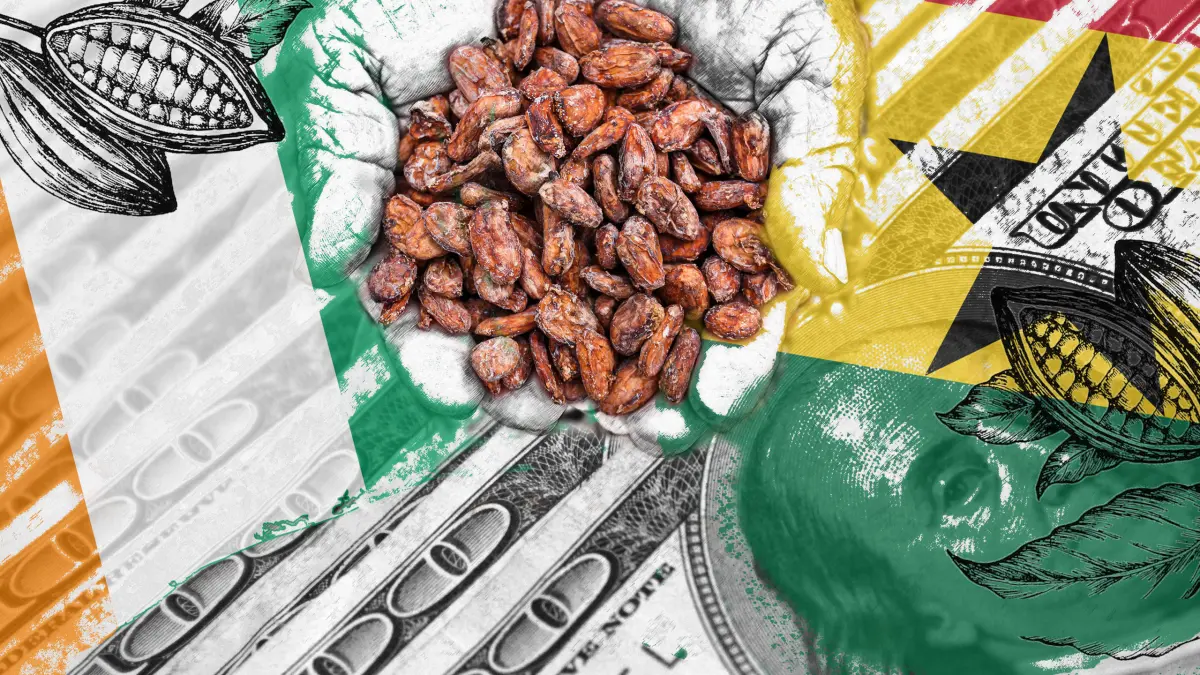
The real driver is simpler and more brutal: the cedi has made imported goods punishingly expensive for the average household, and the gap in quality between local and foreign has shrunk enough that the trade-off no longer feels like a loss.
Consider the arithmetic.
A middle-class household in Accra that used to spend 500 cedis a week on groceries two years ago now spends closer to 900 cedis for the exact same basket — if they buy imports. A switch to local substitutes brings that number down to around 650 or 700 cedis. That is real money. That is school fees. That is transport fare for the month.
When the price difference was marginal — say 10 or 15 percent — the consumer paid the premium for the imported brand. They saw it as insurance against quality failure. Now that the gap has widened to 30 or 40 percent in many categories, that insurance premium no longer makes sense.
The shopper is not switching because they love local goods. They are switching because staying loyal to imports has become an unaffordable luxury.
Why This Is Happening Now
The timing is not accidental.
Three forces have converged over the past 24 to 36 months that have fundamentally altered the competitive landscape between local and imported goods in Accra.
First, the currency collapse of 2022 and its lingering aftershocks. The cedi lost more than 30 percent of its value against the dollar in a single year. Importers who used to hedge their exposure through forward contracts found those instruments either unavailable or ruinously expensive. Almost everything that arrives by container repriced sharply upward. And those prices have not come back down, even as the cedi has shown signs of stabilisation. Once an importer raises a price, they rarely lower it.
Second, a quiet but meaningful upgrade in local production capacity. Over the past five years, a new generation of Ghanaian manufacturers has emerged — not the struggling state-owned enterprises of the past, but private, lean, cost-conscious operators. They have invested in better packaging, improved shelf life, and more consistent quality. The gap between a local tomato paste and an imported one is now narrow enough that many consumers cannot taste the difference. The gap between local bottled water and imported options has vanished entirely.
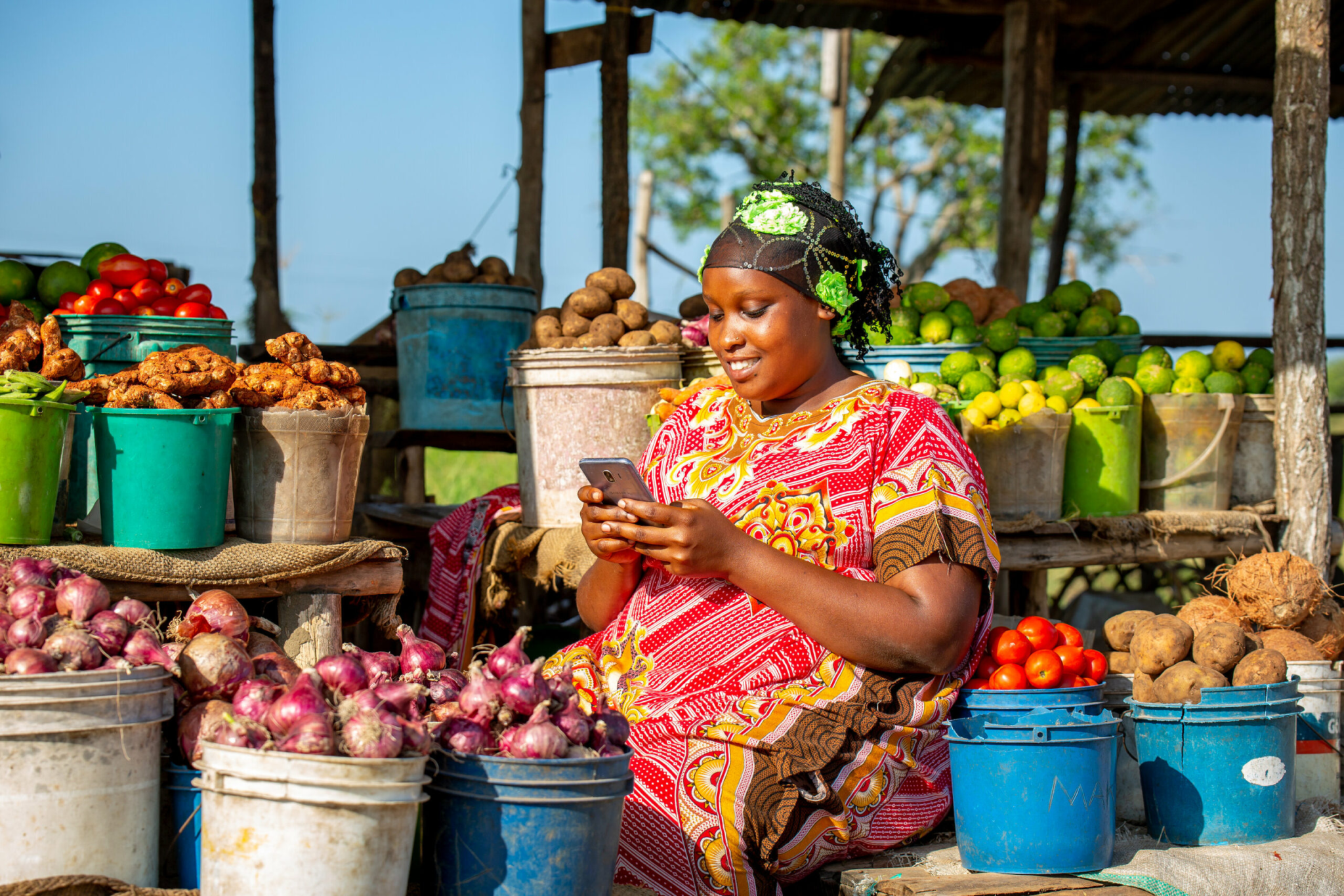
Third, the informal retail network has become a distribution channel for local goods in ways it never was before. Ten years ago, the chop bar operator bought whatever was cheapest, regardless of origin. Today, the same operator has learned that customers ask questions. They notice where the cooking oil comes from. They check the label on the tin of mackerel. The informal seller has adapted, and local manufacturers have followed.
An analysis published recently by Accra Street Journal captured this shift with a useful framing: “The local goods movement in Accra is not a political project. It is a supply chain project. When local products are available, affordable, and acceptable, they win. The consumer does not need convincing. They need options that work.
The Real-World Impact: Who Wins and Who Loses
The shift toward local goods is not neutral. It redistributes money and power across the economy in ways that are already visible.
Businesses
For Ghanaian manufacturers, this is the opportunity they have waited a generation for. But opportunity and execution are very different things.
The local producers who are winning right now share three traits: they have consistent quality, reliable packaging, and distribution reach. The ones who are struggling are those who cannot keep their products on shelves because they lack working capital, or who suffer from intermittent production because of power outages or raw material shortages.
The biggest winners have been in processed foods — pasta, fruit juices, cooking oils, snacks, bottled water, and frozen foods. These are high-volume categories where the price advantage of local production is most pronounced.
The biggest losers, interestingly, have been the importers and wholesalers who built their entire business model around foreign brands. Many are pivoting, adding local products to their portfolios. Others are shrinking.
Consumers
The average shopper is saving money, but they are also navigating a new kind of complexity.
Not every local product delivers on its promise. Some brands have quality that varies from batch to batch. Others have packaging that fails — a sealed sachet of local juice that leaks in the shopping bag, a tin of local mackerel with a pull-top that breaks. These small failures erode trust quickly.
The savvy Accra consumer has learned to be selective. They will buy local cooking oil and local bottled water without hesitation. They will buy local pasta if the brand is one they have tested. But they still reach for the imported sardine brand because the local alternative has let them down before.
This selectivity matters. It means local manufacturers cannot simply ride the currency wave. They have to earn repeat business.
Workers
The shift toward local goods is good for jobs, but the quality of those jobs matters.
A local food processing plant employs Ghanaians. That is unambiguously positive. But many of those jobs are informal, low-wage, and lack basic protections. The companies that are winning the local goods battle are not necessarily the ones paying living wages or providing health insurance.
The longer-term risk is that Ghana builds a local manufacturing sector that produces cheap goods for price-sensitive consumers while keeping workers in precarity. That is a brittle model. It does not survive the next economic shock.
The Bigger Pattern: Ghana Is Following a Familiar Path
What is happening in Accra is not unique. It is a regional pattern with local characteristics.
Nigeria went through this same transition a decade ago, driven by the same forces — currency pressure, import restrictions, and gradual improvement in local manufacturing. Today, Lagos is a city where local goods dominate many supermarket categories. The shift took time. It was not linear. But it stuck.
Kenya has followed a similar trajectory, with local goods now commanding premium shelf space not because they are cheaper but because they are seen as modern and desirable.
Ghana is roughly five to seven years behind Nigeria on this curve. The difference is that Ghana does not have Nigeria’s population scale to support massive local manufacturing capacity. The market is smaller, which means unit costs remain higher. That is a structural disadvantage that no amount of consumer goodwill can erase.
Samuel Kwame Boadu, who has tracked consumer goods trends across West Africa for years, made this point sharply in a recent note: “Accra is not Lagos. A local manufacturer in Ghana serves 33 million people. A local manufacturer in Nigeria serves 220 million. The economies of scale are fundamentally different. Ghanaian producers have to be smarter, not just bigger. They have to own niches. They have to build brands that travel across borders. The domestic market alone will never be enough.”
Future Outlook: Where This Is Going
Look ahead three to five years, and several scenarios are possible.
The optimistic scenario: The cedi stabilises, but the shift toward local goods holds because manufacturers have used this window to improve quality and build brand loyalty. Local goods move from being the cheaper option to being the preferred option in several categories. Investment flows into production capacity. Exports to neighbouring markets grow.
The pessimistic scenario: The cedi recovers sharply — unlikely given structural pressures, but possible — and the price advantage of local goods evaporates. Consumers, who never truly abandoned their preference for imports, switch back. Local manufacturers who expanded too aggressively face ruin. The window closes.
The most likely scenario falls somewhere in between. The local goods shift will hold in some categories and reverse in others. Staples like cooking oil, bottled water, pasta, and fruit juices will likely stay local because the production economics are strong. More discretionary categories — premium snacks, specialty sauces, imported cheeses — will remain dominated by foreign brands for the foreseeable future.
What would lock in the shift permanently is policy. If the government uses this moment to create a genuinely supportive environment for local manufacturing — reliable electricity, access to affordable credit, streamlined port clearance for raw materials — the gains could become structural. If not, this remains a cyclical story.
Conclusion: The Consumer Has Opened the Door
The popularity of local goods in Accra right now is not a triumph of persuasion. It is a verdict of necessity.
The Ghanaian shopper has not suddenly become more patriotic. They have become more practical. And that practicality is a gift to local manufacturers — a second chance they did not earn but cannot afford to waste.
The door is open. The consumer is willing. But willingness has limits. One bad batch, one broken seal, one out-of-stock moment at the wrong time, and that customer is gone. They will go back to the imported brand they trusted before, price be damned.
Local goods are winning in Accra today because the maths favours them. Whether they keep winning depends on whether local manufacturers can do the unglamorous, expensive, difficult work of consistency, distribution, and trust.
The currency gave them an opening. What they do with it is entirely up to them.
Source: Accra Street Journal
Last Updated on May 2, 2026 by Samuel Kwame Boadu
Disclaimer: Some content on Accra Street Journal may be aggregated, summarized, or edited from third-party sources for informational purposes. Images and media are used under fair use or royalty-free licenses. Accra Street Journal is a subsidiary of SamBoad Publishing Hub under SamBoad Business Group Ltd, registered in Ghana since 2014.
For concerns or inquiries, please visit our Privacy Policy or Contact Page.

Samuel Kwame Boadu is a Ghanaian media entrepreneur and storyteller with a passion for amplifying urban voices and uncovering everyday truths. He is the Editor-in-Chief and Founder of Accra Street Journal, a dynamic digital platform dedicated to capturing the pulse of Ghana’s capital—its people, culture, challenges, business, sports and innovations.