









The quiet engine of survival that most people walk past every Saturday

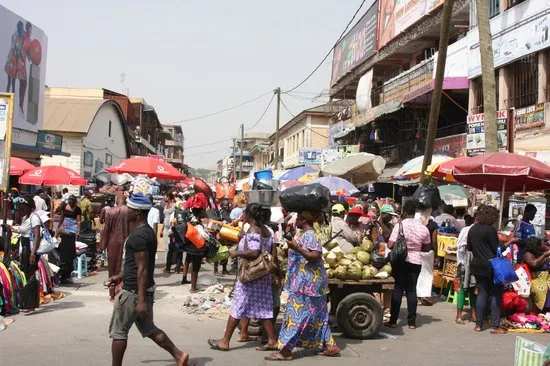
On a Saturday morning at Agbogbloshie, a woman sells cooked rice and stew from a plastic table she carries on her head every week. By Sunday evening, she has paid her child’s school fees. At the Tema Station Sunday market, a young man sells phone accessories from a wooden stand that did not exist on Friday. By Monday morning, he has bought stock for the next week.
These are not accidents. They are systems.
📢 GET A DETAILED ARTICLES + JOBS
Join ASJ's WhatsApp Channel and never miss a post or opportunity.
Weekend markets in Accra are not just places to buy cheaper tomatoes or second-hand clothes. They are the most accessible entry point into formal-adjacent business for thousands of Ghanaians who cannot afford shop rent, do not have connections for permanent stalls, and cannot risk quitting their weekday jobs.
For every business owner you see in a mall or a container shop along the highway, there are perhaps fifty others who operate only on Saturdays and Sundays. They are not less serious. They are more strategic.
This ASJ article explains how weekend markets actually work as business engines, why they matter more than most economic reports acknowledge, and what they reveal about surviving in Accra’s economy.
What Is Really Happening
Let us start with what weekend markets are not. They are not the same as daily markets like Makola or Kaneshie, where traders operate every day and pay daily tolls to assembly members or market queens.
Weekend markets are temporary economies. They spring up on specific days—often Saturdays or Sundays—on streets, undeveloped plots, school grounds, or car parks that are empty during the rest of the week.
The most well-known examples in Accra include:
-
The Sunday market at Tema Station (clothing, accessories, phone repairs)
-
The Saturday food market at Agbogbloshie (cooked foods, fresh produce, provisions)
-
Weekend cloth markets at various lorry parks
-
Flea markets in residential areas like East Legon and Dzorwulu on Saturdays
-
Church-based markets where members sell after service
What makes these different is the cost structure. A weekend trader pays a daily fee—usually between GHS 5 and GHS 20 depending on location and size of goods. That is it. No one-month advance rent. No utility bills. No threat of eviction beyond that single day.
For a young person with GHS 200 in capital, a weekend market is the only realistic business launchpad.
Why This Is Happening
Three forces have made weekend markets essential to Accra’s microbusiness ecosystem.
One: Shop rents have become impossible
Across Accra, the cost of renting even a single lock-up shop has climbed beyond the reach of most small traders. In areas like Atomic Junction, Madina, and Kasoa, monthly rents for tiny spaces range from GHS 800 to GHS 2,500. That is before the “key money” or advance payments of two or three years that many landlords demand.
A weekend trader avoids all of that. They pay by the day. If sales are bad on Saturday, they do not show up on Sunday. There is no debt hanging over their head.
Two: The rise of the week salary-worker side hustle
Many weekend traders have weekday jobs. They work as security guards, cleaners, drivers, or office assistants from Monday to Friday. Their salaries have not kept up with inflation. They need a second income, but they cannot commit to daily trading because they are already employed.
Weekend markets solve this perfectly. They work from Friday evening or Saturday morning until Sunday evening. The trader keeps their weekday job and adds weekend income. The business does not need to be supervised on Monday when they are at work.
Three: Low barrier to entry
You do not need a business registration certificate to sell at most weekend markets. You do not need a banker’s reference or a tax clearance certificate. You need a table or a mat, some stock, and the daily fee.
For young people who have completed school but cannot find formal employment, this is the only business model that says “yes” without conditions.
Real-Life Impact in Ghana
Let us move from general explanations to specific effects on households and individuals.
For the individual trader
Consider Ama, a 28-year-old who lives at Nima. She works as a receptionist Monday to Friday, earning GHS 1,200 per month. Transport and lunch take nearly half of that. Rent is GHS 700 for a single room she shares with a cousin.
On Saturdays, Ama goes to the Tema Station weekend market to sell waist beads and earrings she buys from Ashaiman. Her stock costs her GHS 300 at the start of the month. On a good Saturday, she makes GHS 150 profit. Over four Saturdays, that is GHS 600—a 50 percent increase in her monthly income.
That extra money is not for luxuries. It is for the rent increase her landlord announced. It is for the school fees of her younger sister. It is for the medical bill when malaria hits.
Without the weekend market, Ama would have no margin. With it, she has breathing room.
For the household
Weekend markets also serve as low-cost shopping destinations for families. A mother of three who buys vegetables and fish at the Agbogbloshie Saturday market often pays 20–30 percent less than she would at the neighbourhood provision shop.
That saving is not small. For a household feeding five people, saving GHS 50 on weekend shopping means GHS 200 extra in the monthly budget. That money buys electricity units or pays school transportation.
For small suppliers
Weekend markets create demand for wholesale suppliers upstream. The women selling cooked rice on Sunday mornings buy their rice, oil, and fish from distributors who sell in smaller quantities. The phone accessory seller buys from a wholesaler at the Central Business District.
These wholesalers would lose a significant portion of their customer base if weekend markets disappeared. The economy is connected in ways that are not obvious.
Hidden Insight (What Most People Do Not Realise)
Here is the part that economic reports miss.
Weekend markets are unofficial business schools.
A person who starts selling at a weekend market learns, in real time, every skill that a formal business program teaches on paper. They learn:
-
Pricing: How to set a price that covers cost and attracts buyers in a highly competitive environment where the next seller is five metres away.
-
Inventory management: How much stock to buy without spoilage or theft. How to read the crowd and predict demand.
-
Customer negotiation: When to hold the price and when to discount. How to turn a browser into a buyer.
-
Savings discipline: Keeping daily proceeds separate from household money. Building stock capital for the next weekend.
-
Risk assessment: Knowing which Saturday to show up and which Saturday to stay home because the rain will kill sales.
These are not small lessons. They are the same lessons that owners of shops, restaurants, and small manufacturing businesses learn—but usually after losing real money in a more expensive setup.
Many of the successful small shop owners in Accra started exactly this way. Two years at a weekend market, then a move to a daily stall, then eventually a container shop or a storefront. The weekend market was the classroom where failure cost GHS 20 instead of GHS 2,000.
Another hidden insight: weekend markets absorb labour shocks
When layoffs happen—and they happen quietly all the time in Accra—where do people go? Not to formal job applications that take six months. They go to weekend markets.
Accra Street Journal has documented how the weekend market ecosystem expanded noticeably after the banking sector cleanup in 2018 and again during the economic pressures of 2022–2024. People who lost formal jobs did not become unemployed statistic figures. They bought tables and started selling.
The weekend market is the shock absorber of Accra’s labour market. It does not appear in GDP reports the way manufacturing or mining does. But it keeps people eating while they figure out the next step.
What This Means Going Forward
Understanding weekend markets is not just intellectual. It has practical implications for different groups.
For someone thinking of starting a microbusiness
Start at a weekend market. Do not look for a shop first. Do not borrow money to rent a space you cannot afford. Go to Tema Station, Agbogbloshie, or your local weekend market. Watch for two Saturdays. Notice which products sell fast. Ask a trader how much the daily fee is. Then start small.
Your first business does not need to be your last business. It just needs to teach you without bankrupting you.
For policymakers
Weekend markets are not problems to be cleared away for city beautification projects. They are economic infrastructure. When Accra Metropolitan Assembly officials chase weekend traders off the streets, they are not enforcing law and order. They are shutting down the most accessible business incubator the city has.
The better approach is designated spaces, reasonable daily fees, and basic amenities like water and waste bins. Formalising weekend markets does not mean killing them. It means helping them work better.
For consumers
When you buy from a weekend market, you are not just getting a lower price. You are directly putting money into the household of someone who has no other safety net. That is not charity. That is economic circulation. The GHS 10 you spend on earrings or cooked rice stays in Accra. It pays someone’s rent. It buys someone’s electricity.
ASJ Conclusion
Weekend markets in Accra look chaotic. They look temporary. They look like something the city will eventually outgrow.
But that is the wrong way to see them.
These markets are not waiting to be replaced by something more modern. They are the modern thing—resilient, low-cost, and perfectly adapted to an economy where formal jobs are scarce and formal rents are high.
For the thousands of Ghanaians who sell every Saturday and Sunday, the weekend market is not a side note. It is the difference between managing and collapsing. Between paying school fees and withdrawing a child. Between staying in Accra and going back to the village.
That is not a small thing. That is the real economy.
Source: Accra Street Journal
Last Updated on May 2, 2026 by Samuel Kwame Boadu
Disclaimer: Some content on Accra Street Journal may be aggregated, summarized, or edited from third-party sources for informational purposes. Images and media are used under fair use or royalty-free licenses. Accra Street Journal is a subsidiary of SamBoad Publishing Hub under SamBoad Business Group Ltd, registered in Ghana since 2014.
For concerns or inquiries, please visit our Privacy Policy or Contact Page.

Samuel Kwame Boadu is a Ghanaian media entrepreneur and storyteller with a passion for amplifying urban voices and uncovering everyday truths. He is the Editor-in-Chief and Founder of Accra Street Journal, a dynamic digital platform dedicated to capturing the pulse of Ghana’s capital—its people, culture, challenges, business, sports and innovations.