









With a 73.5% surge in underwriting profit, a AAA credit rating, and a 20.1% market share, Ghana’s oldest insurer is fighting a brutal two-front war—against a declining bottom line (profit -7.8%) and a swarm of aggressive fintech-insurer partnerships, with a new Managing Director betting that purpose-driven leadership can hold the line.

Executive Introduction
On the grand avenue of Ghanaian commerce, few edifices stand as tall or as weathered as Enterprise Insurance Ltd. It is the doyen of the boardroom, the institution that underwrote the nation’s growth from the Gold Coast era, through independence, and into the digital age.
But in the financial year 2025, a fascinating and somewhat brutal portrait of a market leader emerged. The numbers tell a story of a business operating at peak efficiency—an 11.3% rise in gross written premium and a stellar 73.5% jump in underwriting profit suggest a machine that is working better than ever. Yet, the scoreboard tells a different story: group net income fell 7.8%, as soaring actuarial and finance costs ate the profits before they could reach the bottom line.
📢 GET A DETAILED ARTICLES + JOBS
Join ASJ's WhatsApp Channel and never miss a post or opportunity.
This is the paradox of Enterprise Insurance in 2026. It is a fortress besieged—not by a single army, but by a swarm of agile competitors. The entry of fintechs like Telecell into the insurance space, and deep partnerships between banks (like Access Bank) and rivals (Coronation Insurance), are fragmenting the market that Enterprise once defined.
To understand Ghana’s insurance sector, one must understand Enterprise Insurance. It is the standard by which claims are judged (AAA rated by GCR) and the institution that has produced the leadership talent that now runs the industry.
This profile examines the 102-year legacy of the Royal Exchange Assurance, the strategic restructuring under the Enterprise Group PLC holding company, the leadership philosophy of the award-winning MD Akosua Ansah-Antwi, the brutal 2025 financials, and the critical question: As the fintechs lower the barriers to entry, does brand trust or underwriting discipline win the race?
Company Overview
The Genesis: From Royal Exchange Assurance to Enterprise Insurance
Enterprise Insurance is not just a company; it is a timeline of Ghanaian commerce. Its roots trace back to 1924 when the Royal Exchange Assurance Corporation of the United Kingdom commenced business in the Gold Coast. For nearly three decades, it operated as an agency, until 1952 when it was formally registered as an insurance company to provide the full complement of life and non-life business.
The Great Split (1965):
The passage of the Insurance Act of 1965 (Act 288) fundamentally altered the industry. Section 9 barred non-domestic insurers from insuring Ghanaian lives. Consequently, the Royal Exchange Assurance transferred its life business to Crusader Insurance Company, focusing solely on non-life (general) insurance for the first time.
The Merger and Rebranding (1969-1990):
Following a merger in the UK between Royal Exchange and Guardian Assurance, the Ghanaian operation became Guardian Royal Exchange Assurance (Ghana) Ltd (GREG). In 1977, the company’s name was changed to Enterprise Insurance Company, embracing a name that signified local ownership and ambition. In a landmark moment for the capital markets, Enterprise became one of the first companies to be listed on the Ghana Stock Exchange in 1990.
The Reorganization: The Enterprise Group PLC Era
In August 2010, realizing the need to streamline its diverse holdings (life, general, trustees, properties), the board reorganized. Enterprise Group Plc (EGL) was created as a holding company, and Enterprise Insurance was delisted from the GSE.
Ownership Structure (as of 2023):
| Shareholder | Stake | Nature |
|---|---|---|
| Enterprise Group Plc | 75.0% | Parent Holding Company |
| Black Star Holdings Ltd | 25.0% | Private UK-based firm |
This structure provides the financial backing of a diversified group while allowing Enterprise Insurance to focus specifically on General Insurance (Non-Life).
Leadership: Akosua Ansah-Antwi
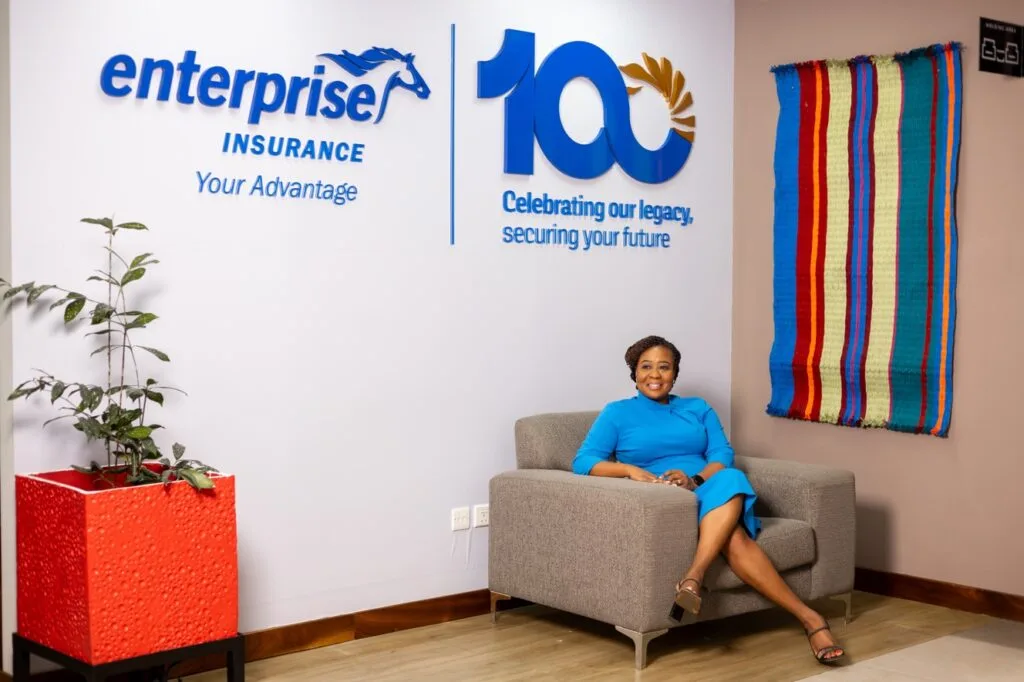
At the helm of Enterprise Insurance is Akosua Ansah-Antwi, who has rapidly become one of the most celebrated executives in the sector.
The Accidental Insurer:
Interestingly, insurance was not her dream. After qualifying as a barrister, she applied for a legal role at Enterprise. At the time, the firm had no legal department, so she was placed in claims. That unexpected detour became her destiny.
The CEO of the Year:
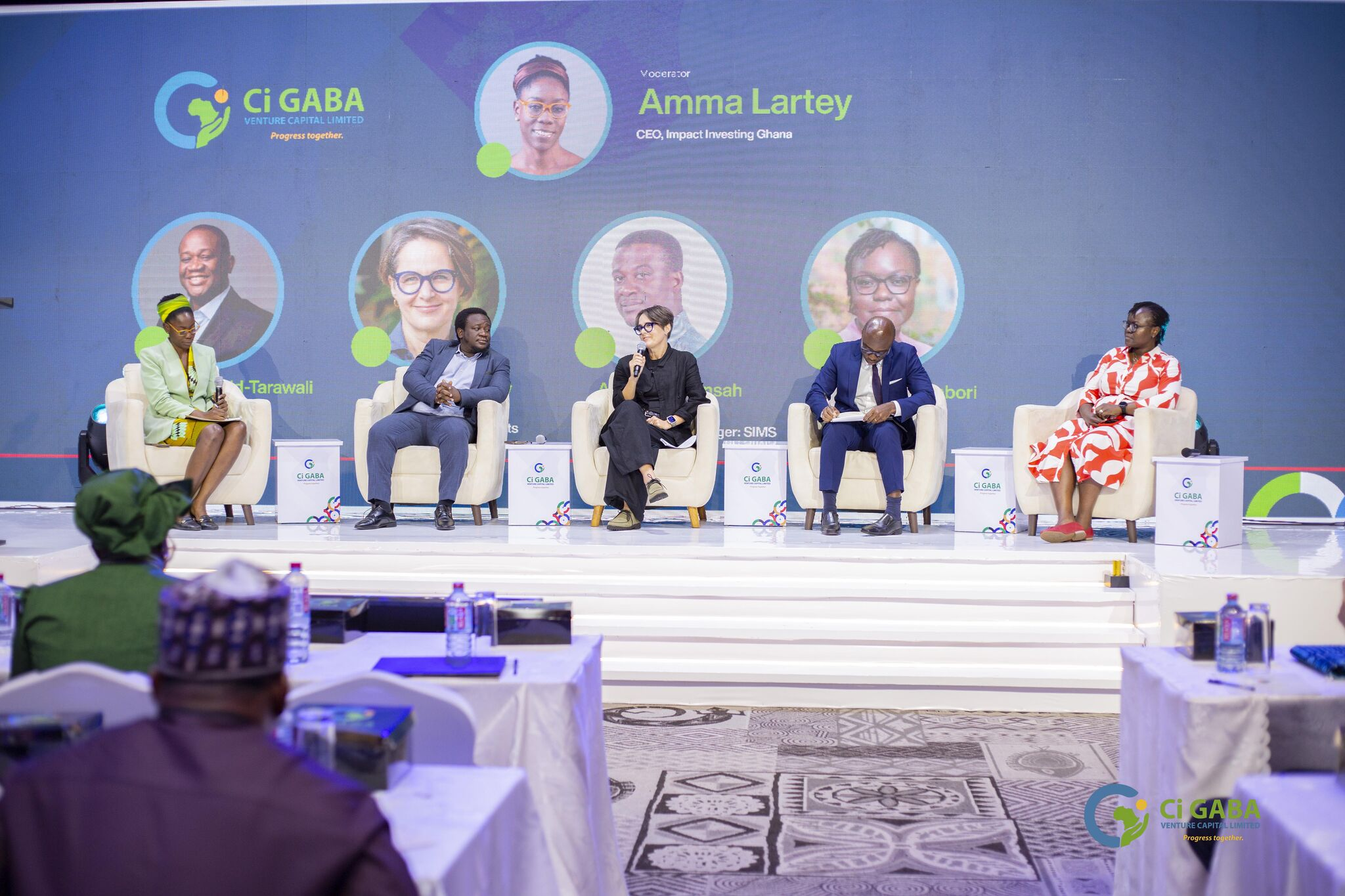
In 2025, she was named CEO of the Year – General Insurance Sector at the Ghana CEO’s Summit. The citation highlighted her “outstanding leadership, unwavering commitment, and the strategic direction” that has deepened customer trust.
The Philosophy:
Her leadership style is one of empowerment and “enablement.” As she articulated in a 2026 interview, she believes leadership is a continuous journey of learning. Her philosophy is built on the idea that to gain, one must give—investing in people and purpose to create impact.
The 2025 Financials: The Curious Case of Rising Profits and Falling Earnings
The 2025 unaudited financials for Enterprise Group (consolidated) reveal a company grappling with the complexity of modern insurance accounting (IFRS 17) and a challenging macroeconomic environment.
Performance at a Glance (Group Consolidated)
| Metric | 2025 (GHS ‘000) | 2024 (GHS ‘000) | Change |
|---|---|---|---|
| Insurance Revenue | 1,760,000 | 1,580,000 | +11.3% |
| Insurance Service Result | 494,600 | 285,000 | +73.5% |
| Investment Income | 533,000 | 297,400 | +79.2% |
| Insurance Finance Expenses | (451,500) | (89,900) | +402% |
| Profit After Tax | 337,800 | 366,500 | -7.8% |
The Engine is Strong (Insurance Service Result)
The headline figure for the insurance purist is the 73.5% surge in the Insurance Service Result (GHS 494.6 million). This metric measures pure underwriting profitability—the money made from selling policies and managing claims before looking at investments. It tells us that Enterprise is selling more policies, pricing them accurately, and managing claims more efficiently than last year. Insurance service expenses actually declined, suggesting improved claims experience and tighter underwriting discipline.
The Killer is the Cost of Money (Insurance Finance Expenses)
Why did the bottom line drop 7.8%? Insurance Finance Expenses ballooned from GHS 89.9 million to GHS 451.5 million.
This is not a sign of operational failure but an accounting reality unique to insurers under IFRS 17. These are not marketing expenses; they are actuarial adjustments reflecting the changing discount rate environment. When interest rates rise (or fall) rapidly—as they have in Ghana—the “present value” of future claims liabilities fluctuates wildly, creating massive paper losses or gains in the finance section. The underlying business is healthy; the accounting noise is deafening.
Investment Income: The Silver Lining
Despite the liability storm, Enterprise saw Investment Income surge 79.2% to GHS 533 million. This reflects the group’s savvy treasury management: massive float (insurance contract liabilities grew 26% to GHS 2.05 billion) was deployed into high-yield government bonds during a period of elevated policy rates.
Market Position: The AAA Fortress
The GCR Rating
Enterprise Insurance holds a AAA (gha) rating from Global Credit Rating (GCR) of South Africa, the highest on the national scale. This indicates an exceptionally strong ability to meet policyholder obligations. In an industry where trust is the only currency, this rating is a strategic asset that new fintech entrants cannot easily replicate.
Market Share
Enterprise Insurance is the largest private insurer in Ghana, holding a dominant position in the non-life (general insurance) segment. It provides the full spectrum of General Insurance:
-
Personal: Motor, Home, Travel, Personal Accident, Pet Insurance.
-
Corporate: Fire, Marine, Assets All Risk, Public Liability, Fidelity Guarantee, Goods in Transit.
International Footprint
Beyond Ghana, Enterprise operates in two other African markets: Nigeria and The Gambia . This regional diversification helps spread risk but also exposes the group to foreign currency translation losses, as seen in the 2025 comprehensive income statement where translation losses hit GHS 16.2 million.
The Competitive Siege: Fintech and Banks Are Eating the Lunch
For decades, Enterprise Insurance competed with other traditional insurers (e.g., Hollard, SIC, GLICO). The battlefield, however, has fundamentally changed.
The Rise of Bancassurance 2.0 (Fintech-Insurer Partnerships)
The most immediate threat is the partnership between banks/fintechs and smaller, agile insurers to create “embedded insurance.”
In February 2026, Access Bank partnered with Coronation Insurance to launch “Business Protection Insurance” targeting SMEs. This is a bundled product covering fire, flood, and burglary, sold directly at the point of banking.
-
Why it hurts Enterprise: A customer financing their business through Access Bank will likely click the “Accept Insurance” button on the banking app (powered by Coronation) rather than walking into an Enterprise branch.
The Telco Invasion
Telecommunications giants are leveraging their massive user bases (Mobile Money subscribers) to sell micro-insurance products. While Enterprise focuses on comprehensive Commercial and Motor insurance, the down-sell of cheap life and accident cover via USSD codes builds brand loyalty with the next generation of customers.
The Marketing Response: “Insure na Chilli”
In response to the commoditization of insurance, Enterprise launched the “Insure na Chilli” campaign in early 2026.
The Gimmick: Customers who insure their vehicles are entered into a draw to win sponsored trips to watch football live (the “Ultimate Football Experience”).
The Strategy: Enterprise is trying to change the conversation from “buying a defensive product” to “participating in an exciting lifestyle.” Head of Business Development Mark Danso Addison framed it as “insurance [that] can also reward customers in a transparent and meaningful way.” This is a direct defence against the price wars initiated by digital disruptors; Enterprise is trying to win on value-added experience rather than pure price.
Structure: The Stack Group of Ghana?
Enterprise Insurance is the anchor of a diversified financial services machine—Enterprise Group PLC.
Group Subsidiaries
The “Enterprise” brand is not a single entity but an ecosystem:
-
Enterprise Insurance: General insurance (Motor, Fire, Marine).
-
Enterprise Life: Life assurance, annuities, and savings.
-
Enterprise Trustees: Pension fund administration.
-
Enterprise Properties: Real estate development and management.
-
Acacia Health Insurance: Health coverage (rebranding to Enterprise Health).
-
Transitions (Funeral Services): Comprehensive funeral services.
This structure allows the group to cross-sell relentlessly. A customer buying a Motor policy from Enterprise Insurance is a prime target for a Life policy from Enterprise Life and a Funeral plan from Transitions.
The FT Ranking
In 2025, Enterprise Group was named among the Top 100 Fastest Growing Companies in Africa by the Financial Times. The group recorded an absolute growth of 107.9% over the period, with a Compound Annual Growth Rate (CAGR) of 27.6%. This recognition validates the holding company structure as a successful engine for wealth creation, even if the insurance subsidiary feels the short-term pain of high finance costs.
The “102-Year” Advantage: Brand Equity vs. Digital Friction
The core question for Enterprise Insurance is whether its Century-Old Legacy is a moat or a millstone.
The Moat (Trust & Reliability)
-
Claims Payment: In the insurance business, you are only as good as your claims department. Enterprise has a reputation (and the AAA rating) for paying out.
-
Network: With its head office at Advantage Place and branches nationwide, there is a physical presence that pure-play digital insurers lack.
The Millstone (The “Old Economy”)
-
The Perception of Bureaucracy: Fintechs offer instant quotes and digital onboarding. Enterprise must accelerate its digital transformation to ensure that “100 years of experience” does not translate to “100-year-old processes” in the customer’s mind.
-
Talent Retention: The group employs 889 people. As the fintech sector booms, retaining actuarial and tech talent against well-funded startups is an ongoing risk.
The Path Forward
Under Akosua Ansah-Antwi, the strategy appears to be “Purpose-Driven Modernization” . She has emphasized that sustainable growth will depend on leaders who respect the company’s legacy while courageously embracing innovation. Listening deeply to employees and customers, and adapting to a changing world, are essential.
Challenges and Risks
1. The Profitability Pinch
While underwriting is strong, the 7.8% drop in group net profit is a reality check for investors. If Insurance Finance Expenses remain volatile, it will be hard to provide consistent earnings growth forecasts.
2. Economic Headwinds (Property & Currency)
Enterprise recorded an investment property fair value loss of GHS 8.8 million, swinging from a gain in 2024. Ghana’s real estate market is facing headwinds from interest rates. Additionally, their Nigerian and Gambian operations face currency depreciation risks when converting back to Cedis.
3. The Rise of the “Embedded” Aggregators
The Access Bank/Coronation Insurance model is a blueprint for disruption. If MTN or Telecel aggressively move into comprehensive motor insurance (not just micro-life), they could capture the distribution channel and leave Enterprise as a silent wholesaler.
4. Reinsurance Costs
Net expenses from reinsurance contracts swung from a gain to a cost of GHS 202 million, indicating that it is getting more expensive for Enterprise to transfer risk to global reinsurers due to global inflation or specific claims experience.
Economic and Industry Impact
The Industry Anchor
Enterprise Insurance, as the oldest and largest, acts as the benchmark for pricing and claims standards in Ghana. When Enterprise adjusts its fire insurance rates, the market follows.
The “One-Stop-Shop” Ecosystem
Enterprise Group is a case study in financial convergence. It is effectively the “Berkshire Hathaway of Ghana”—an insurance-led conglomerate with fingers in real estate, pensions, and burial services. This model provides resilience; if insurance premiums drop, pension contributions or property sales may buoy the group.
100 Years of Employment
From its founding in 1924 to the present day, Enterprise has produced generations of insurance professionals. Many of the senior executives running competing firms today cut their teeth at Enterprise. It is the “University of Insurance” in Ghana.
Future Outlook
As of 2026, Enterprise Insurance stands at a generational crossroads. It has the strongest balance sheet (AAA) and the oldest brand. However, it faces the most aggressive competition in its history as fintechs lower the barrier to entry.
The Bull Case (Optimistic)
-
Rate Stabilization: If Ghanaian interest rates stabilize, the massive “Insurance Finance Expenses” volatility will subside, revealing the true 70%+ underwriting profit growth on the bottom line.
-
The Cross-Sell Machine: The Enterprise Group structure successfully uses the vast data from Enterprise Life and Trustees to feed high-value general insurance leads to Enterprise Insurance, bypassing the need for expensive digital marketing.
-
Mission-Driven Resilience: Under Ms. Ansah-Antwi, the company transitions from a slow-moving giant to an “agile heritage brand,” digitizing claims processes to match the speed of fintechs while maintaining its AAA trust rating.
The Bear Case (Pessimistic)
-
Commoditization: Motor insurance, a key product for Enterprise, becomes a pure price war waged by mobile money wallets. Enterprise’s higher operating costs (due to physical branches) make it impossible to compete on price.
-
The Great Resignation (Insurance Edition): Key talent leaves Enterprise to head up digital divisions at tech startups, draining the company of the innovation needed to modernize.
-
Real Estate Drag: The GH¢ 169.9 million tied up in Property and Equipment becomes a liability if the commercial real estate market crashes, forcing write-downs that drain capital.
The Verdict
Enterprise Insurance is not a “sunset” industry player waiting for its pension. It is a financial fortress under siege, fighting a war of attrition against technology.
The 2025 numbers proved one thing unequivocally: Enterprise knows how to underwrite risk. The Insurance Service Result is world-class. The challenge is not the underwriting; it is the environment and the distribution.
The Access Bank/Coronation model is a direct shot across the bow. If Enterprise cannot build the digital rails to offer “one-click” insurance through partner banks or telcos, it will be relegated to a legacy provider serving an aging demographic.
However, the brand has survived the British exit, the stock exchange listing, and the corporate restructuring. Under the leadership of Akosua Ansah-Antwi, the company is betting that trust—earned over 102 years of paying claims—is the ultimate advantage. .
In a market where fintechs can reach the customer faster but can’t guarantee the payout, Enterprise still holds the ultimate trump card: the AAA rating, the deep reserve, and the legal muscle to pay every claim on the century-old books. The fintechs have the speed, but Enterprise has the finish line.
FAQ SECTION
1. Is Enterprise Insurance the oldest insurance company in Ghana?
Yes. Enterprise Insurance Ltd traces its roots to 1924 when the Royal Exchange Assurance Corporation of the United Kingdom began operations in the Gold Coast. It is the longest-operating insurance provider in the country.
2. Who is the CEO of Enterprise Insurance?
The Managing Director of Enterprise Insurance is Akosua Ansah-Antwi. She was named CEO of the Year (General Insurance Sector) at the 2025 Ghana CEO’s Summit. She is a qualified lawyer and a chartered insurer.
3. Who owns Enterprise Insurance?
Enterprise Insurance is a subsidiary of Enterprise Group PLC. The Group holds a 75% stake, while the remaining 25% is held by Black Star Holdings Limited, a private limited company registered in England and Wales.
4. Is Enterprise Insurance listed on the stock exchange?
The parent company, Enterprise Group PLC, is listed on the Ghana Stock Exchange (listed November 2010). Enterprise Insurance itself was delisted in 2010 as part of the group restructuring to form the holding company.
5. What is the GCR rating of Enterprise Insurance?
Enterprise Insurance holds a AAA (gha) rating from Global Credit Rating (GCR) of South Africa. This is the highest rating on the national scale, signifying an exceptionally strong capacity to meet policyholder obligations.
6. How well did Enterprise Insurance perform in 2025?
For the 2025 financial year, the Enterprise Group reported consolidated insurance revenue of GHS 1.76 billion (+11.3%). The insurance service result surged 73.5% to GHS 494.6 million. However, group profit after tax declined 7.8% to GHS 337.8 million due to soaring insurance finance expenses driven by actuarial adjustments.
7. What products does Enterprise Insurance offer?
Enterprise Insurance offers a wide range of General Insurance (Non-Life) products. For individuals, this includes Motor, Home, Travel, and Personal Accident. For businesses, it includes Fire, Marine, Assets All Risk, Public Liability, Fidelity Guarantee, and Goods in Transit.
8. What is the ‘Insure na Chilli’ campaign?
Launched in early 2026, “Insure na Chilli” is a promotional campaign by Enterprise Insurance. Customers who purchase or renew their motor insurance policies are entered into a draw to win sponsored trips to watch football live (The Ultimate Football Experience). The campaign runs through May 2026.
9. Does Enterprise Insurance provide travel insurance?
Yes. Enterprise offers a Travel Insurance product designed for anyone traveling outside Ghana. It provides benefits including medical expenses up to 30,000 Euros, repatriation, baggage loss/delay, and personal accident cover.
10. Who are the main competitors of Enterprise Insurance?
Enterprise Insurance competes with other major general insurers in Ghana such as Hollard Insurance, SIC Insurance, GLICO General, and Activa Insurance. It also faces increasing competition from bancassurance models, such as the partnership between Access Bank and Coronation Insurance.
QUICK FACTS BOX
| Item | Details |
|---|---|
| Founded | 1924 (as Royal Exchange Assurance) |
| Headquarters | Advantage Place, Mayor Road, Ridge-West, Accra, Ghana |
| Industry | Insurance / Financial Services |
| Specialization | General Insurance (Non-Life): Motor, Fire, Marine, Accident, Travel |
| Parent Company | Enterprise Group PLC |
| Parent Ownership | Enterprise Group PLC (75%), Black Star Holdings (25%) |
| CEO (MD) | Akosua Ansah-Antwi (Awarded CEO of the Year 2025) |
| Group CEO | Daniel Larbi-Tieku |
| Market Position | Largest private insurer in Ghana; Oldest insurer in Ghana |
| GCR Rating | AAA (gha) – Highest national scale rating |
| Employees (Group) | 889 |
| Insurance Revenue (2025) | GHS 1.76 Billion (+11.3% YoY) |
| Insurance Service Result | GHS 494.6 Million (+73.5% YoY) |
| Group PBT (2025) | GHS 337.8 Million ( -7.8% YoY) |
| Total Assets (Group) | GHS 4.82 Billion (+22.5% YoY) |
| Key Subsidiaries | Enterprise Life, Enterprise Trustees, Acacia Health, Enterprise Properties, Transitions (Funerals) |
| International Ops | Nigeria, The Gambia |
| Key 2026 Campaign | Insure na Chilli (Customer Rewards) |
| Key Differentiator | AAA Claims-paying ability & 100+ year legacy |
| Regulator | National Insurance Commission (NIC) Ghana |
| Website | myenterprisegroup.io |
Source: Accra Street Journal
Last Updated on May 4, 2026 by Samuel Kwame Boadu
Disclaimer: Some content on Accra Street Journal may be aggregated, summarized, or edited from third-party sources for informational purposes. Images and media are used under fair use or royalty-free licenses. Accra Street Journal is a subsidiary of SamBoad Publishing Hub under SamBoad Business Group Ltd, registered in Ghana since 2014.
For concerns or inquiries, please visit our Privacy Policy or Contact Page.

Samuel Kwame Boadu is a Ghanaian media entrepreneur and storyteller with a passion for amplifying urban voices and uncovering everyday truths. He is the Editor-in-Chief and Founder of Accra Street Journal, a dynamic digital platform dedicated to capturing the pulse of Ghana’s capital—its people, culture, challenges, business, sports and innovations.