









Ten years ago, it was a Y Combinator gamble in a market where online payments barely existed. Today, backed by Stripe, restructured into a holding company, and armed with a banking license, this Nigerian-born fintech has become the financial operating system for over 300,000 African businesses. The exit was just the beginning.

Executive Introduction
In the annals of African technology, few deals have carried the weight of the 2020 acquisition of Paystack by Stripe. The reported $200 million price tag was not merely a financial transaction; it was a validation. It signaled to the world that a startup built by Nigerians, for Africa, could architect the payment rails for a continent and then graduate to the global league.
But to frame Paystack only as an acquisition story is to miss the point. Five years after joining the Stripe family, Paystack has executed a transformation more radical than any exit. It has expanded from two countries to seven, grown its merchant base from 60,000 to over 300,000, and navigated a terrifying currency collapse that erased 70% of Nigeria‘s naira value .
📢 GET A DETAILED ARTICLES + JOBS
Join ASJ's WhatsApp Channel and never miss a post or opportunity.
Now, with the launch of The Stack Group (TSG) —a holding company structure that houses its core payments engine, a consumer app, a venture studio, and a licensed microfinance bank—Paystack is no longer just a payment processor . It is building the complete financial operating system for African businesses. The acquisition by Stripe gave it the resources. The new structure gives it the agility to use those resources without losing its soul.
For merchants, competitors, and global investors, Paystack represents a case study in strategic patience. In an era where fintechs vied for consumer attention with cashbacks, Paystack courted developers with clean APIs. While others chased market share, Paystack chased reliability. And as of 2026, as it embarks on lending and deposits, it is betting that the data trillions of naira flowing through its rails is worth more than any marketing budget.
This ASJ profile examines the Paystack evolution: from a Y Combinator demo day to a Stripe subsidiary, from a single-product firm to a multi-brand technology group. It analyzes the creation of TSG, the strategic logic of the microfinance bank, the rise of the consumer app Zap, and the critical question: In a new battle with Flutterwave and Moniepoint for the financial plumbing of Africa, does structure or scale win? .
Company Overview
The Founding Story: A Developer‘s Pain Point
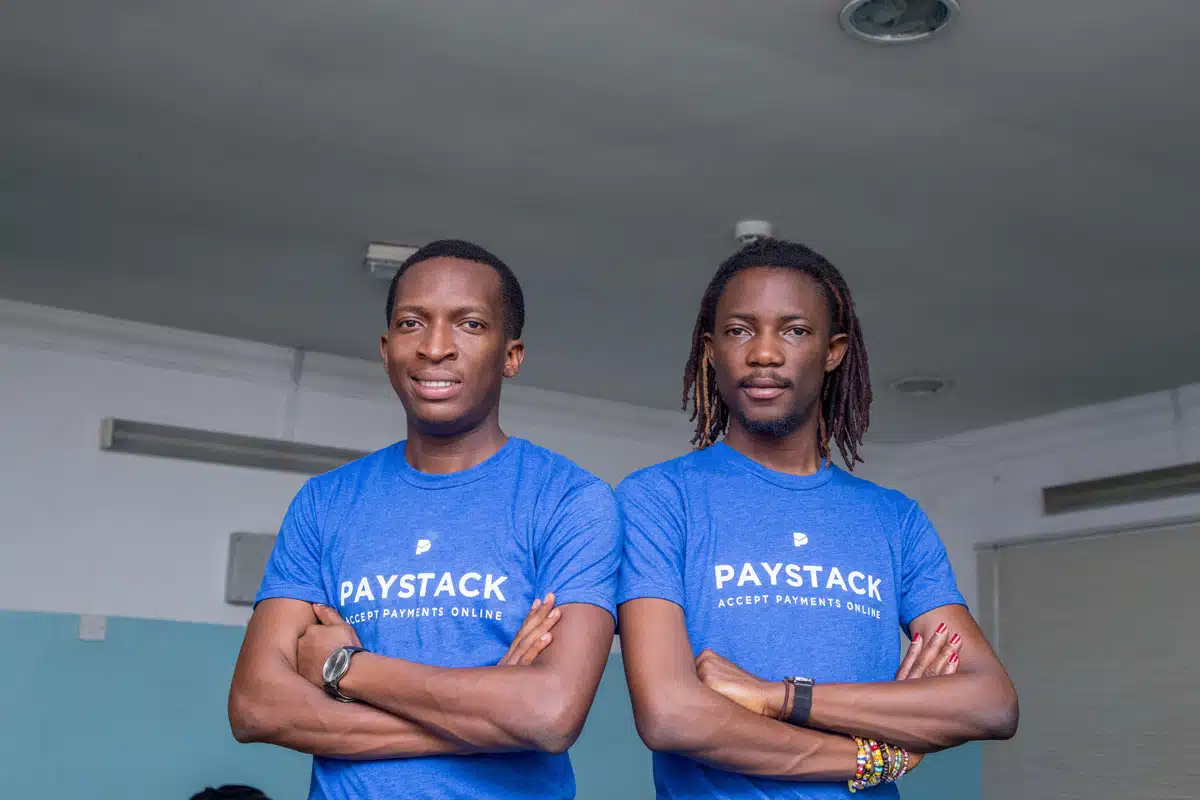
Paystack was founded in 2015 by Shola Akinlade and Ezra Olubi. At its core, the idea was simple yet technically daunting: build a developer-first payment gateway that made it ridiculously easy for African businesses to accept payments online .
Before Paystack, accepting a card payment online in Nigeria was a nightmare. It involved months of negotiations with banks, Byzantine documentation, and integration processes that could break a small business. Akinlade, a software engineer himself, understood the friction and built a solution that prioritized the developer experience: clean documentation, a sandbox environment, and a straightforward API.
The gamble paid off. In 2018, Paystack became the first Nigerian startup to be accepted into Y Combinator, the prestigious US accelerator . That year, Stripe led an $8 million Series A round, planting the seeds for the eventual acquisition .
The Stripe Acquisition (2020)
On October 15, 2020, Stripe announced it was acquiring Paystack for a reported $200 million . It remains one of the largest fintech acquisitions out of Africa.
Why Stripe bought Paystack:
Stripe needed a beachhead in Africa. The continent’s payment landscape was (and remains) hyper-fragmented, with dozens of local payment methods and complex regulations. Paystack had already solved this problem for the Nigerian and Ghanaian markets. By acquiring Paystack, Stripe instantly gained a local infrastructure expert with the trust of local developers. It gave Stripe‘s global customers a seamless way to expand into Africa.
Why Paystack said yes:
Shola Akinlade framed the decision not as an exit but as an acceleration . Paystack had ambitions to cover the entire continent. Stripe provided the capital, the global engineering talent, and the credibility to make regulator friends in new markets. Crucially, Stripe allowed Paystack to operate independently post-acquisition, retaining its brand, leadership, and culture.
The Evolution: From Payments to The Stack Group
For a decade, Paystack was defined by its singular focus on merchant payments. In 2026, that changed.
Paystack restructured into The Stack Group (TSG) , a holding company jointly owned by Shola Akinlade, Stripe, and employees of Paystack . This is a multi-brand technology group housing four distinct entities:
-
Paystack: The core payments business, still serving over 300,000 merchants.
-
Zap: A consumer-facing payments app (currently active in Nigeria) designed to eat into the P2P and bill payment market.
-
Paystack Microfinance Bank (MFB): A licensed bank allowing Paystack to hold deposits, issue loans, and offer working capital.
-
TSG Labs: A venture studio building new products using AI and stablecoins.
Why the restructure?
According to COO Amandine Lobelle: “The beauty of this model is that it rewards the people who are building the company, while also maintaining the global backing of one of the leading payments companies” .
Leadership: The Executive Team
Shola Akinlade – Co-Founder & CEO of TSG
Akinlade remains the public face and strategic visionary. Under his leadership, Paystack navigated the 2023-2024 Nigerian currency crisis (where the naira lost 70% of its value) without losing merchant trust . His focus has shifted to building durable infrastructure rather than chasing viral growth.
Ezra Olubi – Co-Founder
Olubi drives the engineering culture. He ensures that as Paystack expands into banking and consumer apps, the core API remains the gold standard for reliability.
Amandine Lobelle – Chief Operating Officer of TSG
Lobelle is the architect of the new holding company structure. She has been instrumental in separating the regulated banking entity from the parent group to ring-fence risk .
Operations and Footprint
As of 2026, Paystack serves over 300,000 businesses across seven African countries .
Country Presence:
-
Nigeria (HQ)
-
Ghana
-
Kenya
-
Côte d‘Ivoire
-
Egypt (Private Beta)
Ghana Presence:
In Ghana specifically, Paystack powers over 159 e-commerce stores identified by platform data, processing payments for listings ranging from the Accra College of Medicine to Eddy‘s Pizza . The partner landscape is heavily skewed towards WooCommerce (66% of stores) .
Business Model: The Multi-Engine Revenue Machine
Paystack‘s business model has evolved from a single tollbooth (transaction fees) to a diversified financial services group.
Engine 1: Payment Processing (The Legacy Toll)
This remains the core. Paystack charges a fee (typically 1.5% to 2% plus a fixed charge) on every transaction processed via its API or checkout links. The volume here is staggering. Paystack processes trillions of naira monthly .
Value Proposition:
-
Low-Code/No-Code Tools: Merchants can start accepting payments in minutes using hosted pages or low-code integrations .
-
Pro-Code/API: Developers get access to robust APIs for subscriptions, split payments, and recurring billing .
-
In-Person Payments (Terminals): Paystack supports physical POS terminals for brick-and-mortar retail, bridging online and offline commerce.
Engine 2: Paystack Microfinance Bank (Working Capital)
This is the new growth engine .
The Problem: There is a $32 billion small business financing gap in Nigeria alone. Traditional banks will not lend to SMEs because they lack collateral .
The Solution: Using rich, real-time transaction data from the payment rails, Paystack MFB can underwrite risk more accurately than any traditional bank. A business that has processed millions through Paystack for two years is a known quantity, even if it has no land title.
Services offered :
-
Merchant cash advances
-
Working capital loans
-
Overdrafts
-
Term loans for SMEs
Execution: In January 2026, Paystack acquired Ladder Microfinance Bank and rebranded it as Paystack MFB . The bank will operate as a sister company to the payment processor, with separate governance but high operational synergy.
Engine 3: Zap (Consumer Payments)
Paystack has launched Zap, a consumer app acting as a digital wallet for P2P transfers and bill payments . This places Paystack in direct competition with Moniepoint and OPay.
Why launch Zap?
Paystack historically lacked a direct relationship with the end consumer (it was B2B). Zap allows Paystack to collect user data, understand spending patterns, and create a consumer lending channel—feeding data back into the MFB for underwriting.
Engine 4: TSG Labs (The Venture Arm)
TSG Labs is a venture studio exploring bets beyond fintech . This includes:
-
Artificial Intelligence: Tools to help merchants automate business operations.
-
Stablecoins: Exploring blockchain rails for cheaper cross-border remittances to complement the $97 billion diaspora market .
Revenue Model Summary
| Revenue Stream | Fee Structure | Margin Profile | Status |
|---|---|---|---|
| Card/Transfer Processing | ~2% + fixed | High (Volume) | Mature |
| Mobile Money Collections | Lower % | Low (Volume) | Mature |
| Working Capital Loans | Interest Rate (APR) | High (Risk-based) | New (2026) |
| Zap Transactions | Variable | Low | Growth |
| TSG Labs (AI/Stablecoins) | TBD | High | R&D |
Paystack in Ghana: The Reliable Engine
Paystack has been serving the Ghanaian market for several years, providing developers and merchants with a gateway to accept Mobile Money (MTN, Vodafone, AirtelTigo) and Cards.
Market Penetration
According to e-commerce platform data, Paystack is currently installed on 159 active e-commerce stores in Ghana .
Top Ghanaian Clients:
-
Accra College of Medicine
-
Nkyinkyim Museum
-
Eddy‘s Pizza
-
Cape Coast Mall
Platform Preference
Ghanaian merchants using Paystack heavily favor WooCommerce (66% of installations), reflecting the popularity of WordPress-based online stores in the country . A significant minority (30.2%) use custom-built carts, highlighting Paystack‘s appeal to the developer community who prefer API flexibility .
Competitive Positioning in Ghana
In Ghana, Paystack competes with the home-grown giant Hubtel and the cross-border specialist Flutterwave.
| Feature | Paystack | Hubtel | Flutterwave |
|---|---|---|---|
| Developer Experience | Excellent (API-first) | Good | Excellent |
| Mobile Money Support | Yes (Aggregated) | Yes (Aggregated) | Yes |
| E-commerce Focus | High | High (also Delivery) | High |
| Local Brand Presence | Strong in Tech circles | Strong in Retail/Delivery | Moderate |
| International Sellers | Supported (via Stripe) | Limited | Supported |
Paystack‘s strength in Ghana remains its Stripe connectivity. A merchant in Accra can use the same Paystack plugin as a merchant in Lagos, but because the parent company is Stripe, they can also accept international cards from US or European customers seamlessly—a significant differentiator from purely local gateways.
The Strategic Pivot: Why 2026 Is a Defining Year
The creation of The Stack Group and the acquisition of Ladder Microfinance Bank represent the most significant shift in Paystack‘s history .
The Microfinance Bank: Data as Collateral
For seven years, Paystack watched money flow through its pipes. It knew exactly how much a business sold, when the peak seasons were, and whether customers were churning. Yet, it could not lend to that business because it lacked a banking license.
The Paystack MFB solves this.
“After 10 years of building payment infrastructure and going deep, we realized that businesses needed more than just getting paid to grow,” said Amandine Lobelle .
The Model:
-
A merchant processes GHS 500,000 through Paystack over six months.
-
Paystack‘s algorithms detect the business is healthy and growing.
-
Paystack MFB offers the merchant GHS 100,000 in working capital at competitive rates.
-
The merchant repays via the same payment rails (instant settlement).
This creates a self-reinforcing flywheel: Better data -> Better lending -> Healthier merchants -> More transaction volume -> Better data.
The Holding Company Structure: Ring-fencing Risk
Paystack could not simply add a bank to its existing corporate structure. The compliance burden and capital requirements for a bank are vastly different from those of a payment processor.
By creating The Stack Group, Paystack separates the entities :
-
Paystack (Payments): High velocity, low margin, low regulatory friction.
-
Paystack MFB (Banking): Lower velocity, higher margin, high regulatory friction.
-
Zap (Consumer): High velocity, potentially loss-leading, consumer protection rules.
If the MFB has a compliance lapse, it risks its own license—but Paystack the payment processor keeps running. This ring-fencing is a sign of corporate maturity.
The Stripe Partnership Evolution
It is crucial to note that Stripe remains a majority owner of The Stack Group, alongside Akinlade and employees . However, by allowing Akinlade to co-own TSG and incentivize employees directly, Stripe is giving Paystack more operational autonomy, not less. This suggests Stripe views Paystack not as a subsidiary to be absorbed but as the regional champion of its Global Payments and Treasury Network (GPTN) .
Market Position and Competition
Africa‘s fintech landscape has narrowed to a three-horse race among Flutterwave, Paystack, and Moniepoint .
The New Contest: Battle of the Pipes
| Dimension | Paystack (TSG) | Flutterwave | Moniepoint |
|---|---|---|---|
| Primary Focus | Developer Experience, Banking Integration | Cross-border, Global Enterprise | Agent Banking, SME Dominance |
| Structure | Holding Company (TSG) | Single Entity | Holding Company |
| Banking License? | YES (MFB) | NO (Partner banks) | YES (via subsidiaries) |
| Consumer Face | Zap (App) | Send App | Moniepoint App |
| Key 2026 Move | Absorbing Ladder MFB | Acquiring Mono (Open Banking) | Expanding internationally |
| Parent/Backer | Stripe (Global) | Private VC | Private VC |
Heading: Paystack vs. the Competition
Paystack vs. Flutterwave:
Flutterwave ($3B valuation) is focused on regulatory depth (34 US licenses) and big-ticket enterprise cross-border flows . Paystack is focused on the local SMB and developer ecosystem. They compete on large Nigerian/Ghanaian merchants but increasingly serve different masters: Flutterwave wants to move money across borders; Paystack wants to control the full financial life of the business within the border .
Paystack vs. Moniepoint:
Moniepoint has won the physical ground war with POS terminals in every shop. Paystack won the digital air war with checkout links and APIs. The acquisition of the MFB puts them in direct conflict for the SME loan. Moniepoint lends to its agents; Paystack lends to its online merchants. The prize is the same: the $32 billion working capital gap.
Technology and Innovation
API-First Philosophy
Paystack‘s technical moat remains its API. The documentation is famously clean, and the integration process (including a test mode that simulates live transactions) sets the standard for the continent.
Payment Methods Supported:
-
Cards: Visa, Mastercard, Verve.
-
Bank Transfers: Direct debit and transfer APIs.
-
Mobile Money: MTN MoMo, Vodafone Cash, AirtelTigo Money (aggregated).
-
USSD: Offline code-based payments.
The No-Code/Low-Code Suite
Recognizing that not every business has a developer, Paystack provides :
-
Paystack Invoices: Send a professional invoice via email with a pay button.
-
Paystack Payment Links: Generate a URL instantly to sell a product.
-
Paystack Storefront: A free, basic e-commerce website builder.
Development of Stablecoins
As part of TSG Labs, Paystack is experimenting with stablecoin rails . The goal is to reduce the cost of cross-border remittances (currently as high as 8%). Using Stripe‘s infrastructure and blockchain technology, Paystack could eventually allow a business in London to settle a payment to a business in Lagos in stablecoins, converting instantly to Naira on arrival.
AI Integration
TSG Labs is actively building AI tools to help merchants automate reconciliation, inventory management, and customer service .
Socio-Economic Impact
SME Empowerment
By lowering the barrier to accepting cards and mobile money, Paystack enabled the proliferation of digital commerce in Nigeria and Ghana. Businesses that were once WhatsApp-only stores now have professional checkout experiences.
Job Creation
Paystack directly employs hundreds of engineers and support staff. Indirectly, thousands of developers and digital agencies specialize in building Paystack integrations for merchants.
The Shift from Cash to Digital
In regions where Paystack operates, every successful transaction is a proof of concept for the digital economy. For the $32 billion SME financing gap, the data Paystack collects replaces the need for a physical office visit . This is formalizing the informal economy.
Challenges and Risks
Risk 1: Regulatory Friction in Banking
Holding a banking license is a double-edged sword . Paystack MFB is now subject to Central Bank of Nigeria (CBN) capital adequacy requirements, liquidity ratios, and on-site inspections. The cost of compliance is substantial and will require capital that could have otherwise funded growth.
Risk 2: Currency Volatility Exposure
Between 2023 and 2024, the naira lost 70% of its value . While Paystack charges fees in dollars for international transactions, its local operating costs and merchant deposits are in naira. Another major devaluation would compress margins and potentially create a run on deposits if merchants rush to convert to dollars.
Risk 3: Competition from Moniepoint and OPay
In the consumer app space (Zap), Paystack is a late entrant. Moniepoint and OPay have millions of active users already hooked on their ecosystems. Converting those users to Zap will require significant marketing spend (“cashback wars”) .
Risk 4: The Acquisition of Ladder MFB
Acquisitions are notoriously difficult to integrate. Paystack is a tech-first fintech; Ladder was a traditional microfinance bank. Blending the agile culture of Paystack with the bureaucratic controls of Ladder will be a management test.
Risk 5: The Brain Drain
With TSG Labs and the focus on AI, Paystack is competing directly with global tech giants for a limited pool of AI and blockchain engineers in Africa. It is in a bidding war with Flutterwave, Moniepoint, and international remote employers.
Risk 6: Profitability vs. Growth
While the group claims profitability, the launch of the MFB and Zap will require heavy upfront investment in capital reserves (for lending) and user acquisition (for Zap) . This could push the group back into a loss-making phase.
Future Outlook
As of May 2026, Paystack has transformed from a single-product payments company into a multi-brand technology group. The immediate question is not whether it will survive, but how fast it can turn its data advantage into lending dominance.
The Immediate Agenda (2026-2027)
-
Rolling out Paystack MFB: Deploying working capital loans to the top 10% of Paystack merchants.
-
Scaling Zap: Launching user acquisition campaigns for the consumer app to capture P2P market share.
-
Expanding to new territories: Moving the Egypt private beta to public launch .
-
Stablecoin launch: Pilot a cross-border settlement product for enterprise clients.
The Bull Case (Optimistic)
-
The Lending Flywheel Works: The MFB successfully underwrites loans using transaction data. Default rates are lower than industry average, and interest income becomes a significant portion of revenue.
-
Stripe Synergy Peaks: Paystack integrates deeply with Stripe‘s Global Treasury Network, allowing African merchants to hold multi-currency accounts (USD, EUR, GBP) natively.
-
TSG Labs Unicorn: One of the AI or stablecoin bets spun out of TSG Labs achieves product-market fit and becomes a standalone success.
-
Profitability Sustains: Despite the investments in the MFB, the core payments business remains highly profitable, funding the new bets without requiring external capital.
The Bear Case (Pessimistic)
-
The Lending Pivot Fails: Paystack MFB suffers from high default rates because transaction data is not a perfect proxy for creditworthiness. The bank requires a capital injection from Stripe, diluting local ownership.
-
Zap Bank Fails: Paystack burns cash on marketing Zap but fails to dethrone Moniepoint or OPay. The consumer app is quietly sunset.
-
Regulatory Overreach: The Central Bank of Nigeria imposes stricter rules on Payment Service Banks (PSBs) regarding foreign ownership or data sharing, crippling Paystack MFB‘s reliance on parent company data.
The Verdict: The Maturation of the Ecosystem
Paystack has outgrown the “startup” label. It is now an institution.
The acquisition by Stripe gave it a five-year runway to figure out the next step. Instead of resting on that success, Paystack has used the capital to attack the hardest problem in African finance: access to credit. By integrating Ladder MFB, Paystack is turning a payment gateway into a bank—not just a bank, but a data-driven lender that can offer capital to a business owner in Lagos or Accra without them ever stepping into a branch .
The restructure into The Stack Group is a signal to the market. Paystack is no longer just Shola Akinlade‘s company; it is a holding company where Stripe is a partner, employees are owners, and failure in one vertical (e.g., Zap) is ring-fenced from success in another (e.g., Payments).
For the Ghanaian market, Paystack provides the crucial connectivity to the global Stripe network. A Ghanaian entrepreneur using Paystack is not just selling to Accra; they are plugged into a global payment acceptance network. For Flutterwave and Moniepoint, Paystack is the competitor that refuses to stay in its lane.
The next decade of African fintech will not be decided by who has the cheapest transfer fees, but by who controls the flow of data. Paystack is betting that the data generated from your checkout button is worth more than the data from your POS terminal. If they are right, The Stack Group will tower over the continent‘s financial plumbing.
FAQ SECTION
1. What is Paystack?
Paystack is a payment service provider and technology group that makes it easy for African businesses to accept online and in-person payments . Founded in 2015, it serves over 300,000 businesses across countries including Nigeria, Ghana, South Africa, and Kenya . Paystack is a subsidiary of the US-based payments giant Stripe.
2. Who owns Paystack?
Paystack is majority owned by Stripe following its acquisition in 2020 for over $200 million. However, in 2026, the company restructured into The Stack Group (TSG) , which is jointly owned by Stripe, Co-Founder Shola Akinlade, and Paystack employees .
3. Who is the CEO of Paystack?
Shola Akinlade serves as the CEO of Paystack and The Stack Group. He founded the company in 2015 with Ezra Olubi .
4. Did Paystack acquire a bank?
Yes. In January 2026, Paystack acquired Ladder Microfinance Bank and rebranded it as Paystack Microfinance Bank (MFB) . This allows Paystack to hold customer deposits and lend directly to businesses, moving beyond just processing payments.
5. What is The Stack Group (TSG)?
The Stack Group is a holding company created in 2026 to house Paystack‘s various business units. It separates the core payments business (Paystack) from the new bank (Paystack MFB), the consumer app (Zap), and the venture studio (TSG Labs) to manage regulatory risk and allow independent growth .
6. Does Paystack have a banking license in Ghana?
Currently, the acquisition of Ladder MFB applies to Paystack‘s operations in Nigeria . While Paystack aggressively applies for licenses across its markets, its Ghana operations currently rely on partner banks to hold funds, pending specific regulatory approvals for direct banking.
7. How many customers does Paystack have?
Paystack serves over 300,000 businesses across Africa . In Ghana specifically, platform data suggests there are over 159 active e-commerce stores using Paystack, including the Accra College of Medicine and Eddy‘s Pizza .
8. What is Zap?
Zap is a consumer payments app launched by Paystack under The Stack Group. It allows users to send money peer-to-peer (P2P) and pay bills. It competes directly with apps like OPay and Moniepoint in the consumer market .
9. Is Paystack profitable?
Yes. In early 2026, Paystack reported that the group is profitable and has recorded positive monthly cash flow. Paystack‘s payment volumes have grown more than twelvefold since being acquired by Stripe in 2020 .
10. How does Paystack make money?
Paystack primarily generates revenue via transaction fees (e.g., ~2% on local card transactions). It also charges for enterprise-level API access and currency conversion. With the launch of its microfinance bank, it will soon generate interest income from loans and working capital advances to merchants .
11. How does Paystack differ from Hubtel?
Paystack focuses heavily on developer experience (APIs) and international card acceptance via Stripe. Hubtel is a broader fintech that focuses on bulk SMS, delivery logistics, and a consumer marketplace. Paystack is the tool you plug into a website; Hubtel is the tool that also delivers the food .
12. Who competes with Paystack?
Paystack‘s main competitors are Flutterwave (valued at $3 Billion, focusing on cross-border) and Moniepoint (focusing on physical agent banking) . Locally in Ghana, it competes with Hubtel and expressPay.
QUICK FACTS BOX
| Item | Details |
|---|---|
| Founded | 2015 |
| Founders | Shola Akinlade, Ezra Olubi |
| Headquarters | Lagos, Nigeria (Operational) / San Francisco, USA (Legal/Stripe) |
| Parent Company | Stripe (Acquired 2020, majority owner) |
| Holding Company | The Stack Group (TSG) (Formed 2026) |
| Group CEO | Shola Akinlade |
| Group COO | Amandine Lobelle |
| Businesses | Paystack (Payments), Paystack MFB (Banking), Zap (Consumer App), TSG Labs (Venture Studio) |
| Y Combinator Batch | W2018 |
| Countries Served | 7 (Nigeria, Ghana, South Africa, Kenya, Côte d‘Ivoire + Betas) |
| Merchants Supported | 300,000+ |
| Ghana Stores | 159+ (e-commerce platforms) |
| Key Ghana Clients | Accra College of Medicine, Eddy‘s Pizza, Cape Coast Mall |
| Platform Split (Ghana) | 66% WooCommerce, 30% Custom |
| Key 2026 Milestone | Acquisition of Ladder Microfinance Bank |
| Key Product (Banking) | Paystack Microfinance Bank (Working capital, loans) |
| Key Product (Consumer) | Zap (P2P & Bill payments) |
| Key Advantage | Data-driven lending using transaction history |
| Regulator (Banking) | Central Bank of Nigeria (CBN) |
| Website | paystack.com |
Source: Accra Street Journal
Last Updated on May 4, 2026 by Samuel Kwame Boadu
Disclaimer: Some content on Accra Street Journal may be aggregated, summarized, or edited from third-party sources for informational purposes. Images and media are used under fair use or royalty-free licenses. Accra Street Journal is a subsidiary of SamBoad Publishing Hub under SamBoad Business Group Ltd, registered in Ghana since 2014.
For concerns or inquiries, please visit our Privacy Policy or Contact Page.

Samuel Kwame Boadu is a Ghanaian media entrepreneur and storyteller with a passion for amplifying urban voices and uncovering everyday truths. He is the Editor-in-Chief and Founder of Accra Street Journal, a dynamic digital platform dedicated to capturing the pulse of Ghana’s capital—its people, culture, challenges, business, sports and innovations.