







Ghana has ascended to become the eighth-largest economy in Africa, with a Gross Domestic Product (GDP) of 114.71billion in 2026108 billion. The rise from tenth to eighth position reflects a combination of fortuitous commodity prices—particularly gold, which has traded above 4,600 per ounce—and deliberate structural expansion in the information, communication, technology (ICT), and financial services sectors. While South Africa retains its top position with a GDP of 479.96 billion, followed by Egypt (429.65billion) and Nigeria (377.37 billion), Ghana’s steady climb underscores a broader narrative: the country is successfully diversifying beyond its traditional resource base while maintaining macroeconomic stability despite persistent challenges in public debt management and external vulnerabilities. For a nation that entered an IMF program just three years ago, the ranking is both a validation of recent reforms and a reminder that structural transformation remains incomplete. The question for policymakers and investors alike is whether Ghana can sustain this momentum, closing the gap with Kenya (146.26billion) and Angola 152.4 billion) while staying ahead of the Democratic Republic of Congo (113.41billion) and Ethiopia (109.3 billion).

Key Developments: Sectoral Drivers and Ranking Methodology
The 2026 GDP estimate of 114.71billionrepresentsanominalincreasefrom108.1 billion in 2025, a 6.1% nominal rise that exceeds the real growth rate (estimated at 4.8% for 2025) due to favorable exchange rate effects. Ghana’s nominal GDP is calculated in current US dollars, meaning it reflects both real output growth and the cedi’s performance against the dollar. The cedi’s relative stability in 2025 and early 2026—trading near GH¢11.09 per dollar—has prevented the currency erosion that has historically reduced Ghana’s dollar-denominated GDP even when cedi-denominated output grew.
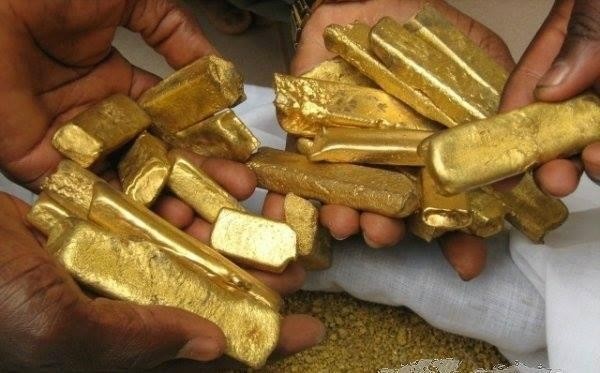
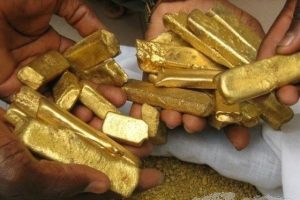
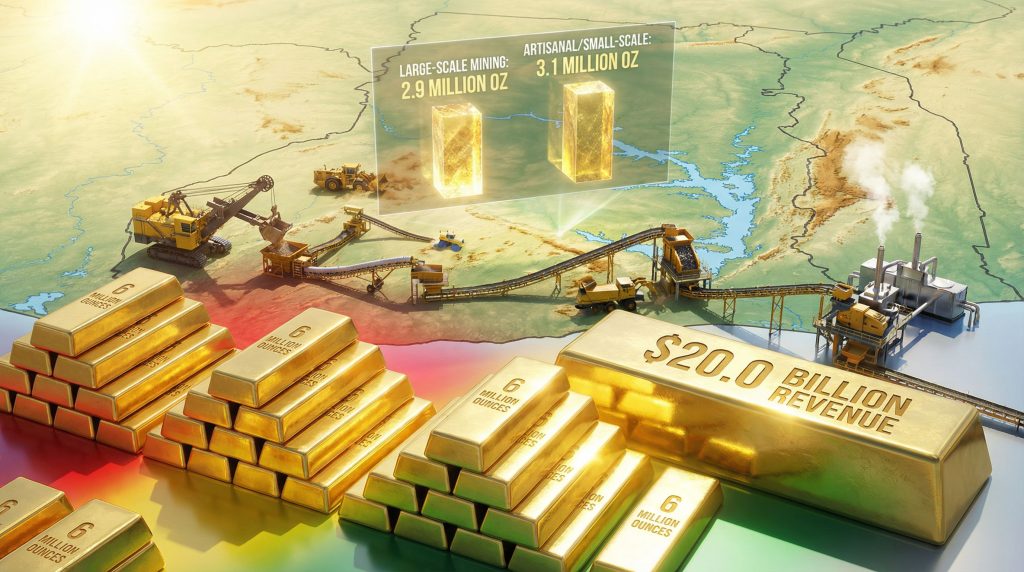
Three sectors drove the expansion. The mining sector, led by gold, benefited from global prices that averaged above 4,600 per ounce in 2025 and have remained elevated in 2026.Ghana′s gold production reached approximately4.5millionounces in 2025, generating export revenues 7.2 billion—nearly half of total merchandise exports. The Minerals Commission projects production could reach 5 million ounces by 2028, suggesting continued contribution.
📢 GET A DETAILED ARTICLES + JOBS
Join ASJ's WhatsApp Channel and never miss a post or opportunity.
The ICT sector has emerged as an unexpected engine. Mobile money transactions, fintech innovation, and expanding digital infrastructure have created a services ecosystem that the Ghana Statistical Service now estimates contributes nearly 5% of GDP, up from 3.2% in 2020. The sector’s growth is driven by both domestic adoption (over 77 million registered mobile money accounts) and business process outsourcing (BPO) serving European and North American clients attracted by Ghana’s English-speaking workforce.
Financial services, the third pillar, have benefited from banking sector consolidation, improved asset quality, and increased intermediation. The Bank of Ghana’s cleaning of the banking sector in the late 2010s, while painful, created a more resilient system. Non-performing loan ratios have declined to 14.5% from peaks above 20%, and credit to the private sector, while still constrained by high interest rates, has grown in real terms for three consecutive quarters.
The ranking is based on economic data from the International Monetary Fund, World Bank, and African Development Bank, with adjustments for purchasing power parity where applicable. In nominal terms, Ghana has now surpassed the Democratic Republic of Congo ($113.41 billion) and Ethiopia ($109.3 billion), which hold the ninth and tenth spots respectively. However, Ghana still trails behind Kenya ($146.26), Angola ($152.4 billion), and Morocco ($194.33 billion)—nations with similar population sizes or resource levels.
The climb from tenth to eighth isn’t just about numbers. It shows real economic growth—more goods and services being produced, more formal jobs created, and more tax revenue coming in. Still, rankings can be misleading. Ghana’s GDP per capita, at around $3,300, is below the African average for upper-middle-income countries and far lower than Botswana’s $7,800 or South Africa’s $6,700. While total economic size matters for things like geopolitical influence, access to capital, and credit ratings, per capita income is what really shapes everyday life for citizens. They’re not the same thing.
Analysis & Implications: Diversification, Resilience, and the Debt Overhang
Ghana’s economic story in 2026 is one of genuine progress shadowed by enduring vulnerabilities. The diversification narrative is real but incomplete.
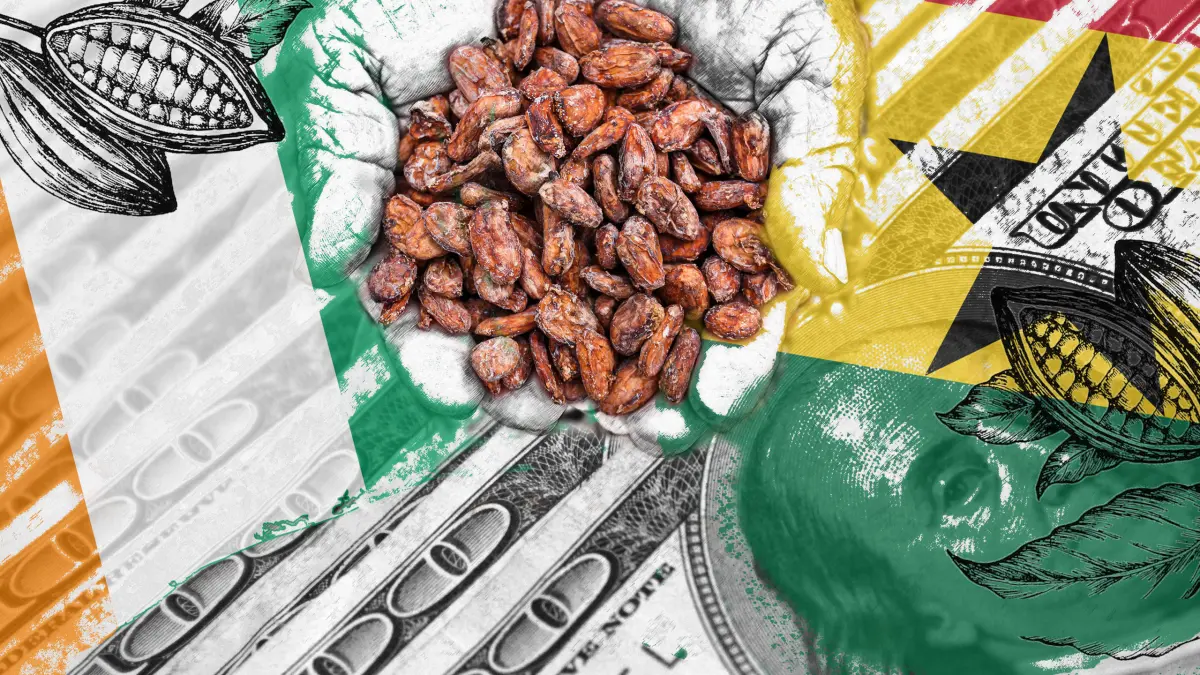
Compared to its West African peers, Ghana has achieved notable sectoral balance. Nigeria remains overwhelmingly dependent on oil, which accounts for over 80% of export earnings and 50% of government revenue. Côte d’Ivoire is heavily concentrated in cocoa (approximately 40% of export earnings). Ghana, by contrast, has three substantial export pillars: gold (approximately 48% of exports), oil (approximately 30%), and cocoa (approximately 15%). No single commodity dominates, and the services sector—ICT, finance, transport, trade—now contributes over 50% of GDP.
This diversification provides insulation. When gold prices fell in 2021-2022, oil and cocoa provided buffers. When oil prices collapsed briefly in 2020, gold surged. In 2025-2026, with oil elevated due to Hormuz tensions and gold at record highs due to geopolitical risk, both are performing strongly simultaneously—a rare alignment that has boosted revenues across the board.
The resilience extends to macroeconomic management. Ghana completed its IMF Extended Credit Facility reviews without waivers, maintained primary fiscal balance targets, and rebuilt international reserves to $4.2 billion. The cedi, while not strong, has been stable—a significant achievement given the currency’s historical volatility. The Bank of Ghana has resisted pressure to monetize fiscal deficits, keeping central bank financing of government at zero.
However, the debt overhang remains. Ghana’s public debt stands at approximately 75% of GDP, down from the 2022 peak of over 100% following the domestic debt exchange program, but still elevated. Interest payments consume approximately 38% of tax revenue, crowding out spending on infrastructure, education, and health. While the IMF program has restored credibility, Ghana’s debt sustainability remains fragile. A sharp depreciation of the cedi or a spike in global interest rates could quickly reverse progress.
The ranking also reflects currency effects. Nigeria’s 30% nominal GDP increase to $377.37 billion isn’t mainly due to real growth—the economy didn’t actually expand by nearly a third in one year. The jump comes from the naira’s appreciation after the central bank’s exchange rate reforms and a reduced gap in the parallel market. Likewise, Egypt’s 17.84% rise to $429.65 billion partly stems from the return of portfolio capital and the stabilization of the Egyptian pound after years of managed depreciation. In both cases, real GDP growth was much lower.
Ghana’s 3.2% nominal increase, by contrast, is closer to real growth adjusted for modest currency movements. This suggests that Ghana’s rise in the rankings is more “real” than Nigeria’s or Egypt’s—less reliant on exchange rate accounting and more on actual production. The Accra Street Journal notes that this distinction matters for investors. A country that climbs rankings through real output growth is building sustainable capacity. A country that climbs through currency revaluation may see its position reverse just as quickly.
What This Means for Ghana: Policy Implications and Investor Sentiment
The eighth-largest economy ranking is a marketing asset. For the Ministry of Finance, it provides a headline to showcase at investor roadshows: “Ghana: Africa’s 8th Largest Economy and Rising.” For the Ghana Investment Promotion Centre (GIPC), it signals market size and relevance. For international credit rating agencies, it is a data point, though not determinative; Moody’s, Fitch, and S&P will continue to focus on debt dynamics, governance, and external liquidity.
For domestic businesses, the ranking is less immediately relevant than the sectoral drivers that produced it. The growth of ICT and financial services suggests where opportunities lie: digital infrastructure, payment systems, fintech partnerships, and business process outsourcing. The mining sector’s continued strength suggests sustained demand for drilling, haulage, and support services—opportunities for local contractors under the localization policy. The oil and gas sector, while not the primary driver in 2026, remains significant for fiscal revenues and energy security.
For policymakers, the ranking should not lead to complacency. Ghana still trails Kenya ($146 billion) despite having a larger population (about 33 million versus 54 million), meaning Kenya’s per capita income is much higher. Angola ($152 billion) has a smaller population (35 million) but enjoys significantly higher per capita income thanks to oil wealth. Morocco ($194 billion) is nearly twice Ghana’s size economically, with a similar population of 37 million. The aim should be not only to hold on to eighth place but to close the absolute gap.
The government’s economic strategy should focus on the drivers that produced the 2026 result: gold (which requires stable fiscal terms and security to prevent illegal mining), ICT (which requires reliable electricity and affordable data), and financial services (which requires regulatory predictability and a stable currency). Policies that undermine any of these—such as windfall profit taxes that discourage investment, energy tariffs that price out data centers, or forex restrictions that freeze banking—would jeopardize future growth.
The Bank of Ghana’s focus on cross-border payment interoperability, discussed at the 3i Africa Summit, is an example of forward-looking policy. If Ghana can position itself as a hub for digital financial services across West Africa, the ICT and financial services sectors could grow even faster, pushing GDP toward $130 billion by 2028.
Equally important is addressing the vulnerabilities that could reverse progress. Public debt must be reduced to below 60% of GDP to free up fiscal space. Reserve accumulation must continue to cushion against external shocks. The domestic debt market must be deepened to reduce reliance on foreign borrowing. And the energy sector must be stabilized to prevent the kind of load-shedding that erodes industrial competitiveness.
Wider Context: Africa’s Economic League Table and Ghana’s Trajectory
Africa’s economic rankings are more fluid than often assumed. A decade ago, Nigeria was the largest economy following a 2014 rebasing that dramatically increased its nominal GDP. South Africa has since reclaimed the top spot as the naira depreciated and Nigeria’s oil production faltered. Egypt has risen through infrastructure investment and population growth (over 110 million). Angola fell after the 2014 oil price crash but has stabilized. Kenya has climbed steadily through services and technology.
Projections for 2030 suggest further shifts. Ethiopia, with its rapid population growth (over 120 million) and industrial park strategy, could enter the top five. The Democratic Republic of Congo, with its mineral wealth (cobalt, copper, lithium), could surpass Ghana if it stabilizes politically. Ghana’s position at eighth is not guaranteed; it must be earned through continued reform and investment.
Comparing Ghana to its West African neighbors is revealing. Nigeria, with a GDP of $377 billion, is about 3.3 times larger. Côte d’Ivoire, at $78 billion, is smaller. ($35 billion) and Burkina Faso ($22 billion) are significantly smaller. Ghana has become the region’s second-largest and most diversified economy, giving it considerable influence within ECOWAS and in dealings with international partners.
The African Continental Free Trade Area (AfCFTA) could reshape rankings. Countries that successfully attract manufacturing investment—through reliable power, efficient ports, and stable policies—will see GDP accelerate. Countries that fail to compete will stagnate. Ghana’s Tema Port expansion, special economic zones, and improving ease-of-doing-business scores position it well, but competition from Côte d’Ivoire (Abidjan port upgrade), Benin (Glazoué special economic zone), and Senegal (Dakar port expansion) is intense.
The international context also matters. Higher oil prices benefit Nigeria, Angola, and Libya—widening the gap between them and Ghana. Higher gold prices benefit Ghana, Mali, Burkina Faso, and South Africa—helping Ghana keep pace with mid-tier economies. Diversification is the only durable strategy because no single commodity price lasts forever.
Outlook / What Happens Next
Ghana’s GDP in 2027 will depend on gold prices, oil production, ICT sector growth, and the cedi’s trajectory. The most likely scenario, based on current commodity futures and policy trajectories, is continued modest growth to approximately $122 billion by end-2027, maintaining eighth position if Ethiopia and DRC do not accelerate.
Upside risks include sustained high gold prices (above 4,500), faster-than-expected ICT sector growth driven by business process outsourcing, and successful implementation of the mining localization policy, which would boost value retention. Downside risks include a sharp drop in gold prices (to 3,500 or below), worsening public finances due to pre-election spending, or the return of load-shedding, which could hurt manufacturing and services.
For investors, Ghana offers a mixed picture. The macroeconomic framework is stable, the banking system is sound, and the growth sectors (gold, ICT, finance) are clear. However, public debt remains high, interest rates are elevated (27% policy rate), and the political calendar (elections in December 2026) introduces uncertainty. The eighth-largest ranking is a reason to look—but not necessarily a reason to leap without due diligence.
For Ghanaians, the ranking is a point of pride but not a solution to everyday economic struggles. GDP per capita remains low; unemployment, particularly among youth, is a political flashpoint; and inflation, while moderating, still erodes purchasing power. The macroeconomic stability that produced the ranking must translate into job creation, wage growth, and improved public services for citizens to feel the improvement.
The Accra Street Journal concludes that Ghana’s rise to eighth place is real and earned, but it is a milestone, not a destination. The country has recovered from the 2022 crisis, stabilized its currency, restructured its debt, and grown its economy. Now it must consolidate those gains, invest in productivity, and compete for a place among Africa’s top five. That will require another decade of reform, resilience, and rigorous execution. The foundation is laid. The work continues.
Source: Accra Street Journal
Last Updated on May 9, 2026 by Samuel Kwame Boadu
Disclaimer: Some content on Accra Street Journal may be aggregated, summarized, or edited from third-party sources for informational purposes. Images and media are used under fair use or royalty-free licenses. Accra Street Journal is a subsidiary of SamBoad Publishing Hub under SamBoad Business Group Ltd, registered in Ghana since 2014.
For concerns or inquiries, please visit our Privacy Policy or Contact Page.

Samuel Kwame Boadu is a Ghanaian media entrepreneur and storyteller with a passion for amplifying urban voices and uncovering everyday truths. He is the Editor-in-Chief and Founder of Accra Street Journal, a dynamic digital platform dedicated to capturing the pulse of Ghana’s capital—its people, culture, challenges, business, sports and innovations.