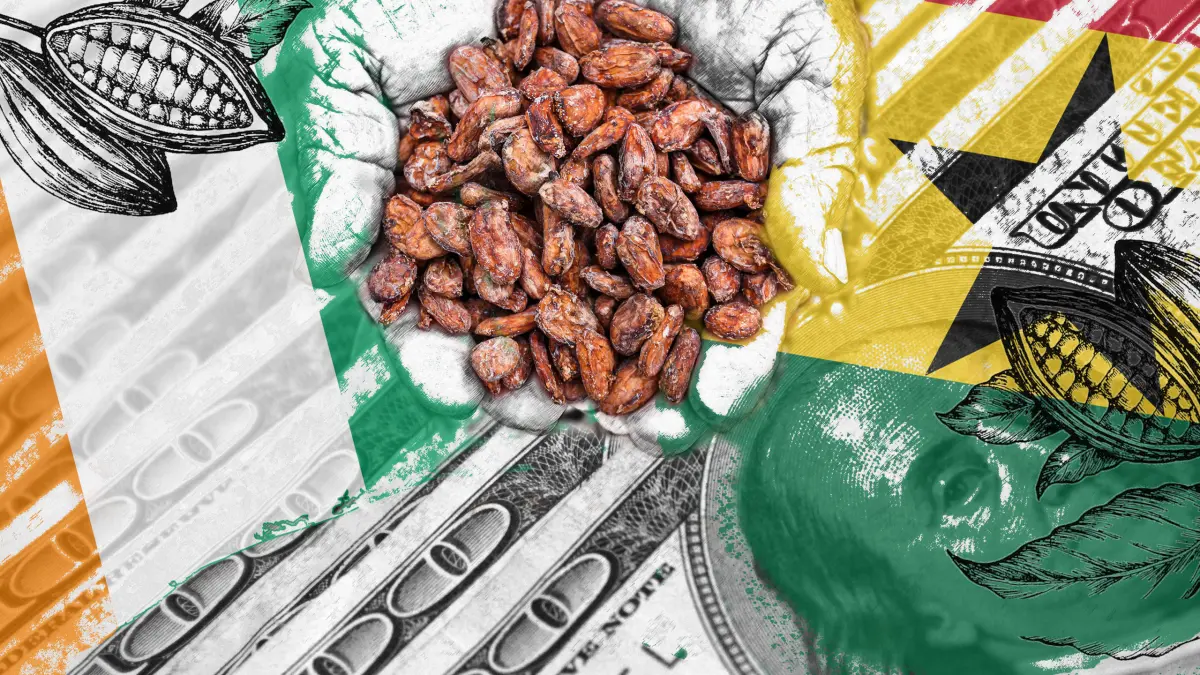











Ghana is set to overhaul the way it finances its cocoa sector, with plans to raise 1 billion cedis through domestic, cedi-denominated bonds to fund crop purchases for the 2026/27 season. Announced by COCOBOD Chief Executive Dr. Ransford Abbey at the Africa Cocoa Finance and Investment Forum at the London Stock Exchange, this marks a major shift from the country’s long-standing reliance on foreign, dollar-denominated syndicated loans. The new aims to boost price stability, secure sustainable incomes for farmers, and reduce vulnerability to international lenders and currency fluctuations—goals made more urgent by the recent tough restructuring of earlier cocoa bills. However, the success of the 1 billion cedi issuance will depend on balancing investor confidence, shaken by past restructuring, with opportunities presented by Ghana’s stable economic climate, rising global cocoa prices, and declining domestic interest rates. For an industry that employs over 800,000 farmers and accounts for approximately 15% of export earnings, the transition to domestic bond financing is both an opportunity and a test. Opportunity, because lower cedi interest rates and record cocoa prices could make the bonds attractive to local pension funds and institutional investors. Test, because trust eroded by past defaults is not easily rebuilt.

Key Developments: From Syndicated Loans to Domestic Bonds
The cocoa financing model that Ghana has used for over three decades was straightforward but increasingly problematic. Each season, COCOBOD would secure a dollar-denominated syndicated loan from a consortium of international banks, backed by forward sales of cocoa and sovereign guarantees. The loan would fund the purchase of cocoa from farmers at a guaranteed producer price; repayment would come from the proceeds of cocoa sales, typically hedged through the international futures market.
This model worked well when global interest rates were low, the cedi was relatively stable, and Ghana’s sovereign credit rating was investment grade. It began to fracture after 2020. Rising global rates increased borrowing costs. Currency depreciation meant that COCOBOD had to generate increasing cedi revenues to service dollar-denominated debt. And Ghana’s debt restructuring—including the treatment of cocoa bills—damaged the sector’s reputation among international lenders. The 2023/24 season saw delayed syndicated loan disbursements, anxious negotiations, and ultimately, a reduced facility.
📢 GET A DETAILED ARTICLES + JOBS
Join ASJ's WhatsApp Channel and never miss a post or opportunity.
The new model announced in February and elaborated at the London forum addresses these vulnerabilities by shifting financing to the domestic cedi bond market. COCOBOD will issue bonds to local institutional investors—pension funds, insurance companies, asset managers, and potentially commercial banks—raising up to $1 billion equivalent in cedis. The bonds will be issued before the season commences in August 2026, ensuring that funds are available for the October start of the main harvest.
Dr. Abbey framed the shift as a strategic upgrade rather than a distressed pivot. The new financing scheme, he said, is intended to improve price stability and ensure sustainable farmer income while reducing dependence on offshore financiers. “Sustainable farmer income” is a critical phrase: one of the chronic problems of the syndicated loan model was that repayment pressures sometimes forced COCOBOD to delay payments to farmers, creating liquidity crises at the Producer Buying Company (PBC) level.
The PBC’s current distress underscores the urgency. The state-owned buyer owes farmers for over 9,000 bags of delivered cocoa, with total debts of GH¢673 million. The inability to pay farmers promptly undermines the entire system: farmers may smuggle cocoa to neighboring Côte d’Ivoire (where prices are sometimes higher), or abandon cocoa for other crops, or resort to illegal mining (galamsey) to meet cash needs. A reliable, timely payment mechanism is not merely a financial nicety; it is a production imperative.
The bond issuance is intended to create a more resilient funding cycle. Instead of borrowing dollars, converting to cedis, paying farmers, selling cocoa for dollars, and repaying dollars—a cycle exposed to currency risk at every turn—COCOBOD will borrow cedis, pay farmers in cedis, and repay in cedis from its cedi revenues. The currency mismatch disappears. The exposure to global interest rate fluctuations diminishes. And the repayment pressure is aligned with the domestic fiscal calendar.
Analysis & Implications: The Three Levers of Investor Appetite
The success of the $1 billion domestic bond issuance depends on three variables: cocoa prices, interest rates, and trust. Each is moving in a different direction.
Cocoa prices have been volatile but are looking good at the moment. After a historic rally in 2024 that pushed prices above 10,000 per tonne, they dropped sharply but have regained strength in recent weeks. In April 2026, worries about supply from Côte d’Ivoire and Ghana—the world’s top two producers—drove futures to around 8,500 per tonne. If these high global prices hold, COCOBOD’s liquidity would see a big boost, as the gap between the farmer gate price (in cedis) and the global sale price (in dollars) generates the surplus used to repay financing. Bigger surpluses mean lower default risk.
Interest rates are falling, which is positive for bond issuance but creates a strategic dilemma. The Bank of Ghana has aggressively cut its policy rate to 14%, down from 27% at the peak of the crisis. Lower rates reduce COCOBOD’s borrowing costs, making the bonds more affordable to issue. However, as analysts noted at the London forum, using high interest rates as bait would be inappropriate in the current climate. Doing so would contradict the downward trend of national rates and send a signal of desperation, undermining confidence in Ghana’s fiscal management. COCOBOD must price the bonds attractively enough to clear the market but not so richly that it appears distressed. A yield of 18% to 20% for a 3-to-5-year tenor is plausible—high enough to compete with treasury bills (currently yielding approximately 22% to 24%) but not so high as to signal panic.
Trust is the most difficult variable. The decision to restructure cocoa bills as part of Ghana’s wider debt reorganization left a lingering anti-sentiment among some institutional investors. Bondholders who took haircuts or extended maturities under duress are not eager to lend again. However, the restructuring was not unique to cocoa; it was part of a systemic sovereign debt treatment that applied across domestic and external instruments. Investors who have returned to Ghanaian treasury bills (the domestic debt market has normalized) may be willing to consider cocoa bonds, especially if structured with stronger creditor protections.
Offsetting the skepticism is Ghana’s relatively stable economic environment. Inflation, while ticking up slightly to 3.4% in April 2026, remains near historic lows after the hyperinflationary shock of 2022-2023. The cedi has stabilized near GH¢11 to the dollar. The IMF program remains on track. These macro factors—improved fiscal credibility, currency stability, low inflation—provide a foundation that did not exist during the restructuring period.
Accra Street Journal notes that domestic institutional investors face their own constraints. Pension funds, which hold the largest pool of long-term local currency savings, have regulatory limits on how much they can invest in corporate bonds (versus government securities). The National Pensions Regulatory Authority (NPRA) would need to approve cocoa bonds as eligible assets, likely with a defined limit. Insurance companies and commercial banks have more flexibility but also shorter duration liabilities; they may prefer shorter tenor bonds.
What This Means for Ghana’s Cocoa Sector and Farmers
For cocoa farmers, the domestic bond model promises something the syndicated loan model could not always deliver: timely payment. The PBC’s GH¢673 million debt to farmers is not merely a financial statistic; it represents thousands of households unable to pay school fees, buy medicine, or invest in farm maintenance. When farmers are paid late, the incentives to maintain cocoa trees, apply fertilizer, and harvest carefully diminish. Yields drop. Quality suffers. The entire supply chain degrades.
By aligning the funding cycle with the harvest cycle—borrowing before the season, paying farmers during the season, repaying after sales—the bond model could solve the chronic liquidity mismatch. COCOBOD would have the cash on hand to pay farmers within days of delivery, not months. This is particularly important for the 2026/27 season, where high global prices create an opportunity: farmers who are paid promptly and see high prices are more likely to reinvest in their farms, increasing future production.
The shift to domestic bonds also reduces the export revenue cyclically that has plagued Ghana’s cocoa sector. Under the syndicated model, a significant portion of cocoa export revenues was pre-committed to loan repayment, leaving little flexibility for domestic value addition or farmer support. Domestic bonds, repaid in cedis, free up dollar export proceeds for other uses—including potentially investing in cocoa processing facilities to capture more of the value chain domestically.
However, risks remain. If cocoa prices fall sharply between issuance and repayment—say, if global demand weakens or Côte d’Ivoire produces a bumper crop—COCOBOD’s surplus would shrink. The bonds would still need to be repaid from general cocoa revenues or, in extremis, from the government budget. This would transfer risk from COCOBOD to the sovereign balance sheet, which is still recovering from the 2022-2023 crisis.
The Producer Buying Company’s restructuring must accompany the financing shift. Paying farmers on time requires not only funding but also functional logistics: weighing, grading, bagging, transporting, and receipting. The PBC’s operational deficiencies have been as damaging as its liquidity constraints. COCOBOD’s announcement of the new financing model should be paired with a credible plan to overhaul the PBC—potentially including private sector participation, digitized payment systems, and performance-based contracts for purchasing clerks.
Wider Context: African Agricultural Finance Innovation
Ghana’s pivot to domestic bonds for cocoa financing is part of a broader trend across African commodity sectors. Countries are seeking to reduce dependence on volatile, expensive, and often politically conditional international financing.
Côte d’Ivoire, the world’s largest cocoa producer, has experimented with similar models, though it continues to rely on syndicated loans structured with futures-linked pricing. Nigeria’s Cocoa Board has used a mix of domestic bank loans and agricultural bonds. Ethiopia’s Coffee and Tea Authority has issued local currency bonds to support the coffee value chain, with mixed results depending on global coffee prices.
The success of these instruments depends on three factors: depth of domestic capital markets, credibility of the issuing institution, and commodity price outlook. Ghana’s domestic capital market has deepened significantly in the past decade, with pension fund assets exceeding GH¢60 billion and insurance industry assets over GH¢15 billion. There is sufficient local liquidity to absorb a $1 billion issuance, provided the yield is attractive and the risk is understood.
Credibility is improving but not yet fully restored. International investors at the London forum noted that while Ghana’s macroeconomic stabilization is impressive, the memory of the domestic debt exchange program (DDEP) is still fresh. COCOBOD may need to offer additional protections—such as ring-fencing cocoa revenues, creating a dedicated sinking fund, or securing an explicit government guarantee—to reassure investors.
Commodity prices are the wild card. The cocoa market has become more volatile due to climate change (erratic rainfall in West Africa), disease (swollen shoot virus), and structural shifts in demand (chocolate manufacturers developing cocoa-free alternatives). A bond structured with a hedge—say, a collar that guarantees a minimum effective cocoa price—would reduce risk but add complexity and cost.
The broader lesson is that agricultural finance cannot be separated from agricultural policy. Ghana’s cocoa sector faces challenges beyond financing: aging tree stock, limited irrigation, and competition from other crops and activities (including illegal mining). Domestic bonds can provide the liquidity to pay farmers promptly, but prompt payment alone will not solve the underlying productivity crisis. That requires investment, extension services, and long-term planning—which the freed-up export revenues could help fund.
Outlook / What Happens Next
The $1 billion domestic bond issuance will proceed subject to market conditions and regulatory approvals. COCOBOD is expected to launch a pre-issuance roadshow in June 2026, targeting domestic institutional investors and potentially regional (West African) investors through the BRVM. The actual issuance will occur in July or August, before the October harvest.
Pricing will be critical. If COCOBOD prices the bonds at 18% with a 5-year tenor, demand is likely to be robust from pension funds seeking duration and yield pick-up over treasury bills. If pricing is below 16%, demand may be tepid. If pricing exceeds 22%, questions about financial distress would arise.
The NPRA’s approval for pension fund investment is not automatic; COCOBOD must demonstrate that the bonds meet regulatory criteria for admissible assets (investment grade rating, adequate collateral, appropriate risk management). A government guarantee would simplify approval, but would also increase the sovereign’s contingent liability.
For farmers, the most important date is not the bond issuance but the payment date. If the 2026/27 season sees farmers paid within two weeks of delivery, the new model will have achieved its primary goal. If payment delays persist despite the new financing, the structural issues run deeper than funding.
For investors, the cocoa bonds offer an opportunity to participate in Ghana’s economic recovery with a commodity-linked asset that benefits from high global prices. The risks are real but manageable. The decision to shift from foreign syndicated loans to domestic bonds is strategically sound. Execution will determine whether it succeeds.
As Dr. Abbey told the London forum, the new model is intended to improve price stability and ensure sustainable farmer income. Price stability depends on global markets and COCOBOD’s hedging strategy. Farmer income depends on prompt payment and producer price. The bond issuance enables both but guarantees neither. Ghana’s cocoa sector is at a crossroads. The domestic bond path is the right direction. The journey, however, has only just begun.
Source: Accra Street Journal
Last Updated on May 10, 2026 by Samuel Kwame Boadu
Disclaimer: Some content on Accra Street Journal may be aggregated, summarized, or edited from third-party sources for informational purposes. Images and media are used under fair use or royalty-free licenses. Accra Street Journal is a subsidiary of SamBoad Publishing Hub under SamBoad Business Group Ltd, registered in Ghana since 2014.
For concerns or inquiries, please visit our Privacy Policy or Contact Page.

Samuel Kwame Boadu is a Ghanaian media entrepreneur and storyteller with a passion for amplifying urban voices and uncovering everyday truths. He is the Editor-in-Chief and Founder of Accra Street Journal, a dynamic digital platform dedicated to capturing the pulse of Ghana’s capital—its people, culture, challenges, business, sports and innovations.