





11 min read
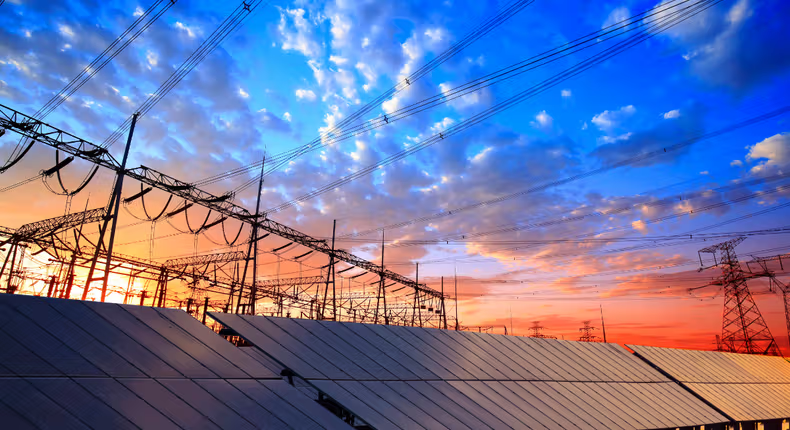
Renewvia Energy Corp., an Atlanta-based solar energy company, is expanding its mini-grid operations into Uganda, Rwanda, Ethiopia, and the Democratic Republic of Congo. The $750 million investment is expected to deliver about 2.1 million electricity connections across some of Africa’s most energy-poor regions. The announcement, made by Renewvia Solar Africa CEO Trey Jarrard, comes as sub-Saharan Africa remains the global epicenter of energy poverty, with nearly 600 million people lacking access to electricity. Additionally, $45 million in concessional financing will be used to expand energy access in Kakuma and Dadaab, two of the world’s largest refugee settlements in Kenya, potentially increasing electricity access fivefold and reaching over 550,000 people. This expansion aligns with the World Bank and African Development Bank-backed Mission 300 initiative, which aims to connect 300 million Africans to electricity by 2030. In a region where extending the main grid is often too costly for rural and peri-urban areas, mini-grids have emerged as a practical and scalable solution—if financing, regulations, and tariffs work together.
Key Developments: The Four-Country Expansion, Refugee Settlements, and Concessional Finance
Renewvia’s expansion plan targets four countries with vastly different energy landscapes but a common deficit. Uganda has made progress in grid electrification but still has significant rural gaps. Rwanda has one of Africa’s highest electrification rates (approximately 70%) but relies heavily on off-grid solutions for the remaining population. Ethiopia, with over 120 million people, has one of the lowest electrification rates on the continent (approximately 50%), and its grid struggles to reach remote highlands. The Democratic Republic of Congo, despite immense hydroelectric potential (Inga Dam), has an electrification rate below 20%, and its conflict-affected eastern regions are almost entirely off-grid.
Key Takeaways
- Renewvia Energy Corp., an Atlanta-based solar energy company, is expanding its mini-grid operations into Uganda, Rwanda, Ethiopia, and the Democratic Republic of Congo.
- The announcement, made by Renewvia Solar Africa CEO Trey Jarrard, comes as sub-Saharan Africa remains the global epicenter of energy poverty, with nearly 600 million people lacking access to electricity.
- Accra Street Journal notes that Ghana, despite being a relatively mature market for off-grid solar (with over 2 million solar home systems installed), has been slower to adopt mini-grids at scale.
The proposed investment of $750 million for 2.1 million connections works out to about $357 per connection. That’s much cheaper than rural grid extension, which can cost over $1,000 per connection, and stacks up well against standalone solar home systems, which usually run $150 to $300 per household but have lower capacity. Mini-grids strike a balance, offering more power than solar home systems—enough for small businesses, clinics, schools, and productive appliances—while keeping costs below those of grid extension.
Renewvia’s existing mini-grids in Kenya and Nigeria provide a proof of concept. The company has demonstrated that commercial mini-grids can serve both residential and commercial customers. The inclusion of corporate clients like Shell (perhaps for remote facility power) and UBA Bank (for branch electrification) is notable; these anchor customers provide predictable revenue streams that reduce risk for mini-grid developers.
The refugee settlement focus is particularly innovative. Kakuma and Dadaab in Kenya host approximately 550,000 refugees combined, primarily from South Sudan, Somalia, and other conflict-affected countries. Energy access in these settlements is minimal; most refugees rely on diesel generators (expensive and polluting), kerosene lamps, or nothing at all. Renewvia’s proposed $45 million project would increase access fivefold, potentially transforming economic opportunities for refugees (who are typically prohibited from formal employment but can engage in small-scale commerce) and reducing dependence on aid.
The concessional financing piece is critical. Mini-grids have high upfront capital costs (solar panels, batteries, inverters, distribution lines) and low operating costs (sun is free). The financing challenge is that revenue from low-income customers cannot service commercial debt at market rates. Concessional financing—loans with below-market interest rates, longer tenors, or grace periods—bridges the gap. Renewvia’s request for $45 million in such financing, likely from development finance institutions (DFIs) like the IFC, AfDB, or PROPARCO, or from impact investors, is essential to keep tariffs affordable.
Analysis & Implications: The Mini-Grid Model—Scalability, Sustainability, and Regulation
The mini-grid model has matured significantly in the past decade. Early pilots in Tanzania, Kenya, and Nigeria demonstrated technical feasibility but struggled with commercial viability. The key lessons learned are now being applied.
First, anchor customers matter. A mini-grid that serves only households will struggle because household demand is low (lights, phone charging, a fan) and tariffs must be kept very low to be affordable. Adding a small business—a barbershop, a grain mill, a welding shop, a phone charging kiosk—increases daytime demand and revenue. Adding a larger commercial customer (a bank branch, a telecom tower, a health clinic) provides predictable, contractually guaranteed revenue. Renewvia’s experience with Shell and UBA Bank is directly applicable.
Second, productive use promotion is essential. Even if electricity is available, customers will not use it unless they have appliances and income-generating activities. Mini-grid developers increasingly partner with appliance financing companies (e.g., Sun King, Zola Electric) to offer solar water pumps, refrigerators, freezers, and grain mills on credit. Renewvia will need to integrate such partnerships into its four-country expansion.
Third, regulation is a double-edged sword. Supportive regulation—such as Rwanda’s mini-grid tariff framework, which allows developers to charge cost-reflective tariffs while providing subsidies to the poorest customers—enables investment. Restrictive regulation—such as requirements to obtain a license for any grid, regardless of size, or limits on tariffs—stifles it. Renewvia will need to navigate four distinct regulatory environments, each with different rules on licensing, tariffs, and grid integration.
The refugee settlement model deserves special consideration. Kakuma and Dadaab are unique because the population is transient (refugees move) and has limited ability to pay. However, the humanitarian case for energy access is strong: lighting improves safety at night (especially for women and girls), refrigeration enables vaccine storage, phone charging enables communication with family and access to information, and small business power enables livelihoods. DFIs and humanitarian donors (UNHCR, WFP, IOM) are increasingly willing to subsidize energy access in these contexts. Renewvia’s $45 million request is modest relative to the potential impact.

The connection to Mission 300 is strategic. The World Bank and AfDB’s goal of connecting 300 million Africans by 2030 is ambitious; grid extension alone cannot achieve it. Mini-grids are expected to provide 30% to 40% of new connections, particularly in rural and peri-urban areas. Renewvia’s expansion is precisely the kind of private sector response that Mission 300 seeks to catalyze.
Accra Street Journal notes that Ghana, despite being a relatively mature market for off-grid solar (with over 2 million solar home systems installed), has been slower to adopt mini-grids at scale. The country’s grid extension program, supported by the Millennium Development Authority (MiDA), has prioritized grid densification. However, there remain remote communities—particularly in the Volta Region, Northern Region, and lake islands—where mini-grids could be more cost-effective. Ghanaian policymakers should study Renewvia’s model as they update the National Electrification Plan.

What This Means for Host Countries: Uganda, Rwanda, Ethiopia, DRC
Each of the four target countries presents distinct opportunities and challenges.
Uganda has a vibrant off-grid solar market and a supportive regulatory environment. The Rural Electrification Agency (REA) has a mini-grid framework that allows private developers to operate under standardized tariffs. The country’s lakeside communities (Lake Victoria) and remote northern districts are prime mini-grid candidates. Renewvia should prioritize locations with productive use potential: fishing communities (refrigeration for catch), trading centers (lighting for evening markets), and agricultural areas (grain milling).
Rwanda is the most advanced in terms of mini-grid policy. The government has set a target of 100% electrification by 2030 and actively courts private developers. Rwanda’s Energy Group (REG) has a mini-grid acceleration program that provides subsidies for the capital costs of rural mini-grids. The country’s small geographic size and good roads make logistics manageable. Renewvia should consider partnering with REG’s existing mini-grid operators rather than starting from scratch.
Ethiopia presents the largest market but also the greatest challenges. The country’s regulatory environment is less private-sector-friendly; the state-owned utility (Ethiopian Electric Utility) has historically resisted independent power producers. However, the government has recognized that it cannot achieve universal electrification alone and has opened the door to private mini-grids in remote areas. The highlands and the southern regions (near the Kenyan border) are priority areas. Renewvia will need patient capital and local partnerships.
The Democratic Republic of Congo is the hardest but potentially most impactful. The country’s eastern regions are conflict-affected, infrastructure is minimal, and governance is weak. However, the humanitarian case is strongest: millions of displaced people have no access to electricity. Renewvia’s proposed mini-grid in Baraka, a town of 270,000 on Lake Tanganyika, is a beachhead. The project will require security arrangements, community engagement, and coordination with humanitarian actors (MONUSCO, UNHCR, WFP). If successful, Baraka could serve as a model for other lake towns.
For all four countries, the critical success factor is the availability of concessional finance. Renewvia’s $750 million investment will not come entirely from equity; it will require blended finance—a mix of commercial debt, concessional debt, equity, and grants. DFIs (IFC, AfDB, FMO, Proparco, DEG) and impact investors (Acumen, Energy Access Ventures) are natural partners. Bilateral donors (USAID, DFID, EU) can provide technical assistance and de-risking instruments.
Wider Context: The Global Mini-Grid Landscape and Africa’s Energy Deficit
The mini-grid industry is global but concentrated: India, Bangladesh, and sub-Saharan Africa are the largest markets. India’s Solar Energy Corporation has tendered thousands of mini-grids; Bangladesh’s IDCOL provides subsidized financing for solar home systems but has been slower on mini-grids. Africa, with its combination of poor grid infrastructure, high solar resource, and large rural populations, is arguably the most promising market.
The technology has advanced rapidly. Lithium-ion battery prices have fallen by over 85% in the past decade, making storage affordable. Remote monitoring (using GSM or satellite) allows a single operator to manage hundreds of mini-grids from a control room. Smart meters and pay-as-you-go (PAYG) technology enable customers to pay small amounts via mobile money, reducing collection costs. Renewvia’s existing experience in Kenya and Nigeria positions it to deploy these technologies at scale.
Competition in the mini-grid space is intensifying. Renewvia competes with ENGIE Energy Access (formerly Fenix International), which has deployed mini-grids in several African countries; Bboxx, which has expanded from solar home systems into mini-grids; and numerous smaller developers. The market is large enough to accommodate multiple players, but capital is constrained. The $750 million that Renewvia plans to invest over several years will need to be raised from DFIs and impact investors—a competitive process.
The connection to the global climate agenda is increasingly explicit. Mini-grids reduce reliance on diesel generators, which emit CO2 and local pollutants; they also displace kerosene lamps, which are hazardous and expensive. However, the carbon finance market for mini-grids is underdeveloped compared to large-scale solar or wind. Methodologies for verifying emissions reductions from mini-grids exist but are complex and costly to apply. Renewvia may need to bundle its mini-grids into a larger portfolio to attract carbon credit buyers.

The Mission 300 target—300 million connections by 2030—is a rallying point. To achieve it, the World Bank and AfDB are providing 30billioninpublicfinanceandseekingtomobilize30 billion in private capital. Renewvia’s $750 million is a small but meaningful contribution. The bigger challenge is not lack of capital but lack of bankable projects—projects with regulatory approval, land rights, revenue certainty, and technical feasibility. Renewvia’s early-stage development activities in its four target countries are exactly what is needed to create a pipeline.
Outlook / What Happens Next
Renewvia has established local entities in Uganda, Rwanda, Ethiopia, and DRC. Early-stage development activities—site identification, feasibility studies, community engagement, regulatory applications—are underway. The next 12 to 18 months will be critical for securing the necessary permits and financing.
The $45 million request for Kakuma and Dadaab is likely to be approved, given the humanitarian urgency and the support of UNHCR and other aid agencies. The financing will likely come from a blend of DFI loans and donor grants. Once operational, the refugee settlement mini-grids will serve as a showcase for Renewvia’s model.
The four-country expansion will proceed more slowly. Renewvia will likely start with one country (probably Uganda or Rwanda) to pilot the expansion model, then replicate. The full $750 million investment and 2.1 million connections may take a decade to achieve, not the 5 years suggested by the announcement. This is realistic; building energy infrastructure at scale takes time.
For the Accra Street Journal’s readers, the Renewvia expansion is a reminder that the private sector can play a significant role in closing Africa’s energy deficit. Governments must provide enabling regulations—streamlined licensing, cost-reflective tariffs, clear grid integration rules. DFIs must provide concessional finance to make the economics work. And developers like Renewvia must execute.
The 600 million Africans without electricity are not a statistic; they are people who cannot refrigerate medicine, light their children’s homework, or power a small business. Every mini-grid that connects a village to modern energy improves lives, unlocks economic opportunity, and reduces poverty. Renewvia’s $750 million commitment is a step. The journey to universal access is long, but the direction is clear.
Source: Accra Street Journal
Last Updated on May 10, 2026 by Samuel Kwame Boadu
Disclaimer: Some content on Accra Street Journal may be aggregated, summarized, or edited from third-party sources for informational purposes. Images and media are used under fair use or royalty-free licenses. Accra Street Journal is a subsidiary of SamBoad Publishing Hub under SamBoad Business Group Ltd, registered in Ghana since 2014.
For concerns or inquiries, please visit our Privacy Policy or Contact Page.

Samuel Kwame Boadu is a Ghanaian media entrepreneur and storyteller with a passion for amplifying urban voices and uncovering everyday truths. He is the Editor-in-Chief and Founder of Accra Street Journal, a dynamic digital platform dedicated to capturing the pulse of Ghana’s capital—its people, culture, challenges, business, sports and innovations.
Use the following reference when citing or referencing this article.
Your feedback helps us improve our journalism.
Report an Error
Help us maintain accuracy. Let our editorial team know if you spot an issue in this article.
Report a problem with this article