




10 min read
Mauritius is moving to deepen cross-border capital flows into West Africa through a high-level business forum in Accra on May 22, 2026, an engagement that signals growing international confidence in Ghana’s economic recovery and the island nation’s strategic pivot toward West African financial markets.
The Economic Development Board (EDB) of Mauritius, in partnership with the Ghana Investment Promotion Centre (GIPC), will host senior business leaders, financial institutions, investors, and policymakers at a closed-door investment forum themed “Mauritius: Your Strategic Platform for Ghanaian Capital, Growth and Global Expansion.” The event comes at a critical juncture for Ghana, which is seeking to consolidate recent macroeconomic gains—including stable inflation near 5.4%, a policy rate of 18%, and banking sector capital adequacy of 17.5%—while attracting new investment into productive sectors. Nearly 20 Mauritian financial institutions, including Tier-1 banks, fund managers, corporate service providers, and wealth management firms, are expected to participate.
Key Takeaways
- Nearly 20 Mauritian financial institutions, including Tier-1 banks, fund managers, corporate service providers, and wealth management firms, are expected to participate.
- Mauritius's status as an IFC is well-established: the jurisdiction offers a stable regulatory environment, a common law legal system, a double taxation avoidance treaty network, and access to capital from global investors.
- For Ghanaian businesses, Mauritius provides a platform for international capital raising, holding company structures, and investment fund domiciliation.
The forum forms part of a broader West African investment corridor initiative covering Lagos, Abidjan, and Accra, with Ghana selected as the final destination—a choice that analysts say underscores Ghana’s continued strategic importance within the region despite recent economic challenges. For Mauritius, widely regarded as one of Africa’s leading International Financial Centres (IFCs), the engagement offers an opportunity to position itself as a gateway through which Ghanaian businesses can access international capital markets, investment structuring services, and cross-border financing solutions. For Ghana, the event could provide fresh channels for attracting long-term capital into infrastructure, renewable energy, manufacturing, agriculture, and oil and gas.
Key Developments: The Accra Forum, Mauritian Delegation, and Expected Outcomes
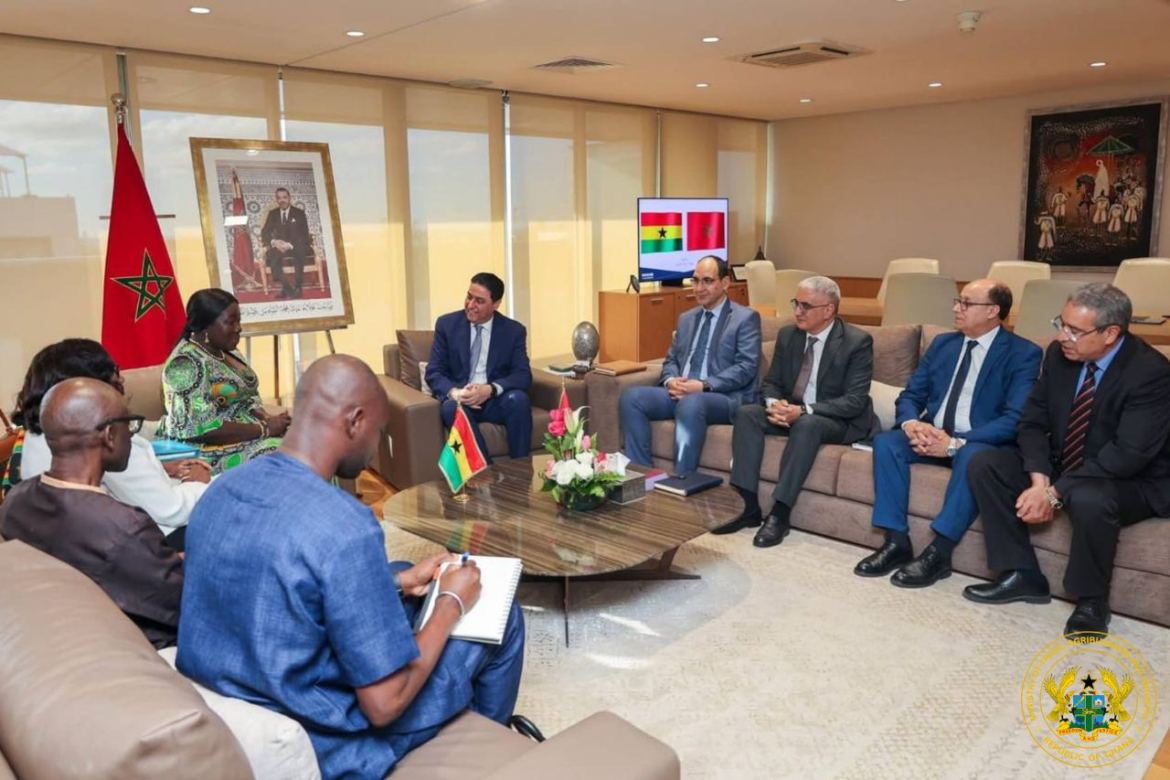
The May 22 forum is invitation-only and targeted at C-suite executives, institutional investors, senior partners, and government stakeholders. Organizers describe it as a strategic effort to strengthen financial and investment linkages between Ghana and Mauritius, moving beyond traditional diplomatic engagement into concrete financial collaboration.
The Mauritian delegation will be led by senior representatives from nearly 20 financial institutions. Mauritius’s status as an IFC is well-established: the jurisdiction offers a stable regulatory environment, a common law legal system, a double taxation avoidance treaty network, and access to capital from global investors. For Ghanaian businesses, Mauritius provides a platform for international capital raising, holding company structures, and investment fund domiciliation.
The forum is expected to focus heavily on Ghana’s financial services sector, including banking, insurance, fintech, investment management, legal services, and corporate advisory. But the discussions will extend beyond financial services to include financing models for industrial growth: debt capital, equity financing, mezzanine structures, bridge financing, private equity, venture capital, insurance, and fund domiciliation opportunities.
Organizers anticipate concrete investment outcomes, including Memoranda of Understanding, Letters of Intent, and structured financing partnerships. The event’s focus on outcomes rather than mere networking distinguishes it from typical investment promotion events. Previous iterations of the West African investment corridor initiative in Lagos and Abidjan reportedly generated significant follow-on transactions.
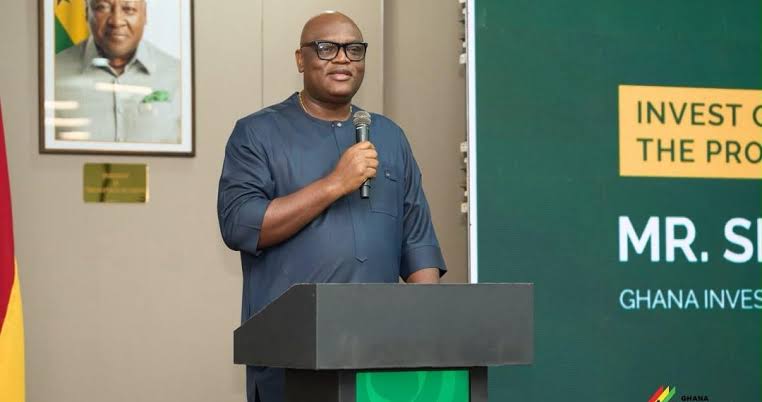
At the policy level, the forum will be attended by Mauritius’s Minister of Financial Services and Economic Planning, Dr. Jyoti Jeetun, signaling high-level political backing for deeper economic engagement with Ghana. The Chief Executive Officer of the GIPC, Mr. Simon Madjie, is also expected to participate, reinforcing government efforts to position Ghana as a preferred investment destination within the sub-region.
The timing is significant. Ghana recently completed its IMF program reviews, stabilized its currency near GH¢11 per dollar, and saw its banking sector capital adequacy ratio rise to 17.5%. These metrics matter to international investors who previously viewed Ghana as high-risk. Mauritius, which has its own sophisticated financial ecosystem, is positioning itself to intermediate capital flows into Ghana as the risk perception improves.
Analysis & Implications: Why Mauritius and Why Now
Mauritius’s interest in Ghana is not accidental. The island nation has long served as a conduit for investment into Africa, particularly into India, South Africa, and East Africa. Its double taxation treaties, investment promotion and protection agreements, and well-regulated financial services sector have made it a preferred jurisdiction for holding companies and investment funds. However, its West African exposure has been relatively limited compared to its East and Southern African presence.

Ghana offers Mauritius several strategic advantages. First, Ghana is English-speaking with a common law legal system, which aligns with Mauritius’s legal framework. Second, Ghana has a relatively stable democracy and a track record of peaceful transitions of power. Third, Ghana’s economy is diversified—gold, oil, cocoa, and a growing services sector—offering multiple entry points for investment. Fourth, Ghana’s recent macroeconomic stabilization has reduced perceived risk, making it more attractive for institutional investors.
For Ghana, the engagement with Mauritius offers access to capital markets that might otherwise be out of reach. Ghanaian companies seeking to raise international debt or equity often face high transaction costs and limited investor awareness. Using Mauritius as a platform—by setting up a Mauritius-incorporated holding company that then invests in Ghana—can reduce those costs, provide access to a broader investor base, and offer legal protections under Mauritius’s investment treaties.

The Accra Street Journal notes that the Mauritius-Ghana investment corridor is not new; several Ghanaian companies already use Mauritius structures for international operations. However, the forum represents a systematic effort to scale that corridor, moving from ad hoc arrangements to a structured partnership. The participation of nearly 20 financial institutions suggests that the Mauritian private sector sees commercial opportunity, not just diplomatic goodwill.
The broader context is Africa’s need for long-term capital. The African Development Bank estimates that the continent requires 130billionto170 billion annually for infrastructure, but only half that amount is mobilized. Traditional sources—official development assistance, multilateral development banks, Chinese loans—are under pressure. Private capital, including from institutional investors such as pension funds and insurance companies, must fill the gap. Mauritius, as a regulated IFC, can help channel that capital.
The selection of Ghana as the final destination of the West African roadshow—after Lagos and Abidjan—is telling. Lagos is Africa’s largest city and Nigeria’s commercial capital; Abidjan is Francophone West Africa’s economic hub. That Ghana was chosen ahead of other Anglophone West African countries (e.g., Senegal, Côte d’Ivoire is Francophone but included) suggests that investors view Ghana’s recent reforms as credible. However, Ghana must not become complacent; competition for investment capital is intense, and other West African countries are also improving their investment climates.
What This Means for Ghanaian Businesses, Financial Institutions, and Policymakers
For Ghanaian businesses, the Mauritius forum offers practical pathways to international capital. A medium-sized Ghanaian manufacturing company seeking to expand might find that local bank lending is limited or expensive. By establishing a Mauritius holding company, it could raise debt from international investors (through a bond issuance) or equity from private equity funds. The Mauritius structure provides a familiar, regulated environment that international investors trust.
For Ghanaian financial institutions, the forum offers partnership opportunities. Mauritian banks and fund managers may seek to co-invest with Ghanaian counterparts, providing capital and expertise. Ghanaian banks could access wholesale funding from Mauritius-based institutions, reducing their reliance on local deposits and allowing them to lend more. Insurance companies could reinsure through Mauritius-based reinsurers, improving risk management.
For Ghanaian policymakers, the forum is a validation of recent reforms but also a reminder of unfinished business. Investors will be watching for signals that Ghana can sustain its macroeconomic stability, maintain its policy rate trajectory, and avoid pre-election fiscal slippage. The forum’s outcomes will depend on Ghana’s ability to demonstrate that the 2025 gains are durable, not temporary.
The GIPC’s role is particularly important. As the government agency responsible for promoting and facilitating investment, the GIPC must ensure that Ghana’s investment climate is attractive not only to Mauritian intermediaries but to the ultimate investors they represent. This means addressing persistent concerns: unreliable power supply, slow customs clearance, corruption perceptions, and contract enforcement delays. A Mauritius holding company cannot fix these operational challenges; Ghana must.
The Ministry of Finance and the Bank of Ghana should also take note. Increased cross-border capital flows through Mauritius structures could affect Ghana’s balance of payments, exchange rate, and tax revenues. While the benefits of investment outweigh the costs, policymakers must ensure that the structures are not used for illicit financial flows or tax avoidance that deprives Ghana of legitimate revenue. Double taxation agreements exist to prevent double taxation, not to enable no taxation.
For the broader Ghanaian economy, the Mauritius engagement could support the government’s industrialization agenda. The 24-hour economy proposal, the mining localization policy, and the cocoa domestic bond issuance all require capital. If Mauritius-based funds can be channeled into these priorities, the forum will have delivered tangible results.
Wider Context: Africa’s International Financial Centres and Investment Competition
Mauritius is not the only African IFC. South Africa’s Johannesburg remains the continent’s largest financial centre, with deep capital markets and sophisticated institutions. Kenya’s Nairobi is emerging as a regional hub for East Africa. Rwanda’s Kigali International Financial Centre (KIFC) has been aggressively marketing itself as a gateway to Central and East Africa. Nigeria’s Lagos has ambitions but faces governance and infrastructure constraints.

What distinguishes Mauritius is its specialization in cross-border structuring and fund domiciliation. Mauritius has double taxation agreements with over 40 countries, including several African nations. Its legal system is based on English common law and French civil law, giving it flexibility. Its regulatory environment is well-regarded by international investors. And its political stability, despite being a small island, is a significant advantage.
Ghana has aspirations to become a regional financial hub but recognizes that it cannot compete with Mauritius on its terms. Instead, Ghana’s strategy should be complementary: use Mauritius as a platform for international capital, while developing domestic financial infrastructure (capital markets, payment systems, credit bureaus) that makes Ghana an attractive destination for the ultimate investment.
The competition for investment capital is intensifying. Western countries are imposing stricter anti-money laundering and counter-terrorism financing rules, making it harder for African businesses to access international banks directly. IFCs like Mauritius provide an intermediary layer that satisfies compliance requirements. Ghana must ensure that its own compliance regime is robust enough to satisfy international partners, or risk being bypassed.
The broader geopolitical context also matters. China is a major investor in Africa but through state-owned enterprises, not private capital. Western investors are increasingly interested in Africa but are risk-averse. Mauritius, as a neutral jurisdiction with strong ties to both Western and African markets, can bridge this gap. The Accra forum is a test of whether that bridging function can deliver real investment.
Outlook / What Happens Next
The May 22 forum is a one-day event, but its outcomes will unfold over months and years. The immediate deliverables are MOUs and Letters of Intent—non-binding agreements that signal intention. The real test is whether those intentions translate into actual transactions: loans disbursed, equity invested, bonds issued.
For Ghana, the next steps are clear. First, ensure that the GIPC and Ministry of Finance follow up aggressively with the Mauritian delegation, turning expressions of interest into concrete proposals. Second, address any regulatory or operational bottlenecks that Mauritian investors identify during the forum. Third, use the event to build a pipeline of bankable projects that can absorb the capital.
For Mauritian financial institutions, the decision to engage with Ghana is a commercial bet. They will assess Ghana’s political risk, macroeconomic stability, regulatory environment, and specific investment opportunities. Positive outcomes will lead to more engagement; negative experiences will deter future interest. The forum is an introduction, not a conclusion.
The involvement of Mauritius’s Minister of Financial Services and Economic Planning signals that Port Louis sees Ghana as a priority market. Similarly, the GIPC’s participation signals that Accra sees value in the partnership. The alignment of political will is necessary but not sufficient; execution matters.
For the Accra Street Journal’s readers, the Mauritius forum is a reminder that Ghana’s economic recovery is being noticed. International investors are taking a second look. Whether they invest depends on whether Ghana can sustain its reforms, maintain its stability, and deliver on its promises. The country has the opportunity. The responsibility to seize it lies in Accra.
Source: Accra Street Journal
Last Updated on May 12, 2026 by Samuel Kwame Boadu
Disclaimer: Some content on Accra Street Journal may be aggregated, summarized, or edited from third-party sources for informational purposes. Images and media are used under fair use or royalty-free licenses. Accra Street Journal is a subsidiary of SamBoad Publishing Hub under SamBoad Business Group Ltd, registered in Ghana since 2014.
For concerns or inquiries, please visit our Privacy Policy or Contact Page.

Samuel Kwame Boadu is a Ghanaian media entrepreneur and storyteller with a passion for amplifying urban voices and uncovering everyday truths. He is the Editor-in-Chief and Founder of Accra Street Journal, a dynamic digital platform dedicated to capturing the pulse of Ghana’s capital—its people, culture, challenges, business, sports and innovations.
Use the following reference when citing or referencing this article.
Your feedback helps us improve our journalism.
Report an Error
Help us maintain accuracy. Let our editorial team know if you spot an issue in this article.
Report a problem with this article