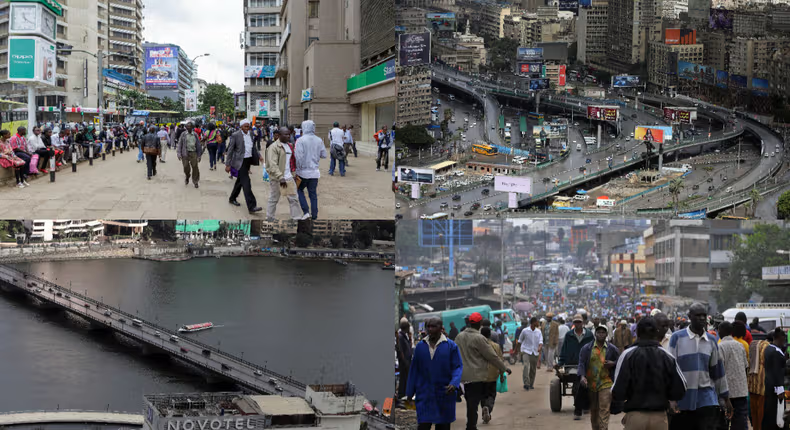
Sub-Saharan Africa has the largest informal workforce in the world, with nearly 88% of workers operating outside the formal economy, a trend that is weakening government finances, limiting economic growth, and making it harder for countries to improve their creditworthiness, according to a new report from Moody’s Ratings.
The ratings agency said informal employment in Sub-Saharan Africa accounts for a median 88% of total employment, compared with around 40% globally. It is also estimated that the region’s informal economy represents about 36% of official GDP, significantly higher than the global average of roughly 25%. The findings come as African governments face growing pressure to raise domestic revenue amid rising debt-servicing costs, shrinking development aid budgets, and increasing demands for spending on infrastructure, healthcare, and education.

Moody’s noted that while informal work provides livelihoods for millions of people and can help households absorb economic shocks, the broader economic consequences are substantial. Large informal economies constrain fiscal capacity, productivity growth, and policy effectiveness,” the report said. The agency also found that around 41% of potential VAT revenue goes uncollected across Africa, compared with 23% in Europe, despite the median corporate tax rate in Sub-Saharan Africa being about 30%—the highest among major global regions.
📢 GET A DETAILED ARTICLES + JOBS
Join ASJ's WhatsApp Channel and never miss a post or opportunity.

Key Developments: The Scale of Informality, Revenue Loss, and Productivity Drag
The 88% informal employment figure is staggering. Nearly nine out of every ten workers in Sub-Saharan Africa are outside the formal economy. They are not registered, do not pay income tax, and are not covered by social protection (health insurance, pensions, unemployment benefits). They are also not counted in official labour statistics, making it difficult for governments to plan.
The 36% of GDP figure is equally striking. The informal economy is not a marginal activity; it is a substantial portion of economic output. If measured and taxed, it could generate significant revenue. But because it is informal, it operates in cash, evades taxes, and is not subject to regulation.

The revenue loss is substantial. Moody’s estimates that 41% of potential VAT revenue goes uncollected across Africa, compared with 23% in Europe. This is not because tax rates are low; the median corporate tax rate in Sub-Saharan Africa is 30%, the highest among major global regions and above the global median of 25%. The problem is compliance, not rates.
The productivity drag is equally concerning. Informal businesses are typically small, have limited access to financing, technology, and skilled labour, and often struggle to scale up. They contribute less to productivity gains and economic transformation than formal firms. Formalisation would increase productivity, wages, and tax revenues.
The policy effectiveness constraint is less obvious but important. Central banks may find it harder to control inflation because many informal businesses have little access to formal credit markets, weakening the transmission of monetary policy decisions. Fiscal policy is also less effective because tax changes affect only the formal sector.
The variation across countries is significant. Southern African economies such as Mauritius and South Africa perform relatively better, with smaller informal sectors. West and Central African countries tend to have some of the largest informal sectors. Moody’s estimates Nigeria’s informal economy at close to 55% of official GDP, one of the highest levels in Sub-Saharan Africa.
The underlying causes are institutional: weak governance, cumbersome regulations, limited enforcement capacity, and low public trust in government institutions. Businesses and households that receive limited public services often have fewer incentives to comply with tax and regulatory requirements, creating a cycle that reinforces informality.
Analysis & Implications: The Fiscal Constraint, Growth Drag, and Credit Rating Impact
The fiscal constraint is the most immediate consequence. Governments with large informal sectors have smaller tax bases. They rely heavily on indirect taxes (VAT, import duties) and on a narrow pool of formal taxpayers. This leaves them vulnerable to economic shocks and limits their ability to invest in public goods.
The growth drag is the long-term consequence. Informal firms are less productive than formal firms. They cannot access credit, so they cannot invest. They cannot scale, so they cannot create formal jobs. The economy remains stuck in a low-productivity, low-wage equilibrium.
The credit rating impact is the Moody’s-specific angle. Sovereign credit ratings reflect a country’s ability and willingness to repay debt. A large informal sector reduces the tax base, making it harder for the government to generate revenue. It also indicates weak institutions, which suggests that policy may be unpredictable. Both factors weigh on ratings.
The AfDB’s estimate that African countries could mobilize an additional $469 billion in annual revenue through better tax administration, digitalization, and stronger compliance measures is a wake-up call. That is more than the continent receives in aid. Domestic resource mobilization is the key to financing development.

The ATAF’s warnings about tax leakages, weak compliance systems, and illicit financial flows echo the Moody’s findings. The solutions are known: simplify registration, lower compliance costs, use digital tools (e.g., mobile money for tax payments), and improve public services so that citizens see the benefit of paying taxes.
The examples of Benin, Côte d’Ivoire, and Tanzania, where reductions in informality have coincided with improvements in governance indicators and stronger credit fundamentals, show that progress is possible. But formalisation is a gradual process; it takes time, resources, and political will.
The Accra Street Journal notes that Ghana’s informal sector is substantial. The government’s efforts to formalise through the Ghana Card, digital addresses, and business registration systems are steps in the right direction. But enforcement is weak, and compliance is low. The government should consider incentives (e.g., tax holidays for newly formalised businesses) as well as penalties.
What This Means for African Governments, Businesses, and Workers
For African governments, the Moody’s report is a call to action. The status quo is unsustainable. The tax base is too narrow; the debt burden is too high; the need for public spending is too great. Governments must reform tax administration, simplify regulations, and invest in public services to build trust.
For formal businesses, the large informal sector is both a threat and an opportunity. It is a threat because informal businesses evade taxes, undercut prices, and avoid regulations. It is an opportunity because formalisation would level the playing field, reduce unfair competition, and expand the market.
For informal workers, formalisation offers benefits: access to credit, social protection, and legal recourse. But it also imposes costs: registration fees, tax payments, and regulatory compliance. The benefits must outweigh the costs for workers to choose formalisation.
For development partners, the Moody’s report reinforces the importance of domestic resource mobilization. Aid can support reforms, but it cannot replace tax revenue. Partners should focus on technical assistance for tax administration, digitalization, and institutional strengthening.
For credit rating agencies, the report provides a framework for assessing sovereign creditworthiness. Countries that make progress on formalisation will see improvements in their ratings. Countries that do not will continue to face constraints.
The Accra Street Journal’s advice to governments: start with simple, low-cost reforms. Simplify business registration (one-stop shops, online portals). Reduce the cost of compliance (lower fees, fewer forms). Use digital tools (mobile money, electronic filing). Improve public services (health, education, infrastructure) so that citizens see the benefit of paying taxes. And enforce the rules fairly—no exemptions for the politically connected.
Wider Context: The Global Informal Economy and Lessons from Other Regions
Informality is not unique to Africa; it exists globally. The global average of informal employment is approximately 40%. In Latin America, informality ranges from 30% to 70%. In Asia, it is also substantial. But Sub-Saharan Africa’s 88% is the highest.
The reasons for informality are similar across regions: weak institutions, cumbersome regulations, low trust in government, and lack of access to finance. The solutions are also similar: simplify, digitalise, incentivise, and enforce.

The success stories are instructive. Brazil’s SIMPLES program simplified tax registration and payment for micro and small enterprises, leading to increased formalisation. India’s GST (Goods and Services Tax) and digital payment systems reduced the cost of compliance. Rwanda’s one-stop shop for business registration reduced the time and cost of formalisation.
The role of digital technology is critical. Mobile money, digital IDs, and electronic filing systems can reduce the cost of compliance and make it easier for informal businesses to formalise. Ghana’s Ghana Card and mobile money penetration are assets; the government should use them.
The Accra Street Journal’s conclusion: the Moody’s report is a warning. Sub-Saharan Africa’s large informal economy is a drag on growth, a constraint on fiscal capacity, and a barrier to creditworthiness. The problem is well-diagnosed; the solutions are known. The missing ingredient is political will. Governments must reform, simplify, digitalise, and enforce. The cost of inaction is high; the benefits of action are substantial. The time to act is now.
Source: Accra Street Journal
Last Updated on June 7, 2026 by Samuel Kwame Boadu
Disclaimer: Some content on Accra Street Journal may be aggregated, summarized, or edited from third-party sources for informational purposes. Images and media are used under fair use or royalty-free licenses. Accra Street Journal is a subsidiary of SamBoad Publishing Hub under SamBoad Business Group Ltd, registered in Ghana since 2014.
For concerns or inquiries, please visit our Privacy Policy or Contact Page.

Samuel Kwame Boadu is a Ghanaian media entrepreneur and storyteller with a passion for amplifying urban voices and uncovering everyday truths. He is the Editor-in-Chief and Founder of Accra Street Journal, a dynamic digital platform dedicated to capturing the pulse of Ghana’s capital—its people, culture, challenges, business, sports and innovations.