From a single Rush Energy Drink launch in 2013 to over 60 trusted brands, three ultramodern manufacturing facilities across Ghana and Burkina Faso, a workforce exceeding 5,000, and a new 80,000-bottles-per-hour packaging line in Kumasi, Twellium has executed one of the most rapid and comprehensive industrial expansions in West African history. With investments in environmental sustainability (a GHS3 million effluent treatment plant), partnerships with global technology leaders (Sidel, Krones, Tetra Pak), and a flagship Verna Mineral Water brand whose “Changing Lives” CSR initiative has earned endorsements from the Ghana Medical Association, the Lebanese-Ghanaian family-owned conglomerate is redefining what “Made in Africa” means—proving that patient capital, vertical integration, and a deep understanding of the African consumer can build a manufacturing empire in just over a decade.
Executive Introduction
In the annals of Ghanaian manufacturing, the story of Twellium Industrial Company Ltd stands out as a testament to vision, speed, and scale. Founded in 2013 by Lebanese brothers Hussein and Hassan Kesserwani—engineers and international business graduates raised in the United States—the company entered a market dominated by multinational giants like Coca-Cola and Nestlé, armed with little more than a single energy drink and a conviction that “Made in Africa” could mean world-class quality.

Eleven years later, Twellium has not only survived; it has thrived. The company has expanded from a single product to over 60 brands spanning non-alcoholic beverages, mineral water, biscuits, confectionery, and baked goods. Its flagship Verna Mineral Water is one of Ghana‘s most trusted brands, supported by a powerful “Changing Lives” CSR initiative that has earned endorsements from the Ghana Medical Association. Its beverage portfolio includes consumer favourites such as Bigoo (a household name in carbonated soft drinks), American Cola, Planet Drinks, Rush Energy, and Dr. Malt. And its McBerry line of biscuits, cakes, and cookies has made Twellium a major force in Ghana’s bakery industry.
📢 GET A DETAILED ARTICLES + JOBS
Join ASJ's WhatsApp Channel and never miss a post or opportunity.

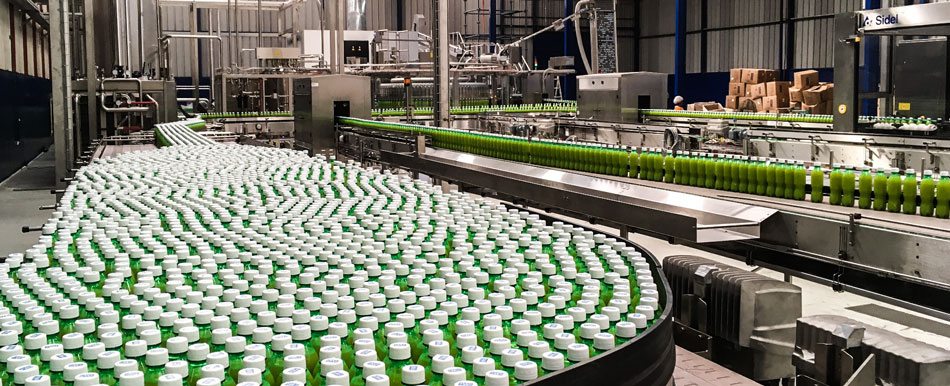
The company‘s physical footprint is extraordinary. Twellium operates three ultramodern facilities—in Accra, Kumasi, and Bobo-Dioulasso (Burkina Faso)—employing advanced machinery from global leaders such as Sidel, Krones, GEA, Tonelli, Imaforni, and Tetra Pak. The newly commissioned Kumasi facility, developed in partnership with Sidel, features Africa‘s fastest complete PET water line, producing 80,000 bottles per hour, alongside a high-speed carbonated soft drink line capable of 65,000 bottles per hour. All plants are FDA-approved, GSA-authorised, and certified under ISO 9001:2015, HACCP, and Halal standards, ensuring safety, consistency, and premium quality.
Twellium‘s workforce has grown to over 5,000 employees, with the company providing livelihoods for more than 10,000 families indirectly. The company exports locally produced goods to over 10 West African countries, disrupting the long-standing practice of importing finished goods into Ghana. It has invested GHS3 million in an Effluent Treatment Plant (ETP) at its Adjen Kotoku factory to treat industrial waste water, demonstrating a commitment to environmental sustainability.

For investors, policymakers, and business analysts, Twellium Industrial Company Ltd represents a case study in Lebanese-Ghanaian entrepreneurship, rapid industrialisation, and vertical integration. It is a family-owned conglomerate that has successfully competed with multinational giants by combining global technology, local understanding, and a long-term perspective.
This ASJ profile examines the company‘s 2013 founding, its three manufacturing facilities, its extensive brand portfolio, its import and export trade activity ($6.62 million Senegal subsidiary imports), its environmental and social investments, the leadership of Hussein and Hassan Kesserwani and Chief Marketing Officer Ali Ajami, and the critical question: As Twellium expands its footprint across West Africa, can it maintain the quality, innovation, and community focus that fuelled its meteoric rise?
Company Overview: The Kesserwani Brothers‘ Vision
The Genesis: 2013 and the Rush Energy Drink Launch
Twellium Industrial Company Limited was founded in 2013 by brothers Hussein Kesserwani and Hassan Kesserwani. The brothers, who have backgrounds in engineering and international business and were raised in the United States, brought a unique perspective to the Ghanaian manufacturing sector: they understood Western quality standards and business practices, but they also recognised the immense potential of the African market.
The company entered the Ghanaian beverage market in September 2013 with a focused product line: Rush Energy Drink, Original American Cola, Planet Range, Bubble Up Lemon Lime, and Verna Mineral Water. The initial strategy was to establish a foothold in the highly competitive non-alcoholic beverage sector, competing directly with established global brands.
The gamble paid off. By focusing on quality, affordability, and local relevance, Twellium quickly gained consumer acceptance. Production commenced in earnest on February 4, 2014, marking the official start of the company‘s manufacturing operations.
Ownership and Leadership
Twellium is a privately held family-owned company, with Mr. Hussein Kesserwani and Mr. Hassan Kesserwani as the co-owners. The brothers remain actively involved in the strategic direction of the business.
Key Leadership Figures:
| Name | Position | Background |
|---|---|---|
| Hussein Kesserwani | Co-Owner | Engineering background; raised in the United States |
| Hassan Kesserwani | Co-Owner | International business background; raised in the United States |
| Ali Ajami | Chief Marketing Officer | Public face of the company‘s expansion and CSR initiatives |
Ali Ajami, the Chief Marketing Officer, has been the public spokesperson for many of Twellium‘s major announcements, including the commissioning of the GHS3 million Effluent Treatment Plant and the company‘s accolades at the Ghana Beverage Awards.
The Company‘s Three Manufacturing Facilities
Twellium operates three ultramodern manufacturing facilities across West Africa:

| Location | Status | Key Features |
|---|---|---|
| Accra, Ghana | Operational (since 2014) | Original facility; houses beverage production lines and bakery operations |
| Bobo-Dioulasso, Burkina Faso | Operational | Serves the Francophone West African market |
| Kumasi, Ghana | Commissioned (2024) | Ultra-modern greenfield project; features Africa‘s fastest PET water line (80,000 bottles/hour) and a high-speed CSD line (65,000 bottles/hour); developed in partnership with Sidel |
All three facilities use advanced machinery from global leaders such as Sidel, Krones, GEA, Tonelli, Imaforni, and Tetra Pak. The plants are FDA-approved, GSA-authorised, and certified under ISO 9001:2015, HACCP, and Halal standards.
Workforce and Employment Impact
| Metric | Value |
|---|---|
| Direct Employees | 5,000+ |
| Families Supported Indirectly | 10,000+ |
| Company Size Classification | 5,000-10,000 employees (by one estimate) |
Twellium has become a major employer in Ghana‘s manufacturing sector. Chief Marketing Officer Ali Ajami noted that the company provides employment for more than 5,000 Ghanaians, with the workforce steadily increasing. The company‘s expansion into Kumasi has created additional job opportunities in the Ashanti Region.
Contact Information
-
Headquarters Location: Nsawam Road, Accra, Ghana
-
HQ Phone: +233249717777
-
Website: twellium.com
The Brand Portfolio: Over 60 Products and Market Leadership
Twellium‘s product portfolio has expanded dramatically from its humble beginnings. The company now produces over 60 different brands and flavours across multiple categories.
Beverages: The Core Engine
Twellium‘s beverage portfolio is extensive, covering carbonated soft drinks, energy drinks, malt-based drinks, juices, and mineral water.
| Brand | Category | Market Position |
|---|---|---|
| Verna Mineral Water | Natural mineral water | Flagship product; one of Ghana‘s most trusted water brands; powerful “Changing Lives” CSR initiative |
| Rush Energy Drink | Energy drink | Original launch product; competes in the growing energy drink segment |
| Bigoo | Carbonated soft drink (Cola, Cocktail, and other flavours) | Household name; leading Ghana‘s carbonated soft drink market |
| American Cola | Carbonated soft drink | Competes directly with Coca-Cola and Pepsi |
| Planet Drinks | Carbonated soft drinks | Established brand in the portfolio |
| Bubble Up Lemon Lime | Carbonated soft drink | Licensed from Monarch Beverage Company |
| Slemfit Water | Mineral water | Verna‘s sister brand |
| Chale Juices | Fruit juices | Targets the growing juice segment |
| Dr. Malt | Malt-based beverage | Competes in the malt drink category |
| Rasta Malt | Malt-based beverage | Another malt offering |
| Run Energy | Energy drink | Extends the energy drink line |
| Xplus Energy | Energy drink | Premium energy offering |
| Pippo | Carbonated soft drink | Targets younger consumers |
Sources: The High Street Business
Verna‘s “Changing Lives” Initiative:
Verna Mineral Water is more than a product; it is a platform for social impact. The brand‘s “Changing Lives” initiative has supported healthcare, education, and vulnerable communities nationwide. The programme has earned multiple CSR awards and endorsements from reputable institutions, including the Ghana Medical Association. The appointment of Dr Louisa Ansong-Satekla as Brand Ambassador for Verna Mineral Water further solidified the brand‘s premium positioning.
Bakery and Confectionery: The McBerry Success Story
Twellium has successfully diversified into the bakery and confectionery sector with its McBerry brand. The company now offers over 100 varieties of biscuits, cakes, and cookies, including:
-
Creamy and chocolaty wafers
-
Crackers
-
Bourbon biscuits
-
Soda crackers
-
Donuts
-
Sliced cakes
-
Cream centre-filled cakes
This diversification has made Twellium a major force in Ghana‘s confectionery space, competing with established international and local brands.
The Kumasi Mega-Factory: A Sidel-Powered Packaging Hub
In October 2024, Twellium announced a landmark partnership with Sidel, a global leader in packaging solutions, to develop a new ultra-modern facility in Kumasi, Ghana. This greenfield project represents a significant capital investment and a strategic expansion of Twellium‘s manufacturing capacity.
Technical Specifications
The Kumasi facility features two complete PET packaging lines:

| Line | Product Type | Capacity | Key Technology |
|---|---|---|---|
| Water Line | Still water (Verna, Slemfit) | 80,000 bottles/hour | Africa‘s fastest complete PET water line; uses Sidel‘s Combi solution (blow moulding, filling, and capping integrated into one compact unit) |
| CSD Line | Carbonated soft drinks (Bigoo, American Cola, Planet, Bubble Up) | 65,000 bottles/hour | Also uses Sidel‘s Combi solution; features EvoDECO Roll-Fed labeller applying QR codes to bottle caps for enhanced traceability and regulatory compliance |
Additional features of the facility include:
-
A modern water treatment room
-
An automated cleaning-in-place (CIP) system
-
Flexibility to produce different bottle sizes and beverage types
Ali Ajami, Twellium‘s Marketing Director, commented:
“Sidel‘s complete PET packaging lines for Twellium ensure we meet production demands efficiently, allowing us to keep up with the constant increase in demand. This collaboration drives efficiency and supports regional employment, further establishing Twellium as a leader in Ghana‘s beverage industry.”
Import and Export Trade: The Senegal Subsidiary and Regional Expansion
Twellium Industrial Company Limited Senegal Sas
Twellium has established a subsidiary in Senegal, Twellium Industrial Company Limited Senegal Sas, to serve the Francophone West African market and facilitate regional trade.
Trade Data (December 2024 – November 2025):
| Metric | Value |
|---|---|
| Import Turnover | $6.62 million |
| Export Turnover | $439,700 |
| Import Shipments | 88 |
| Export Shipments | 5 |
Top Import Sources for the Senegal Subsidiary:
| Country | Share of Import Value |
|---|---|
| China | 35.13% |
| Lebanon | 21.40% |
| Ghana | 8.60% |
| India | 7.12% |
| Brazil | 6.32% |
Analysis: The High Street Business
The Senegal subsidiary‘s trade data reveals that Twellium sources a significant portion of its raw materials and packaging inputs from China (35%) and Lebanon (21%)—likely leveraging the Kesserwani brothers‘ Lebanese connections. Ghana itself supplies 8.6% of the subsidiary‘s imports, indicating some intra-group trade between the Ghanaian and Senegalese operations.
Regional Exports: “Made in Ghana” Across West Africa
Twellium exports its locally manufactured products to over 10 West African countries. This export activity is a direct challenge to the historical pattern of importing finished goods into Ghana; Twellium has reversed the flow, sending “Made in Ghana” products to neighbouring nations.
The company‘s Chief Marketing Officer has encouraged other businesses to take advantage of Ghana‘s conducive business environment to export their products to neighbouring countries, helping to boost Ghana‘s economy and create more employment opportunities.
Environmental Sustainability: The GHS3 Million Effluent Treatment Plant
In June 2024, Twellium commissioned a GHS3 million Effluent Treatment Plant (ETP) at its Adjen Kotoku factory. The plant is designed to treat industrial waste water from the factory before it is safely discharged.
Key Features of the Effluent Treatment Plant:
-
Processes organic and inorganic pollutants
-
Removes all impurities generated from the factory
-
Treated water can be used by neighbouring farmers to water their crops and for other domestic uses
Ali Ajami, Chief Marketing Officer, stated:
“The Company was committed to environmental sustainability and would continuously explore innovations that would ensure that its operations did not harm the environment.”
The ETP is part of Twellium‘s broader commitment to responsible manufacturing. The company‘s facilities operate under ISO 9001:2015, HACCP, and Halal certifications, ensuring that quality and safety are maintained alongside environmental responsibility.
Awards and Industry Recognition
Ultimate Best Manufacturing Company of the Year (2025)
Twellium was awarded the Ultimate Best Manufacturing Company of the Year at the Ghana Beverage Awards 2025, solidifying its position as one of Ghana‘s most influential manufacturing companies.
The award reflects a decade of growth, innovation, and a diverse product portfolio that continues to shape consumer lifestyles in Ghana and across West Africa.
Other Recognitions
-
Verna Mineral Water: Multiple CSR awards for its “Changing Lives” initiative
-
Endorsements: Ghana Medical Association endorsement for Verna‘s quality and social impact
As the company noted in its press release: “Twellium‘s story is one of vision, investment, and a deep understanding of the African consumer.”
The “Made in Africa” Philosophy: Local Sourcing and Community Impact
Twellium is committed to sourcing raw materials from local farmers, empowering the African agricultural sector. This vertical integration approach reduces import dependence, supports local economies, and ensures supply chain resilience.
The company‘s Twellium Foundation is the vehicle for its broader corporate social responsibility initiatives, making substantial contributions to society. The “Changing Lives” initiative, run through the Verna brand, has supported healthcare, education, and vulnerable communities nationwide.
Stonebwoy‘s Endorsement:
In June 2024, Ghanaian Afro-dancehall sensation Stonebwoy toured the Twellium factory site prior to the announcement of his wife, Dr Louisa Ansong-Satekla, as Brand Ambassador for Verna Mineral Water. Stonebwoy, who was crowned Artist of the Year at the Telecel Ghana Music Awards (TGMA), commended Twellium for investing in Ghana:
“Industrialisation was the surest way to create employment opportunities… Employment is going on here and the number of staff is increasing. I am happy to find some of the people that I lived in the same community with secure employment here.”
Market Position and Competition
Twellium‘s Competitive Advantages
1. Vertical Integration Across Multiple Categories
Unlike many competitors that focus on beverages or biscuits alone, Twellium manufactures across both categories, capturing economies of scope and cross-selling opportunities.
2. State-of-the-Art Manufacturing Technology
The partnership with Sidel (80,000 bottles/hour water line, 65,000 bottles/hour CSD line) gives Twellium a significant cost and efficiency advantage over smaller local competitors.
3. Multiple Geographic Locations
Facilities in Accra, Kumasi, and Bobo-Dioulasso, plus a subsidiary in Senegal, provide regional reach and supply chain resilience.
4. Strong Brand Equity
Verna Mineral Water is one of Ghana‘s most trusted brands. Bigoo is a household name in carbonated soft drinks.
5. “Made in Africa” Positioning
The company‘s commitment to local sourcing, local employment, and “Made in Ghana” exports resonates with consumers who value local manufacturing.
6. Export Orientation
Exports to over 10 West African countries generate foreign exchange and reduce Ghana‘s trade deficit.
Competitive Landscape
| Competitor | Category | Twellium‘s Advantage |
|---|---|---|
| Coca-Cola Beverages Africa | Carbonated soft drinks | Twellium‘s local ownership and agility |
| Nestlé Ghana | Mineral water, malt drinks | Verna‘s brand equity and CSR |
| Promasidor | Malt drinks, juices | Twellium‘s diversified portfolio (beverages + biscuits) |
| Local bakeries | Biscuits, cakes | McBerry‘s scale and quality consistency |
| Other local water producers | Mineral water | Verna‘s trust and CSR initiatives |
Challenges and Risks
No analysis of Twellium is complete without acknowledging the headwinds it faces as a rapidly expanding manufacturer.
Risk 1: Currency Volatility
Twellium imports raw materials, machinery, and packaging from China, Lebanon, India, Brazil, and other countries. These imports are denominated in foreign currencies (USD, EUR, CNY). The company sells its products in cedis, CFA francs, and other local currencies. The cedi‘s historic volatility compresses margins when local currencies depreciate.
Mitigation: Twellium sources some raw materials locally (from Ghanaian farmers) and exports to over 10 countries, earning foreign exchange to offset import costs.
Risk 2: Competition from Multinationals
Coca-Cola, Nestlé, and other global giants have deeper pockets, established distribution networks, and powerful brands.
Mitigation: Twellium competes on agility, local relevance, and price. Its “Made in Africa” positioning appeals to consumers who prefer local brands.
Risk 3: Supply Chain Complexity
Operating three manufacturing facilities across two countries, plus a subsidiary in Senegal, requires sophisticated logistics. A disruption at any point—raw material supply, shipping, customs—could affect production.
Mitigation: Twellium has diversified its supplier base (China, Lebanon, India, Brazil, Ghana) to reduce dependence on any single source.
Risk 4: Capital Intensity
The Kumasi mega-factory required significant capital investment. Continued expansion will require further capital. As a private family-owned company, Twellium does not have access to public equity markets.
Mitigation: The Kesserwani brothers have access to capital through their Lebanese and international networks. The company‘s profitability and growth trajectory likely support reinvestment.
Risk 5: Regulatory Environment
Changes in import duties, value-added tax, or manufacturing regulations could affect profitability.
Mitigation: Twellium has maintained strong relationships with government agencies, as evidenced by Ali Ajami‘s praise of the government‘s support for exporters.
Risk 6: Environmental Scrutiny
As a large manufacturer, Twellium faces scrutiny over its environmental footprint—water usage, waste water treatment, plastic packaging, energy consumption.
Mitigation: The GHS3 million Effluent Treatment Plant demonstrates a commitment to environmental responsibility. Twellium also uses advanced technology to optimise resource efficiency.
Future Outlook
As of June 2026, Twellium Industrial Company is executing a strategy of capacity expansion, geographic diversification, and brand extension.
The Immediate Agenda (2026-2027)
-
Maximise Kumasi Facility Capacity: Ensure the 80,000 bottles/hour water line and 65,000 bottles/hour CSD line operate at full capacity; expand product range from the Kumasi site.
-
Expand Export Markets: Increase the number of export destinations beyond 10 West African countries; explore opportunities in Central or East Africa.
-
Deepen Bakery Category Presence: Expand the McBerry product line; increase distribution of biscuits, cakes, and cookies across West Africa.
-
Strengthen Senegal Operations: Grow the Senegal subsidiary‘s import and export activity; potentially establish local manufacturing in Senegal.
-
Continue CSR Investment: Expand the “Changing Lives” initiative; deepen relationships with healthcare and education institutions.
-
Sustainability Improvements: Explore solar energy installations, water recycling, and reduced plastic packaging.
The Bull Case (Optimistic)
-
Kumasi Facility Delivers Efficiency Gains: The Sidel-powered lines reduce per-unit production costs by 20-30%. Twellium passes some savings to consumers, gaining market share.
-
Exports Grow to 20+ Countries: Twellium becomes a recognised West African manufacturing champion. Export revenue exceeds 30% of total revenue.
-
McBerry Becomes Market Leader: The biscuit and confectionery line captures 20%+ market share in Ghana, competing effectively with multinational brands.
-
Senegal Subsidiary Scales: Twellium establishes local manufacturing in Senegal, reducing import dependence and capturing the Francophone market.
-
Environmental Leadership Recognised: The Effluent Treatment Plant and other sustainability initiatives earn international certifications, attracting premium customers.
The Bear Case (Pessimistic)
-
Currency Crisis Deepens: The cedi depreciates sharply. Import costs spike. Twellium must raise prices, losing volume to cheaper competitors.
-
Competition Intensifies: Coca-Cola launches aggressive pricing campaigns. Nestlé expands its local manufacturing. Twellium‘s market share erodes.
-
Supply Chain Disruption: Geopolitical tensions or shipping disruptions affect raw material imports from China or Lebanon. Production halts.
-
Over-expansion: The Kumasi facility operates below capacity due to weaker-than-expected demand. The capital investment does not deliver expected returns.
-
Regulatory Headwinds: New taxes or import restrictions increase costs.
The Verdict
Twellium Industrial Company Ltd is the most impressive manufacturing success story in Ghana‘s fast-moving consumer goods (FMCG) sector in the past decade. Founded in 2013 with a single energy drink, the company has grown into a diversified manufacturing powerhouse with over 60 brands, 5,000 employees, three ultramodern facilities, and exports to over 10 West African countries.
The Kesserwani brothers‘ vision—combining Lebanese entrepreneurial capital, American business education, and a deep commitment to “Made in Africa”—has paid off spectacularly. The partnership with Sidel has given Twellium a technological edge, with Africa‘s fastest PET water line producing 80,000 bottles per hour. The GHS3 million Effluent Treatment Plant demonstrates that the company is serious about environmental sustainability. The “Changing Lives” initiative has made Verna Mineral Water a trusted brand with genuine social impact.
For the Ghanaian consumer, Twellium offers affordable, high-quality alternatives to multinational brands. For the Ghanaian economy, Twellium is a major employer (5,000+ direct jobs), a significant taxpayer, and an export earner. For the investor, Twellium is a private, family-owned company—not publicly listed—but its success demonstrates the potential of the Ghanaian manufacturing sector.
Twellium is not trying to be the largest beverage company in West Africa—Nestlé and Coca-Cola hold that title. It is trying to be the most innovative, the most locally rooted, and the most trusted. With a 11-year track record, a 5,000-strong workforce, and a mega-factory in Kumasi, it is well on its way.
As the company‘s slogan suggests, Twellium is Ghana‘s leading company in modern manufacturing. The next decade will determine whether it can translate this national leadership into regional dominance.
FAQ SECTION
1. Is Twellium Industrial Company a Ghanaian-owned company?
Yes. Twellium is a Ghanaian-registered company, wholly owned by Lebanese brothers Hussein Kesserwani and Hassan Kesserwani. However, the brothers have deep ties to Ghana, have invested heavily in the country, and the company‘s operations are proudly “Made in Ghana.” The Kesserwanis were raised in the United States but have chosen to build their manufacturing empire in West Africa.
2. Who is the owner of Twellium?
Twellium Industrial Company Limited is owned by Mr. Hussein Kesserwani and Mr. Hassan Kesserwani, brothers with backgrounds in engineering and international business.
3. When was Twellium founded?
Twellium was founded in 2013 and began production on February 4, 2014.
4. What products does Twellium manufacture?
Twellium manufactures over 60 brands across multiple categories:
-
Beverages: Verna Mineral Water, Bigoo (Cola, Cocktail), Rush Energy Drink, American Cola, Planet Drinks, Bubble Up, Slemfit Water, Chale Juices, Dr. Malt, Rasta Malt
-
Bakery & Confectionery: McBerry biscuits, cakes, wafers, crackers, donuts
5. Where are Twellium‘s factories located?
Twellium operates three ultramodern facilities:
-
Accra, Ghana (original facility)
-
Kumasi, Ghana (new mega-factory, commissioned 2024)
-
Bobo-Dioulasso, Burkina Faso
6. How many employees does Twellium have?
Twellium employs over 5,000 people directly and supports more than 10,000 families indirectly.
7. What is the Kumasi factory‘s production capacity?
The Kumasi facility, developed in partnership with Sidel, features:
-
A water line producing 80,000 bottles per hour (Africa‘s fastest complete PET water line)
-
A carbonated soft drink line producing 65,000 bottles per hour
8. Does Twellium export its products?
Yes. Twellium exports its locally manufactured products to over 10 West African countries, reversing the historical pattern of importing finished goods into Ghana.
9. What is the Effluent Treatment Plant (ETP)?
Twellium commissioned a GHS3 million Effluent Treatment Plant at its Adjen Kotoku factory in June 2024. The plant treats industrial waste water, removing organic and inorganic pollutants before safe discharge. Treated water can be used by neighbouring farmers for irrigation.
10. What are Twellium‘s certifications?
Twellium‘s facilities are FDA-approved, GSA-authorised, and certified under ISO 9001:2015, HACCP, and Halal standards.
11. Who is the Chief Marketing Officer of Twellium?
Mr. Ali Ajami serves as the Chief Marketing Officer and has been the public spokesperson for many of the company‘s major announcements.
12. Is Twellium listed on any stock exchange?
No. Twellium is a privately held family-owned company. It is not listed on any stock exchange.
QUICK FACTS BOX
| Item | Details |
|---|---|
| Founded | 2013 |
| Production Commenced | February 4, 2014 |
| Founders / Owners | Hussein Kesserwani, Hassan Kesserwani |
| Chief Marketing Officer | Ali Ajami |
| Headquarters | Nsawam Road, Accra, Ghana |
| HQ Phone | +233249717777 |
| Industry | FMCG / Food & Beverage Manufacturing |
| Products | Non-alcoholic beverages (water, CSDs, energy drinks, juices, malts), biscuits, cakes, confectionery |
| Number of Brands | 60+ |
| Flagship Brands | Verna Mineral Water, Bigoo, Rush Energy Drink, McBerry |
| Manufacturing Facilities | Accra (Ghana), Kumasi (Ghana), Bobo-Dioulasso (Burkina Faso) |
| Key Technology Partner | Sidel (packaging lines) |
| Production Capacity (Kumasi Water Line) | 80,000 bottles/hour |
| Production Capacity (Kumasi CSD Line) | 65,000 bottles/hour |
| Direct Employees | 5,000+ |
| Indirect Beneficiaries | 10,000+ families |
| Export Markets | 10+ West African countries |
| Senegal Subsidiary Import Turnover | $6.62 million (Dec 2024 – Nov 2025) |
| Key Import Sources | China, Lebanon, India, Brazil |
| Environmental Investment | GHS3 million Effluent Treatment Plant (Adjen Kotoku) |
| Key Certifications | ISO 9001:2015, HACCP, Halal, FDA-approved, GSA-authorised |
| Key Award | Ultimate Best Manufacturing Company of the Year (Ghana Beverage Awards 2025) |
| Key CSR Initiative | Verna “Changing Lives” (endorsed by Ghana Medical Association) |
| Key Brand Ambassador | Dr Louisa Ansong-Satekla (Verna) |
| Website | twellium.com |
Source: Accra Street Journal
Last Updated on June 7, 2026 by Samuel Kwame Boadu
Disclaimer: Some content on Accra Street Journal may be aggregated, summarized, or edited from third-party sources for informational purposes. Images and media are used under fair use or royalty-free licenses. Accra Street Journal is a subsidiary of SamBoad Publishing Hub under SamBoad Business Group Ltd, registered in Ghana since 2014.
For concerns or inquiries, please visit our Privacy Policy or Contact Page.

Samuel Kwame Boadu is a Ghanaian media entrepreneur and storyteller with a passion for amplifying urban voices and uncovering everyday truths. He is the Editor-in-Chief and Founder of Accra Street Journal, a dynamic digital platform dedicated to capturing the pulse of Ghana’s capital—its people, culture, challenges, business, sports and innovations.