EXECUTIVE INTRODUCTION
The physical shop, with its rent advance, its signage, its generator, its display shelves, and its fixed location, was once the non-negotiable foundation of a serious retail business in Accra. To own a shop was to have arrived. Today, an entire generation of Ghanaian retailers, from the solo entrepreneur selling thrifted clothing to the established brand launching a new product line, is arriving without a shopfront at all. Their store is not on the Oxford Street strip or in the East Legon mall. It lives in the palm of the customer’s hand, on the glowing screen of a smartphone, inside the endlessly scrolling feed of Instagram and the intimate, encrypted chat window of WhatsApp.
This is not a marginal, experimental trend. It is a fundamental, structural transformation of the retail landscape, a shift as profound in its implications as the rise of the supermarket or the open-air market. The social media shop has become, for a vast and rapidly growing segment of the Accra market, the primary, and in many cases the only, retail channel. This Accra Street Journal analysis examines the deep economic, social, and technological forces that have driven this revolution. We explore the brutal cost arithmetic that makes the physical shop a prohibitive trap for the new entrepreneur, the unique architecture of trust that the social platform provides in a low-confidence market, the powerful new consumer behaviours that have emerged around the “drop” and the “live sale,” and the sophisticated, informal, and distinctly Ghanaian business models that operate entirely outside the purview of the formal retail industry. The shop is no longer a place. It is a person, a phone, and a perfectly lit photograph. The Accra consumer has migrated from the street to the screen, and the retail industry will never be the same.

THE ECONOMIC LOGIC: THE DEATH OF THE LEASE AND THE BIRTH OF THE BEDROOM BOUTIQUE
The primary driver of the social media retail revolution is cold, hard, and unforgiving arithmetic. The cost of establishing and operating a physical retail presence in a desirable Accra location has become prohibitive for the vast majority of new market entrants. The landlord’s demand for a multi-year rent advance, often two to three years paid upfront, represents a capital barrier that instantly eliminates all but the well-capitalised or the already wealthy. This single, brutal fact excludes an immense reservoir of entrepreneurial talent from the formal retail economy. The social media shop eliminates this barrier entirely. The “shop” is a corner of the entrepreneur’s bedroom, a rented apartment living room, or a small, inexpensive storage space in a less commercial area. The initial capital is redirected from the landlord’s pocket into product inventory, better photography equipment, and targeted marketing.
📢 GET A DETAILED ARTICLES + JOBS
Join ASJ's WhatsApp Channel and never miss a post or opportunity.

The second layer of the cost advantage is operational. The social media shop does not pay for the branded glass shopfront, the air-conditioning, the expensive lighting, the display shelving, the security guard, or the shop assistant’s salary. These substantial, recurring fixed costs of the physical shop are simply absent from the digital retailer’s income statement. The digital shop is, in a very real sense, a cost structure from another, leaner universe. It is a retail model that is asset-light, overhead-minimal, and capable of being launched with a few hundred cedis of starting capital and a good smartphone. This radical economic efficiency is not a temporary competitive edge; it is a permanent structural advantage that allows the social media retailer to offer compelling prices, to experiment with new product lines with minimal risk, and to operate profitably at a scale that would be impossible for a physical shop burdened with a crippling lease. The bedroom boutique is not a compromise; it is a superior financial architecture for the early-stage retail venture in Accra.
THE TRUST ARCHITECTURE: THE FACE, THE TESTIMONY, AND THE DELIVERY PROOF
The immediate, instinctive objection of the traditional retail thinker to the social media shop is the question of trust. How, they ask, can a customer possibly send their hard-earned mobile money to a stranger behind a screen for a product they have never touched, from a shop they have never visited, with no formal consumer protection or legal recourse? The answer is that the successful social media shop has evolved a sophisticated, multi-layered, and highly effective architecture of trust that is fundamentally different from, but in many ways more powerful than, the trust mechanisms of the anonymous physical shop. The traditional shop relies on the physical permanence of the location as a signal of reliability. The digital shop relies on the personal, public, and continuous performance of the seller’s own identity.

The founder’s face is the primary trust asset. The successful social media seller is not a faceless brand logo. They show their face, daily, on Instagram Stories and live videos. They share fragments of their life, their voice, their personality, their family. They build a parasocial relationship with their audience, a sense of personal connection and familiarity that is far more powerful than the distant, transactional relationship with the anonymous cashier in a supermarket. The second pillar of trust is social proof. The customer testimonial, the screenshot of the WhatsApp conversation with the happy client, the re-posted photograph of the customer wearing the purchased dress, the video of the satisfied buyer unboxing their order—this stream of real, often imperfect, and verifiable evidence of successful transactions builds a cumulative, powerful, and constantly refreshed case for the seller’s honesty and reliability. The third pillar is delivery proof. The video of the neatly packaged parcels, the stack of waybills, the real-time updates on the dispatch process—this logistics theatre visibly demonstrates that the business is active, operational, and fulfilling orders. The social media shop has not solved the trust problem with legal contracts; it has solved it with personal transparency, relentless social proof, and the continuous, public performance of reliability.
THE NEW SALES MECHANICS: THE DROP, THE LIVE SALE, AND THE INSTAGRAM AUCTION
The social media shop has not just changed the cost structure and the trust architecture of retail; it has invented entirely new, and wildly effective, sales mechanics that are native to the digital platform and impossible to replicate in a physical store. The “drop” is the primary event. The seller announces, with days of teaser content, that a curated batch of new stock will be posted to their Instagram feed or WhatsApp status at a precise, pre-announced time—”Friday, 7 PM sharp.” At the appointed moment, the products are revealed. The customer who hesitates loses the item to the faster-fingered competitor in the comments section. The drop creates an intense, concentrated, and highly emotional buying frenzy, a FOMO-driven rush that converts browsers into buyers with an efficiency that a static shop shelf can only dream of.
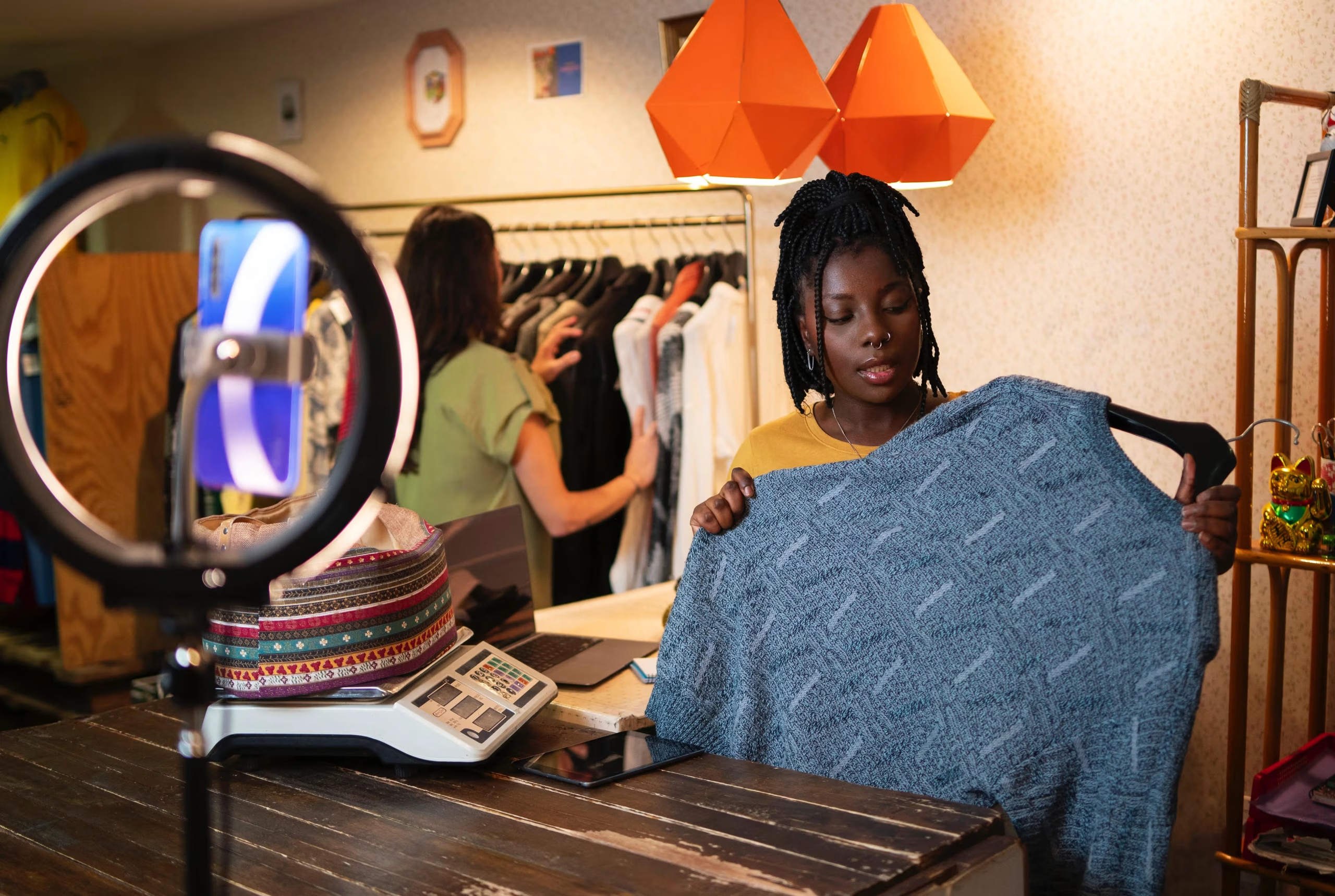
The Instagram Live sale takes this dynamic to an even higher level of intensity. The seller is live, on camera, holding up the product, describing its features, modelling the dress, answering questions in real-time from the scrolling comments. The customer types “MINE” or “SOLD” in the comments, and the item is theirs. The live sale is a fusion of retail, entertainment, and community. It is the modern, digital incarnation of the traditional market woman’s persuasive, personal sales pitch, amplified to an audience of hundreds or thousands. The auction is a third format, where a product is posted and customers bid against each other in the comments over a set period. These mechanics are not gimmicks; they are the core commercial engine of the social media shop, tools that generate urgency, engagement, and a conversion rate that the passive, browse-and-select environment of the physical store struggles to match.
THE LAYERS OF THE SOCIAL COMMERCE ECONOMY: THE SOLO, THE CURATOR, AND THE BRAND
The social media retail landscape in Accra is not a monolith. It has stratified into distinct, coexisting layers, each with its own business model, its own risk profile, and its own growth trajectory. The first and largest layer is the solo, informal entrepreneur. This is the individual who imports a bale of second-hand clothing, or sources a small batch of bags, shoes, or cosmetics, and sells directly through their personal Instagram and WhatsApp. This is often a side hustle, an informal supplement to a formal salary, and it operates almost entirely in the cash-and-mobile-money economy, outside the formal tax and regulatory system.
The second layer is the digital curator. This is a more sophisticated operator who does not just resell generic goods but builds a distinct, curated brand around a specific aesthetic or a targeted customer persona. The “fashion curator” who sources unique, high-quality vintage pieces. The “home curator” who finds and sells artisanal Ghanaian home decor with a modern, minimalist aesthetic. The “beauty curator” who carefully selects and recommends a range of niche skincare products for the Ghanaian climate. The curator adds value through their eye, their taste, and the trust their audience places in their selection. They command a higher price point and a more loyal, engaged following than the generic reseller. The third, and most commercially ambitious layer, is the digital-first brand. This is the entrepreneur who, often having started as a solo reseller or a curator, graduates to developing their own branded product line—the fashion label, the skincare range, the packaged food product—and uses social media not just as their shopfront, but as the primary channel for their entire brand narrative, community building, and direct-to-consumer sales strategy. The social media platform is not a stepping stone to a physical store; it is the permanent, strategic home of the brand.
THE LIMITS OF THE SCREEN: THE PERSISTENT CHALLENGES OF THE DIGITAL SHOP
The social media shop, for all its transformative power, is not a frictionless utopia. It is plagued by a set of persistent, structural challenges that define the experience of both the seller and the buyer. The platform itself is a rented marketplace, subject to the arbitrary whims of the algorithm. A change in Instagram’s feed ranking can, overnight, decimate a shop’s organic reach and its sales, with no recourse or appeal. The competition is ferocious and barrier-free, with new, identical sellers entering the market every day, constantly driving up the cost of customer attention and eroding the pricing power of the established operator.
Customer behaviour, while a source of trust, is also a source of immense frustration. The phenomenon of “window shopping” and the non-committal comment is a constant drain on the seller’s energy and hope. The customer who types “How much?” or “Beautiful!” and then disappears without a trace, the customer who negotiates a price, agrees, and then goes silent, the customer who places an order and fails to pay—these are the daily, grinding psychological costs of the digital shop. The payment and delivery logistics, while vastly improved by mobile money and the rider network, remain a point of friction. The disputed payment, the delayed rider, the damaged goods in transit, the customer who claims the package was never received—these disputes must be resolved personally, directly, and often at a cost to the seller. And the final, and most significant, challenge is scale. The solo, founder-led social media shop, which relies on the personal charisma and constant presence of the owner, hits a hard ceiling. The owner can only be on camera for so many hours. They can only manage so many WhatsApp conversations. The very personalisation that is the business’s greatest competitive advantage becomes its most stubborn constraint on growth.
CONCLUSION: THE MARKETPLACE THAT NEVER CLOSES
The social media shop is no longer the future of Accra retail. It is the dominant present. It has democratised market entry, shattered the tyranny of the physical lease, created new and powerful forms of customer trust and engagement, and birthed an entirely new class of Ghanaian digital entrepreneur. The old dichotomies—formal versus informal, physical versus digital, market woman versus modern retailer—have collapsed into a single, dynamic, and continuously scrolling reality. The most commercially significant shop in Accra today is not the one on the high street; it is the one on the consumer’s phone screen, and it is open every hour of every day.
The strategic challenge for the social media retailer is to professionalise without losing the personal touch that is the source of their advantage. To build a brand that can outlast the algorithm. To develop the operational systems to manage the complexity of scale without sacrificing the intimate, trust-based customer relationship that made them successful in the first place. The physical shop will not disappear. But its function has changed. It is increasingly becoming a supplementary, experiential, and brand-building space for businesses that were born and raised in the digital realm. The centre of gravity of Accra retail has shifted, permanently and irreversibly, from the street to the screen. The market woman has picked up her smartphone, and her voice is reaching a customer who never walked past her stall.

QUICK FACTS BOX: SOCIAL MEDIA SHOPS IN ACCRA
-
Primary Economic Driver: The complete elimination of the prohibitive, multi-year upfront rent advance required for a physical shop, creating a radically lower barrier to entry and an asset-light, overhead-minimal cost structure.
-
Core Platforms: Instagram (the public shop window, visual catalogue, and brand-building tool) and WhatsApp (the private, operational backbone for orders, personal customer relationships, and mobile money payment coordination).
-
Trust Architecture: Replaces the physical shop’s permanence with a powerful, personal, three-part trust system: the founder’s own visible face and personality, relentless social proof via customer testimonials, and transparent delivery and dispatch updates.
-
New Sales Mechanics: The “drop” (a time-limited, urgency-driven product release), the Instagram Live sale (real-time, interactive, and entertaining selling), and the comment-based auction.
-
Market Structure: A stratified ecosystem from the solo informal reseller, to the aesthetic-driven digital curator, to the full-fledged, direct-to-consumer digital-first brand.
-
Key Challenges: Algorithm dependency and instability, intense, barrier-free competition, the high psychological cost of managing non-committal customers, and the hard scalability ceiling of the personal, founder-led model.
FAQ SECTION
1. Why is someone starting a retail business in Accra today more likely to open an Instagram page than a physical shop?
The primary reason is the prohibitive cost. A physical shop demands a multi-year, upfront rent advance that can be hundreds of thousands of cedis. An Instagram shop can be started with a smartphone, some inventory, and a data bundle.
2. How can customers trust a shop that has no physical address in Accra?
Trust is built through a new architecture: the seller constantly shows their face and life, building a personal connection. They provide relentless social proof from customer testimonials, and they publicly post videos and updates proving they are actively fulfilling orders.
3. What kind of products are most commonly sold via social media in Accra?
The most vibrant categories are fashion (new and second-hand), beauty and skincare, wigs and hair products, custom-made footwear, home decor, artisanal foods, and small-scale event accessories.
4. What is an Instagram “drop” and why is it so effective?
A drop is a pre-announced, timed release of a new product collection on a specific day and hour. It creates intense urgency, excitement, and FOMO (fear of missing out), driving a concentrated and high-conversion sales rush that a physical shop cannot replicate.
5. Is it just small businesses, or do big brands also use this model in Accra?
Both. While it began with micro-entrepreneurs, established Ghanaian and even international brands now use Instagram and WhatsApp as a primary, and in some cases exclusive, direct-to-consumer channel for product launches and customer engagement.
6. What is the biggest daily frustration for a social media shop owner in Accra?
The enormous volume of non-committal enquiries. The constant “how much?” messages that are met with silence, and the customers who place an order and then fail to pay, are a significant drain on time and energy.
7. How do social media shops in Accra handle payments and deliveries?
Overwhelmingly, payment is made via mobile money, the universal digital settlement rail. Delivery is handled by the vast network of independent and app-based motorcycle riders that now covers the city.
8. Can a successful social media shop eventually open a physical store?
Yes, and many do, but the physical store’s role changes. It becomes a supplementary space for brand experience, customer trust-building, and in-person collection, rather than the primary, direct sales channel.
9. How does a social media shop deal with a customer who publicly complains?
As detailed in our analysis on complaint management, the smart owner instantly migrates the conversation to a private WhatsApp chat to resolve the issue personally, generously, and without the distorting pressure of a public audience.
10. Is it possible to build a big, scalable business that is only on social media, or is it a dead end?
It is a real and proven model for building a highly profitable, lifestyle business. Scaling to a very large size is the core challenge, as the model is intensely dependent on the founder’s personal presence, but many have successfully made the transition to a full-fledged, digital-first brand with a team.
Source: Accra Street Journal

Last Updated on July 29, 2026 by Samuel Kwame Boadu
Disclaimer: Some content on Accra Street Journal may be aggregated, summarized, or edited from third-party sources for informational purposes. Images and media are used under fair use or royalty-free licenses. Accra Street Journal is a subsidiary of SamBoad Publishing Hub under SamBoad Business Group Ltd, registered in Ghana since 2014.
For concerns or inquiries, please visit our Privacy Policy or Contact Page.

Samuel Kwame Boadu is a Ghanaian media entrepreneur and storyteller with a passion for amplifying urban voices and uncovering everyday truths. He is the Editor-in-Chief and Founder of Accra Street Journal, a dynamic digital platform dedicated to capturing the pulse of Ghana’s capital—its people, culture, challenges, business, sports and innovations.