







14 min read
Introduction
Ghana’s export economy is dominated by gold. In 2025, gold brought in $20.2 billion, more than cocoa and crude oil combined, and accounted for 63% of total export earnings . That is a fact worth sitting with. For a country that has spent decades talking about diversification, the reality is that one commodity has become even more dominant, not less.
But the story of Ghana’s export and international trade industry is not just about gold. It is about cashew exporters winning international awards, pineapple cooperatives shipping to European supermarkets, shea butter producers supplying global cosmetics brands, and a handicrafts sector growing at 500% . It is about the companies that have built the supply chains, certifications, and international relationships that allow Ghanaian products to reach markets from Amsterdam to Dubai.
Key Takeaways
- It is about cashew exporters winning international awards, pineapple cooperatives shipping to European supermarkets, shea butter producers supplying global cosmetics brands, and a handicrafts sector growing at 500% .
- Before the Tree Crops Development Authority was established in 2019, cashew was Ghana's highest non-traditional export earner .
- Ghana's handicrafts sector recorded about 500% growth in exports, making it the fastest-growing segment within the non-traditional export sector, according to the Ghana Export Promotion Authority .
This article looks at the companies and sectors leading Ghana’s export trade. It covers the dominant commodity exporters, the agribusinesses building international reputations, the trade bodies and partnerships facilitating growth, and the persistent challenge of concentration that the Ghana Statistical Service itself has warned about .
The Dominant Exporters: Gold, Cocoa and Oil
The companies that dominate Ghana’s export trade by value are those in the extractive and commodity sectors. Gold, cocoa beans, cocoa products, crude oil, and cashew nuts together accounted for 63.9% of total exports in 2025.
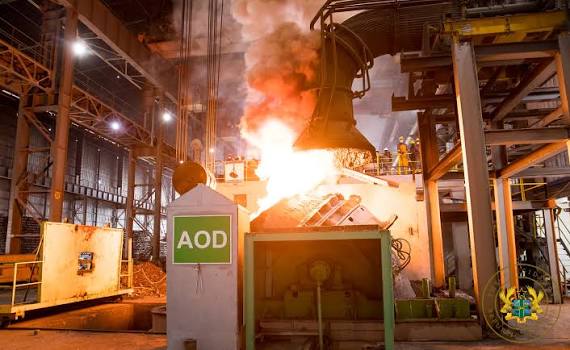
Gold is in a class of its own. Export earnings reached $20.2 billion in 2025, driven by both production volumes and high international prices. The Bank of Ghana reported that gold export receipts hit $12.5 billion in the first half of 2026 alone, up 49% from the same period the previous year . The companies operating in this space are the large mining houses—Newmont, AngloGold Ashanti, Gold Fields, and Zijin—whose operations and export flows were covered in detail in the mining profile. For export trade specifically, the key point is that gold’s dominance has reshaped Ghana’s entire trade profile, from foreign exchange reserves to the cedi’s stability.
Cocoa remains the second major export earner, generating $4.2 billion in 2025 . The sector is regulated by COCOBOD, which sets quality standards and manages the export process. Cocoa products—paste, butter, powder—are increasingly important, with non-traditional cocoa product exports rising from 9.8% of total exports to 27% between 2004 and 2025 . This shift toward processed cocoa reflects a broader push for value addition that runs through Ghana’s export strategy.
Crude oil contributed $3.7 billion in 2025 . Oil exports are managed by the companies operating the Jubilee, TEN, and Sankofa fields. Like gold, oil is a commodity whose export earnings are determined by international prices as much as by production volumes.
The Agribusiness Exporters: Cashew, Pineapple, Shea and More
Below the commodity giants sits a layer of agribusinesses building Ghana’s non-traditional export base. These are the companies that the government’s diversification strategy depends on.
Cashew: Duapa Agri and the Export Award
Duapa Agri Products Ltd. was named Best Cashew Exporter of the Year at the Ghana Tree Crops Excellence Awards in February 2026 . The award recognised the company’s supply chain leadership, export-grade quality, farmer relationships, and compliance with international standards. Duapa’s Managing Director, Curtis Akunfu, described the recognition as reflecting “years of disciplined supply chain leadership” and a commitment to traceability, operational efficiency, and ethical sourcing .
Cashew has become one of Ghana’s most important non-traditional exports. Before the Tree Crops Development Authority was established in 2019, cashew was Ghana’s highest non-traditional export earner . The sector is now receiving renewed investment, with companies like Nadkansco building processing capacity to shift from raw exports to processed kernels. But raw cashew exports remain significant, and companies like Duapa are positioned at the export end of that chain.

Pineapple: SPEG and the European Market
The Sea-Freight Pineapple Exporters of Ghana (SPEG) is a cooperative of 27 producers and exporters that together ship approximately 30,000 tonnes of fresh pineapples per year to Europe . SPEG was founded in 1994 and played a central role in Ghana’s transition from the Smooth Cayenne variety to the MD2 (Sweet Gold) variety that European supermarkets demand.
What makes SPEG significant is its collective model. Individual Ghanaian pineapple exporters could not reliably supply European buyers on their own. SPEG provides its members with GlobalG.A.P. certification support, shared shipping logistics through reefer vessels from Tema Port, quality control infrastructure, and direct market linkages. Member pineapples are sold into Belgium, the Netherlands, Germany, France, and the UK year-round. This is an export model built on cooperation rather than competition, and it has kept Ghana competitive in a demanding market.

Fresh Produce: Srighan Farms and VEPEAG
Srighan Farms (GH) Ltd is one of Ghana’s leading private exporters of fresh agricultural products, ranking among the top three vegetable, yam, and coconut exporters in the country . The company is vertically integrated—grower, packer, exporter, and distributor—supplying UK, France, Canada, and USA markets directly. It has operated for over 25 years and uses an out-grower model that brings smallholder farmers into its supply chain.
The Vegetable Producers and Exporters Association of Ghana (VEPEAG) is the industry body for fresh vegetable exporters. Established in 1997, VEPEAG operates cooling and packaging facilities near Kotoka International Airport, handling up to 10 tonnes of fresh produce per day. Its members export to the UK, Germany, France, Switzerland, the Netherlands, and Dubai . VEPEAG provides market linkage services, price information, and logistics support—the kind of infrastructure that individual small exporters cannot build for themselves.
Shea: AAK and the Value Addition Push
AAK Ghana Limited has operated in Ghana since 1958 and is one of the world’s largest producers and buyers of shea products. In February 2026, AAK signed a Memorandum of Understanding with the Ministry of Food and Agriculture to drive value addition and competitiveness in Ghana’s shea industry .
Under the agreement, AAK committed to expanding its Kolo Nafaso sustainable sourcing programme, which supports over 230,000 women shea collectors, by approximately 70,000 additional women in northern Ghana. The company also expressed intention to invest in local shea processing using world-class technology, creating over 100 jobs and boosting export competitiveness . The shift from exporting raw shea nuts to processed butter and derivatives is central to Ghana’s strategy of capturing more value from its agricultural exports.
Handicrafts: The Fastest-Growing Export Segment
Ghana’s handicrafts sector recorded about 500% growth in exports, making it the fastest-growing segment within the non-traditional export sector, according to the Ghana Export Promotion Authority . Products like ornaments, Adinkra-inspired items, paintings, and woodcrafts are attracting growing international interest. The GEPA deputy CEO noted that changing global consumer preferences have increased demand for handmade and culturally distinctive products .
This is a different kind of export success. It is not driven by large companies or commodity volumes. It is driven by small producers, cultural products, and the global appeal of Ghanaian craftsmanship. It also signals an opportunity: with the right support in branding, quality improvement, and market development, the creative and cultural products sector could become a significant export earner.
The Institutions and Partnerships Facilitating Trade
Individual companies do not export in a vacuum. They depend on institutions that provide certification, market access, financing, and trade facilitation.
The Ghana Export Promotion Authority (GEPA) coordinates export promotion across agricultural and non-traditional sectors. Its strategy focuses on diversifying exports beyond gold and unprocessed cocoa, with a target of $10 billion in non-traditional export earnings by 2030 . GEPA’s partnership with the Netherlands’ Centre for the Promotion of Imports from Developing Countries (CBI), signed in July 2026, is a concrete step toward that goal. The agreement supports export trade facilitation, capacity building, and improved market access for Ghanaian exporters, with horticulture as a priority sector . The Netherlands is Ghana’s leading destination for non-traditional exports, and the partnership is designed to help Ghanaian SMEs meet EU market requirements, access market intelligence, and connect with European buyers.
The Ghana Investment Promotion Authority (GIPA) plays a complementary role, attracting foreign direct investment into export-oriented sectors. Between January 1994 and June 2026, the Bono, Bono East, and Ahafo regions alone attracted 57 registered companies with approximately $383.65 million in FDI, much of it in agriculture, manufacturing, and export trading centred on cashew, timber, and agro-processing . Investors came from India, the UK, US, Canada, China, Lebanon, and Australia. This is the investment side of the export equation: capital flowing into the businesses that will produce and sell Ghanaian goods abroad.
The Bank of Ghana provides the macroeconomic context. Its monetary policy decisions affect the exchange rate, which in turn affects the competitiveness of Ghanaian exports and the cost of imported inputs. The central bank’s trade data also provides the most reliable picture of what is actually being exported and at what value .

Challenges
Ghana’s export trade faces challenges that are structural and persistent.
Concentration risk. The Ghana Statistical Service has explicitly warned that gold’s dominance exposes the country to problems if global gold prices fall . The GSS recommends increasing value addition in gold and cocoa, supporting non-traditional exports, and developing more products for export. This is not a new recommendation. But the data shows that the gap between gold and everything else has widened, not narrowed.
Non-traditional export performance. Despite the growth in cashew, pineapple, shea, and handicrafts, non-traditional exports actually declined by 4.5% to $1.79 billion in the first half of 2025, and by 3.5% in the first quarter of 2026 . The sectors that are supposed to drive diversification are not yet growing fast enough to offset the dominance of gold and cocoa.
Compliance and standards. Exporting to Europe and North America requires meeting strict standards: GlobalG.A.P. for fresh produce, HACCP for processed foods, EUDR for cocoa, and phytosanitary certification across the board . These requirements are necessary for market access, but they are costly for small producers. The companies that succeed are those that can invest in certification and traceability, which often means they are larger or better-organised than their competitors.
Infrastructure and logistics. The high inspection rate at Tema Port, the condition of roads to farming areas, and the cost of energy all affect the competitiveness of Ghanaian exports. A pineapple exporter in the Central Region faces costs that a competitor in Côte d’Ivoire or Costa Rica may not. The logistics bottlenecks covered in the logistics profile are directly relevant to export performance.
Access to finance. Export businesses need working capital to buy from farmers, process, package, and ship before they are paid by international buyers. Small exporters often cannot access the credit they need. The GEPA-CBI partnership and the investment flows tracked by GIPA are addressing this at the margins, but the gap remains large.
Why It Matters to Ordinary Ghanaians
Exports are not just about foreign exchange. They affect what Ghanaians earn and what they can buy.
Jobs. The cashew export sector employs farmers, sorters, shellers, and packers. The pineapple sector employs farm workers, packers, and logistics staff. The shea sector supports hundreds of thousands of women collectors, mostly in northern Ghana . Handicrafts production employs artisans and creatives. These are jobs that exist because there is demand for Ghanaian products abroad.
Farmer incomes. When exporters like Duapa Agri or Srighan Farms build out-grower networks, they give farmers a reliable buyer for their produce. This is different from selling at the farm gate to a middleman who sets the price. Export-grade supply chains require consistent quality and volume, which means farmers get training, inputs, and a market. The income stability that comes with this is significant.
The cedi. Export earnings bring foreign currency into Ghana. When gold, cocoa, and non-traditional exports earn dollars and euros, there is more foreign exchange available to pay for imports. This supports the cedi’s value, which in turn affects the price of imported goods that ordinary Ghanaians buy.
The economy’s stability. A diversified export base is more resilient than one built on a single commodity. The GSS warning about gold concentration is not an academic concern. If gold prices fall sharply, the entire economy feels it. Building cashew, shea, pineapple, handicrafts, and other exports is about reducing that vulnerability.
Future Outlook
The direction of Ghana’s export trade is shaped by two competing forces: the dominance of gold and the slow growth of everything else.
If current trends continue, gold will remain the overwhelming export earner. Non-traditional exports will grow, but not fast enough to change the structure of the economy. The GEPA’s $10 billion target by 2030 will require a significant acceleration from current levels, which sit at under $2 billion for non-traditional exports in the periods reported .
The opportunities are real. The GEPA-CBI partnership could open more doors to European markets for horticultural exporters . The Tree Crops Development Authority’s push for processing could increase the value captured from cashew, shea, and oil palm . The handicrafts sector’s growth shows that cultural products have global appeal . And the investments tracked by GIPA in export-oriented agribusiness suggest that capital is flowing into the sectors that need it .
The risks are equally clear. If global gold prices fall, export earnings will drop sharply. If non-traditional exports continue to decline or stagnate, diversification will remain a slogan rather than a reality. If infrastructure and logistics costs remain high, Ghanaian exporters will struggle to compete with lower-cost producers in other countries.
The wild card is value addition. Ghana has spent years talking about processing more of what it produces before exporting. The shift is happening in cocoa products and cashew, but slowly. If the government’s policies on local processing, the Tree Crops Development Authority’s investments, and private sector initiatives like AAK’s shea processing all come together, the composition of Ghana’s exports could look different by 2030. But the window is narrowing, and the competition is not standing still.
Quick Facts
Topic: Companies Leading Ghana’s Export and International Trade
Total Exports (2025): GH¢402 billion (trade surplus: GH¢148 billion)
Gold Export Earnings (2025): $20.2 billion (63.1% of total exports)
**Cocoa Export Earnings (2025):** $4.2 billion
Crude Oil Export Earnings (2025): $3.7 billion
**Best Cashew Exporter (2026):** Duapa Agri Products Ltd.
**Pineapple Export Cooperative:** SPEG (27 members, ~30,000 tonnes/year)
**Top Fresh Produce Exporter:** Srighan Farms (vegetables, yam, coconut)
**Shea Sector Support:** AAK’s Kolo Nafaso programme (230,000+ women)
**Fastest-Growing Export Segment:** Handicrafts (~500% growth)
**Key Trade Partnership:** GEPA-CBI Netherlands (signed July 2026)
**Non-Traditional Export Target:** $10 billion by 2030
Main Challenge: Gold concentration risk, slow non-traditional export growth
FAQ Section
1. What are Ghana’s biggest exports?
Gold is by far the biggest, earning $20.2 billion in 2025. Cocoa ($4.2 billion) and crude oil ($3.7 billion) are the next largest. Cashew nuts are a major non-traditional export .
2. Which company won Best Cashew Exporter in Ghana?
Duapa Agri Products Ltd. was named Best Cashew Exporter of the Year at the Ghana Tree Crops Excellence Awards in February 2026 .
3. What is SPEG?
The Sea-Freight Pineapple Exporters of Ghana is a cooperative of 27 producers and exporters that ship approximately 30,000 tonnes of pineapples per year to Europe. It provides certification support, shared logistics, and market linkages to its members .
4. Who are the leading fresh produce exporters in Ghana?
Srighan Farms is one of the top three exporters of vegetables, yam, and coconut. VEPEAG is the industry association for fresh vegetable exporters, with cooling and packaging facilities near Kotoka Airport .
5. What is AAK doing in Ghana’s shea industry?
AAK Ghana has operated since 1958 and supports over 230,000 women shea collectors through its Kolo Nafaso programme. It signed an MoU with the Ministry of Food and Agriculture in 2026 to expand local processing and value addition.
6. How fast is Ghana’s handicrafts export sector growing?
About 500%, according to GEPA, making it the fastest-growing segment within the non-traditional export sector .
7. What is the GEPA-CBI partnership?
A Memorandum of Understanding signed in July 2026 between the Ghana Export Promotion Authority and the Netherlands’ Centre for the Promotion of Imports from Developing Countries, aimed at boosting Ghana’s non-traditional exports to the Netherlands and the EU .
8. What is Ghana’s target for non-traditional exports?
GEPA aims to increase non-traditional export earnings to $10 billion by 2030 .
9. Why is gold concentration a concern?
The Ghana Statistical Service has warned that relying heavily on gold exposes the country to problems if global gold prices fall. It recommends value addition and support for non-traditional exports .
10. What challenges do Ghanaian exporters face?
Compliance with international standards (GlobalG.A.P., HACCP, EUDR), logistics bottlenecks at Tema Port, access to finance, and competition from lower-cost producers in other countries.
Source: Accra Street Journal
Last Updated on November 26, 2026 by Samuel Kwame Boadu
Disclaimer: Some content on Accra Street Journal may be aggregated, summarized, or edited from third-party sources for informational purposes. Images and media are used under fair use or royalty-free licenses. Accra Street Journal is a subsidiary of SamBoad Publishing Hub under SamBoad Business Group Ltd, registered in Ghana since 2014.
For concerns or inquiries, please visit our Privacy Policy or Contact Page.

Samuel Kwame Boadu is a Ghanaian media entrepreneur and storyteller with a passion for amplifying urban voices and uncovering everyday truths. He is the Editor-in-Chief and Founder of Accra Street Journal, a dynamic digital platform dedicated to capturing the pulse of Ghana’s capital—its people, culture, challenges, business, sports and innovations.
Use the following reference when citing or referencing this article.
Your feedback helps us improve our journalism.
Report an Error
Help us maintain accuracy. Let our editorial team know if you spot an issue in this article.
Report a problem with this article