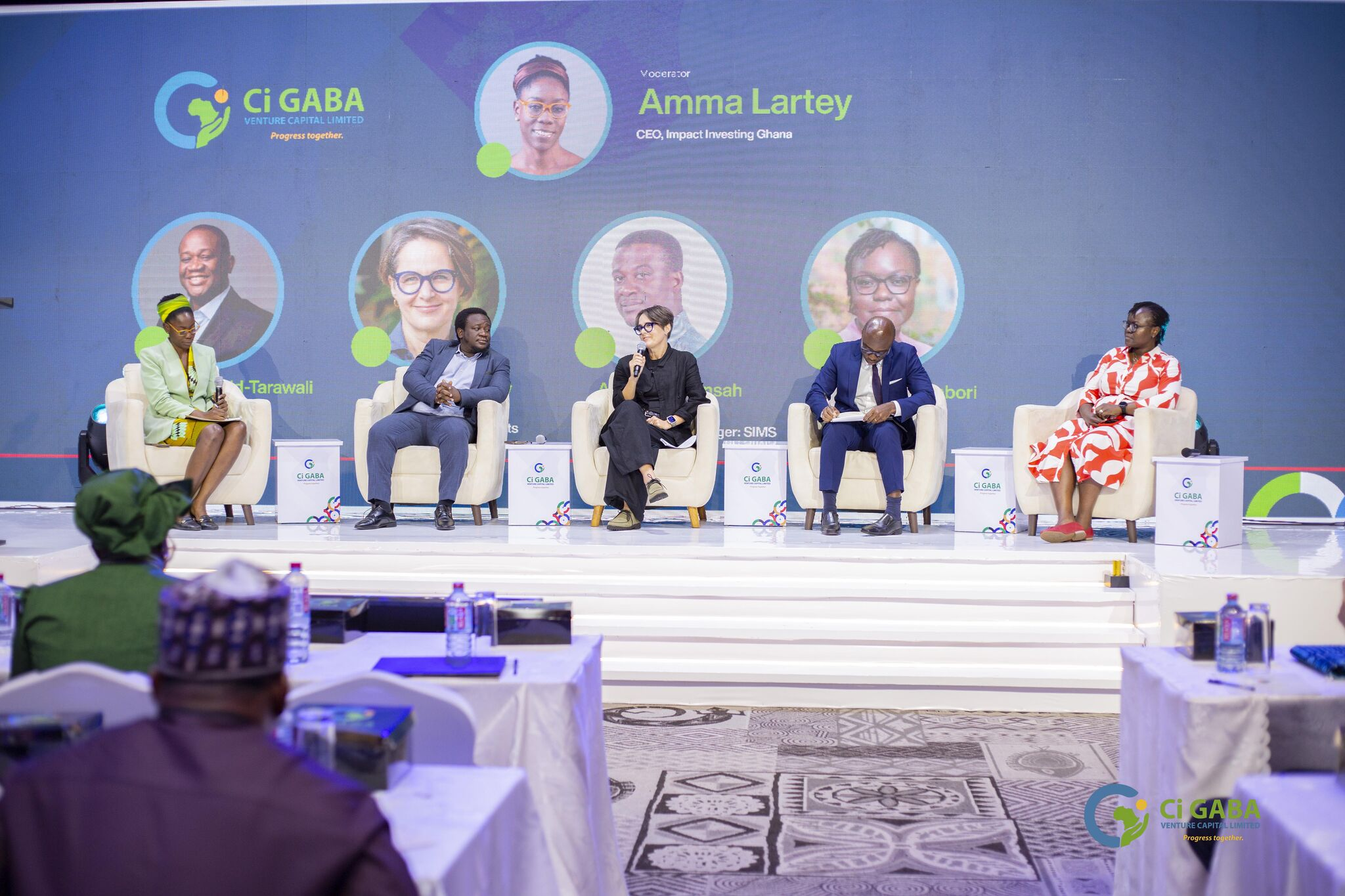











Private equity in Ghana has grown from a niche corner of the financial market into a $6.93 billion industry . Yet for most Ghanaians, it remains a mystery—partly because the world of private equity operates behind closed doors, and partly because the barriers to entry are high. This ASJ article explains how the industry works, who the key players are, and what is changing in 2026.

Introduction: The Rise of Private Capital
Ghana’s private equity and venture capital (PE/VC) industry has grown dramatically since it was formally established in 2004. Assets under management reached $6.93 billion in 2023, an average annual growth rate of 23% since 2008 . Ghana is now ranked among the top 10 most attractive VC/PE markets in Africa, coming in at 7th on the continent and 78th globally .
But the industry is not without its challenges. It faces limited exit opportunities, currency volatility, a small pool of quality investment targets, and a funding base that is heavily reliant on foreign development finance . Understanding how the industry works is essential for anyone seeking to participate in it—or to understand why it matters for Ghana’s economic development.
📢 GET A DETAILED ARTICLES + JOBS
Join ASJ's WhatsApp Channel and never miss a post or opportunity.
What Is Private Equity?
Private equity is equity or equity-like investment in private companies—that is, companies that are not listed on a stock exchange . A private equity fund pools capital from investors and uses it to acquire stakes in companies, with the goal of improving their operations and eventually selling them for a profit.
There are three main strategies within private equity :
Buyout: Acquiring a controlling ownership stake in a mature company, often financed with a combination of equity and debt. This is the largest segment by assets under management.
Growth Equity: Investing in established companies that are growing rapidly. These investments tend to use less debt than buyouts, and the ownership stakes can range from minority to majority.
Venture Capital: Investing in early-stage businesses with high growth potential. These are typically primary investments—cash going into the company’s balance sheet—in exchange for minority stakes, often as part of a syndicate with other investors.
Who Provides the Capital?
The most striking feature of Ghana’s private equity industry is where the money comes from.
Development Finance Institutions (DFIs) account for approximately 90.5% ($6.28 billion) of committed capital in VC/PE-backed funds investing in Ghana . These are institutions like the World Bank’s IFC, the African Development Bank, British International Investment, and FSD Africa. Their dominance means the industry is heavily dependent on foreign, largely dollar-denominated capital.
Local pension funds are beginning to play a larger role. Between 2022 and 2023, local pension funds committed some $15 million to local funds, and they have become anchor investors in the Injaro Ghana Venture Capital Fund . The government has also issued a directive encouraging pension funds and insurers to allocate at least 5% of their assets to private equity and venture capital by 2026 .
The Venture Capital Trust Fund (VCTF) , established by Act 680 in 2004, has committed approximately **$29 million** to 11 funds, leveraging $109 million in private capital—a ratio of about 1:4 . It is the anchor of local funds.
Despite these developments, locally domiciled funds hold only about 2.4% of total AUM, while regional African funds hold 78% . Over 95% of the funding available to SMEs is in foreign currency .
How Private Equity Funds Operate
Private equity funds are typically structured as closed-end funds with a fixed term, traditionally around 10 years . Investors commit capital upfront, but the fund does not call it all at once. Instead, the fund manager calls capital as investment opportunities arise.
The Investment Process
Sourcing: The fund identifies potential target companies—often family-owned businesses, growth-stage companies, or undervalued assets .
Due Diligence: The fund conducts detailed legal, financial, tax, and regulatory due diligence. In Ghana, this process is becoming more rigorous as the economy formalises and tax enforcement becomes more assertive .
Investment: The fund acquires a stake in the company, often taking board positions and influencing strategic decisions .
Value Creation: The fund works to improve the company’s operations, enhance profitability, and position it for growth. This may involve hiring new management, streamlining operations, or investing in modern facilities .
Exit: After several years, the fund sells its stake—through a trade sale, secondary buyout, or initial public offering (IPO)—and returns capital plus profits to investors .
Fees
Private equity funds typically charge two types of fees :
Management Fee: Typically 0.5% to 2.5% of assets under management or committed capital. SEC Ghana mandates that fees be disclosed, justifiable, and aligned with investor expectations.
Carried Interest (Performance Fee): A share of the profits, often 15–20% , with conditions such as hurdle rates, high water marks, and preferred returns to protect investors .
The Regulatory Framework
SEC Oversight
Private equity funds in Ghana are regulated by the Securities and Exchange Commission (SEC) under the Securities Industry Act, 2016 (Act 929) . The SEC registers, licenses, authorises, and regulates funds and fund managers.
Local Presence Requirements
Foreign fund managers wishing to operate in Ghana face strict requirements :
-
Local incorporation as a Ghanaian company
-
SEC licensing as a fund manager or adviser
-
Local office and at least one resident director
-
Independent local custodian of assets
-
Fit and proper test for directors and key personnel
The LP Gap
One of the most significant regulatory gaps is the absence of a Limited Partnership (LP) Act. The Ghana Venture Capital Association (GVCA) and industry practitioners have been advocating for an LP Act that would provide a clear legal route for fund domiciliation, lowering transaction costs and providing investor-grade legal certainty .
Without an LP structure, funds often use alternative vehicles that may be less efficient or less familiar to international investors. The proposed LP framework would align Ghana with leading fund domiciles and make it easier to raise capital from institutional investors .
Pension Fund Allocation
The National Pensions Regulatory Authority (NPRA) guidelines allow pension funds to allocate up to 25% of their assets to private equity . However, actual allocation remains low—Ghana deploys just 4.4% of its 25% regulatory limit to alternatives, compared to Nigeria’s 34% usage of a 5% cap and South Africa’s approximate 8% allocation under a 15% ceiling .
Key Players in Ghana’s PE Landscape
Ghana’s PE market includes a mix of locally domiciled fund managers and foreign-domiciled funds with local presence . Some notable names include:
-
Africa Capital Alliance (AUM: $1,000 million)
-
Zebu (AUM: $121 million)
-
Cardinal Stone (AUM: $64 million)
-
Investisseurs et Partenaires
Locally domiciled funds include :
-
Mirepa Capital SME Fund I (GH₵55 million)
-
Injaro Ghana Venture Capital Fund (GH₵216 million)
-
Industrial Support Fund (GH₵50 million)
-
Growth Investment Partners (GH₵567 million)
-
Wangara Green Ventures (GH₵50 million)
The Ci-Gaba Fund, Ghana’s first private fund of funds, reached its first close of $75 million in January 2026. It is designed to mobilise pension capital into private equity and private debt investments, with more than two-thirds anchored by local pension funds . It is expected to support up to 25,000 jobs .
The Exit Challenge
One of the biggest challenges for private equity in Ghana is exiting investments . Funds that invested between 2018 and 2022 are now approaching or exceeding their expected exit horizons, creating pressure to deliver liquidity .
The most viable exit route is trade sales to pan-African and Asian strategic buyers. Secondary buyouts remain uncommon due to a limited buyer pool. Stock exchange listings are achievable but require extensive preparation .
GP-led secondaries—where the fund manager initiates the sale of assets—are emerging globally but remain rare in Ghana. There is no record of GP-led secondaries using structures like continuation funds in Ghana, though secondary buyouts have occurred.
Challenges Facing the Industry
The Ghana PE market faces several structural challenges :
Limited exit opportunities: A small pool of buyers and an underdeveloped secondary market make it difficult to realise returns.
Currency volatility: Most funding is in foreign currency, creating exchange rate risk for both investors and portfolio companies.
Small pool of quality targets: Finding companies with strong management teams, clean financials, and growth potential is difficult.
Regulatory hurdles: Complex legal frameworks and inconsistent enforcement practices create uncertainty.
Capacity gaps: Many portfolio companies lack skilled management teams and need capacity building.
Long-term financing constraints: Access to long-term local capital remains limited.
What This Means for Ghana’s Economy
Private equity matters for Ghana’s development because it provides long-term, patient capital that banks cannot easily offer. It funds growth-stage businesses, supports job creation, and drives operational improvements .
The government’s directive encouraging pension funds to allocate 5% of assets to private equity and venture capital by 2026 signals a policy shift toward mobilising domestic savings for productive investment . The Ci-Gaba Fund is an early test of whether this model can work .
For ordinary Ghanaians, the industry’s growth means more capital for businesses that create jobs, more options for pension funds seeking higher returns, and a more diversified financial system. But the barriers—regulatory, structural, and cultural—remain significant.
Quick Facts
| Topic | Details |
|---|---|
| AUM (2023) | $6.93 billion |
| Annual Growth Rate (since 2008) | 23% |
| Local Fund Share of AUM | 2.4% |
| DFI Share of Capital | 90.5% ($6.28 billion) |
| Pension Fund Cap | 25% of AUM |
| Actual Pension Allocation | 4.4% |
| Government Target | 5% of assets by 2026 |
| Ci-Gaba Fund First Close | $75 million |
| Management Fee Range | 0.5% – 2.5% |
| Carried Interest | Typically 15–20% |
Frequently Asked Questions
1. What is private equity?
Private equity is equity or equity-like investment in private companies—companies not listed on a stock exchange. Funds pool capital from investors and use it to acquire stakes in companies, improve their operations, and eventually sell them for a profit .
2. How big is Ghana’s private equity industry?
Ghana’s PE/VC industry had assets under management of $6.93 billion in 2023, growing at an average annual rate of 23% since 2008 .
3. Who provides the capital for private equity in Ghana?
Development Finance Institutions (DFIs) provide about **90.5% ($6.28 billion)** of committed capital. Local pension funds are beginning to play a larger role, committing $15 million between 2022 and 2023 .
4. How do private equity funds make money?
Funds acquire stakes in companies, improve their operations, and sell them at a profit. They charge a management fee (0.5–2.5% of AUM) and a performance fee or carried interest (typically 15–20% of profits) .
5. Who regulates private equity in Ghana?
The Securities and Exchange Commission (SEC) regulates private equity under the Securities Industry Act, 2016 (Act 929) .
6. What is the Ci-Gaba Fund?
Ci-Gaba is Ghana’s first private fund of funds, designed to mobilise pension capital into private equity and private debt. It reached a first close of $75 million in January 2026, with more than two-thirds anchored by local pension funds .
7. What challenges does Ghana’s private equity industry face?
Challenges include limited exit opportunities, currency volatility, a small pool of quality investment targets, regulatory hurdles, and capacity gaps in portfolio companies .
8. Can individual Ghanaians invest in private equity?
Private equity is generally restricted to institutional investors, high-net-worth individuals, and family offices. It is not available to retail investors due to high minimums, illiquidity, and risk .
9. What is the government doing to support private equity?
The government has directed pension funds and insurers to allocate at least 5% of assets to private equity and venture capital by 2026. It has also supported the Venture Capital Trust Fund and is working on regulatory reforms, including a proposed Limited Partnership Act .
10. How do private equity funds exit their investments?
The most common exit route in Ghana is trade sales to strategic buyers. Secondary buyouts and IPOs are less common due to a limited buyer pool and preparation requirements
Source: Accra Street Journal
Last Updated on September 18, 2026 by Samuel Kwame Boadu
Disclaimer: Some content on Accra Street Journal may be aggregated, summarized, or edited from third-party sources for informational purposes. Images and media are used under fair use or royalty-free licenses. Accra Street Journal is a subsidiary of SamBoad Publishing Hub under SamBoad Business Group Ltd, registered in Ghana since 2014.
For concerns or inquiries, please visit our Privacy Policy or Contact Page.

Samuel Kwame Boadu is a Ghanaian media entrepreneur and storyteller with a passion for amplifying urban voices and uncovering everyday truths. He is the Editor-in-Chief and Founder of Accra Street Journal, a dynamic digital platform dedicated to capturing the pulse of Ghana’s capital—its people, culture, challenges, business, sports and innovations.