







For a small business owner in Accra, the assets are everything. The inventory in the shop, the machinery in the workshop, the vehicle that delivers the goods, the computer that holds the customer records. These are not abstract balance-sheet items. They are the physical embodiment of years of work. And they are more vulnerable than most owners realize.
Fire is the single biggest risk cited by informal businesses in Ghana, according to a nationwide survey by the National Insurance Commission . Burglary, flood, and liability claims follow close behind. Yet the vast majority of SMEs operate without any form of insurance cover, leaving them one incident away from collapse.

The Risks That Threaten SME Assets
The NIC survey, which gathered over 26,000 responses across 10 regions, identified the threats that keep small business owners awake at night . The pattern is consistent across sectors.
📢 GET A DETAILED ARTICLES + JOBS
Join ASJ's WhatsApp Channel and never miss a post or opportunity.

Fire
Fire is the most commonly cited threat. A single outbreak can destroy stock, equipment, and premises in hours. For a business operating on thin margins, the loss is often unrecoverable.
Burglary and Theft
Break-ins are a persistent risk, particularly for businesses in busy commercial areas or with valuable inventory. The loss of stock or cash can disrupt operations for weeks.

Flood and Natural Perils
Accra’s recurring floods are a well-documented hazard. Businesses in low-lying areas face the risk of water damage to premises, inventory, and equipment.
Liability Claims
If a customer is injured on your premises, or if your operations cause damage to someone else’s property, you can be held legally liable. For businesses without liability cover, a single claim can wipe out savings.
The Loss of the Owner
For many SMEs, the business owner is the business. If the owner dies or becomes permanently disabled, the enterprise often ceases to function. Employee welfare and life cover protect both the owner’s family and the continuity of the business .
The Insurance Products That Protect SME Assets
The Ghanaian insurance market has developed products specifically for small businesses. The days of generic, expensive commercial policies are fading. The new generation of SME products is tiered, affordable, and accessible through digital channels.
Property and Asset Cover
This is the foundation. It protects the physical assets of the business—buildings, stock, equipment, furniture, and fittings—against fire, burglary, flood, and other insured perils.
Hollard Ghana’s Asomdwee MSME Insurance provides protection against fire, burglary, and other perils, alongside employee welfare benefits and third-party liability cover. It is available in bronze, silver, and gold packages, allowing business owners to choose the level of protection that matches their needs and budget .
Coronation Insurance’s Smart SME Plan, launched in partnership with MTN MoMo, offers tiered cover starting from GH¢225 per year for basic protection (up to GH¢20,000 inventory cover), rising to GH¢800 for prestige cover (up to GH¢100,000 inventory cover and GH¢20,000 personal accident cover) .
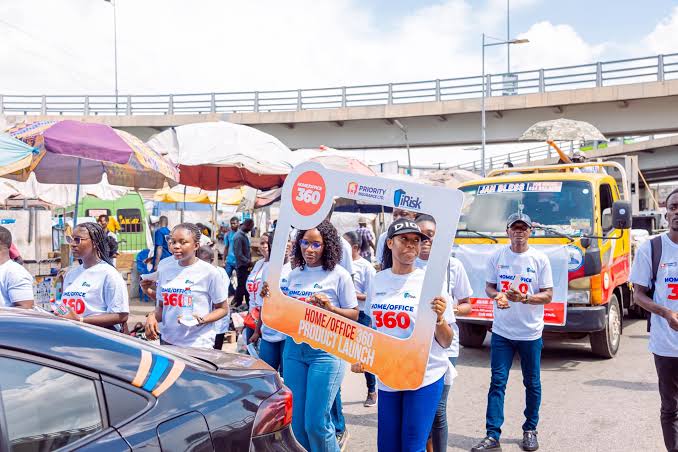
Priority Insurance’s Home/Office 360 is a micro-insurance product costing GH¢360 per year (GH¢1 per day) that provides up to GH¢50,000 in cover for contents against fire, burglary, and personal accidents .
Sanlam Allianz’s Business Guard offers comprehensive cover for assets, money, premises, employee dishonesty, and group life insurance within limits .

Liability Cover
Public liability insurance is compulsory for high-risk businesses such as hotels, restaurants, filling stations, construction sites, event centres, malls, and hospitals . It covers injury, death, or property damage suffered by members of the public on your premises.
Even where it is not legally compulsory, liability cover is essential. A customer slipping on a wet floor, a delivery causing damage to a third party’s property, or a product causing harm can all result in claims that exceed the business’s ability to pay.
Employee Welfare and Group Life
For businesses with employees, group life and employee welfare cover protect the people who keep the business running. Asomdwee includes permanent disability, critical illness, and death cover for employees . Business Guard includes group life insurance within its limits .
This is particularly important for SMEs where the loss of a key employee can disrupt operations. It also demonstrates to employees that they are valued, which supports retention.
Motor Fleet Insurance
For businesses that rely on vehicles—delivery vans, trucks, sales vehicles—motor fleet insurance provides cover for multiple vehicles under a single policy. It covers accidental damage, fire, theft, and third-party liability .
Business Interruption (Where Available)
The often-overlooked risk is not the damage to the asset itself, but the loss of income while the business is unable to operate. Business interruption cover replaces lost income during the recovery period. While not all SME products include it as standard, it is worth asking about, particularly for businesses in high-risk locations.
How Much Does It Cost?
The NIC survey found that business owners are willing to pay a median of GH¢20 per week for insurance, with market traders at GH¢25 and drivers at GH¢30 . The regulator has proposed three pricing tiers for informal-sector products: GH¢10–15 per week for basic cover, GH¢20–30 for standard cover, and GH¢40–60 for comprehensive cover .
The annual products on the market sit comfortably within these ranges. The Smart SME Plan starts at GH¢225 per year—less than GH¢5 per week. Home/Office 360 is GH¢1 per day. These are not large sums relative to the value of the assets being protected.
The Access Problem: Why So Many SMEs Remain Uninsured
Despite the availability of affordable products, insurance penetration in Ghana remains around 1% of GDP, well below the African average of 3% and the global average of 6% . For SMEs, the reasons are consistent.
Lack of awareness. Many business owners do not know that these products exist, or they do not understand how insurance works. The NIC survey was designed in part to address this gap, using Youth Employment Agency graduates to gather data and raise awareness .
Limited trust. Past experiences with slow claims or complex processes have made some owners skeptical. The industry is working to rebuild trust through faster claims and digital platforms.

The informality barrier. A significant number of enterprises operate informally, limiting their access to government support programmes, financial services, and digital tools . Formalising operations is often a prerequisite for accessing insurance.
The collateral problem. Nearly 95% of SMEs face difficulties accessing credit because they cannot provide the physical collateral required by banks . The NIC is working with the Bank of Ghana and the 24-Hour Economy Authority to develop a credit insurance scheme that would allow loans to SMEs to be insured, reducing reliance on physical collateral . This would address one of the structural barriers to SME growth.
The Strategic Argument: Insurance as a Business Continuity Tool
The case for insurance is not just about recovering from disaster. It is about the confidence to grow.
As Hollard Ghana’s Group CEO put it: “When small business owners operate with a guaranteed financial safety net, they can navigate market volatility and invest in expansion with greater confidence” .
A business owner who knows that a fire will not destroy everything they have built is more willing to invest in new equipment, hire additional staff, or take on larger contracts. Insurance removes the fear that holds small businesses back.
It also protects the owner’s family. For many SMEs, the business is the family’s primary asset. If the owner dies without cover, the family may be forced to sell the business or its assets to cover funeral costs and debts. Life and employee welfare cover ensure that the business can continue, or that the family is compensated for its loss.
ASJ Bottom Line
The products exist. The premiums are affordable. The risks are real and well-documented.
An SME owner in Accra can protect their inventory against fire and burglary for GH¢225 a year. They can protect their premises and contents for GH¢1 a day. They can protect their employees and their own family with group life and welfare cover.
The barrier is not cost. It is the decision to act before the emergency arrives.
The NIC’s proposed pricing tiers and the growth of digital products like the Smart SME Plan are making it easier than ever to get covered. The credit insurance scheme under development may soon make it easier to access finance as well.
But the first step is the owner’s. Insurance is not an expense to be deferred until the business is bigger or more stable. It is the tool that makes stability possible.
Quick Facts
| Topic | Details |
|---|---|
| Top Business Risk | Fire |
| Median Willingness to Pay | GH¢20/week (national); GH¢25/week (market traders) |
| Basic Cover (Proposed) | GH¢10–15/week |
| Smart SME Plan (Coronation) | From GH¢225/year |
| Home/Office 360 (Priority) | GH¢360/year (GH¢1/day) |
| Asomdwee (Hollard) | Bronze/Silver/Gold packages |
| Business Guard (Sanlam Allianz) | Assets, money, premises, employee dishonesty, group life |
| Insurance Penetration (Ghana) | ~1% of GDP |
| Credit Insurance Scheme | Under development by NIC, BoG, 24-Hour Economy Authority |
Frequently Asked Questions
1. What is the biggest risk facing SMEs in Ghana?
Fire is the most commonly cited threat, according to the National Insurance Commission’s survey of over 26,000 informal businesses .
2. How much does SME insurance cost in Ghana?
Plans start from as low as GH¢225 per year for basic cover under Coronation’s Smart SME Plan, or GH¢360 per year (GH¢1 per day) for Priority Insurance’s Home/Office 360 .
3. What does Asomdwee MSME Insurance cover?
Asomdwee covers fire, burglary, and other perils, alongside employee welfare benefits (permanent disability, critical illness, death) and third-party liability. It is available in bronze, silver, and gold packages .
4. Is public liability insurance compulsory for businesses in Ghana?
Yes, for high-risk businesses such as hotels, restaurants, filling stations, construction sites, event centres, malls, and hospitals .
5. What is the Smart SME Plan?
It is a digital SME insurance product from Coronation Insurance, launched in partnership with MTN MoMo. Business owners can register, pay, and file claims via the MoMo app or USSD *170#. Cover ranges from GH¢20,000 to GH¢100,000 inventory protection .
6. Do I need insurance if my business is small?
Yes. Small businesses are often more vulnerable to shocks because they lack the financial reserves to recover from a fire, burglary, or liability claim. Affordable micro-insurance products are designed specifically for small businesses .
7. What is the credit insurance scheme for SMEs?
The NIC, Bank of Ghana, and 24-Hour Economy Authority are developing a scheme that would allow loans to SMEs to be insured, reducing the need for physical collateral and improving access to finance.
8. Can I protect my employees with insurance?
Yes. Group life and employee welfare cover protect employees against permanent disability, critical illness, and death. Products like Asomdwee and Business Guard include these benefits .
9. How do I choose the right SME insurance product?
Consider your biggest risks (fire, burglary, flood, liability), the value of your assets, the number of employees, and your budget. Compare the coverage limits, exclusions, and premium of the products available. A broker can help you assess your needs.
10. Is insurance penetration low in Ghana?
Yes. Insurance penetration is around 1% of GDP, well below the African average of 3% and the global average of 6% . This means most SMEs are operating without a safety net
Source: Accra Street Journal
Last Updated on November 2, 2026 by Samuel Kwame Boadu
Disclaimer: Some content on Accra Street Journal may be aggregated, summarized, or edited from third-party sources for informational purposes. Images and media are used under fair use or royalty-free licenses. Accra Street Journal is a subsidiary of SamBoad Publishing Hub under SamBoad Business Group Ltd, registered in Ghana since 2014.
For concerns or inquiries, please visit our Privacy Policy or Contact Page.

Samuel Kwame Boadu is a Ghanaian media entrepreneur and storyteller with a passion for amplifying urban voices and uncovering everyday truths. He is the Editor-in-Chief and Founder of Accra Street Journal, a dynamic digital platform dedicated to capturing the pulse of Ghana’s capital—its people, culture, challenges, business, sports and innovations.