







Ghana has over 50 licensed insurers and reinsurers. It has affordable micro-insurance products starting at GH¢1 a day. It has a regulator that publishes pricing guidelines and a government that has made financial inclusion a policy priority. Yet insurance penetration remains stuck at around 1% of GDP, far below the African average of 3% and the global average of 6% . The problem is not the product. It is the awareness.
A nationwide survey by the National Insurance Commission, conducted with 218 Youth Employment Agency graduates across 10 regions, found that half of the informal-sector workers interviewed were willing to pay between GH¢10 and GH¢50 per week for insurance . Drivers were willing to pay GH¢30, traders GH¢25, and artisans GH¢20. The demand exists. What does not exist is the knowledge.

The Awareness Gap: What the Survey Found
The NIC-YEA Insurance Awareness and Risk Perception Report, based on 26,493 completed responses gathered between January and March 2026, is the most comprehensive primary research on insurance perception in Ghana to date . Its findings are stark.
📢 GET A DETAILED ARTICLES + JOBS
Join ASJ's WhatsApp Channel and never miss a post or opportunity.

When asked what risks threatened their livelihoods, 41% of respondents cited fire. Theft and robbery followed at 36%, and illness at 34% . These are the exact risks that insurance is designed to cover. Yet most of the respondents had no cover.
The survey identified the core barrier: limited public awareness. As the Commissioner of Insurance, Dr Abiba Zakaria, put it during the 2026 Insurance Debate, many Ghanaians fail to turn to insurance when disasters strike because they do not understand how it works or what relief it can provide .

The report recommended weekly mobile money premiums, simplified claims processes, and digital policy issuance to make insurance more accessible . But none of those innovations will matter if people do not know the products exist or do not trust that claims will be paid.
The Regional Blind Spot: Accra Is Not Ghana
The NIC survey found significant regional differences in willingness to pay. Respondents in Ashanti, Greater Accra, and Bono recorded a median of GH¢30 per week, while those in the Northern and Volta regions recorded GH¢10.
This is not simply a matter of income. It reflects the concentration of insurance education and agent activity in the capital. The Ghana Insurers Association has acknowledged this. Its annual Insurance Awareness Month was, for the first time, taken beyond Accra to the Western Region, with roadshows and street activations in Tarkwa, Bibiani, and Cape Coast. The GIA’s Head of Technical, Ernestina Amankrah, admitted that past efforts were “overly Accra-focused” .
The outreach revealed a “stark information gap,” with many people viewing coverage as inaccessible or irrelevant. This rebuilds trust,” Amankrah said, noting that low uptake stems from distrust, not disinterest .
If the regional model is sustained, it could reshape perceptions industry-wide. But one campaign in one region is not enough.
The Trust Deficit: Why Awareness Alone Is Not Enough
Awareness campaigns that simply tell people to buy insurance will fail if the underlying trust deficit is not addressed. The NIC survey found that many respondents had misconceptions about insurance. The Ghana Insurers Association has acknowledged that low uptake is driven by distrust, not just lack of information .
Hollard Ghana’s “We Cover You” campaign, launched in July 2026, was designed with this in mind. The company discovered that many people associated the Hollard name with fabric, not insurance, due to its similarity to other familiar names. The campaign used the image of cloth—representing warmth, care, and protection—to simplify the conversation and rebuild the brand’s identity .
The Ghana Insurers Association’s CEO, Dr Kingsley Kwesi Kwabahson, used the campaign launch to remind insurers that trust requires action: companies must honour legitimate claims promptly and simplify products so consumers can understand them .
This is the critical point. Awareness campaigns that generate interest but are not matched by reliable claims settlement will backfire. They will create a generation of Ghanaians who know about insurance but believe it does not pay.

The NHIS Model: Education That Works
The National Health Insurance Authority has demonstrated what effective education looks like. Its campaign targeting senior high schools in the Volta, Oti, Central, and Western Regions ahead of its maiden Inter-Schools Quiz Competition reached students with practical knowledge of the NHIS: benefits, registration, renewal, digital services, and member rights.
The NHIA’s Chief Executive, Dr Victor Asare Bampoe, made a point that applies to the entire insurance industry: “Many Ghanaians only discover what their NHIS cards cover when a family member falls ill, leaving them to make difficult decisions under financial pressure” .
The NHIS approach works because it is face-to-face, interactive, and targeted at young people who can share the information with their families. It uses the channels people already use—schools, communities, radio—rather than expecting them to seek out insurance information on their own.
The private insurance industry could learn from this model. Awareness campaigns that rely solely on billboards, radio jingles, or social media posts will not reach the informal-sector workers who most need cover.
The Business Case for Awareness
Insurance companies are not charities. They need to see a return on their awareness investment. The NIC survey provides that case.
The median willingness to pay is GH¢20 per week nationally, with half of all responses falling between GH¢10 and GH¢50 . The NIC proposed three pricing tiers: GH¢10–15 for basic cover, GH¢20–30 for standard, and GH¢40–60 for comprehensive .
These are not hypothetical figures. They are what real Ghanaians in real markets said they would pay. The insurers who design products around these price points and invest in the education required to sell them will capture a market that has been largely untouched.
The market is there. The products can be built. The distribution channels—mobile money, agents, community groups—already exist. What is missing is the sustained, trustworthy, nationwide education that turns willingness into action.
What a Serious Awareness Campaign Would Look Like
The evidence points to several principles.
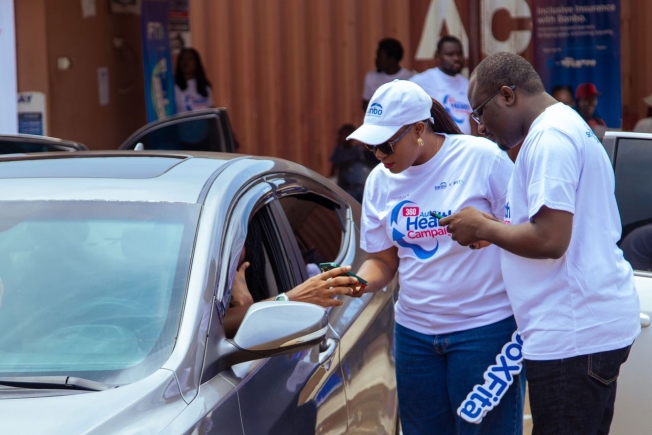
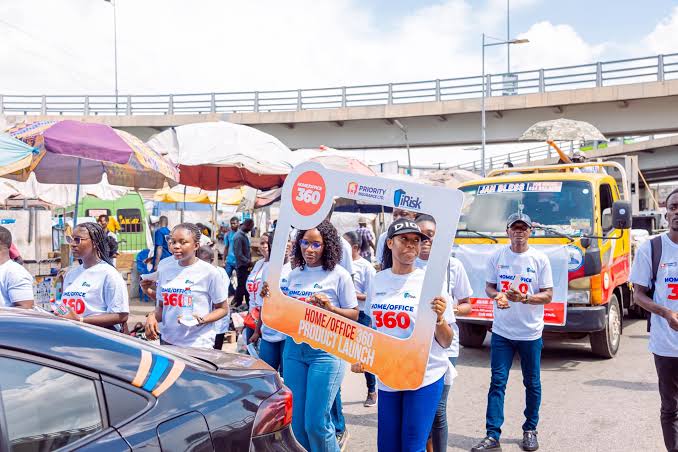
Go where the people are. Markets, taxi stations, artisanal hubs, churches, mosques. The NIC-YEA graduates did this successfully. The GIA’s regional roadshows did this successfully. It needs to be scaled, not treated as a one-off.
Use trusted intermediaries. The YEA graduates were trusted because they were young people from the communities they served. Insurance agents who are known in their communities are more effective than anonymous call centres.

Simplify the language. Hollard’s “cloth” metaphor worked because it moved the conversation away from technical policy language. The industry needs more of this.
Pay claims promptly. This is the foundation. No awareness campaign can succeed if the first person in a community who buys insurance has their claim denied or delayed.
Target young people. The NHIA’s school campaign and the 2026 Insurance Debate, which brought eight tertiary institutions together under the theme “Think Future, Think Insurance,” are building a generation that understands risk . That generation will be the customers of the next decade.
ASJ Bottom Line
Ghana does not need more insurance companies. It has over 50. It does not need more products. It has micro-insurance starting at GH¢1 a day.
It needs more awareness. It needs more education. It needs more trust.
The NIC survey found that the willingness to pay exists. The GIA has admitted that past efforts were too Accra-focused. The NHIA has shown that school-based, face-to-face education works.
The industry has the evidence. The question is whether it has the will to act on it.
Awareness is not a marketing expense. It is the foundation of the market. Until more Ghanaians understand what insurance is, how it works, and why it matters, penetration will stay at 1%, and the next fire, flood, or illness will push another family into crisis.
Quick Facts
| Topic | Details |
|---|---|
| Insurance Penetration (Ghana) | ~1% of GDP |
| African Average | ~3% |
| Global Average | ~6% |
| NIC Survey Respondents | 26,493 across 10 regions |
| Top Risk Cited | Fire (41%) |
| Median Willingness to Pay | GH¢20/week (national) |
| Drivers’ Willingness to Pay | GH¢30/week |
| Traders’ Willingness to Pay | GH¢25/week |
| Proposed Basic Cover | GH¢10–15/week |
| Accra Bias Acknowledged | GIA took campaign to Western Region for first time |
Frequently Asked Questions
1. Why is insurance penetration so low in Ghana?
The primary barrier is limited public awareness. Many Ghanaians do not understand how insurance works or what it covers. A secondary barrier is distrust, driven by past experiences with slow claims .
2. How many people did the NIC survey reach?
The NIC-YEA survey collected 26,493 complete responses across 10 regions between January and March 2026 .
3. What is the biggest risk facing informal businesses in Ghana?
Fire was cited by 41% of respondents, followed by theft and robbery at 36%, and illness at 34% .
4. How much are Ghanaians willing to pay for insurance?
The national median is GH¢20 per week. Drivers are willing to pay GH¢30, traders GH¢25, and artisans GH¢20 .
5. What pricing tiers has the NIC proposed?
Basic cover: GH¢10–15/week. Standard cover: GH¢20–30/week. Comprehensive cover: GH¢40–60/week .
6. Why did the Ghana Insurers Association take its campaign to the Western Region?
The GIA admitted that past awareness efforts were overly focused on Accra. Taking the campaign to Tarkwa, Bibiani, and Cape Coast was intended to reach informal workers who had been overlooked .
7. What did Hollard Ghana’s “We Cover You” campaign aim to do?
The campaign sought to address misconceptions about the Hollard brand (which many associated with fabric) and simplify conversations about insurance using the image of cloth as a symbol of protection .
8. How is the NHIA educating the public?
The NHIA has taken health insurance education to senior high schools in multiple regions, using face-to-face sessions and an inter-school quiz competition to teach students about NHIS benefits and digital services.
9. What did the NIC-YEA report recommend to improve accessibility?
Weekly mobile money premiums, simplified claims processes, digital policy issuance, affordable premiums, clear policy terms, and reliable claims settlement.
10. Is awareness alone enough to increase insurance uptake?
No. Awareness must be matched by trust. Insurers must honour legitimate claims promptly and simplify their products. Without reliable claims settlement, awareness campaigns will create knowledge without confidence
Source: Accra Street Journal
Last Updated on November 2, 2026 by Samuel Kwame Boadu
Disclaimer: Some content on Accra Street Journal may be aggregated, summarized, or edited from third-party sources for informational purposes. Images and media are used under fair use or royalty-free licenses. Accra Street Journal is a subsidiary of SamBoad Publishing Hub under SamBoad Business Group Ltd, registered in Ghana since 2014.
For concerns or inquiries, please visit our Privacy Policy or Contact Page.

Samuel Kwame Boadu is a Ghanaian media entrepreneur and storyteller with a passion for amplifying urban voices and uncovering everyday truths. He is the Editor-in-Chief and Founder of Accra Street Journal, a dynamic digital platform dedicated to capturing the pulse of Ghana’s capital—its people, culture, challenges, business, sports and innovations.