EXECUTIVE INTRODUCTION
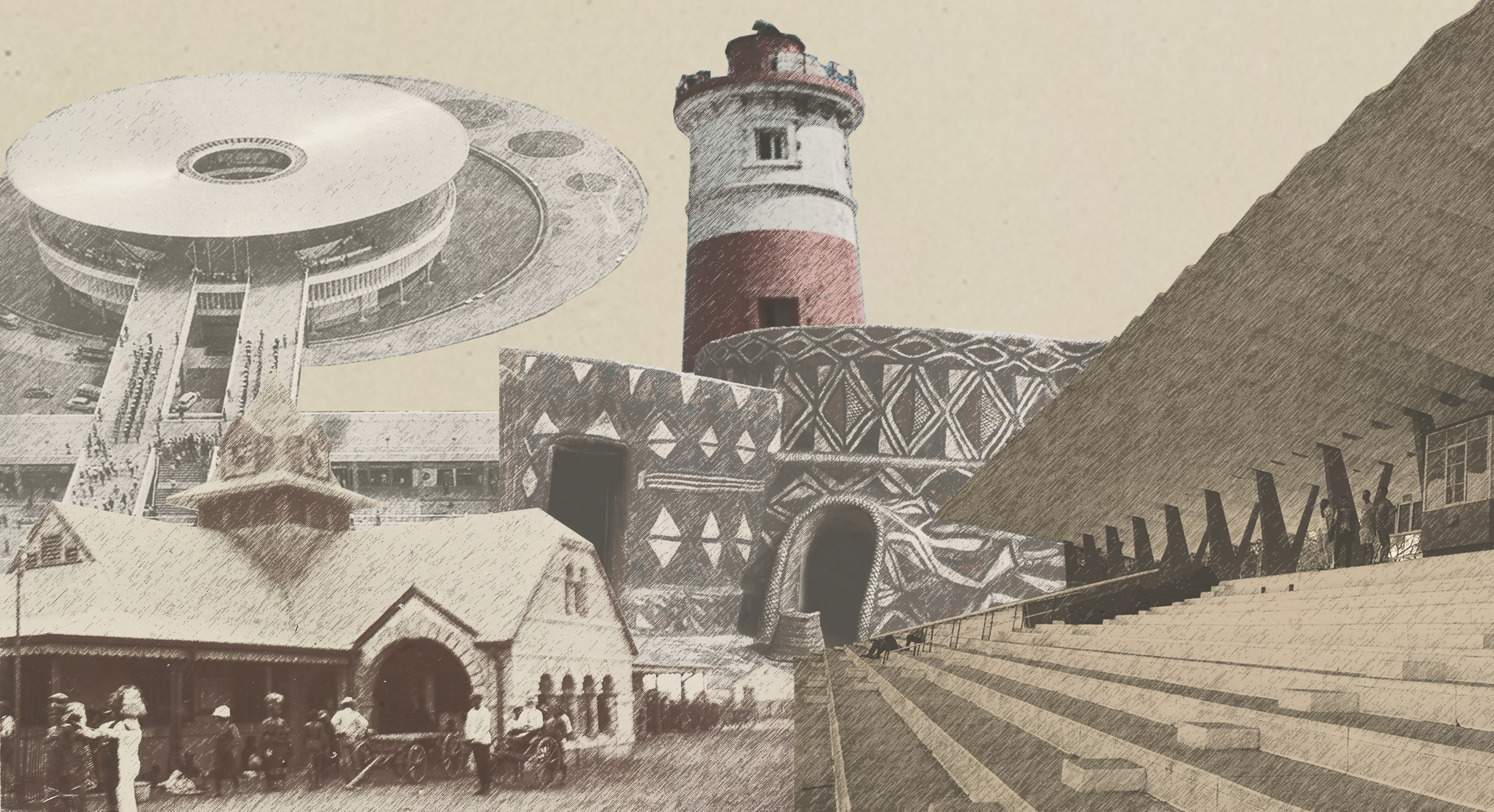
Accra is a city engaged in a fierce, silent, and entirely unresolved negotiation with itself. On one side of the table sits the weight of a dense, layered heritage: the Ga stool houses, the Danish and British colonial masonry, the missionary school bells, the lagoon deities, the Homowo drums, and the bitter, tangible memory of the slave dungeons. On the other side sits the insistent, impatient demand of a modern, aspirational African capital: the glass towers of the airport city, the gated communities of East Legon, the branded shopping malls, and the relentless digital hum of a young, globally connected population that trades in TikTok, fintech, and the promise of a “Ghana Beyond Aid.”
This Accra Street Journal analysis argues that this negotiation is not a peripheral cultural debate. It is the central, defining tension of the city’s contemporary identity. How Accra chooses to remember, forget, commodify, or demolish its past directly determines its economic trajectory, its social cohesion, its aesthetic character, and its competitive position among African cities. The heritage of Accra is not a dead, static collection of old buildings and quaint customs. It is a live, volatile, and deeply contested political and economic force. It shapes land values in Jamestown, fuels the city’s nascent cultural tourism offering, provides the visual language for its most successful creative exports, and generates persistent, low-grade conflict between developers and traditional custodians. This profile examines the precise mechanisms by which the past presses on the present in Accra, not as nostalgia, but as a fundamental material and psychological reality.

HERITAGE AS URBAN BRAND: THE SOFT POWER OF THE OLD CITY
In the global competition for investment, talent, and tourism, the modern African city requires a distinct, legible identity. Lagos has its frenetic, creative energy; Kigali its manicured, orderly efficiency; Cape Town its spectacular natural beauty. Accra’s competitive identity, its unique selling proposition in this crowded market, is increasingly being articulated through its heritage. The city’s brand is not the featureless glass box; it is the texture of the old, the palpable sense of a layered, un-erased history. This soft power is deployed across multiple strategic fronts.
📢 GET A DETAILED ARTICLES + JOBS
Join ASJ's WhatsApp Channel and never miss a post or opportunity.

The “Year of Return” and “Beyond the Return” initiatives, orchestrated by the national government, are the most ambitious and successful large-scale mobilisation of Ghanaian heritage as an economic asset in the country’s history. The emotional and political core of this programme is the heritage of the coast: the slave dungeons of Christiansborg Castle in Osu and James Fort in Jamestown, the memorial gardens, and the solemn, ancestral narrative of the Door of No Return. For the African diaspora, Accra is branded not just as a pleasant tropical capital, but as a site of profound, painful, and ultimately redemptive pilgrimage. The impact has been transformative for parts of the city’s economy, driving demand for heritage-adjacent real estate, boutique hotels in the historic quarters, and cultural tours.
On a more intimate scale, the Osu Oxford Street corridor, the chaotic, densely commercial spine of the city’s entertainment district, draws its brand power not from any single modern development but from the total, messy, historical ambience of Osu itself. The presence of the Christiansborg Castle at one end, the crumbling elegance of old colonial-era commercial buildings, the dense network of family compounds just behind the main strip—this heritage fabric provides a texture and a story that a purpose-built, sanitised entertainment complex cannot replicate. The brand is the layered history, even when that history is unkempt and un-curated. The creative economy—fashion designers, visual artists, musicians—mines this heritage relentlessly for its most distinctive and exportable raw material. The global aesthetic success of Ghanaian design, from the deconstructed kente of contemporary fashion houses to the highlife samples in modern Afrobeats, is fundamentally a heritage valorisation project. It takes the old, the ancestral, and the traditional and makes it a global luxury good.

THE LIVING CULTURE AS IDENTITY BACKBONE: FESTIVALS, FAMILY, AND THE GA SOUL
Beyond the built environment, Accra’s modern identity is continuously, and sometimes forcibly, re-anchored by its living intangible heritage. The city cannot fully forget who it is because the ritual calendar will not let it. The annual cycle of the Homowo festival, with its ban on drumming, its sacred processions, and its public sprinkling of kpekple, is a recurring, city-scale assertion of Ga spiritual and territorial sovereignty. It is a declaration, made with drums and libations, that the capital is not a neutral, ethnically empty administrative zone. It is, first and foremost, Ga land, governed by a sacred contract with specific deities and ancestors. This is a powerful, recurring counter-narrative to the secular, cosmopolitan identity the modern state projects.
This living heritage is embedded in the most fundamental social institution of the city: the family compound house. Despite the relentless atomisation of modern urban life into the nuclear family and the rented apartment, the compound house, with its courtyard, its elders, and its dense, demanding network of mutual obligation, remains the primary residential and social unit for a significant portion of Accra’s population. This is not a “traditional” relic; it is a living, functioning, and often challenging social safety net. It shapes the psychology of the Accra resident in profound ways, instilling a powerful sense of collective identity, lineage responsibility, and a thick, complex web of social indebtedness that the individualistic logic of the modern market economy constantly rubs against. The modern Ghanaian professional’s life is a daily navigation between the networked, obligatory, communal logic of the compound and the contractual, individualistic logic of the office and the bank. This negotiation is the defining psychological experience of the modern Accra identity.
THE POLITICAL ECONOMY OF HERITAGE: PRESERVATION VERSUS DEVELOPMENT
The most acute, concrete, and financially consequential interaction between heritage and modernity occurs in the land market. Accra is a rapidly growing city with immense pressure on land. Its historic core, the Ga towns of Jamestown, Osu, and the colonial administrative district, sits on some of the most valuable coastal and central real estate in the country. This creates a brutal, zero-sum economic tension. Every old colonial bungalow, every crumbling family compound, every historic waterfront site is, in the eyes of the market, a potential high-rise luxury condominium, a hotel, or a government ministry building.
This is the political economy of heritage in Accra: a constant, asymmetrical war between the cultural value of the old and the market value of the new. The statutory defender of the old, the Ghana Museums and Monuments Board (GMMB), is chronically underfunded and legally weak. Its designation of a building as a monument is often a starting pistol for its demolition, as owners race to destroy the evidence before the legal order can be served. The conservation battles in Jamestown are a case study in this conflict. The district is a dense palimpsest of Ga stool houses, colonial-era Brazilian-style masonry buildings built by returned formerly enslaved Africans, and early 20th-century warehouses. Its potential as a UNESCO-inscribed heritage zone, a living museum and cultural tourism magnet, is enormous. But it sits directly in the crosshairs of speculative developers and an infrastructure-hungry state that sees a slum to be cleared, not a heritage asset to be curated. The modern identity of Jamestown hangs in the balance, fought over by foreign tourists with cameras, local families with ancestral claims, and developers with architectural renderings of a concrete future.
The state’s own relationship with its heritage is profoundly ambivalent and often hypocritical. While the government promotes the Year of Return and speaks eloquently of the slave dungeons, the physical fabric of the very same heritage is left to rot. The Christiansborg Castle, a site of world-historical trauma and a potentially transformative UNESCO site, has been largely abandoned as a government seat and left in a state of exquisite, scandalous decay, its future the subject of endless, inconclusive committee reports. The state wants the brand of the heritage without paying the cost of its material preservation, a form of performative memorialisation that cashes the emotional cheque without fixing the leaking roof.
THE DIASPORA CONNECTION: THE RETURNING GAZE AND THE RE-CREATION OF HOME
One of the most powerful and economically consequential forces shaping the modern identity of Accra is the returning diaspora. The African-American, Caribbean, and Black British visitors and settlers who have come in increasing numbers since the Year of Return are not passive consumers of a pre-packaged heritage. They are active, well-capitalised agents of identity re-creation. They are buying land, restoring colonial-era bungalows, opening boutique hotels and concept restaurants in the historic quarters, and creating a new, transnational, Afro-diasporic culture in the city.
This diaspora gaze is profoundly heritage-focused. The returnee is typically more interested in a sensitively restored compound in Osu than a generic flat in a new high-rise at East Legon. They bring capital, a hunger for the “authentic,” and a powerful emotional investment in the historical narrative of return and reconnection. This is a potent economic force for adaptive reuse, but it also creates a new social dynamic. The diaspora returnee’s relationship to the heritage is different from that of the Ga family who has lived in the compound for five generations; one is a chosen, researched, and often romanticised connection, the other is a lived, inherited, and often burdensome obligation. The modern Accra identity is being shaped in this friction, in the cafés and co-working spaces of Osu where the local creative, the diaspora returnee, and the international investor negotiate what “African heritage” means and who gets to define and profit from it.
HERITAGE AS PSYCHOLOGICAL ANCHOR IN A CITY OF CONSTANT FLUX
Finally, the most intimate and least quantifiable function of heritage in Accra is its role as a psychological anchor. Accra is a city of dizzying, relentless change. The demolition of a familiar landmark, the disappearance of a neighbourhood’s old tree, the sudden eruption of a flyover—these are the daily, disorienting experiences of the urban resident. In this context of chronic flux, heritage provides stability. The annual return of the Homowo rituals, the unwavering sound of the obonu drums, the physical persistence of the Jamestown lighthouse and the family compound, and the deeply ingrained social scripts of respect for elders, communal eating, and the ritual pouring of libation are fixed points in a spinning world.
This is not passive nostalgia. It is an active psychological resource. As traditional family and religious structures are strained by modern economic pressures, the public, performative, undeniable presence of the heritage—the festival, the stool, the shrine—provides a sense of continuity and collective selfhood that the market and the state do not offer. The modern Accra resident may work in a globalised corporate office and consume the same digital content as a young person in London or Lagos, but they inhabit a city that still makes room for the ancestors to dance. That duality, that capacity to hold the glass tower and the sacred lagoon in a single frame, is not a sign of Accra’s incomplete modernity. It is the very definition of its unique, specific, and utterly compelling modern identity.

QUICK FACTS BOX: ACCRA’S HERITAGE AND MODERN IDENTITY
-
Core Heritage Assets: Ga tangible (stools, shrines, compound houses) and intangible (Homowo, Kplejoo) culture; Danish (Osu Christiansborg Castle) and British (Jamestown, Victoriaborg) colonial architecture; Afro-Brazilian “Tabom” masonry; the slave trade memory.
-
Key Modern Identity Drivers: Diaspora tourism and settlement (Year of Return), digital creative economy (music, fashion, visual arts), real estate speculation, urban infrastructure modernisation.
-
Principal Tension: The conflict between heritage preservation and land-value-driven redevelopment; the spiritual and communal logic of the Ga ritual calendar versus the secular, commercial rhythms of the modern capital.
-
Competitive City Branding: Accra’s global identity is increasingly defined by its layered history, marketed as an “authentic,” soulful, and emotionally resonant alternative to more sanitised African urban experiences.
-
Living Heritage Institutions: The Ga Traditional Council and its ritual calendar, the family compound house system, the informal “chop bar” and market network, the artisanal fishing communities.
-
Economic Sectors Most Shaped by Heritage: Cultural tourism, real estate (adaptive reuse and demolition), creative industries (fashion, film, music), hospitality (boutique hotels, heritage tours).
-
Key Conflict Zones: Jamestown (Ga core vs. gentrification/displacement), the Christiansborg Castle (state ambivalence), the Ga lagoon systems (ecological heritage vs. urban pollution).
-
Future Trajectory: The identity of the city will be determined by the outcome of the ongoing negotiation between the powerful economic logic of the “new” and the resilient, deeply rooted cultural logic of the “old.”

Last Updated on July 24, 2026 by Samuel Kwame Boadu
Disclaimer: Some content on Accra Street Journal may be aggregated, summarized, or edited from third-party sources for informational purposes. Images and media are used under fair use or royalty-free licenses. Accra Street Journal is a subsidiary of SamBoad Publishing Hub under SamBoad Business Group Ltd, registered in Ghana since 2014.
For concerns or inquiries, please visit our Privacy Policy or Contact Page.

Samuel Kwame Boadu is a Ghanaian media entrepreneur and storyteller with a passion for amplifying urban voices and uncovering everyday truths. He is the Editor-in-Chief and Founder of Accra Street Journal, a dynamic digital platform dedicated to capturing the pulse of Ghana’s capital—its people, culture, challenges, business, sports and innovations.